San Julián Fort — Spain castle

San Julián Fort

San Julián Fort, Cartagena: historic bastioned hill castle in Murcia
Plaza Castillo de San Julián, Spain
Early Medieval (5th–10th c.)

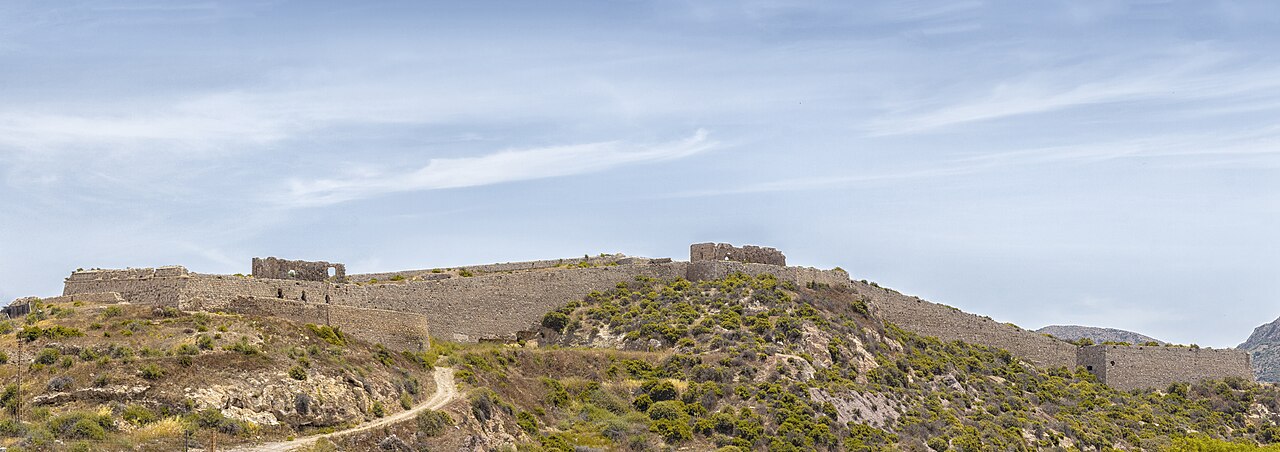
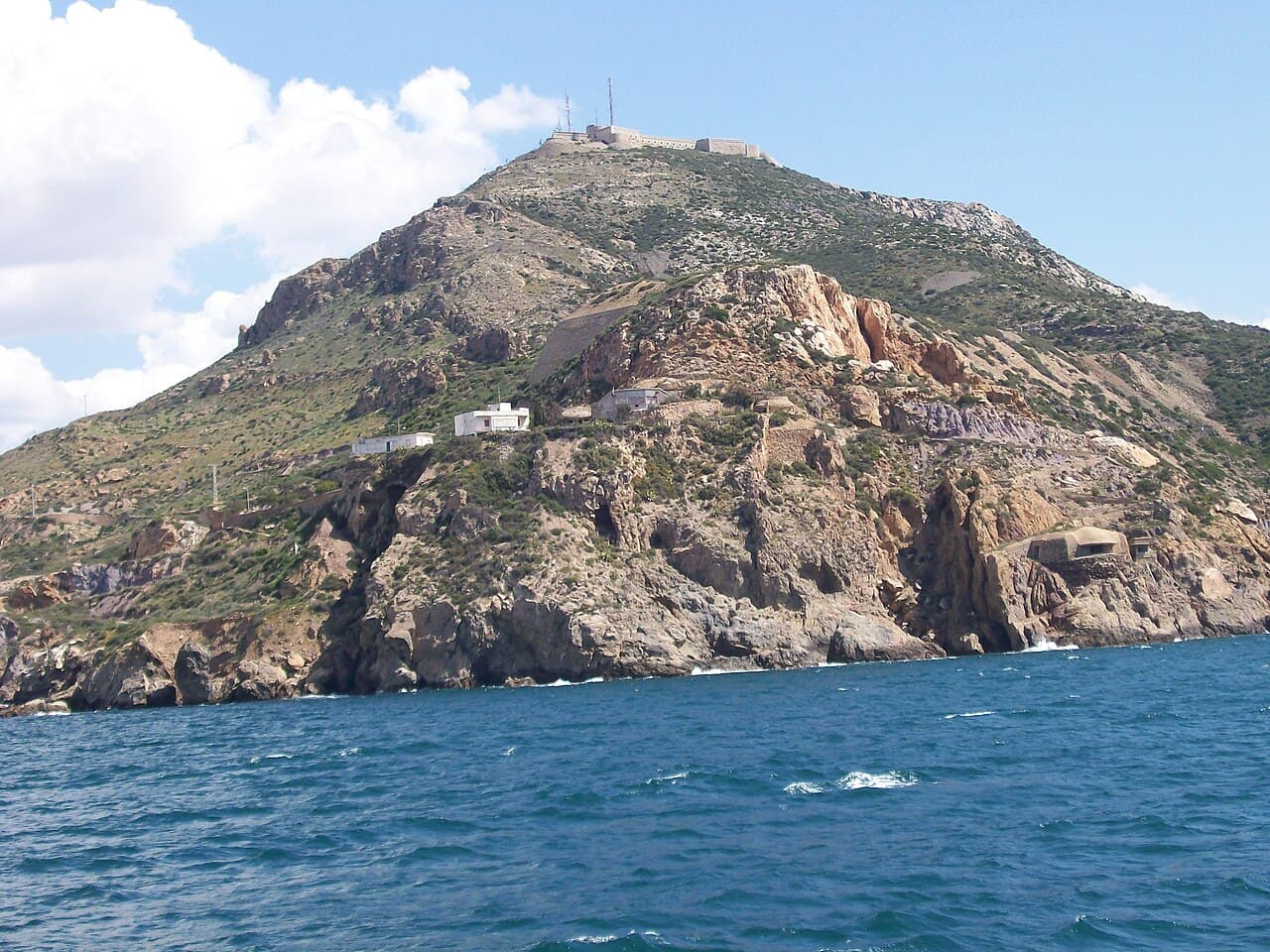
San Julián Fort, also known as Castillo de San Julián, is a prominent historic fortress located on San Julián Mountain, near the city of Cartagena in the Region of Murcia, Spain. This hill castle commands strategic views over the harbor of Cartagena and the surrounding landscape at approximately 293 meters above sea level. It stands as a testament to the military and architectural evolution from the early 18th century through the late 19th century, reflecting the region's turbulent history and strategic maritime importance.

The origins of San Julián Fort date back to the War of Spanish Succession (1701-1714), a critical conflict that saw Cartagena occupied by British forces. In 1706, the English admiral John Leake constructed a cylindrical tower on San Julián Mountain as a military stronghold during this occupation. This tower formed the nucleus of the later Spanish fortification efforts after the war concluded.

Following the war, the Spanish Bourbon monarchy initiated the construction of a more extensive fortification on the site, incorporating the existing English tower. The building process spanned much of the 18th and 19th centuries, with significant expansions and reforms taking place between 1861 and 1883. The resulting structure is an eclectic neoclassical bastioned fort influenced by the Frenchified Spanish School of military architecture, blending traditional bastioned elements with features typical of polygonal forts.

Historical significance and military role

Cartagena itself has a rich history as a vital naval port, founded in the 3rd century BC by the Carthaginian general Hasdrubal the Fair. Its natural harbor made it a key maritime hub, especially from the 16th century onward, when it became one of Spain's most important naval bases. The 18th century saw extensive fortification efforts around the harbor, including multiple forts and batteries on the surrounding hills, with San Julián Fort playing a crucial role in guarding the harbor entrance.

Throughout the 19th century, San Julián Fort was a focal point in several significant historical events. It served as a military prison during periods of political unrest, including housing the liberal military figure Juan Palarea y Blanes until his death in 1842. The fort was involved in the Cantonal rebellion, a federalist uprising in Spain, during which it was renamed after Froilán Carvajal. In January 1886, Republican rebels seized the fort, resulting in the death of the military governor Luis Fajardo. A tragic explosion in the fort's powder magazine in 1898 killed ten soldiers, underscoring the dangers inherent in its military function.

During the Spanish Civil War in the 1930s, the fort was repurposed as a military prison, detaining members of the armed forces involved in political uprisings such as the Sanjurjada and the 1934 Revolution. Under the Franco dictatorship, it became part of a network of concentration camps used for political repression in Cartagena.

Architectural features and design

Fortification style and layout

San Julián Fort is primarily a bastioned fort, a style characterized by angular bastions projecting from the walls to provide defensive coverage against attackers. However, it also incorporates elements typical of polygonal forts, such as tenailles and caponiers. The caponier on the eastern face is a notable defensive feature, allowing defenders to fire along the ditch surrounding the fort, covering blind spots and protecting the walls from assault.

The southwestern front hosts the main entrance, which is protected by a drawbridge system and a tenallat—a defensive structure resembling pincers that allows for multiple levels of fire against attackers attempting to cross. This complex entrance design reflects advanced military engineering aimed at maximizing defense at vulnerable points.

Incorporation of the English tower

The original English cylindrical tower built in 1706 remains a central feature within the fort's walls, linking the early 18th-century British military presence with subsequent Spanish fortification efforts. This tower exemplifies the layering of military architecture over time, preserving the site's historical continuity.

Modern use and preservation

Today, San Julián Fort remains largely intact though in a somewhat dilapidated state. It is listed as a Bien de Interés Cultural, a designation recognizing its cultural and historical significance. The fort is currently owned by the telecommunications company Telefónica, which has installed antennas on the site alongside those of Radio Nacional and the National Police Corps. These installations underscore the site's ongoing strategic importance, now in the realm of communications rather than military defense.

The fort is freely accessible to visitors who can explore the courtyard and walk along the walls, offering spectacular views over Cartagena, its bay, and the Mediterranean Sea. However, access to the interior of the buildings is restricted. The road leading to the fort is challenging, but the panoramic vistas and historical ambiance make it a rewarding destination for those interested in military architecture and Spanish history.

Cartagena's military heritage context

San Julián Fort is part of a larger network of fortifications that have protected Cartagena for centuries. The city's strategic importance as a naval base has resulted in a rich military architectural heritage, including other forts, batteries, and defensive walls. The fortifications reflect evolving military technologies and political changes from the Carthaginian era through to modern times.

The fort's location on a hill overlooking the harbor aligns with classic defensive strategies, using elevation for surveillance and control of maritime access. Its design demonstrates the adaptation of traditional bastioned fort principles to incorporate newer polygonal features, responding to advances in artillery and siege tactics during the 19th century.

Notable historical events associated with San Julián Fort

  • 1706: Construction of the English cylindrical tower by Admiral John Leake during British occupation.
  • 1715-1883: Spanish construction and expansion of the fort, incorporating neoclassical and polygonal elements.
  • 1842: Death of liberal military prisoner Juan Palarea y Blanes within the fort.
  • 1886: Republican rebels seize the fort; military governor Luis Fajardo killed.
  • 1898: Explosion in the powder magazine kills ten soldiers.
  • 1930s: Use as a military prison during the Spanish Civil War and political repression under Franco.

These events illustrate the fort's central role in the military and political history of Cartagena and Spain, highlighting its function as both a defensive structure and a site of conflict and control.

Visiting information and accessibility

Visitors to San Julián Fort can enjoy walking the ramparts and courtyard, taking in the expansive views of Cartagena and the Mediterranean coastline. While the interior buildings are not open to the public, the exterior fortifications provide ample insight into the fort's defensive design and historical significance.

The fort is accessible by car, though the road is rough and may require careful driving. There are no entrance fees, and the site is open to the public freely, making it an attractive destination for history enthusiasts and tourists exploring Cartagena's military heritage.

Nearby attractions include Cartagena's historic naval base, museums, and other fortifications, offering a comprehensive experience of the city's maritime and military past.

Frequently asked questions (FAQ)

How do I get to San Julián Fort?
San Julián Fort is located in Plaza Castillo de San Julián, Spain. You can reach the fort by public transportation, with various bus routes providing access to the area. Additionally, there is ample parking available for those traveling by car.
What is the historical significance of San Julián Fort?
San Julián Fort dates back to the 16th century and was built to defend the coastal area from invasions. It played a crucial role in several historical conflicts and is a testament to the military architecture of its time. Visitors can explore its rich history through informative displays and guided tours.
When was San Julián Fort built?
Construction of San Julián Fort began in the late 1500s and was completed in the early 1600s. The fort was strategically designed to protect the region during a time of frequent maritime threats. Its enduring structure showcases the military engineering of the era.
Can I take guided tours at San Julián Fort?
Yes, guided tours are available at San Julián Fort, providing visitors with in-depth knowledge of its history and architecture. These tours typically last about an hour and are led by knowledgeable staff. It's recommended to check the schedule in advance and book your spot, especially during peak tourist seasons.
Why is San Julián Fort an architectural marvel?
San Julián Fort is an architectural marvel due to its unique blend of Renaissance and military design elements. The fort features thick stone walls, strategic bastions, and a layout that reflects its defensive purpose. Its craftsmanship and historical significance attract architecture enthusiasts and history buffs alike.
Is it possible to visit San Julián Fort during the winter months?
Yes, San Julián Fort is open for visitors year-round, including the winter months. However, it's advisable to check the opening hours as they may vary seasonally. Winter offers a quieter experience, allowing guests to explore the fort without large crowds.
What are the ticket prices for visiting San Julián Fort?
Ticket prices for San Julián Fort are generally affordable, with discounts available for students and seniors. Children under a certain age may receive free admission. It’s best to check the official website for the most current pricing and any special offers.
What are the opening hours for San Julián Fort?
San Julián Fort typically opens at 10 AM and closes at 6 PM, but hours may vary depending on the season. It is closed on certain holidays, so it's a good idea to verify the schedule before your visit. Make sure to arrive early to make the most of your experience.
What are some nearby attractions to San Julián Fort?
Nearby attractions include the picturesque coastal beaches and the historic town center of San Julián, which offers charming shops and local cuisine. Visitors can also explore other historical sites and museums in the area. The combination of attractions makes for a fulfilling day trip.

Photo gallery

San Julián Fort
Click to view

Photo by Murcianboy•CC BY-SA 3.0

1 photo • Click any image to view in full screen

Information

Hill Castle

Sources & official resources

Verify the information above using these authoritative references.

Loading map...

Visitor reviews

No reviews yet. Been here? Write the first review and help other travelers!

Write the first review

Visited this castle? Share your experience

Your review helps other travelers and adds first-hand knowledge to our encyclopedia.

Write a review

(5/5)

0/2000 characters

Your review will be visible after admin approval

Nearby castles

1.8 km

Navidad Fort

Cartagena, Spain

Navidad Fort, locally known as Fuerte de Navidad, is a historic coastal fortress situated on a hill overlooking the harbor of Cartagena in the Region of Murcia, Spain. This strategic location has long been significant due to Cartagena's natural harbor, which was originally founded in the 3rd century BC by the Carthaginian general Hasdrubal the Fair. Cartagena quickly developed into a vital naval port, and by the 16th century, it was recognized as one of Spain's most important maritime strongholds. Historical context and strategic importance The city's harbor has been a focal point of military and naval activity for centuries. During the 18th century, extensive fortifications were constructed around Cartagena to defend against naval threats, with numerous forts and batteries established on the surrounding hills and mountains. The harbor remains the headquarters and main military port for the Spanish Navy, including a significant submarine base and a large military shipyard. Construction and architectural evolution 17th-century origins Navidad Fort was originally built in the late 17th century near the entrance of Cartagena's harbor. Its primary purpose was to protect the naval port from potential attacks, particularly from the French fleet, which posed a significant threat during that period. The fort's location on a hill provided commanding views of the sea and approaching vessels, making it a crucial defensive installation. 18th-century renovations In 1740, the fort underwent significant reinforcement and modernization under the direction of the military engineer Estéban de Panón. This renovation integrated Navidad Fort more fully into the city's defensive network, enhancing its structural integrity and artillery capabilities to meet evolving military needs. 19th-century modernization By 1860, further studies by military engineers highlighted the need to update Cartagena's defenses to keep pace with advancements in military technology. Consequently, Navidad Fort was rebuilt into a casemated angular structure, a design that provided better protection for its artillery and garrison. The fort was equipped with eight cannons, reflecting its continued importance in coastal defense. Role during the Cantonal Revolution During the Cantonal Revolution of 1873-74, an anarchistic uprising against the First Spanish Republic, Navidad Fort was seized by cantonalist rebels. They renamed it Juan Bravo Fort and armed it with two cannons and a mortar. The fort housed a garrison of approximately 38 men during this turbulent period, serving as a rebel stronghold in the defense of Cartagena. Decline and later use At the dawn of the 20th century, improvements in military technology rendered many traditional coastal fortifications obsolete, including Navidad Fort. Its military significance diminished, and it was relegated primarily to ceremonial use, such as firing cannon salutes during official events. Restoration and museum conversion Between 2004 and 2005, Navidad Fort underwent restoration to preserve its historical fabric and adapt it for public visitation. It was transformed into a small museum, offering visitors insights into the fort's history, architecture, and role in Cartagena's maritime defense. The fort's interior and artillery placements are now interpreted for educational purposes. Adjacent historical structures Close to Navidad Fort, positioned slightly higher on the hill, stands a ruined hexagonal watchtower dating back to the 16th century. This watchtower once formed part of the broader coastal defense system, providing early warning of approaching ships. Although largely in ruins, it remains a visible reminder of the area's layered military history. Visiting Navidad Fort Today, Navidad Fort is accessible to the public for a modest fee. Visitors can explore the fort's well-preserved structures, learn about its historical significance, and enjoy panoramic views of Cartagena's harbor. The site serves as a tangible link to Spain's naval heritage and the evolution of coastal fortifications over several centuries.

Post-Renaissance (17th–18th c.)
Details
2.2 km

Fajardo Battery

Cartagena, Spain

Fajardo Battery, locally known as Cuartel Defensivo y Baterías General Fajardo, is a historic military fortification situated on a 94-meter-high hill overlooking the bay of Cartagena in the Region of Murcia, Spain. This battery forms part of the extensive coastal defense system that protected one of Spain's most strategic naval ports from the 18th century onwards. The strategic significance of Cartagena and early fortifications Cartagena was founded in the 3rd century BC by the Carthaginian general Hasdrubal the Fair at the site of a natural harbor. Its location made it a vital naval base throughout history, especially during the 16th century when it became one of Spain's most important naval ports. The city's defenses evolved over centuries, with a particular emphasis in the 18th century when numerous forts and batteries were constructed on the surrounding hills and mountains to guard the harbor. The earliest military activity on the hill where Fajardo Battery now stands dates back to the third quarter of the 18th century. During the construction of the nearby Galeras Fort to the north, three small batteries were established on this hill. However, once Galeras Fort was completed, these initial batteries were abandoned and fell into disuse. Construction and design of Fajardo Battery In response to a 1860 Defense Plan aimed at modernizing Cartagena's defenses, military engineers identified the need for a new fortification on this hill. The Fajardo Battery was subsequently constructed in the later 19th century to address these strategic requirements. The battery was designed not only as a gun emplacement but also included defensive barracks to accommodate and protect the soldiers stationed there. The battery's design reflected the military engineering principles of the time, emphasizing robust stone and masonry walls, artillery platforms, and defensive features to withstand bombardment. It was initially equipped with artillery pieces suitable for coastal defense, intended to cover the approaches to Cartagena's harbor. Modernization and armament upgrades Rapid advances in military technology during the late 19th century soon rendered the original armament of Fajardo Battery obsolete. Recognizing this, the battery underwent significant reforms just before the turn of the 20th century. It was rearmed with two howitzers and 16 cannons, enhancing its firepower and capability to defend against naval threats. Despite these upgrades, the battery's role remained limited compared to larger fortifications in the area. Its position complemented the network of defenses that included other forts and batteries such as Navidad Fort, located to the east below the hill. Role during the Spanish Civil War and decline During the Spanish Civil War in the 1930s, Fajardo Battery saw limited military action. While it did not play a major role in the conflict, its presence contributed to the overall defensive posture of Cartagena, which was a key naval base during the war. Following the war, the battery's military importance steadily declined. By 1960, the last of its howitzers were removed, and the battery was relegated to use as an ammunition storage facility. This marked the beginning of its gradual abandonment. In 1994, the battery was completely abandoned and quickly fell into a state of ruin. Despite this, many of its structural elements, including the barracks and artillery platforms, remain visible and accessible. Current condition and visitor experience Today, Fajardo Battery is freely accessible to the public. Although the hill is officially designated as a military area, there are no restrictions preventing visitors from exploring the site. The battery's defensive barracks and fortifications offer a fascinating glimpse into 19th-century military architecture and coastal defense strategies. The site is popular among history enthusiasts and visitors interested in military heritage. The battery's elevated position provides impressive views over Cartagena's harbor and surrounding landscape. Nearby, the Navidad Fort adds to the historical context of the area's extensive fortification network. Architectural features and layout The battery's layout includes multiple artillery platforms arranged to maximize coverage of the bay approaches. The defensive barracks are notable for their sturdy construction and functional design, providing shelter and protection for the garrison. The walls and parapets incorporate embrasures for cannon firing, and the overall design reflects the transition from traditional bastioned fortifications to more modern artillery emplacements. Significance in Spanish naval defense Fajardo Battery represents a key phase in the evolution of coastal defenses protecting one of Spain's principal naval ports. Its construction and subsequent modernization illustrate the challenges faced by military engineers in adapting to rapid technological changes in artillery and naval warfare during the 19th century. While overshadowed by larger forts, the battery's role in the layered defense system of Cartagena contributed to the security of the Spanish Navy's Mediterranean fleet, which remains headquartered in the city today.

Post-Renaissance (17th–18th c.)
Details
2.3 km
Los Moros Fort — Spain castle

Los Moros Fort

Cartagena, Spain

Los Moros Fort, also known as Castillo de los Moros, stands prominently on the hill of the Moors in the historic city of Cartagena, within the Murcia region of Spain. This fortification offers a commanding view of the natural harbor that has defined Cartagena's strategic importance for centuries. The fort's location atop a 56-meter-high hill has made it a key military site from the early 18th century through to modern times. Cartagena itself was founded in the 3rd century BC by the Carthaginian general Hasdrubal the Fair. Its natural harbor quickly established it as a vital naval base, which later became one of Spain's most important naval ports by the 16th century. The city's military significance was further underscored in the 18th century when extensive fortifications were constructed around the harbor, including numerous forts and batteries on the surrounding hills and mountains. Historical significance and military role The hill of the Moors played a crucial role during the War of the Spanish Succession in 1706. It was used by the artillery forces loyal to Philip V of Spain, specifically the Duke of Berwick, to effectively besiege and capture the nearby Concepción Castle, which was held by Austracist forces. This strategic use of the hill demonstrated its military value, prompting the later construction of a permanent fortification on the site. Construction and architectural design Los Moros Fort was constructed between 1773 and 1778 as part of a broader effort to modernize and strengthen Cartagena's defenses during the reign of King Carlos III. The fort was designed by the Spanish military engineer Juan Martín Cermeño, renowned for his work on fortifications in Spain, and the construction was overseen by the Croatian military engineer Mateo Vodopich. The fort exemplifies the principles of eclectic Neoclassicism as interpreted by the Frenchified Spanish School of military engineering. It is often mistakenly described as a hornwork, but there is consensus among historians and architects that it is in fact a crownwork. This design allowed it to provide effective protection for the Hospital Bastion and the San José Gates, which were critical points in the bastioned city walls of Cartagena. Architectural features The fort's elongated and irregular shape follows the contours of the hill, maximizing defensive coverage. Bastioned fronts and angled walls were designed to deflect artillery fire and provide overlapping fields of fire. Thick stone walls and earthworks helped absorb cannon impacts. Internal courtyards and chambers accommodated troops and artillery placements. The fort's position allowed it to control access to the San José Gates, one of the main entrances to the walled city. Later history and current condition After serving as a key military installation for over a century, Los Moros Fort lost its military function in 1929 when it was transferred from the Ministry of War to civilian authorities. Various proposals for adaptive reuse, including as a jail, were considered but never realized. Since then, the fort has been largely abandoned and has suffered from neglect. Today, the fort remains freely accessible to visitors but is in a state of prolonged deterioration. Its surroundings in the Santa Lucía district are somewhat rundown, leading to issues such as illegal dumping and use by vagrants. Despite this, the fort's distinctive elongated crownwork structure and commanding views of Cartagena's harbor make it a site of historical and architectural interest. Cartagena's fortifications and military heritage The construction of Los Moros Fort was part of a comprehensive fortification program in Cartagena during the 18th century, driven by its designation as the capital of the Mediterranean Maritime Department in 1726. This status necessitated the strengthening of the city's defenses to protect its naval facilities and strategic harbor. Cartagena's fortifications from this period include a network of bastions, forts, and batteries that collectively formed a formidable defensive system. The fortifications reflect the evolution of military architecture in Spain, incorporating lessons from contemporary European military engineering schools. The fort's strategic location Situated at an altitude of 56 meters, Los Moros Fort commands a panoramic view over the harbor and the city, allowing defenders to monitor and control maritime and land approaches. Its position was critical in conjunction with other nearby fortifications, creating overlapping fields of fire and mutual support. Visiting los moros fort today Visitors to Los Moros Fort can explore its unique architectural layout and enjoy sweeping views of Cartagena and the Mediterranean Sea. While the fort is not currently maintained as a formal tourist site, its accessibility offers an opportunity for those interested in military history and architecture to experience a significant piece of Cartagena's heritage. Visitors should exercise caution due to the fort's state of disrepair and the condition of the surrounding neighborhood. Efforts to preserve and restore the fort have been limited, but its historical importance remains recognized by local authorities and heritage organizations.

Post-Renaissance (17th–18th c.)
Details