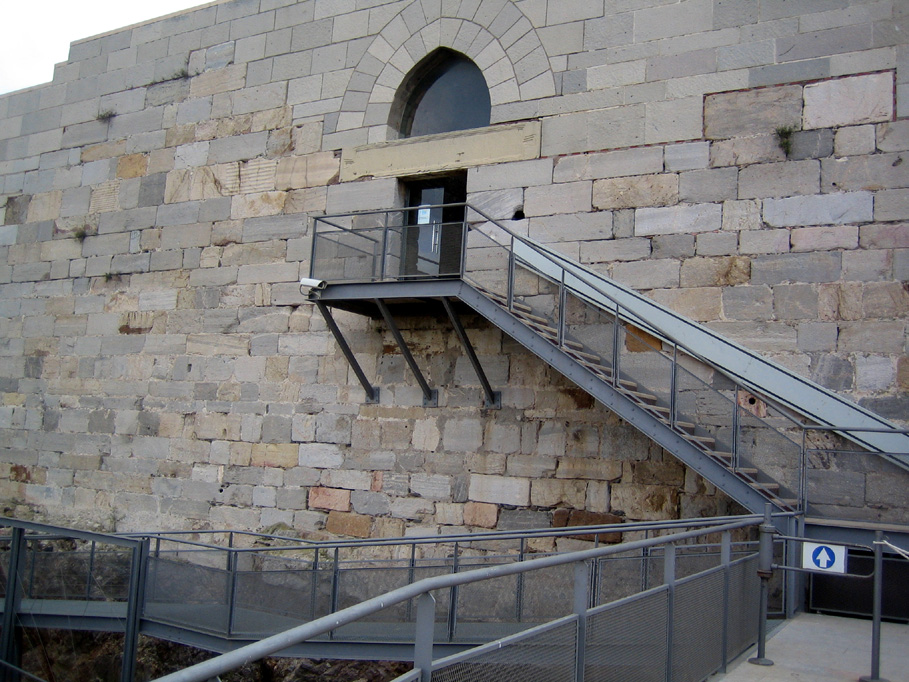
Fajardo Battery
Fajardo Battery, locally known as Cuartel Defensivo y Baterías General Fajardo, is a historic military fortification situated on a 94-meter-high hill overlooking the bay of Cartagena in the Region of Murcia, Spain. This battery forms part of the extensive coastal defense system that protected one of Spain's most strategic naval ports from the 18th century onwards.
The strategic significance of Cartagena and early fortifications
Cartagena was founded in the 3rd century BC by the Carthaginian general Hasdrubal the Fair at the site of a natural harbor. Its location made it a vital naval base throughout history, especially during the 16th century when it became one of Spain's most important naval ports. The city's defenses evolved over centuries, with a particular emphasis in the 18th century when numerous forts and batteries were constructed on the surrounding hills and mountains to guard the harbor.
The earliest military activity on the hill where Fajardo Battery now stands dates back to the third quarter of the 18th century. During the construction of the nearby Galeras Fort to the north, three small batteries were established on this hill. However, once Galeras Fort was completed, these initial batteries were abandoned and fell into disuse.
Construction and design of Fajardo Battery
In response to a 1860 Defense Plan aimed at modernizing Cartagena's defenses, military engineers identified the need for a new fortification on this hill. The Fajardo Battery was subsequently constructed in the later 19th century to address these strategic requirements. The battery was designed not only as a gun emplacement but also included defensive barracks to accommodate and protect the soldiers stationed there.
The battery's design reflected the military engineering principles of the time, emphasizing robust stone and masonry walls, artillery platforms, and defensive features to withstand bombardment. It was initially equipped with artillery pieces suitable for coastal defense, intended to cover the approaches to Cartagena's harbor.
Modernization and armament upgrades
Rapid advances in military technology during the late 19th century soon rendered the original armament of Fajardo Battery obsolete. Recognizing this, the battery underwent significant reforms just before the turn of the 20th century. It was rearmed with two howitzers and 16 cannons, enhancing its firepower and capability to defend against naval threats.
Despite these upgrades, the battery's role remained limited compared to larger fortifications in the area. Its position complemented the network of defenses that included other forts and batteries such as Navidad Fort, located to the east below the hill.
Role during the Spanish Civil War and decline
During the Spanish Civil War in the 1930s, Fajardo Battery saw limited military action. While it did not play a major role in the conflict, its presence contributed to the overall defensive posture of Cartagena, which was a key naval base during the war.
Following the war, the battery's military importance steadily declined. By 1960, the last of its howitzers were removed, and the battery was relegated to use as an ammunition storage facility. This marked the beginning of its gradual abandonment.
In 1994, the battery was completely abandoned and quickly fell into a state of ruin. Despite this, many of its structural elements, including the barracks and artillery platforms, remain visible and accessible.
Current condition and visitor experience
Today, Fajardo Battery is freely accessible to the public. Although the hill is officially designated as a military area, there are no restrictions preventing visitors from exploring the site. The battery's defensive barracks and fortifications offer a fascinating glimpse into 19th-century military architecture and coastal defense strategies.
The site is popular among history enthusiasts and visitors interested in military heritage. The battery's elevated position provides impressive views over Cartagena's harbor and surrounding landscape. Nearby, the Navidad Fort adds to the historical context of the area's extensive fortification network.
Architectural features and layout
The battery's layout includes multiple artillery platforms arranged to maximize coverage of the bay approaches. The defensive barracks are notable for their sturdy construction and functional design, providing shelter and protection for the garrison. The walls and parapets incorporate embrasures for cannon firing, and the overall design reflects the transition from traditional bastioned fortifications to more modern artillery emplacements.
Significance in Spanish naval defense
Fajardo Battery represents a key phase in the evolution of coastal defenses protecting one of Spain's principal naval ports. Its construction and subsequent modernization illustrate the challenges faced by military engineers in adapting to rapid technological changes in artillery and naval warfare during the 19th century.
While overshadowed by larger forts, the battery's role in the layered defense system of Cartagena contributed to the security of the Spanish Navy's Mediterranean fleet, which remains headquartered in the city today.
Frequently asked questions (FAQ)
- How do I get to Fajardo Battery in Cartagena?
- Fajardo Battery is located on a hill near the bay of Cartagena, accessible via Pasaje Faro Navidad. Visitors can reach it by car or on foot from the city center.
- What is the historical significance of Fajardo Battery?
- Fajardo Battery was built in the 19th century as part of Cartagena's coastal defenses, playing a role in protecting one of Spain's key naval ports.
- Can I explore Fajardo Battery freely?
- Yes, the battery is freely accessible to the public despite being in a designated military area. Visitors can explore the ruins and defensive barracks at their leisure.
- When was Fajardo Battery built and modernized?
- Construction began following the 1860 Defense Plan, with the battery built in the late 19th century and modernized at the turn of the 20th century with new artillery.
- What remains of Fajardo Battery today?
- Today, visitors can see the ruins of the defensive barracks, artillery platforms, and walls, offering insight into 19th-century military architecture.
Information
Address
Pasaje Faro Navidad, Spain
Loading map...
Visitor reviews
No reviews yet. Been here? Write the first review and help other travelers!
Write the first reviewVisited this castle? Share your experience
Your review helps other travelers and adds first-hand knowledge to our encyclopedia.