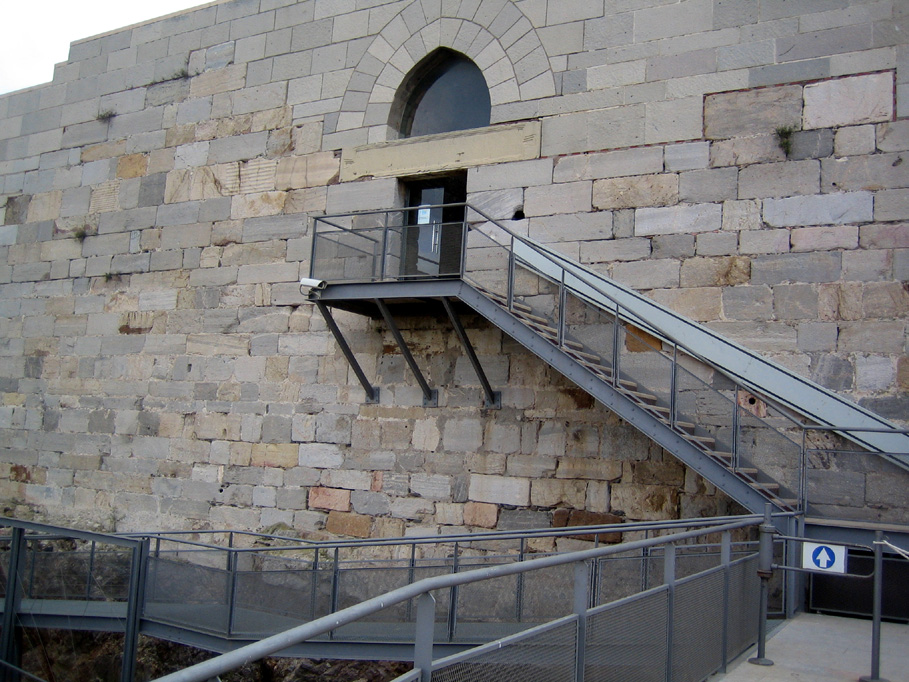
Navidad Fort, locally known as Fuerte de Navidad, is a historic coastal fortress situated on a hill overlooking the harbor of Cartagena in the Region of Murcia, Spain. This strategic location has long been significant due to Cartagena's natural harbor, which was originally founded in the 3rd century BC by the Carthaginian general Hasdrubal the Fair. Cartagena quickly developed into a vital naval port, and by the 16th century, it was recognized as one of Spain's most important maritime strongholds.
Historical context and strategic importance
The city's harbor has been a focal point of military and naval activity for centuries. During the 18th century, extensive fortifications were constructed around Cartagena to defend against naval threats, with numerous forts and batteries established on the surrounding hills and mountains. The harbor remains the headquarters and main military port for the Spanish Navy, including a significant submarine base and a large military shipyard.
Construction and architectural evolution
17th-century origins
Navidad Fort was originally built in the late 17th century near the entrance of Cartagena's harbor. Its primary purpose was to protect the naval port from potential attacks, particularly from the French fleet, which posed a significant threat during that period. The fort's location on a hill provided commanding views of the sea and approaching vessels, making it a crucial defensive installation.
18th-century renovations
In 1740, the fort underwent significant reinforcement and modernization under the direction of the military engineer Estéban de Panón. This renovation integrated Navidad Fort more fully into the city's defensive network, enhancing its structural integrity and artillery capabilities to meet evolving military needs.
19th-century modernization
By 1860, further studies by military engineers highlighted the need to update Cartagena's defenses to keep pace with advancements in military technology. Consequently, Navidad Fort was rebuilt into a casemated angular structure, a design that provided better protection for its artillery and garrison. The fort was equipped with eight cannons, reflecting its continued importance in coastal defense.
Role during the Cantonal Revolution
During the Cantonal Revolution of 1873-74, an anarchistic uprising against the First Spanish Republic, Navidad Fort was seized by cantonalist rebels. They renamed it Juan Bravo Fort and armed it with two cannons and a mortar. The fort housed a garrison of approximately 38 men during this turbulent period, serving as a rebel stronghold in the defense of Cartagena.
Decline and later use
At the dawn of the 20th century, improvements in military technology rendered many traditional coastal fortifications obsolete, including Navidad Fort. Its military significance diminished, and it was relegated primarily to ceremonial use, such as firing cannon salutes during official events.
Restoration and museum conversion
Between 2004 and 2005, Navidad Fort underwent restoration to preserve its historical fabric and adapt it for public visitation. It was transformed into a small museum, offering visitors insights into the fort's history, architecture, and role in Cartagena's maritime defense. The fort's interior and artillery placements are now interpreted for educational purposes.
Adjacent historical structures
Close to Navidad Fort, positioned slightly higher on the hill, stands a ruined hexagonal watchtower dating back to the 16th century. This watchtower once formed part of the broader coastal defense system, providing early warning of approaching ships. Although largely in ruins, it remains a visible reminder of the area's layered military history.
Visiting Navidad Fort
Today, Navidad Fort is accessible to the public for a modest fee. Visitors can explore the fort's well-preserved structures, learn about its historical significance, and enjoy panoramic views of Cartagena's harbor. The site serves as a tangible link to Spain's naval heritage and the evolution of coastal fortifications over several centuries.
Frequently asked questions (FAQ)
- What is the historical significance of Navidad Fort?
- Navidad Fort, located in Cartagena, Spain, is a crucial part of the city's military history. Built in the 17th century, it served as a defensive structure to protect the harbor from piracy and invasion, showcasing the strategic importance of Cartagena during that period.
- When was Navidad Fort constructed?
- Navidad Fort was constructed in the late 17th century, specifically between 1693 and 1701. It was part of a larger series of fortifications designed to safeguard the city and its vital maritime routes.
- What are the opening hours for Navidad Fort?
- Navidad Fort is typically open to visitors from 10 AM to 6 PM, although hours may vary seasonally. It is advisable to check the official website for any changes in hours or special events before your visit.
- Can I access Navidad Fort with a wheelchair?
- Navidad Fort has limited accessibility for visitors with mobility challenges. While some areas may be accessible, it's recommended to contact the fort in advance to inquire about specific accommodations and the best routes to take.
- What is the best time to visit Navidad Fort?
- The best time to visit Navidad Fort is during the spring or early fall when the weather is mild and pleasant. These seasons typically offer fewer crowds, allowing for a more enjoyable exploration of the fort and its surroundings.
- Are there any nearby attractions to visit along with Navidad Fort?
- Yes, near Navidad Fort, visitors can explore the historic city of Cartagena, which features other significant landmarks such as the Roman Theatre and the Cartagena Naval Museum. The coastal views and vibrant local culture make for a well-rounded visit.
- How much are the ticket prices for Navidad Fort?
- Ticket prices for Navidad Fort are generally affordable, with discounts available for students and seniors. It's a good idea to check the official website for current pricing and any special promotions before planning your visit.
Information
Address
Pasaje Faro Navidad 2, Spain
Loading map...
Visitor reviews
No reviews yet. Been here? Write the first review and help other travelers!
Write the first reviewVisited this castle? Share your experience
Your review helps other travelers and adds first-hand knowledge to our encyclopedia.