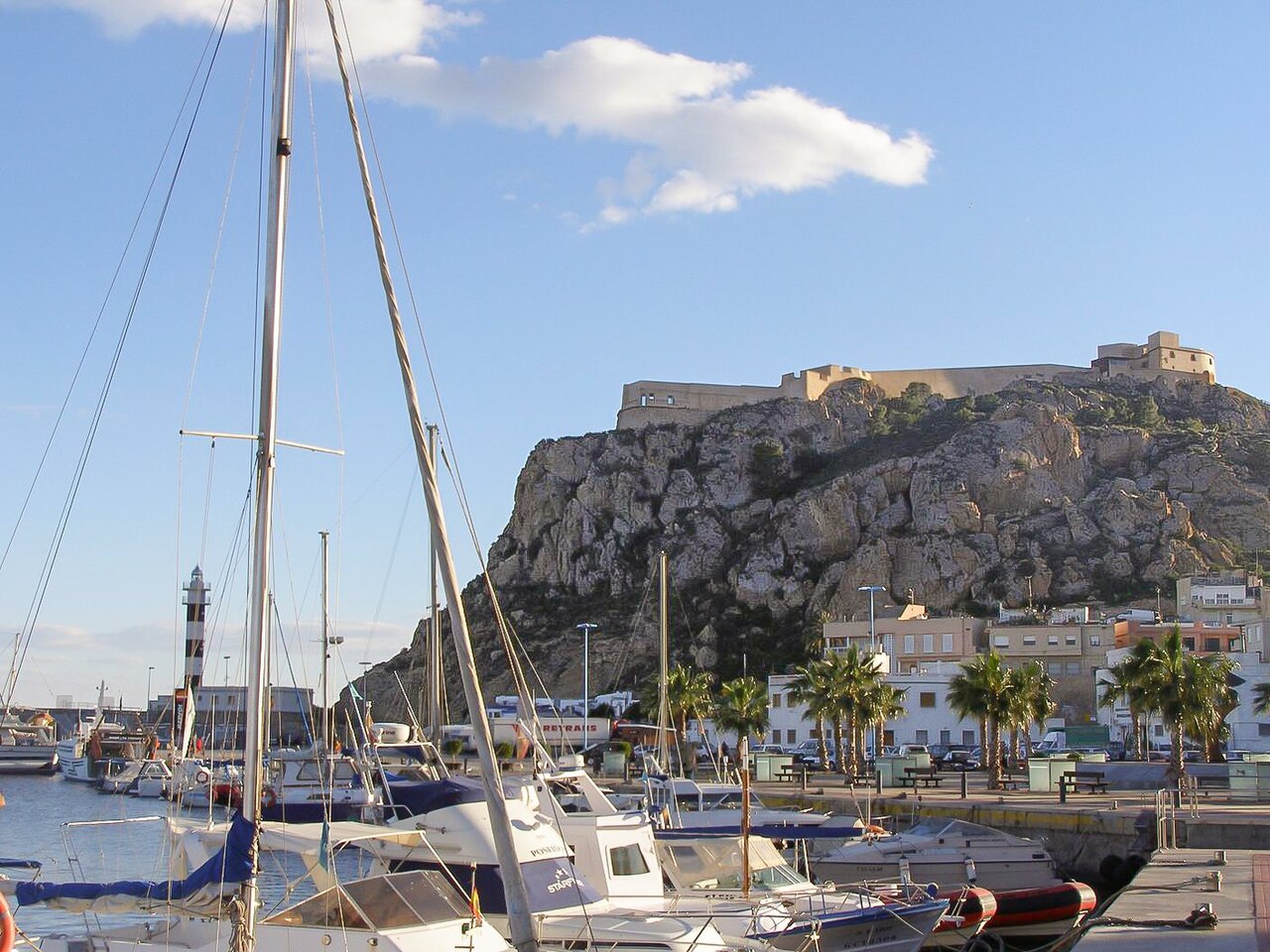
San Juan Castle
San Juan Castle, also known as Castillo de San Juan de los Terreros, is a notable example of 18th-century Spanish coastal military architecture, strategically perched on a hill overlooking the Mediterranean Sea near the town of San Juan de los Terreros in the province of Almería, Spain. This fortress was constructed between 1760 and 1764 during the reign of King Charles III of Spain, reflecting the broader Spanish Crown initiative to strengthen coastal defenses against maritime threats, including piracy and potential naval invasions.
Historical context and strategic importance
The castle's location on a prominent hill provided commanding views of the surrounding coastline and sea approaches, making it an ideal site for surveillance and defense. The region of Almería, with its extensive Mediterranean coastline, was vulnerable to attacks during the turbulent 18th century, prompting the Spanish monarchy to invest in a network of fortifications to protect key harbors and settlements.
San Juan Castle was part of this defensive network, serving as an artillery fortification designed to control and repel hostile naval forces. Its role was primarily military, focusing on coastal defense rather than administrative or residential functions.
Design and architectural features
The initial design of the castle was drafted by the French engineer Thomas de Warluzel d'Hostel, whose plans were subsequently revised and finalized by the Spanish military architect Antonio Duce Oliveros in 1764. The castle exhibits a distinctive horseshoe-shaped layout, a form well-suited to artillery defense, allowing for optimal placement of cannon batteries to cover the sea approaches.
The fortress incorporates a hornwork-shaped layout, characterized by a front defensive wall flanked by two semicircular bastions. These bastions provided overlapping fields of fire, enhancing the fort's ability to defend against naval and land-based attacks. The walls were constructed using finely cut ashlar masonry, demonstrating the quality and durability of 18th-century military construction techniques.
One notable architectural feature is the use of sloped walls (talud), a defensive design element intended to deflect incoming projectiles and prevent undermining of the fortifications. The external walls also feature a distinctive molding known as bocel, which adds to the robustness and aesthetic of the structure.
The castle has a limited number of openings, consistent with its defensive purpose, allowing for surveillance and the firing of artillery while minimizing vulnerabilities. The fortress was connected by a protected walkway to an additional battery located at the opposite end of the ridge, extending the defensive coverage of the site.
Historical events and later use
Throughout its active military use, San Juan Castle played a key role in the protection of the local coastline. In 1823, during the conflicts between royalists and constitutionalists in Spain, the castle changed hands without engaging in combat, which spared it from battle damage. However, in subsequent decades, the castle fell into neglect and abandonment.
By the late 20th century, the fortress was largely in ruins. Recognizing its historical and cultural value, restoration efforts were undertaken in recent decades to rebuild and preserve the structure. Today, San Juan Castle has been restored and adapted to house a small museum, offering visitors insight into its military history and architectural significance.
Current condition and visitor experience
San Juan Castle is currently restored and open to the public for a fee. Its elevated position continues to provide visitors with spectacular views of the Mediterranean coastline and the surrounding natural landscape. The museum within the castle offers educational exhibits on the fortress's history, military architecture, and the broader context of 18th-century coastal defenses in Spain.
The castle's location and design make it a popular destination for history enthusiasts and tourists seeking to explore Spain's military heritage. The combination of well-preserved 18th-century fortifications, scenic vistas, and cultural significance ensures that San Juan Castle remains an important landmark in the region.
Architectural significance and heritage protection
San Juan Castle stands as a well-preserved example of 18th-century military engineering adapted to coastal defense. Its horseshoe-shaped and hornwork design reflect contemporary advances in fortification suited to artillery warfare. The use of ashlar masonry, talud walls, and bastions illustrate the application of Spanish military architectural principles of the period.
Recognized as a site of cultural heritage, the castle is protected under Spanish law, ensuring the preservation of its structural integrity and historical context. The protected perimeter around the hill is legally established, maintaining the castle's setting and safeguarding its viewshed.
Frequently asked questions (FAQ)
- What is the historical significance of San Juan Castle?
- San Juan Castle, located in San Juan de los Terreros, is a 16th-century fortress built to defend the coastline against pirate attacks. It represents the military architecture of the period and is an important cultural monument that reflects the history of coastal defense in Spain.
- When was San Juan Castle built?
- San Juan Castle was constructed in 1576 and completed in the early 17th century. Its strategic location was chosen to provide a panoramic view of the Mediterranean Sea, enabling early detection of potential threats.
- What are the opening hours for visiting San Juan Castle?
- San Juan Castle is open to visitors from 10:00 AM to 6:00 PM daily, although hours may vary seasonally. It is advisable to check the official website or local tourism information for any changes in hours before planning your visit.
- Is it possible to access San Juan Castle with mobility challenges?
- San Juan Castle has some accessibility features, but due to its historical nature, some areas may be challenging for visitors with mobility difficulties. It's recommended to contact the castle management ahead of your visit to inquire about specific accommodations.
- Can I purchase tickets in advance for San Juan Castle?
- Yes, tickets for San Juan Castle can be purchased in advance through the official website or at local tourism offices. Buying tickets ahead of time can help ensure your entry, especially during peak tourist seasons.
- What is the best time to visit San Juan Castle?
- The best time to visit San Juan Castle is during the spring and early fall when the weather is mild and comfortable for exploring. Additionally, these seasons tend to attract fewer crowds compared to the summer months.
- What nearby attractions can I visit while at San Juan Castle?
- While visiting San Juan Castle, you can explore the beautiful beaches of San Juan de los Terreros and the nearby picturesque town. Other attractions include the natural parks and hiking trails in the surrounding area, which offer stunning coastal views.
- How do I get to San Juan Castle?
- San Juan Castle is easily accessible by car, located just off the main road in San Juan de los Terreros. Public transport options are also available, with local buses connecting to larger cities in the region.
Information
Website
Visit websiteSources & official resources
Verify the information above using these authoritative references.
Loading map...
Visitor reviews
No reviews yet. Been here? Write the first review and help other travelers!
Write the first reviewVisited this castle? Share your experience
Your review helps other travelers and adds first-hand knowledge to our encyclopedia.