Castillo de San Juan Bautista
The Castillo de San Juan Bautista stands as a monumental testament to the military architecture and coastal defense strategy of 17th-century Spain. Located in the heart of Santa Cruz de Tenerife, this hill castle was the second most important fortification protecting the city, playing a crucial role in the island's defense system during a turbulent period marked by European conflicts and colonial rivalries.
Constructed between 1641 and 1643, the castle was commissioned in response to the geopolitical upheavals of the early 1600s, including the Portuguese revolution of 1640 and the Catalan revolt, which heightened the vulnerability of the Canary Islands. The fort's strategic position near the coastline allowed it to guard the harbor of Santa Cruz effectively, complementing other defensive structures in the region.
Historical context and construction
The initiative to build the Castillo de San Juan Bautista was spearheaded by the Spanish military authorities to strengthen the island's defenses against potential naval incursions. The project was overseen by Sergeant Major Juan Fernández Franco, who ensured the fortification's robust design and timely completion within two years.
Financing for the construction was secured through levies imposed on the local population by Captain General Luis Fernández de Córdoba y Arce, reflecting the importance of the castle to the island's security and the communal effort involved in its establishment.
Architectural features and design
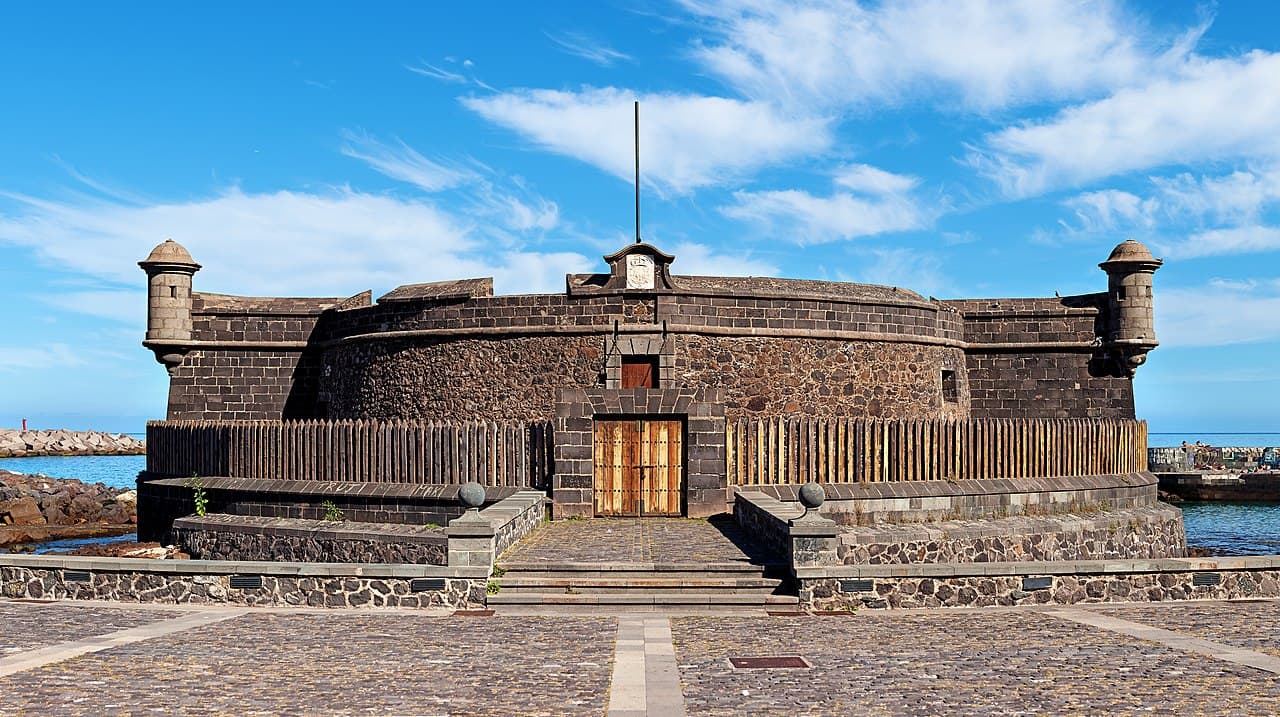
The castle exemplifies Renaissance military architecture adapted to the specific needs of coastal defense. Its layout is characterized by a compact, functional design focused on durability and effective artillery deployment.
Circular tower and artillery emplacements
One of the castle's most distinctive elements is its circular tower facing the sea, added during renovations in 1765 to reinforce the seaward defenses. This tower enhanced the fort's ability to monitor and repel naval threats, serving as a key vantage point for artillery.
The castle's open esplanade is surrounded by parapets equipped with embrasures designed to hold up to five artillery pieces. These gun ports allowed defenders to deliver effective crossfire across the harbor approach, a critical feature during sieges and naval battles.
Vaulted chambers and fortifications
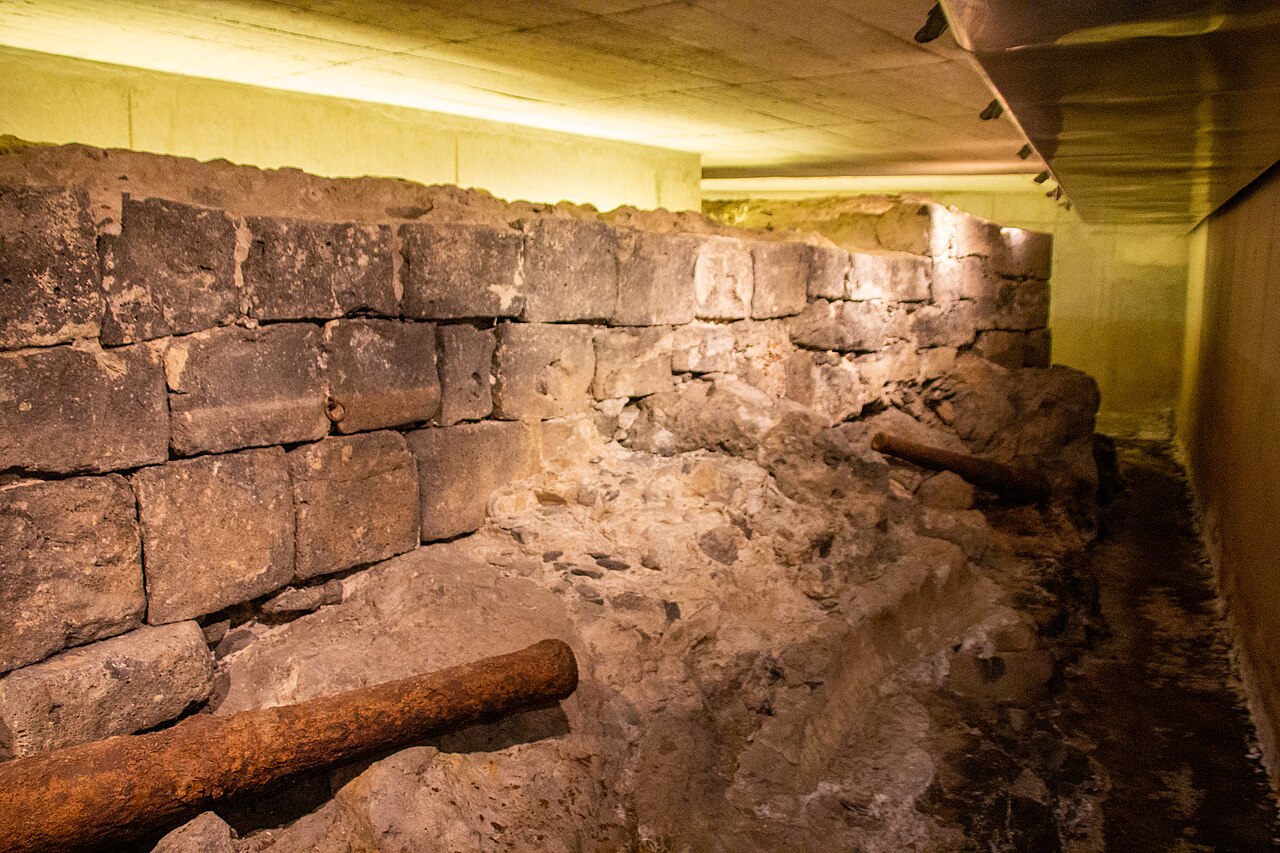
Beneath the esplanade lie two vaulted chambers constructed with thick masonry walls approximately 1.5 meters wide. Covering an area of about 47 square meters, these chambers likely served as storage for munitions and supplies, as well as shelter for the garrison during attacks.
Role in the battle of santa cruz de tenerife, 1797
The Castillo de San Juan Bautista gained historical prominence during the Battle of Santa Cruz de Tenerife on 25 July 1797, when British forces under Admiral Horatio Nelson attempted an invasion of the island. The fort's artillery and strategic position were instrumental in repelling the assault, a victory that remains a celebrated moment in Canarian history.
Each year, a re-enactment of the battle is held in July near the castle, commemorating the successful defense against Nelson's fleet and reinforcing the site's cultural significance.
Administration and later use
In 1684, King Charles II granted the local governing body, the Cabildo de Tenerife, the authority to appoint the castle's governor. This role was typically held by members of the nobility and came with various privileges, including oversight of health services, port regulation, fishing rights, maritime control, conflict mediation, correspondence, and taxation on goods like salt and flour.
The castle remained an active military installation until 1924. Afterward, it transitioned from a defensive fortress to a cultural site, becoming a military museum in 1948. Its designation as a Cultural Interest Asset with Monument status in 1993 underscores its enduring importance to the heritage of Santa Cruz de Tenerife.
Location and preservation
Situated near the coastline behind the modern Auditorio de Tenerife and adjacent to the small cove known as Caleta de los Negros, the castle occupies a flat coastal terrain approximately six meters above sea level. The surrounding landscape features the dramatic backdrop of mountainous terrain inland, enhancing the strategic value of the site.
The fort's current appearance largely reflects the renovations from the 18th century, which addressed structural issues and adapted the castle to evolving military needs. It remains well-preserved, retaining the integrity of its original defensive features without ornamental embellishments, consistent with its utilitarian military function.
Cultural significance and visitor experience
The Castillo de San Juan Bautista is not only a monument of military architecture but also a symbol of the resilience and historical identity of Santa Cruz de Tenerife. Its preservation allows visitors to explore a key chapter in the island's history, including the dramatic events of the late 18th century.
Visitors can appreciate the castle's robust Renaissance fortifications, the imposing circular tower, and the strategic vantage points overlooking the harbor. The annual Battle of Santa Cruz de Tenerife reenactment offers a vivid, immersive experience of the site's historical significance.
The castle's location, close to other cultural landmarks such as the Auditorio de Tenerife, makes it an accessible and enriching destination for those interested in military history, architecture, and Canarian heritage.
Frequently asked questions (FAQ)
- When was the Castillo de San Juan Bautista built?
- The Castillo de San Juan Bautista was constructed between 1641 and 1643, during the early 17th century as part of Spain's coastal defense strategy.
- What role did the castle play in the Battle of Santa Cruz de Tenerife?
- The castle played a crucial role in repelling the British naval assault led by Admiral Horatio Nelson on July 25, 1797, helping to protect the island from invasion.
- Can visitors see reenactments of historical battles at the castle?
- Yes, each July, a reenactment of the Battle of Santa Cruz de Tenerife takes place near the castle, commemorating the failed British invasion attempt.
- What architectural features make the castle significant?
- The castle features a distinctive circular tower added in 1765, thick masonry vaulted chambers, an open esplanade with artillery embrasures, all exemplifying Renaissance military architecture.
- Is the castle accessible to the public?
- The Castillo de San Juan Bautista is located in the city center near the Auditorio de Tenerife and is accessible to visitors interested in history and architecture.
Photo gallery

Information
Website
Visit websiteSources & official resources
Verify the information above using these authoritative references.
Loading map...
Visitor reviews
No reviews yet. Been here? Write the first review and help other travelers!
Write the first reviewVisited this castle? Share your experience
Your review helps other travelers and adds first-hand knowledge to our encyclopedia.