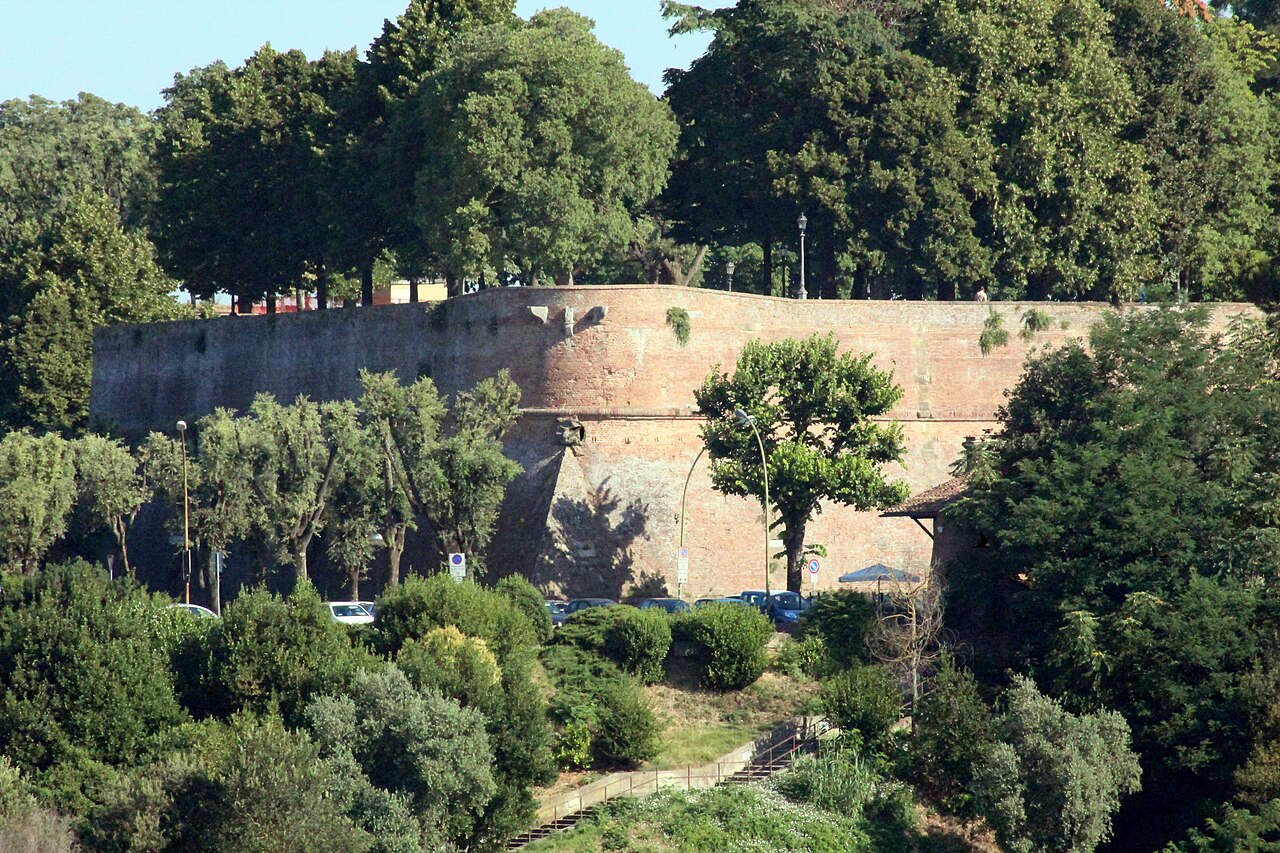
San Fabiano Castle
San Fabiano Castle stands as a remarkable example of medieval fortification in the Tuscan countryside, located in the municipality of Monteroni d’Arbia, Italy. This hill castle is deeply rooted in history, with origins that extend back to the early medieval period, centered around the church of San Fabiano, which dates to 867 AD. The church itself honors Pope Fabian, an early Christian martyr who was executed in the Roman Coliseum, underscoring the site's religious and cultural significance that predates the castle’s military function.
The earliest documentary evidence of the site appears in a charter from 867 AD, describing the area as a curtis—a type of rural estate—granted by Count of Siena Guinigi to the monastery of San Salvatore at Fontebona. This ecclesiastical ownership highlights the medieval intertwining of religious and feudal power. Over the centuries, a village gradually developed adjacent to the estate, evolving into a small free commune by the 13th century with administrative autonomy, reflecting the dynamic social structures of medieval Tuscany.
Medieval origins and architectural features
The castle’s primary construction phase dates to the 13th century, attributed to King Charles of Anjou. The fortified complex is dominated by the torrione, a tall rectangular tower that remains the oldest surviving structure. This tower is architecturally significant for its decorative elements, including blind trilobed arches supported by corbels shaped like inverted pyramids, a distinctive feature of medieval Tuscan military architecture. Above these arches, a series of lowered-arch windows beneath a hipped roof provide light and defensive vantage points.
The tower’s walls are embellished with perlatura brickwork, a beaded pattern that adds ornamental texture to the masonry, demonstrating the blend of functional fortification and aesthetic consideration typical of the period. Surrounding the main tower is a larger building with limited fenestration; the few windows are originally arched, emphasizing defense over comfort.
Adjoining this main structure is a lower building with a battered base—a sloping wall design that strengthens fortifications against siege weaponry—and a smaller corner tower of uncertain age, which may have been added in subsequent phases of construction. The castle’s defensive perimeter is further reinforced by two small towers added in the 18th century, reflecting later modifications to the medieval fortress.
The castle’s layout and estate functions
Within the fortified enclosure, a courtyard contains a well, essential for water supply during sieges, and a portico—a covered walkway used for both practical and social purposes. Extending at right angles from the main building is a secondary structure historically used as a stable and warehouse, underscoring the castle’s role as a center of agricultural production and estate management.
The surrounding grounds include a spacious lawn adorned with potted lemon trees, and on the southern side, gardens feature a clearing with a loggia, an open-air gallery, along with a terrace and external staircase. These landscaped areas are enclosed by boxwood hedges and flanked by cypresses and other trees, maintaining the historic agrarian character of the estate.
Historical ownership and social transformations
By the 15th century, ownership of San Fabiano Castle passed to the influential Forteguerri family, who retained possession for several centuries. Throughout its history, the castle and its lands served multiple functions, including agricultural production and livestock breeding. In the 20th century, the estate operated on a large scale, producing wine and raising the renowned Chianina cattle, a breed native to the region, alongside other farm animals.
A major social transformation occurred in 1963 with the abolition of the mezzadria system, a traditional tenant farming arrangement. This reform led to the abandonment of approximately 25 farmhouses clustered around the castle, which remained unoccupied for about three decades. The estate also hosted a cigar manufacturing operation known as Kentucky Tuscan Cigars during the mid-20th century; this factory closed in the 1970s following changes in import laws affecting the tobacco industry.
The agricultural village and continuity of settlement
To the north of the castle lies the agricultural village that developed around the church of San Fabiano, preserving the historical connection between the religious site and the fortified estate. This spatial relationship illustrates a continuity of settlement and land use from the early medieval period through modern times, reflecting the enduring cultural landscape of this part of Tuscany.
Today, San Fabiano Castle remains a significant cultural and architectural landmark, embodying the layered history of medieval fortification, agricultural estate management, and social change in rural Italy. Its well-preserved structures and surrounding landscape offer valuable insights into the region's historical development and the evolution of castle architecture in Tuscany.
Frequently asked questions (FAQ)
- What are the opening hours for San Fabiano Castle?
- San Fabiano Castle is open to visitors from 10 AM to 5 PM, Tuesday through Sunday. It is closed on Mondays and public holidays. It’s advisable to check the official website for any seasonal changes in hours or special events.
- Can I take guided tours of San Fabiano Castle?
- Yes, guided tours are available at San Fabiano Castle. These tours provide visitors with rich insights into the history and architecture of the castle, making it a more enriching experience. It is recommended to book in advance, especially during peak tourist seasons.
- When was San Fabiano Castle built?
- San Fabiano Castle was originally constructed in the 12th century, serving as a fortified estate. Over the centuries, it has undergone various renovations that reflect the architectural styles of different periods. The castle’s history is closely tied to the development of the surrounding region.
- Is it possible to access San Fabiano Castle with a wheelchair?
- San Fabiano Castle has made efforts to be accessible to all visitors. While some areas may have limited accessibility due to the castle's historic structure, there are ramps and designated paths for easier navigation. It’s best to contact the castle staff in advance to inquire about specific needs.
- What is the historical significance of San Fabiano Castle?
- San Fabiano Castle holds great historical significance as a defensive structure that played a crucial role in local conflicts. Its strategic location allowed it to serve as a lookout point and a refuge during turbulent times. Today, it stands as a testament to the rich history and heritage of Monteroni d’Arbia.
- What are the ticket prices for visiting San Fabiano Castle?
- Tickets for San Fabiano Castle are reasonably priced, with adults paying €8 and reduced rates for children and seniors. Group discounts are also available, making it an affordable option for families and educational trips. Check the official website for any special offers or package deals.
- What is the best time to visit San Fabiano Castle?
- The best time to visit San Fabiano Castle is during the spring and early fall when the weather is pleasant, and the surrounding landscapes are vibrant. These seasons offer comfortable temperatures for exploring the castle grounds and enjoying outdoor activities. Additionally, the castle tends to be less crowded during these times.
- Are there any nearby attractions to visit along with San Fabiano Castle?
- Yes, there are several nearby attractions to explore while visiting San Fabiano Castle. The charming town of Monteroni d’Arbia offers local shops and eateries, and the beautiful Val d'Orcia region is just a short drive away, famous for its stunning landscapes and vineyards. Consider planning a day trip to fully enjoy the area.
Information
Website
Visit websiteSources & official resources
Verify the information above using these authoritative references.
Loading map...
Visitor reviews
No reviews yet. Been here? Write the first review and help other travelers!
Write the first reviewVisited this castle? Share your experience
Your review helps other travelers and adds first-hand knowledge to our encyclopedia.