Castello di Leonina
Castello di Leonina stands as a remarkable example of medieval and Renaissance fortification architecture located in the municipality of Asciano, in the heart of Tuscany, Italy. This hill castle embodies centuries of historical evolution, reflecting the shifting military, social, and economic roles of fortified complexes in the region. Its strategic position on elevated terrain underscores its original defensive purpose, while its architectural features reveal adaptations through time, blending medieval robustness with Renaissance refinement.
The castle's origins date back to the medieval period, constructed by the Sienese as a fortified stronghold to assert and defend territorial claims. The early fortification was integral during regional conflicts, notably in 1234 when it was besieged amid the struggle between the Sienese and Orvieto forces. The siege inflicted severe damage, leading to the deliberate demolition of the original structure to allow for future redevelopment.
In the 15th century, a new castle was erected on the ruins, showcasing Renaissance architectural influences that signaled a transition from purely military functions to a more complex role that included residential and agricultural uses. This period marked the transformation of the castle into a fortified farmstead, adapting to the evolving socio-economic landscape of Tuscany.
Architectural features and layout
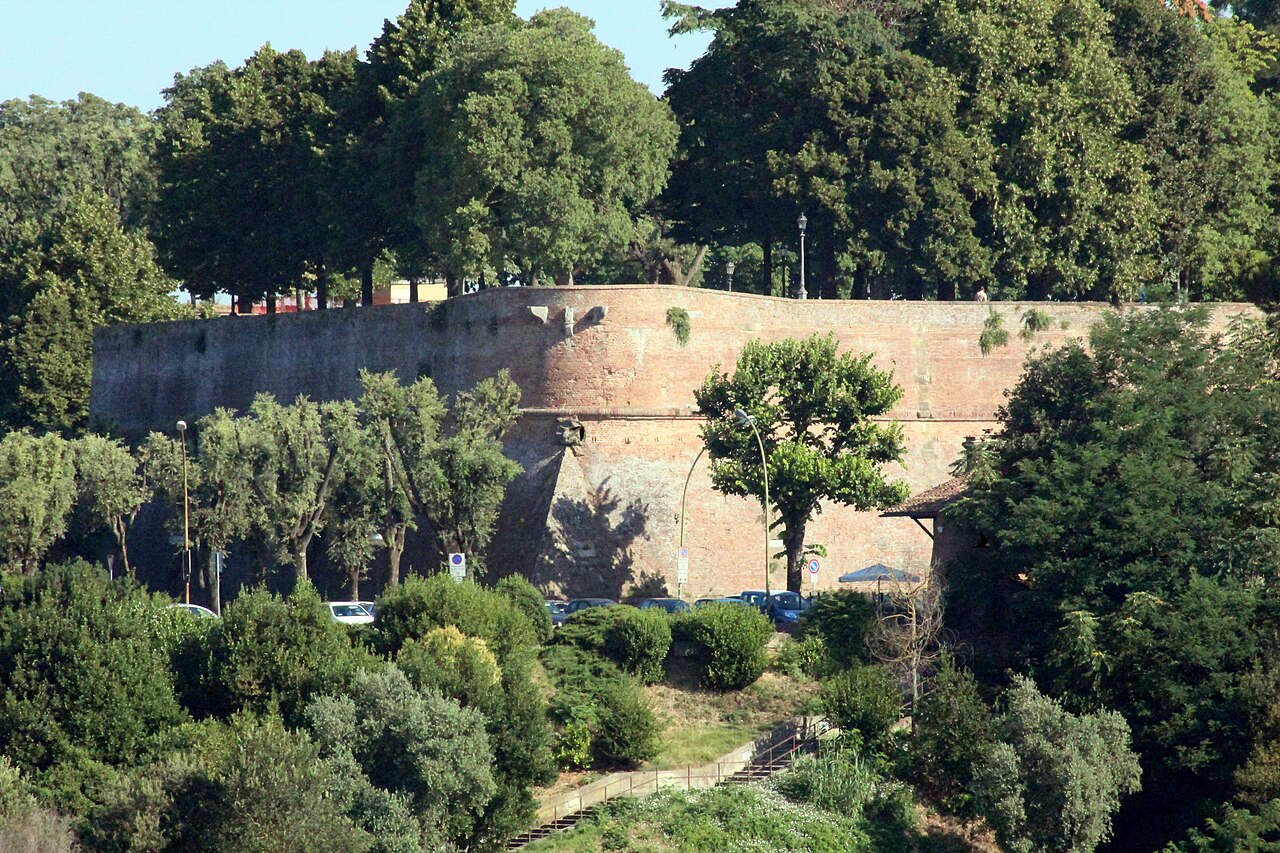
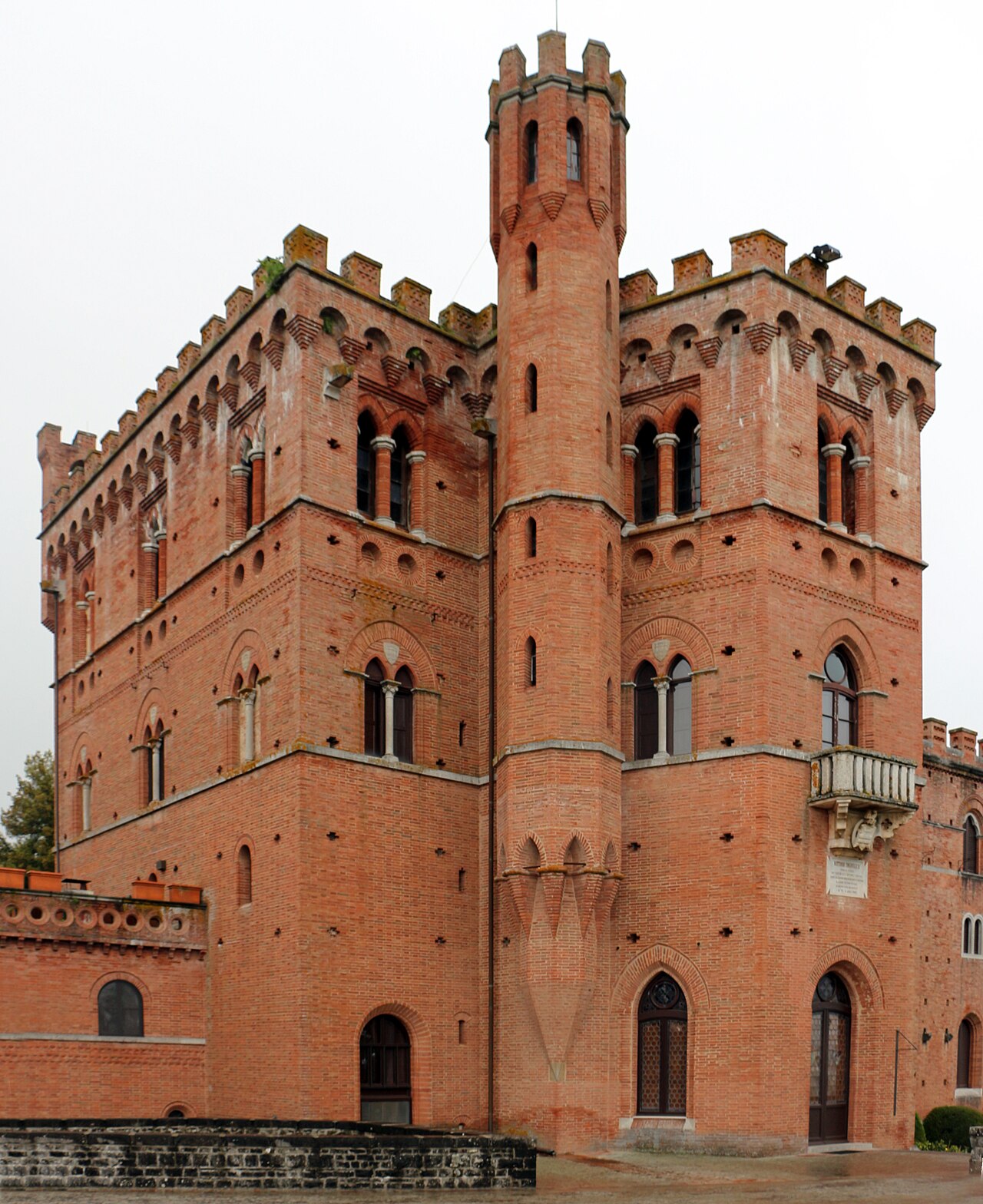
The castle exhibits a roughly quadrangular plan, predominantly constructed from brick, a material commonly used in Tuscan fortifications for its availability and durability. The complex is enclosed by curtain walls on the western and northern sides, which served as the primary defensive barriers. The main entrance is notably positioned on the northern wall, featuring a round arch portal crafted from travertine blocks, a characteristic limestone favored in the region’s historic architecture.
Each corner of the castle is fortified with square guard towers rising from battered bases. These sloped bases were designed to deflect attacks and enhance structural stability. Among these towers, the northeastern tower is distinguished by its greater height and robustness, suggesting it functioned as a key lookout point or a final defensive bastion.
The eastern side of the castle comprises a single elongated rectangular building that connects at its southwestern corner to the southern wing. The southern side houses the main residential building, which is quadrangular and taller than the surrounding structures. Its northern façade faces the inner courtyard and links to an adjacent building, highlighting its central role within the complex.
The courtyard and water supply system
Within the northwestern corner of the courtyard lies an octagonal well-cistern, a vital feature designed to collect and store rainwater for the castle’s daily needs. The well is entirely lined with travertine, emphasizing both functionality and aesthetic refinement. Flanking the well are two columns adorned with Corinthian capitals, a classical decorative motif characterized by acanthus leaves, which add an elegant touch to this practical installation.
Historical context and significance
The castle’s history is deeply intertwined with the regional power struggles of medieval Tuscany. Its initial construction by the Sienese was part of a broader strategy to control key territories and protect trade routes. The conflict with Orvieto in the early 13th century exemplifies the turbulent nature of the period and the importance of fortified sites like Castello di Leonina in these disputes.
Following its reconstruction in the Renaissance era, the castle’s role evolved to accommodate residential and agricultural functions, reflecting broader societal changes. The transformation into a fortified farmstead illustrates the decline of feudal warfare and the rise of estate-based economies in Tuscany.
Later history and restoration efforts
By the 20th century, Castello di Leonina had fallen into disuse and was largely abandoned. A 1994 census by the Siena and Grosseto authority responsible for architectural and landscape heritage documented the castle’s deteriorated state. Subsequently, extensive restoration work was undertaken, culminating in the castle’s reopening in 2003. This restoration preserved the castle’s historical and architectural integrity while repurposing it for contemporary uses beyond its original defensive function.
Adjacent religious architecture
Adjacent to the castle complex is the church of San Bartolomeo a Leonina, which historically served as the parish church for the castle and its surrounding community. This proximity underscores the close relationship between religious and secular life in medieval and Renaissance Tuscany, highlighting the castle’s role as a social as well as military center.
Cultural and heritage importance
Today, Castello di Leonina is recognized for its architectural significance and its embodiment of Tuscan history. Its preserved structures, including the defensive walls, towers, residential buildings, and the distinctive well-cistern, offer valuable insights into the region’s medieval and Renaissance heritage. The castle stands as a testament to the adaptive reuse of fortified sites and the enduring legacy of Tuscany’s historical landscape.
Visitors to Castello di Leonina can explore its well-preserved architectural features and appreciate the blend of military and residential design elements. The site’s restoration has made it accessible for educational and cultural purposes, fostering a deeper understanding of the historical developments that shaped this part of Italy.
Frequently asked questions (FAQ)
- How do I get to Castello di Leonina?
- Castello di Leonina is located in Asciano, Tuscany. It is accessible by car via regional roads and is a short drive from Siena. Public transportation options may be limited, so driving or taxi is recommended.
- What is the historical significance of Castello di Leonina?
- The castle played a key role in medieval regional conflicts, particularly between Siena and Orvieto in the 13th century. Its Renaissance reconstruction reflects the transition from military fortress to fortified farmstead.
- Can I visit the interior of Castello di Leonina?
- Yes, the castle has been restored and is open to visitors. Guided tours are often available, showcasing its architectural features and historical exhibits.
- When is the best time to visit Castello di Leonina?
- The castle is open daily from 10:00 to 18:00. Spring and autumn offer pleasant weather and fewer crowds, making these seasons ideal for visits.
- Is Castello di Leonina suitable for families?
- Yes, the castle is family-friendly with spacious courtyards and educational tours that engage visitors of all ages.
Information
Opening hours
10:00-18:00, daily
Ticket prices
Varies by event or tour
Current owner
Municipality
Website
Visit websiteSources & official resources
Verify the information above using these authoritative references.
Loading map...
Visitor reviews
No reviews yet. Been here? Write the first review and help other travelers!
Write the first reviewVisited this castle? Share your experience
Your review helps other travelers and adds first-hand knowledge to our encyclopedia.