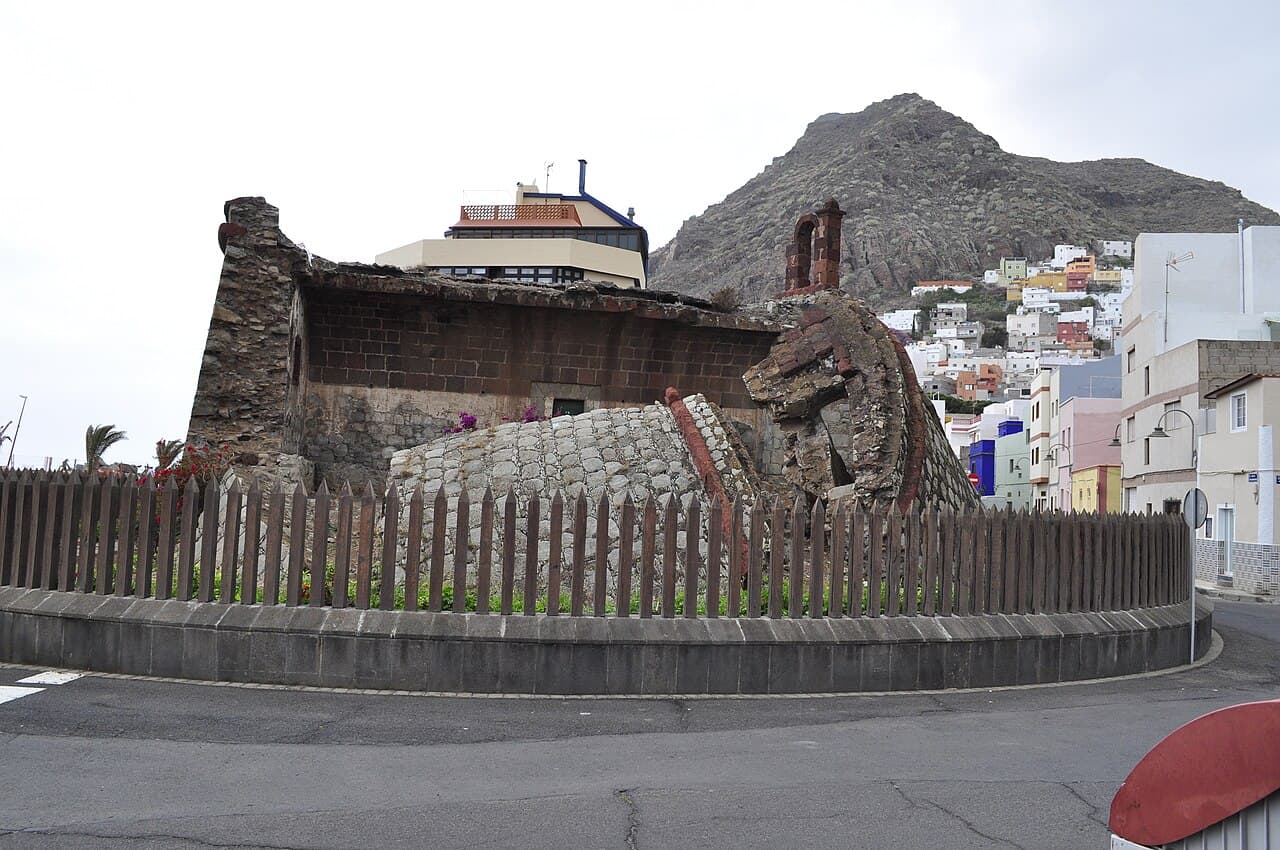
San Andrés Castle
San Andrés Castle, located in the town of San Andrés within the municipality of Santa Cruz de Tenerife in Spain, stands as a significant example of coastal military architecture from the early 18th century. This fortress was constructed as part of a broader defensive network designed to protect the Canary Islands from frequent pirate attacks and naval threats during a turbulent period in Spanish maritime history.
The castle's origins trace back to 1706, when Captain General Agustín de Robles y Lorenzana commissioned its construction to safeguard the strategic Valle de Salazar and its adjacent beach. The initial design and erection of the fortress were entrusted to the engineer Miguel Tiburcio Rossel. The primary purpose of the castle was to serve as a protective outpost for ships seeking refuge and to prevent enemy vessels from gaining advantageous positions to assault nearby forts such as Paso Alto and San Miguel.
Architectural design and construction
San Andrés Castle is characterized by its distinctive circular tower design, a common feature in coastal fortifications of the Canary Islands during this era. The structure was predominantly built from green diorite, a volcanic stone quarried locally in the Valle de San Andrés. This robust material provided both durability and resilience against the harsh marine environment.
Decorative elements crafted from reddish volcanic stone accentuate the fortress, including a perimeter band at the top of the tower, a bell gable, and certain vaulted stones. These details highlight the blend of functionality and aesthetic consideration in the castle's construction.
The tower originally stood surrounded by a moat and was accessed via a wooden drawbridge made from tea wood and secured with bronze nails. The entrance still bears a commemorative plaque honoring the late 18th-century reconstruction led by engineer Alfonso Ochando.
Interior features
The castle's interior includes vaulted ceilings on the lower floor, which housed the gunpowder storage. Additional vaulted chambers on the southern side accommodated the commander and a garrison of up to fifty soldiers. A crucial feature was the cistern capable of holding nearly twelve cubic meters of rainwater, essential for sustaining the occupants during sieges or periods of isolation.
The upper floor was an open-air stone-paved platform equipped with artillery. By 1788, the fortress was armed with five cannons, and at its peak, it possessed a diverse arsenal including culverins (long cannons), other artillery pieces, lanadas (types of guns), iron weapons such as the sacatrapos, cannonballs, and gunpowder supplies. This armament reflects the military needs and strategic importance of the castle within the island's defensive system.
Historical significance and military role
San Andrés Castle played a notable role during the 1797 British assault on Santa Cruz de Tenerife, led by Admiral Horatio Nelson. Although the main Spanish defenses secured victory and forced a British surrender, the artillery of San Andrés, under the command of Lieutenant José Feo de Armas, continued firing on the retreating British fleet. This action inflicted damage on several British ships, including the Emerald and Theseus, underscoring the castle's active military participation even after hostilities had ceased.
Throughout its operational life, the fortress endured repeated damage from flooding caused by nearby ravines, leading to multiple reconstructions. At least four major rebuilds are documented, with a significant one around 1769 led by Alfonso Ochando, which reshaped the castle into its current form.
The castle remained in military use until 1878, when it was ordered disarmed. A severe flood in 1894 caused extensive destruction, leaving the fortress in ruins. In 1924, a royal decree declared it militarily obsolete, and control was transferred to the local municipality in 1926. The site also served briefly as a jail for local offenders.
Preservation and cultural heritage
Despite its damaged condition due to natural disasters, San Andrés Castle remains an iconic landmark of the town and the surrounding Anaga Massif area. Efforts in the 1980s to stabilize the site included the construction of stone retaining walls and wooden fencing to protect against further erosion.
The castle was recognized for its historical value early on, being declared a Spanish Historical Heritage site in 1949 and later classified as a Bien de Interés Cultural under heritage law in 1985. In 2012, a monument was erected near the castle to commemorate the 215th anniversary of the 1797 battle, highlighting its enduring cultural significance.
Today, the castle is a popular tourist attraction, offering visitors a glimpse into the military architecture and history of the Canary Islands. Its strategic coastal location, robust construction, and storied past make it a fascinating subject for those interested in Spanish fortifications and maritime defense.
Frequently asked questions (FAQ)
- When was San Andrés Castle built and for what purpose?
- San Andrés Castle was built in 1706 to protect the Valle de Salazar area and its beach from pirate attacks and naval threats as part of a defensive network in the Canary Islands.
- What architectural features make San Andrés Castle unique?
- The castle features a distinctive circular tower built from green diorite with reddish volcanic stone decorative elements, a moat with a wooden drawbridge, vaulted chambers, and a large cistern for rainwater storage.
- What role did San Andrés Castle play in the 1797 British assault on Santa Cruz de Tenerife?
- During the 1797 British assault, San Andrés Castle's artillery continued firing on the retreating British fleet, damaging several ships including the Emerald and Theseus, demonstrating its active military role.
- Is San Andrés Castle accessible to visitors today?
- Yes, the castle is open daily from 10:00 to 18:00 with an entrance fee of €3 for adults and €1.5 for children, offering a museum and historical insights into the region's coastal defenses.
- How has flooding affected San Andrés Castle over the centuries?
- The castle has suffered repeated damage from floods caused by nearby ravines, leading to multiple reconstructions and significant structural challenges, especially after a devastating flood in 1894.
Photo gallery

Information
Opening hours
10:00-18:00, daily
Ticket prices
€3 adult, €1.5 child
Current owner
Municipality
Address
San Andrés, Santa Cruz de Tenerife, Spain
Loading map...
Visitor reviews
No reviews yet. Been here? Write the first review and help other travelers!
Write the first reviewVisited this castle? Share your experience
Your review helps other travelers and adds first-hand knowledge to our encyclopedia.



