Pirulico Tower

Pirulico Tower: late medieval coastal defense tower in Almería, Spain
Diseminado Macenas, Spain
Late Medieval (14th–15th c.)
Well Preserved

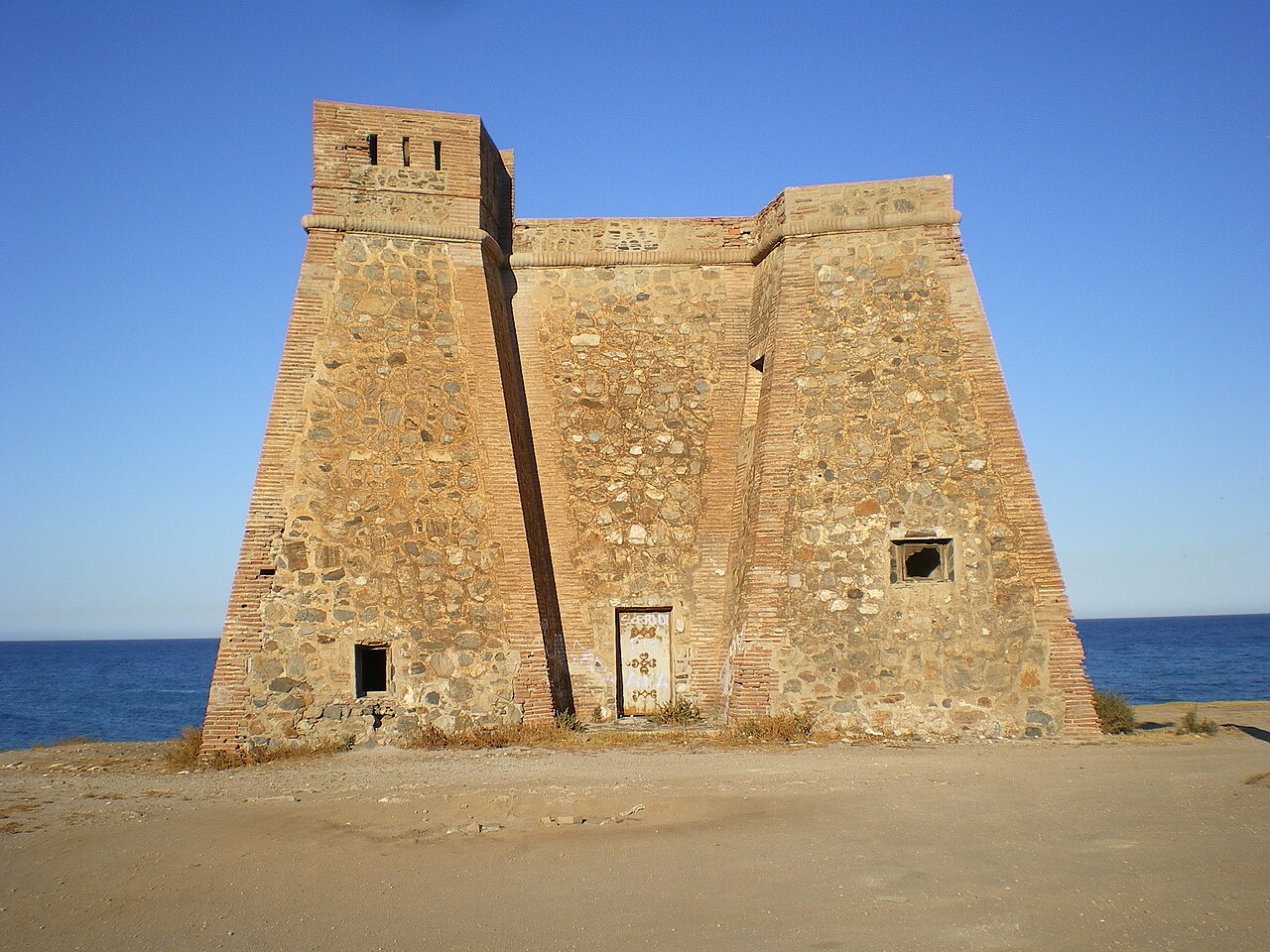
Pirulico Tower, locally known as Torre del Pirulico, is a notable example of a late medieval coastal defense tower situated on a rocky outcrop overlooking the sea in the province of Almería, Spain. Positioned south of the village of Ventanicas-el-Cantal, it forms part of a historic network of watchtowers designed to protect the coastline from maritime threats.

Historical context and construction

Constructed during the Nasrid rule in the 13th or 14th century, Pirulico Tower originally served as a lookout point to monitor the Mediterranean coast. The Nasrid dynasty, the last Muslim dynasty in the Iberian Peninsula, built a series of such towers to safeguard their territories against incursions. This tower's strategic location allowed early detection of approaching ships, particularly those of Barbary pirates who threatened coastal settlements.

During the 16th century, the tower was incorporated into a wider defensive system established by the Spanish Crown to protect against pirate raids. This network of towers along the southern coast of Spain was crucial for the rapid communication of threats and coordination of local defenses.

Architectural features

Pirulico Tower is characterized by its round plan, a common design choice for defensive towers of the period, as circular shapes better deflect projectiles and reduce blind spots. A distinctive feature of the tower is the peculiar tunnel passing through its base, which is unusual among coastal towers in the region. This tunnel may have served as a controlled access route or a defensive element.

The original entrance was located approximately 7 meters above ground level, accessible likely by a removable ladder or wooden stairs, a typical defensive measure to hinder enemy access. Inside, there was a small habitable chamber connected to a mural staircase that led to a defensive platform at the top of the tower. This platform would have been equipped with battlements for surveillance and defense.

Restoration and current state

The tower underwent a restoration in 2009, which helped preserve its structural integrity and made it accessible to the public. Today, Pirulico Tower is in a well-preserved condition, allowing visitors to explore its historical architecture and enjoy the scenic views of the coastline.

Its location near other historic towers, such as Macenas Tower, highlights the extensive network of coastal defenses that once protected this part of Spain. Visitors can freely access the tower, making it a valuable cultural and historical site for those interested in medieval military architecture and maritime history.

Significance and visitor information

Pirulico Tower stands as a tangible reminder of the medieval maritime defenses that shaped the history of the Almería coast. Its combination of architectural features and historical usage provides insight into the defensive strategies employed during the Nasrid period and the subsequent Spanish efforts to secure their shores from piracy.

Visitors to the tower can appreciate its strategic positioning and the engineering solutions implemented to enhance its defensibility. The tower's open access offers an educational experience that connects the present with the region's complex past.

Frequently asked questions (FAQ)

How do I get to Pirulico Tower?
Pirulico Tower is located at Diseminado Macenas in the province of Almería, Andalusia, Spain. It is accessible by local roads and can be reached by car or on foot from nearby villages.
What is the historical significance of Pirulico Tower?
Pirulico Tower was built during the Nasrid period in the 13th or 14th century and later used in the 16th century as part of a coastal defense system against Barbary pirates, reflecting the strategic importance of the Almería coast.
Can visitors enter Pirulico Tower?
Yes, Pirulico Tower is open to the public and visitors can explore the tower and its surroundings freely, enjoying views of the Mediterranean and learning about its defensive features.
When was Pirulico Tower restored?
The tower was restored in 2009, which helped preserve its structure and made it accessible for visitors interested in medieval military architecture.
What architectural features make Pirulico Tower unique?
The tower features a round plan with a distinctive tunnel through its base and an entrance 7 meters above ground, connected by a mural staircase to a defensive platform, typical of coastal fortifications of its time.

Information

Coastal Castle / Fortress

Address

Diseminado Macenas, Almería, Spain

Loading map...

Visitor reviews

No reviews yet. Been here? Write the first review and help other travelers!

Write the first review

Visited this castle? Share your experience

Your review helps other travelers and adds first-hand knowledge to our encyclopedia.
Write a review

(5/5)

0/2000 characters

Your review will be visible after admin approval

Nearby castles

1.3 km
Macenas Tower — Spain castle

Macenas Tower

Mojácar, Spain

Macenas Tower, locally known as Castillo de Macenas, is a remarkable example of 18th-century Spanish coastal military architecture located on the beach south of the village of Ventanicas-el-Cantal in the province of Almería, Spain. This horseshoe-shaped artillery tower was constructed in the second half of the 18th century, during the reign of King Charles III of Spain, as part of a network of coastal defenses designed to protect the vulnerable Mediterranean shoreline from seaborne threats such as piracy and foreign invasions. The tower's strategic position on a slightly elevated terrain about 27 meters above sea level provided a commanding view of the sea, enabling early detection of approaching vessels. Its architectural design, known locally as torre de pezuña or torre de herradura, features a semicircular plan with a diameter between 10.7 and 12.5 meters, not including the sloped base, and a height of approximately 11.7 meters. This horseshoe-type design was typical for coastal artillery towers in the region, including its counterparts like the Mesa Roldán and Cristal towers in Almería, allowing for effective artillery coverage over the surrounding waters. Architectural features and military function The tower was originally accessed via a doorway located on the first floor, reachable only by a rope ladder, a defensive feature that minimized the risk of enemy intrusion. Internally, the tower is divided into three vaulted floors. The lowest level served as a secure storage area for gunpowder and other munitions, critical for sustained defense operations. The middle floor contained living quarters and a kitchen, accommodating the garrison stationed there. The roof was designed as a gun platform, equipped with artillery pieces mounted on a raised barbette, enabling the cannons to fire over the parapet. In 1803, records by Felipe de Paz indicate that Macenas Tower was armed with two 24-pounder cannons, a substantial artillery complement for a coastal watchtower of its size. The parapet was tall and included narrow loopholes, which allowed defenders to use rifles aimed inland while remaining protected, thus providing a layered defense system against both naval and land-based threats. Historical usage and modifications By 1830, the tower was reported to be in disrepair but remained manned by a corporal and three guards, reflecting its ongoing role in coastal surveillance despite reduced artillery capability. In 1873, the adjacent presence of a customs house (house-barracks) indicated the tower's involvement in monitoring maritime trade and preventing smuggling along this stretch of the Spanish coast. During the 20th century, particularly around the time of the Spanish Civil War, the tower was used by the Guardia Civil, who made significant modifications including the insertion of a ground floor entrance to improve access. This alteration remains visible today and marks the tower's adaptation to modern military needs while preserving its historic fabric. Preservation and cultural significance Today, Macenas Tower stands as a well-preserved monument, cataloged under the official code AL-CAS-140. It is recognized as a Bien de Interés Cultural monument under Spanish heritage laws, with formal conservation measures dating back to a 1949 decree and reinforced by the Historical Heritage Law of 1985. The regional government of Andalucía granted special acknowledgment in 1993, underscoring the tower's cultural and historical importance. The tower's preservation offers valuable insight into 18th-century coastal defense strategies and architectural techniques in Spain. Its robust masonry construction, vaulted interiors, and strategic design exemplify military engineering adapted to the challenges of maritime defense during the post-Renaissance period. Visiting Macenas Tower today The exterior of Macenas Tower is freely accessible to visitors, providing an opportunity to appreciate its imposing silhouette against the coastal landscape. Although the interior is not regularly open to the public, the tower remains an evocative landmark for those interested in military history and coastal fortifications. Nearby, visitors can also explore the Pirulico Tower, another historic fortification contributing to the rich heritage of Almería's coastline. Macenas Tower serves as a tangible connection to Spain's efforts to secure its Mediterranean shores during a turbulent era marked by geopolitical conflicts and maritime threats. Its enduring presence continues to inspire appreciation for historical military architecture and the legacy of coastal defense.

Post-Renaissance (17th–18th c.)
Details
6.9 km

Rayo Tower

Carboneras, Spain

Rayo Tower, locally known as Torre del Rayo, is a historic coastal watchtower situated on a mountain overlooking the sea, north of the town of Carboneras in the province of Almería, Spain. This tower played a crucial role in coastal defense during the turbulent 16th century when the Spanish Mediterranean coast was under constant threat from Barbary pirate raids originating from North Africa. The tower's origins likely trace back to the late 15th century, as it was first recorded in 1497. Its architectural features suggest an Arab origin, which was common for coastal fortifications in this region before the Renaissance period. During the 16th century, under the reigns of Charles V and his son Philip II of Spain, Rayo Tower was restored and integrated into a network of defensive watchtowers stretching along the Spanish Mediterranean coast from Alicante to Cádiz. This network was established primarily to monitor and respond to the frequent incursions of Barbary pirates who threatened coastal towns and rural settlements by looting and enslaving inhabitants. Historical context and strategic importance The establishment of Rayo Tower as part of the coastal defense system was a direct response to the increasing pirate activity following the Turkish settlement in Algiers in 1516. This event marked a significant escalation in pirate raids along the Spanish coast. The tower was strategically positioned on a mountain near the sea to provide a vantage point for early detection of pirate ships approaching the shore. Despite its strategic importance, manning the tower was perilous. Historical records from 1525 indicate difficulties in recruiting guards due to the high risk of death or capture during pirate attacks. The tower was typically manned by only two guards, reflecting its small size and the limited resources available for coastal defense. By 1540, the danger had escalated to such an extent that the tower was abandoned, leaving a vulnerable gap in the coastal defense line at the cove of Carbonera. Architectural features and design Rayo Tower is a relatively small structure characterized by a solid lower two-thirds, constructed to withstand attacks and provide a secure base. Above this sturdy foundation, the upper section contains a small habitable space on the second-floor level. This design allowed the guards to live and operate within the tower while maintaining a defensive posture. The tower's construction reflects typical Renaissance military architecture adapted to coastal watchtowers. Its thick walls and elevated position provided both protection and visibility. The tower's simplicity is notable; it lacks extensive fortifications but served effectively as an early warning post within the broader network of coastal defenses. Later uses and preservation In the mid-19th century, Rayo Tower found renewed use when it was employed by the Carabineros Corps to monitor smuggling activities along the coast. Later, in 1941, the tower came under the ownership of the Guardia Civil, Spain's national police force, indicating its continued strategic value even centuries after its initial construction. Today, Rayo Tower is well preserved and accessible to the public. Its location offers scenic views of the Mediterranean coastline and serves as a tangible reminder of the region's historical struggles against piracy and coastal raids. Visitors can freely explore the tower, appreciating its modest but significant role in Spain's maritime defense history. Significance in Spanish coastal defense The network of watchtowers, including Rayo Tower, was instrumental in providing early warnings of pirate attacks, enabling coastal communities to prepare or seek refuge. These towers were part of a larger military strategy during the Renaissance period, reflecting the geopolitical challenges faced by Spain in protecting its extensive Mediterranean coastline. Rayo Tower stands as a representative example of the smaller coastal fortifications that, while less grand than castles or citadels, were vital in maintaining the security and stability of coastal regions during a period marked by conflict and piracy.

Renaissance (15th–17th c.)
Details
8.9 km
San Andrés Castle — Spain castle

San Andrés Castle

Santa Cruz de Tenerife, Spain

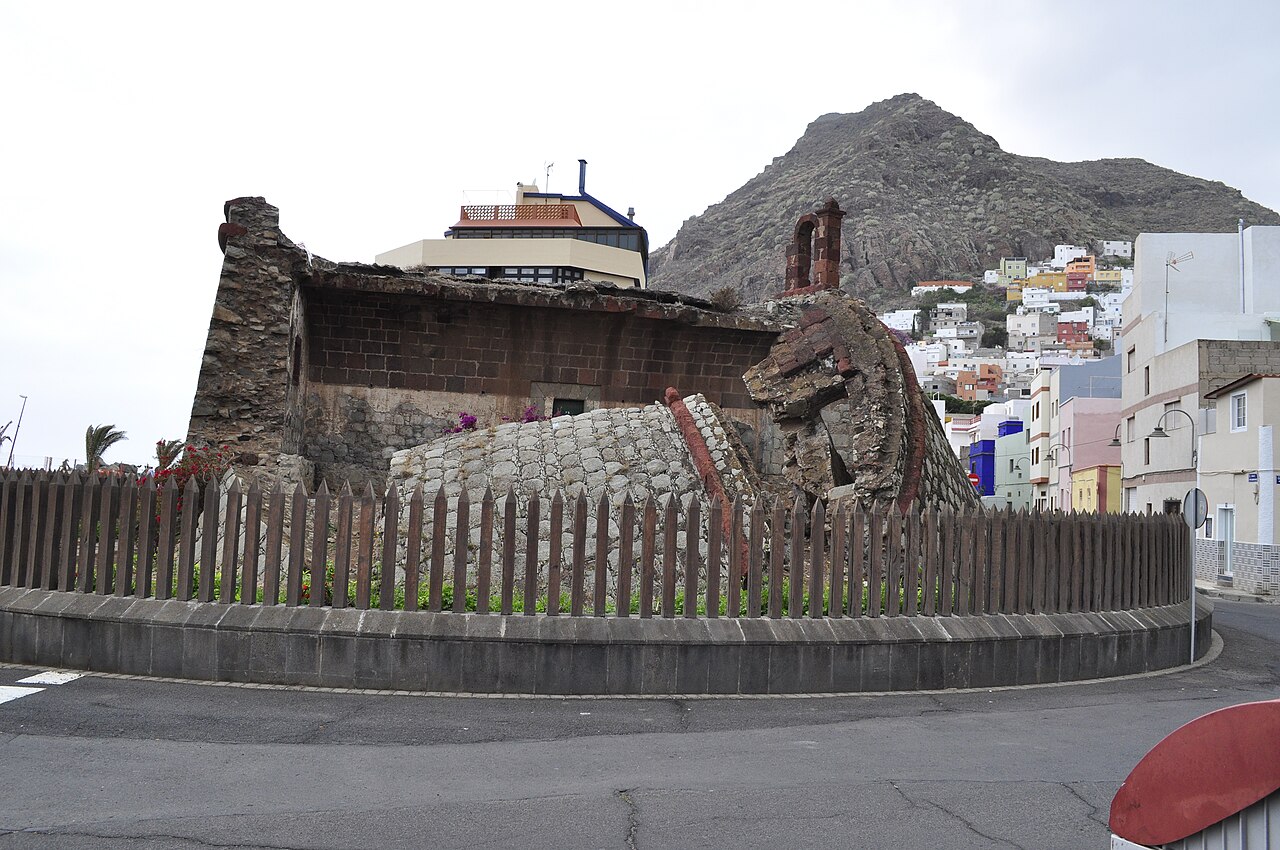
San Andrés Castle, located in the town of San Andrés within the municipality of Santa Cruz de Tenerife in Spain, stands as a significant example of coastal military architecture from the early 18th century. This fortress was constructed as part of a broader defensive network designed to protect the Canary Islands from frequent pirate attacks and naval threats during a turbulent period in Spanish maritime history. The castle's origins trace back to 1706, when Captain General Agustín de Robles y Lorenzana commissioned its construction to safeguard the strategic Valle de Salazar and its adjacent beach. The initial design and erection of the fortress were entrusted to the engineer Miguel Tiburcio Rossel. The primary purpose of the castle was to serve as a protective outpost for ships seeking refuge and to prevent enemy vessels from gaining advantageous positions to assault nearby forts such as Paso Alto and San Miguel. Architectural design and construction San Andrés Castle is characterized by its distinctive circular tower design, a common feature in coastal fortifications of the Canary Islands during this era. The structure was predominantly built from green diorite, a volcanic stone quarried locally in the Valle de San Andrés. This robust material provided both durability and resilience against the harsh marine environment. Decorative elements crafted from reddish volcanic stone accentuate the fortress, including a perimeter band at the top of the tower, a bell gable, and certain vaulted stones. These details highlight the blend of functionality and aesthetic consideration in the castle's construction. The tower originally stood surrounded by a moat and was accessed via a wooden drawbridge made from tea wood and secured with bronze nails. The entrance still bears a commemorative plaque honoring the late 18th-century reconstruction led by engineer Alfonso Ochando. Interior features The castle's interior includes vaulted ceilings on the lower floor, which housed the gunpowder storage. Additional vaulted chambers on the southern side accommodated the commander and a garrison of up to fifty soldiers. A crucial feature was the cistern capable of holding nearly twelve cubic meters of rainwater, essential for sustaining the occupants during sieges or periods of isolation. The upper floor was an open-air stone-paved platform equipped with artillery. By 1788, the fortress was armed with five cannons, and at its peak, it possessed a diverse arsenal including culverins (long cannons), other artillery pieces, lanadas (types of guns), iron weapons such as the sacatrapos, cannonballs, and gunpowder supplies. This armament reflects the military needs and strategic importance of the castle within the island's defensive system. Historical significance and military role San Andrés Castle played a notable role during the 1797 British assault on Santa Cruz de Tenerife, led by Admiral Horatio Nelson. Although the main Spanish defenses secured victory and forced a British surrender, the artillery of San Andrés, under the command of Lieutenant José Feo de Armas, continued firing on the retreating British fleet. This action inflicted damage on several British ships, including the Emerald and Theseus, underscoring the castle's active military participation even after hostilities had ceased. Throughout its operational life, the fortress endured repeated damage from flooding caused by nearby ravines, leading to multiple reconstructions. At least four major rebuilds are documented, with a significant one around 1769 led by Alfonso Ochando, which reshaped the castle into its current form. The castle remained in military use until 1878, when it was ordered disarmed. A severe flood in 1894 caused extensive destruction, leaving the fortress in ruins. In 1924, a royal decree declared it militarily obsolete, and control was transferred to the local municipality in 1926. The site also served briefly as a jail for local offenders. Preservation and cultural heritage Despite its damaged condition due to natural disasters, San Andrés Castle remains an iconic landmark of the town and the surrounding Anaga Massif area. Efforts in the 1980s to stabilize the site included the construction of stone retaining walls and wooden fencing to protect against further erosion. The castle was recognized for its historical value early on, being declared a Spanish Historical Heritage site in 1949 and later classified as a Bien de Interés Cultural under heritage law in 1985. In 2012, a monument was erected near the castle to commemorate the 215th anniversary of the 1797 battle, highlighting its enduring cultural significance. Today, the castle is a popular tourist attraction, offering visitors a glimpse into the military architecture and history of the Canary Islands. Its strategic coastal location, robust construction, and storied past make it a fascinating subject for those interested in Spanish fortifications and maritime defense.

High Medieval (11th–13th c.)
Details