Rayo Tower
Rayo Tower, locally known as Torre del Rayo, is a historic coastal watchtower situated on a mountain overlooking the sea, north of the town of Carboneras in the province of Almería, Spain. This tower played a crucial role in coastal defense during the turbulent 16th century when the Spanish Mediterranean coast was under constant threat from Barbary pirate raids originating from North Africa.
The tower's origins likely trace back to the late 15th century, as it was first recorded in 1497. Its architectural features suggest an Arab origin, which was common for coastal fortifications in this region before the Renaissance period. During the 16th century, under the reigns of Charles V and his son Philip II of Spain, Rayo Tower was restored and integrated into a network of defensive watchtowers stretching along the Spanish Mediterranean coast from Alicante to Cádiz. This network was established primarily to monitor and respond to the frequent incursions of Barbary pirates who threatened coastal towns and rural settlements by looting and enslaving inhabitants.
Historical context and strategic importance
The establishment of Rayo Tower as part of the coastal defense system was a direct response to the increasing pirate activity following the Turkish settlement in Algiers in 1516. This event marked a significant escalation in pirate raids along the Spanish coast. The tower was strategically positioned on a mountain near the sea to provide a vantage point for early detection of pirate ships approaching the shore.
Despite its strategic importance, manning the tower was perilous. Historical records from 1525 indicate difficulties in recruiting guards due to the high risk of death or capture during pirate attacks. The tower was typically manned by only two guards, reflecting its small size and the limited resources available for coastal defense. By 1540, the danger had escalated to such an extent that the tower was abandoned, leaving a vulnerable gap in the coastal defense line at the cove of Carbonera.
Architectural features and design
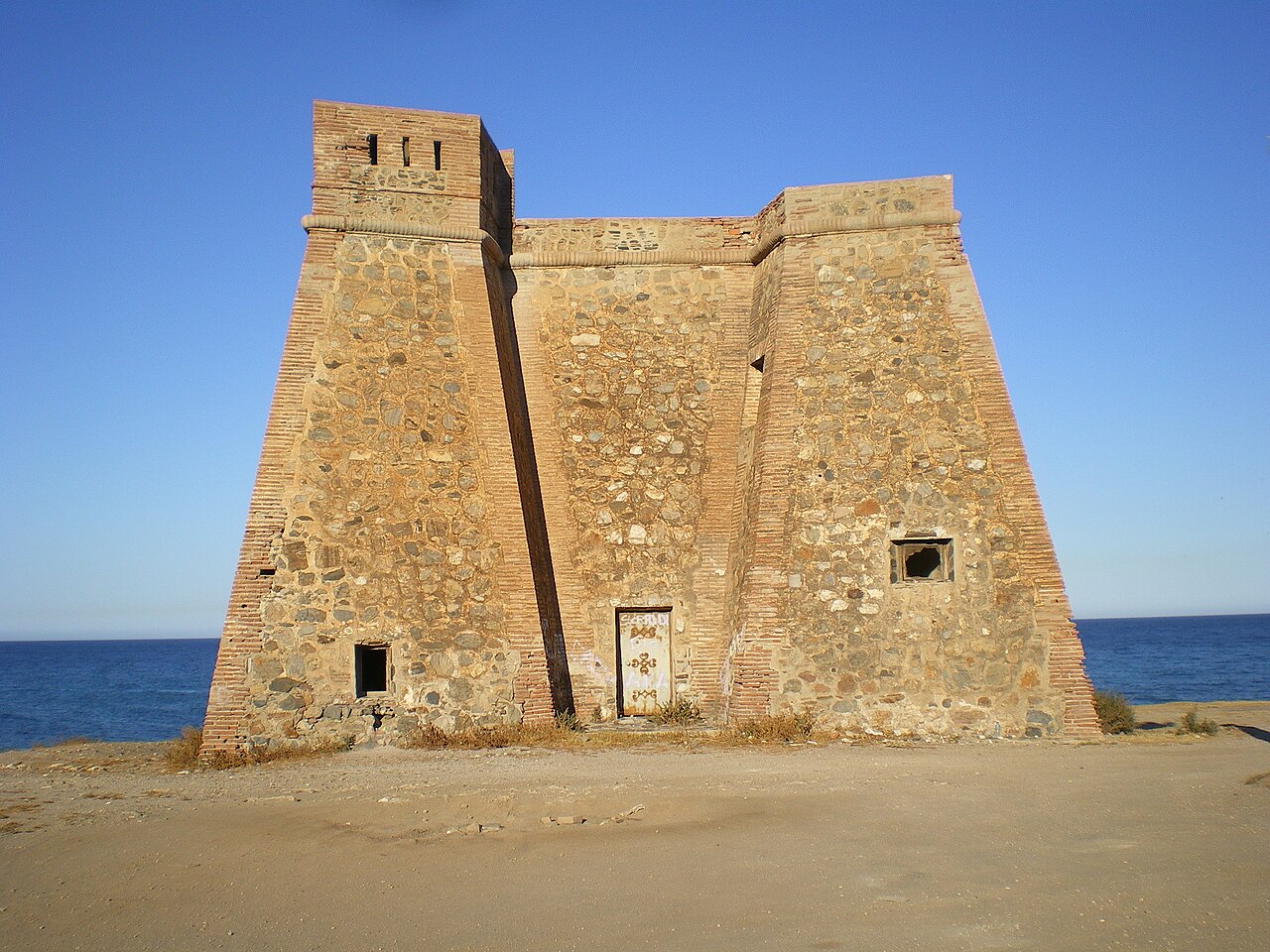
Rayo Tower is a relatively small structure characterized by a solid lower two-thirds, constructed to withstand attacks and provide a secure base. Above this sturdy foundation, the upper section contains a small habitable space on the second-floor level. This design allowed the guards to live and operate within the tower while maintaining a defensive posture.
The tower's construction reflects typical Renaissance military architecture adapted to coastal watchtowers. Its thick walls and elevated position provided both protection and visibility. The tower's simplicity is notable; it lacks extensive fortifications but served effectively as an early warning post within the broader network of coastal defenses.
Later uses and preservation
In the mid-19th century, Rayo Tower found renewed use when it was employed by the Carabineros Corps to monitor smuggling activities along the coast. Later, in 1941, the tower came under the ownership of the Guardia Civil, Spain's national police force, indicating its continued strategic value even centuries after its initial construction.
Today, Rayo Tower is well preserved and accessible to the public. Its location offers scenic views of the Mediterranean coastline and serves as a tangible reminder of the region's historical struggles against piracy and coastal raids. Visitors can freely explore the tower, appreciating its modest but significant role in Spain's maritime defense history.
Significance in Spanish coastal defense
The network of watchtowers, including Rayo Tower, was instrumental in providing early warnings of pirate attacks, enabling coastal communities to prepare or seek refuge. These towers were part of a larger military strategy during the Renaissance period, reflecting the geopolitical challenges faced by Spain in protecting its extensive Mediterranean coastline.
Rayo Tower stands as a representative example of the smaller coastal fortifications that, while less grand than castles or citadels, were vital in maintaining the security and stability of coastal regions during a period marked by conflict and piracy.
Frequently asked questions (FAQ)
- How do I get to Rayo Tower?
- Rayo Tower is located north of Carboneras in Almería, Spain, near the AL-5107 road. Visitors can reach it by car or local transport followed by a short walk to the tower's hilltop location.
- What is the historical significance of Rayo Tower?
- Rayo Tower was part of a coastal defense system built in the 16th century to protect against Barbary pirate raids. It served as a lookout post and warning station during the Renaissance period.
- Can I visit Rayo Tower today?
- Yes, Rayo Tower is well preserved and open to the public. Visitors can freely explore the tower and enjoy views of the Mediterranean coast.
- When was Rayo Tower built?
- The tower was first mentioned in 1497 and was restored and incorporated into the coastal defense system in the 16th century during the Renaissance period.
- Why was Rayo Tower abandoned in the 16th century?
- Due to the high risk of death or capture from frequent pirate attacks, it became difficult to find guards willing to man the tower, leading to its abandonment in 1540.
Information
Address
South of the AL-5107 road, Carboneras, Almería, Spain
Loading map...
Visitor reviews
No reviews yet. Been here? Write the first review and help other travelers!
Write the first reviewVisited this castle? Share your experience
Your review helps other travelers and adds first-hand knowledge to our encyclopedia.