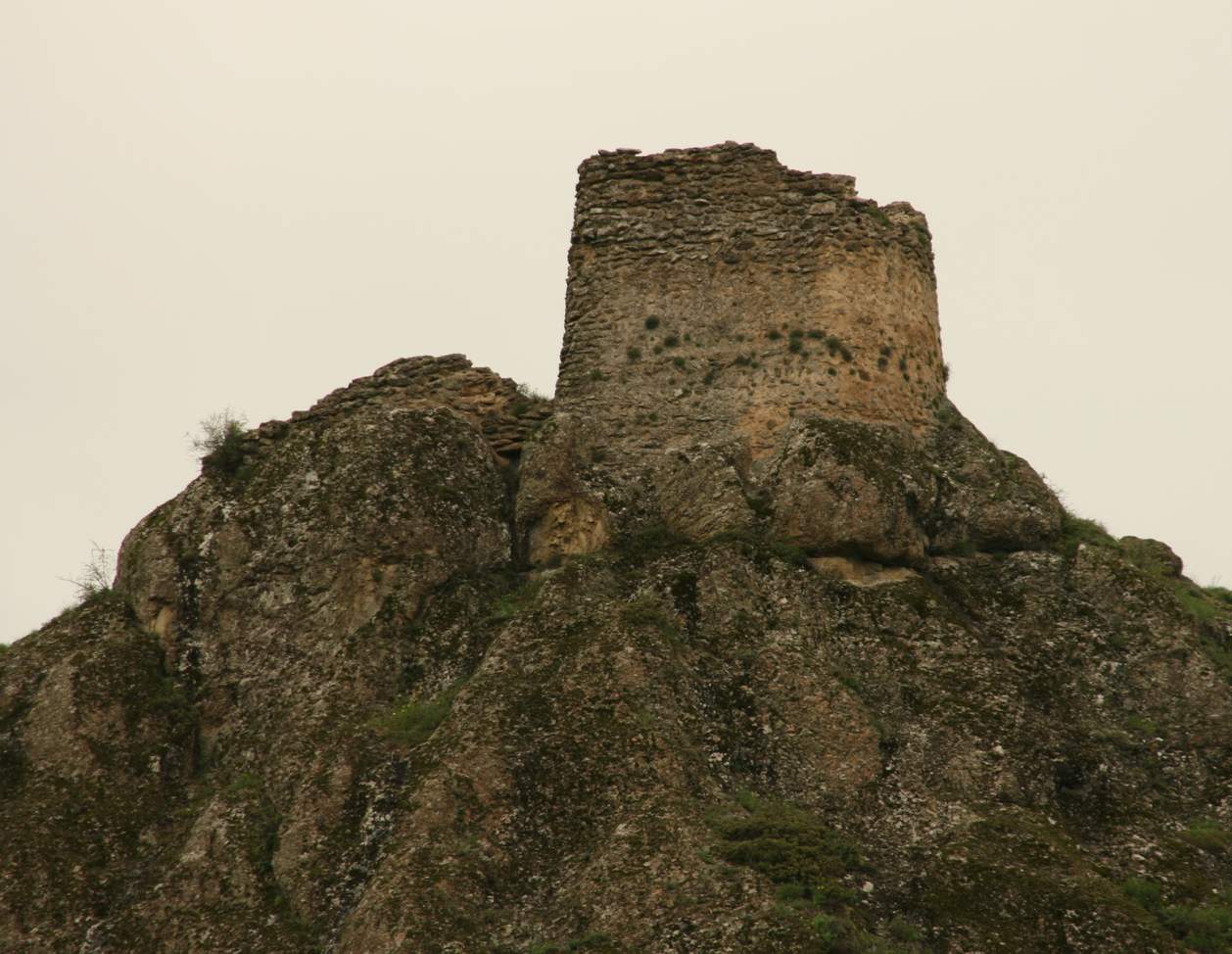
Salkhino Tower

Salkhino Tower in Vashlovani, Georgia: a modern aristocratic folly
Vashlovani, Kvemo Kartli, Georgia
Modern (19th–20th c.)
Well Preserved

Salkhino Tower is located near the village of Vashlovani in the Tetritskaro municipality within the Kvemo Kartli region of Georgia. This tower stands out as a unique example of a structure that mimics traditional defensive architecture yet was never intended for military use. Built in 1811 by a Georgian aristocrat, Salkhino Tower was designed primarily as a venue for social gatherings, banquets, and celebrations rather than for fortification or defense.

Architectural design and stylistic features

Despite its modern construction date, the tower closely resembles the fortified towers commonly built in Georgia during the 17th and 18th centuries. It incorporates many typical defensive features such as thick stone walls, narrow windows, and battlement-like parapets. These elements give it the appearance of a genuine fortified tower, although it never served a military purpose. The name Salkhino translates to "For Joy" in Georgian, reflecting its intended use as a joyous gathering place.

The tower's design reflects a romanticized view of medieval Georgian architecture, blending functional defensive motifs with a decorative and celebratory function. It stands as an example of an aristocratic folly, where traditional forms were adapted for leisure and entertainment rather than protection.

Historical context and purpose

Constructed in the early 19th century, during a period when Georgia was experiencing significant political and social changes, Salkhino Tower was not built for defense but rather as a symbol of status and hospitality. Georgian aristocrats of the time often commissioned such structures to demonstrate their wealth and cultural sophistication. The tower was used for holding feasts, banquets, and social events, providing a distinctive and atmospheric setting.

Its location near Vashlovani places it within a region known for its natural beauty and historical sites, although the tower itself is primarily notable for its architectural character rather than historical military significance.

Current condition and accessibility

Today, Salkhino Tower remains freely accessible to visitors and locals alike. It is not actively maintained or used for any official purpose, but its robust stone construction has preserved it well. The tower offers a picturesque and evocative setting that continues to attract those interested in Georgian architecture and cultural heritage.

While it has no formal function today, the tower's spacious interior and striking appearance make it a charming location for informal gatherings or simply for visitors to explore and appreciate.

Significance in Georgian architectural heritage

Salkhino Tower represents a fascinating example of how traditional Georgian defensive architectural forms were adapted for non-military uses in the modern era. It highlights the enduring influence of medieval tower design on Georgian aristocratic culture and the ways in which architecture can serve symbolic and social functions beyond practical defense.

As a structure built in the modern period but inspired by earlier styles, it provides insight into the cultural values and aesthetic preferences of Georgian nobility in the early 19th century. The tower remains a noteworthy landmark in the Kvemo Kartli region, contributing to the diverse architectural landscape of Georgia.

Frequently asked questions (FAQ)

What is the historical purpose of Salkhino Tower?
Salkhino Tower was built in 1811 as a venue for parties and banquets, not for military defense.
Can visitors access Salkhino Tower today?
Yes, the tower is freely accessible and can be visited without restrictions.
What architectural style does Salkhino Tower represent?
It features a mixed style, combining traditional Georgian fortified tower elements with modern decorative design.
Where is Salkhino Tower located?
It is located near the village of Vashlovani in the Tetritskaro municipality of the Kvemo Kartli region in Georgia.
Is Salkhino Tower a genuine defensive structure?
No, despite its fortified appearance, it was never used for military purposes but built as an aristocratic folly.

Information

Tower House

Loading map...

Visitor reviews

No reviews yet. Been here? Write the first review and help other travelers!

Write the first review

Visited this castle? Share your experience

Your review helps other travelers and adds first-hand knowledge to our encyclopedia.
Write a review

(5/5)

0/2000 characters

Your review will be visible after admin approval

Nearby castles

9.2 km
Narikala Towers — Georgia castle

Narikala Towers

Botanikuri Street, Georgia

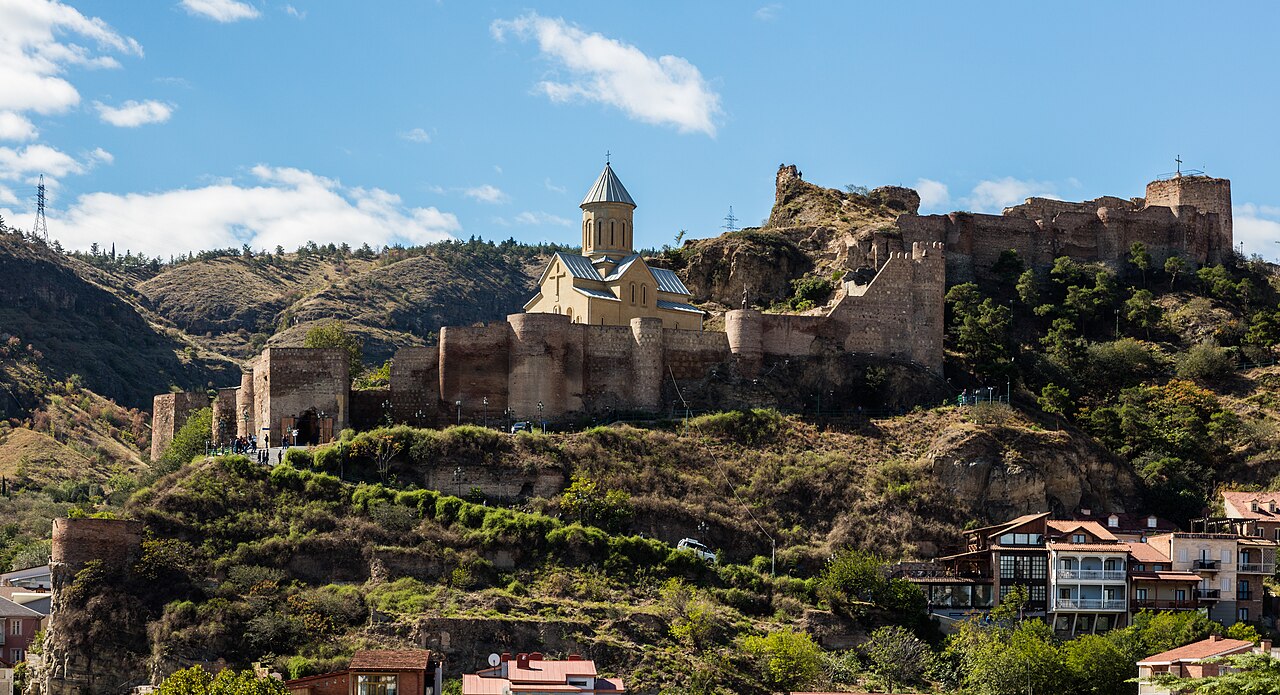
The Narikala Towers are historic remnants located in the heart of Tbilisi, Georgia, situated on the slope of the Tsavkisistskhali valley, beneath the imposing Narikala fortress. These two square towers, though less documented than the main fortress, are believed to date from the 17th to 18th centuries and formed a crucial part of the city's layered defensive system alongside the Narikala Castle itself. Positioned within or near the grounds of the National Botanical Garden of Georgia, the towers contribute to the rich architectural and military heritage of Tbilisi. The Narikala fortress dominates the skyline of Tbilisi, perched on a steep hill overlooking the Mtkvari (Kura) River and the historic sulfur baths district. Its origins trace back to the mid-4th century, during the reign of Aspacures II of Iberia, making it one of the oldest fortifications in the region. Initially called Kala, and later Shuri, the name Narikala derives from one of its towers, eventually becoming the designation for the entire fortress complex. Historical development of Narikala fortress Early origins and Persian influence The fortress site was under Sassanid Persian control from approximately 575 to 627 AD. During this period, the castle was likely fortified to serve as a strategic military stronghold. The architectural style and fortifications were influenced by Persian military design, adapting to the needs of the era. Arab rule and the Emirate of Tbilisi In 736 AD, the Arabs captured Tbilisi, establishing the Emirate of Tbilisi which lasted until the late 11th century. The fortress was expanded and reinforced to serve the administrative and military functions of the Emirate. Arab architectural and defensive techniques were incorporated, further strengthening the castle's fortifications. Expansion under Georgian kings King David IV of Georgia, known as David the Builder (1089–1125), significantly expanded Narikala fortress, transforming it into a sophisticated stronghold. By the 13th century, the fortress housed a king's palace, a church, and various buildings for economic and domestic use within its walls, reflecting its importance as a royal residence and military bastion. Later history and decline The fortress continued to be used and modified through the centuries. In the 17th century, Rostom of Kartli undertook a major rebuilding effort, with much of the visible fortifications dating from the 16th and 17th centuries. However, after the Russian annexation of Georgia in 1801, Narikala lost its strategic military role. It was garrisoned by Russian troops, with buildings repurposed for weapons and gunpowder storage. Destruction and restoration Earthquake damage and explosion A devastating earthquake in 1827 severely damaged the fortress, leading to partial demolition. Further destruction occurred in 1847 when a gunpowder explosion destroyed all buildings inside the castle walls, including the 13th-century St. Nicholas Church. Since then, Narikala has remained largely in ruins. Modern restoration efforts The St. Nicholas Church was rebuilt in the 1990s, replacing the original medieval structure. The new church, constructed in 1996–1997, follows the traditional prescribed cross architectural style with doors on three sides. Its interior is richly decorated with frescos depicting biblical scenes and Georgian historical events, adding cultural significance to the site. Architectural features of Narikala fortress and towers Fortress layout and defensive structures Narikala fortress comprises two main walled sections on a steep hill, strategically positioned between the sulfur baths and the botanical gardens of Tbilisi. The fortifications include thick outer walls with battlements, towers for surveillance and defense, and a complex system of courtyards and chambers. The fortress's elevated position allowed for commanding views of the city and the river, vital for early warning and defense. The Narikala towers The two square Narikala Towers below the main fortress are less preserved but remain significant as part of the city's historic defenses. Their exact construction date is uncertain, but architectural analysis suggests a post-medieval origin, likely in the 17th or 18th century. They stand as archaeological ruins within the botanical garden area and are accessible for viewing, although public access inside the towers may be limited. Visiting Narikala and its surroundings Narikala fortress is a popular tourist destination in Tbilisi, accessible by foot via steep streets or by the aerial tramway from Rike Park. Visitors can explore the restored sections of the fortress walls, the St. Nicholas Church, and enjoy panoramic views of the cityscape. The nearby National Botanical Garden adds natural beauty to the site, with the Narikala Towers located on its slopes. The fortress is open to visitors during regular hours, and while much of the original internal structures have been lost, the site offers rich historical context and a tangible connection to Tbilisi's past. The combination of ancient fortifications, religious architecture, and natural setting makes Narikala a significant cultural landmark. Significance in Georgian history and culture Narikala fortress symbolizes the historical resilience of Tbilisi and Georgia through centuries of foreign invasions, cultural shifts, and political changes. It reflects the architectural evolution from early medieval fortifications to later post-medieval military constructions, including the Narikala Towers. The fortress and its towers are emblematic of the city's strategic importance and its role as a crossroads of empires. Today, Narikala remains a cherished heritage site, representing Georgia's rich past and serving as a focal point for both locals and visitors interested in the country's architectural and historical legacy.

Post-Renaissance (17th–18th c.)
Details
14.9 km

Partskhisi Castle

Partskhisi, Georgia

Partskhisi Castle is a historic fortress located near the village of Partskhisi in the Kvemo Kartli region of Georgia. This high medieval castle, first documented in the 11th century, is believed to have origins dating back to the 9th or 10th century. Archaeological evidence suggests that the site was occupied as far back as 3000 years ago, indicating its long-standing strategic importance. Strategic location and historical significance The castle occupies an elongated hill near the confluence of the Algeti River and a smaller stream, positioning it along one of the main historical routes through the Kvemo Kartli region. This location would have been crucial for controlling movement and trade in the area during the medieval period. The castle complex originally included a keep on the hilltop and a bailey that extended along the hill, although only limited remains of the bailey survive today. Architectural features and layout Partskhisi Castle was built as a typical hill castle, utilizing the natural elevation for defense. The main fortification consisted of stone walls enclosing the summit, with traces of these walls still visible. The bailey, which served as an outer courtyard, contained a small church that remains intact and is a significant feature for visitors. The castle's defensive structures included battlements and possibly towers, though much of these elements have not survived. Underground tunnel legend Local tradition holds that there is an entrance within the castle grounds to a hidden tunnel leading down to the river. This passage was reportedly sealed with rocks to prevent accidents. While no confirmed archaeological evidence has been published about this tunnel, such features were common in medieval fortifications to provide secret escape routes or access to water. Archaeological findings and preservation Excavations at the site have revealed that the hill was occupied long before the medieval period, with artifacts dating back approximately 3000 years. These findings highlight the site's continuous use and importance through various historical periods. Today, the castle is in a state of ruins, with only some wall sections and the small church on the bailey remaining. Due to the limited architectural remains, detailed study of the castle's original design is challenging. Visiting Partskhisi Castle The castle is freely accessible to visitors and offers scenic views of the surrounding landscape. The intact small church on the bailey provides a glimpse into the religious architecture associated with the fortress. The site is also a popular spot for local activities, as evidenced by groups camping within the ruins. Despite its modest remains, Partskhisi Castle is valued for its historical context and picturesque setting. Nearby attractions and accessibility Visitors to Partskhisi Castle can explore the wider Kvemo Kartli area, known for its rich history and natural beauty. The castle's proximity to Tetritsqaro municipality makes it accessible by road. While there are no formal visitor facilities on site, the open access allows for flexible exploration of the ruins and surrounding countryside.

High Medieval (11th–13th c.)
Details
16.9 km
Birtvisi Castle Ruins — Georgia castle

Birtvisi Castle Ruins

Tetri-Tsqaro, Georgia

Birtvisi castle ruins stand as a remarkable example of a medieval fortress ingeniously integrated into a natural rocky landscape in Kvemo Kartli, Georgia. Situated within the Birtvisi Natural Monument and adjacent to the Algeti National Park, the fortress occupies a defensible limestone massif on the southern slopes of the Trialeti Range. This location, near the villages of Tbisi and Partskhisi, provided a strategic vantage point controlling the Algeti river gorge. The fortress dates back to the 11th century and is classified as a high medieval structure, primarily functioning as a natural rocky fortress fortified with man-made defensive walls and towers. The entire complex covers approximately 1 square kilometer, blending the natural rock formations with constructed fortifications. Among its most notable features is the towering rock known as Sheupovari or "Obstinate," which rises above the surrounding landscape and served as a critical lookout point and defensive bastion. Architectural features and defensive structures Birtvisi fortress is unique in its use of the natural topography for defense. The steep limestone cliffs and rocky outcrops formed natural barriers that were enhanced by stone walls and towers strategically placed to guard the approaches. The fortress includes a series of rock-cut steps that allowed defenders to move quickly across the site, as well as an aqueduct system that supplied water, a vital feature for withstanding sieges. The surviving walls are constructed from local stone, carefully fitted to the contours of the rocks. The fortress's layout is irregular, conforming to the natural shape of the massif, which made direct assault difficult. The Sheupovari tower represents the highest point of defense and was likely the last refuge during attacks. Historical significance and ownership Birtvisi fortress first appears in historical records in the early 11th century as a possession of the Arab amir of Tiflis. In 1038, it was seized by prominent Georgian nobles, including Liparit, Duke of Kldekari, and Ivane Abazasdze, marking its integration into the Georgian feudal domain. Throughout the medieval period, it was renowned as an impregnable stronghold commanding control over the strategic Algeti gorge. In 1403, the fortress was notably attacked and partially destroyed by the forces of the Turco-Mongol amir Timur during his invasions of Georgia, reflecting its military importance. Following the fragmentation of the Kingdom of Georgia in the late 15th century, Birtvisi became part of the Kingdom of Kartli and was controlled by the noble Baratashvili family. Current condition and preservation Today, Birtvisi castle ruins remain in a state classified as ruins, with much of the original structure lost to time but significant portions of the defensive walls, towers, and rock-cut features still visible. The site is protected as part of the Birtvisi Natural Monument, which includes both the historical fortress and the surrounding natural landscape. Visitors can explore the ruins and appreciate the combination of natural and man-made fortifications that made Birtvisi a formidable defense in medieval Georgia. Access and visitor experience The fortress is accessible via hiking trails from nearby villages such as Tbisi and Partskhisi. The terrain is rugged, reflecting the fortress’s original defensive purpose, requiring visitors to be prepared for a moderately challenging trek. The site offers panoramic views of the Algeti river gorge and the surrounding Trialeti Mountains, making it a popular destination for both history enthusiasts and nature lovers. Interpretive signage and guided tours are limited, so visitors often benefit from prior research or local guides to fully appreciate the fortress’s historical context and architectural ingenuity. The combination of natural beauty and medieval architecture makes Birtvisi a distinctive heritage site in Georgia.

High Medieval (11th–13th c.)
Details