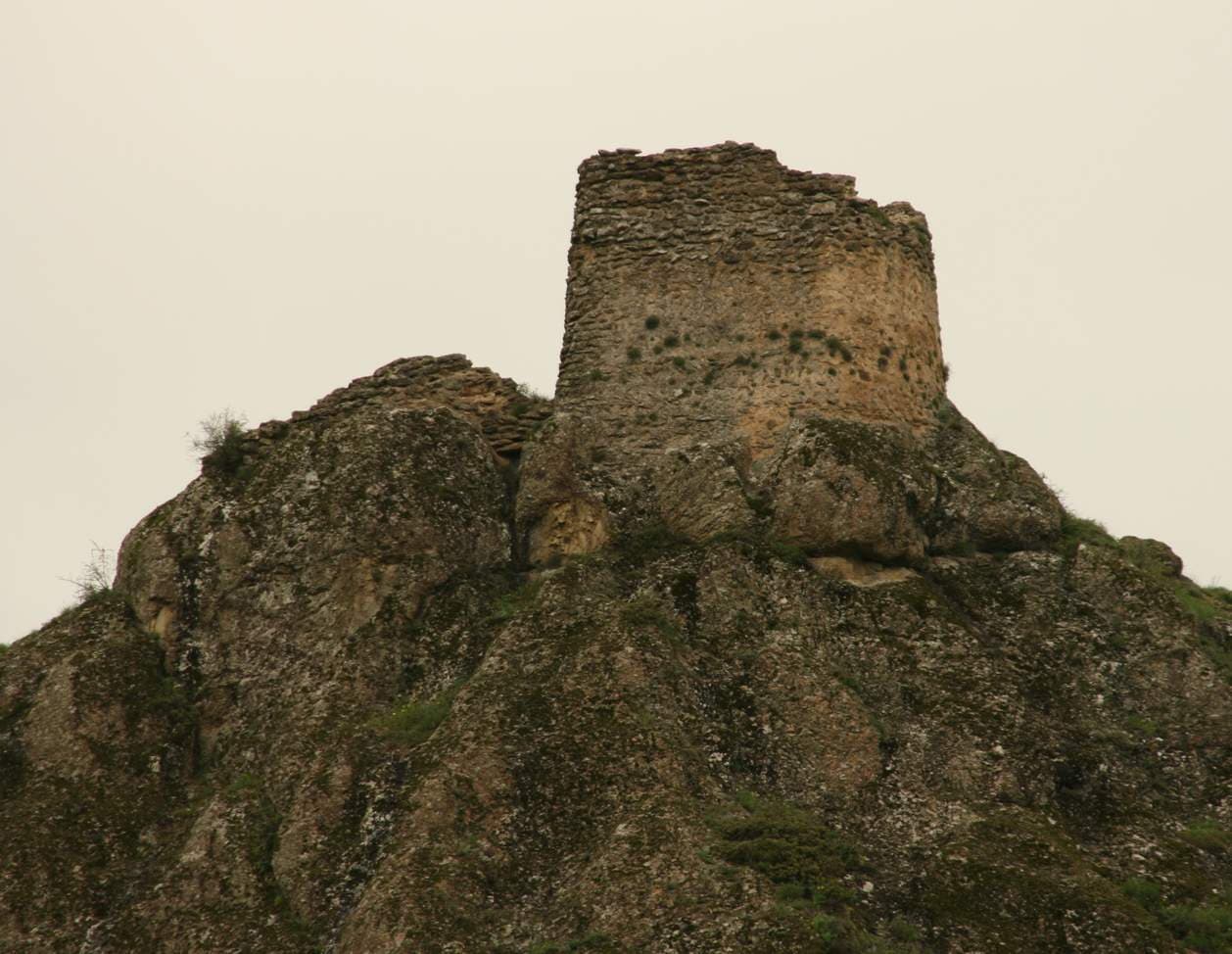
Birtvisi Castle Ruins — Georgia castle

Birtvisi Castle Ruins

Birtvisi castle ruins in Kvemo Kartli, Georgia
Tetri-Tsqaro, Kvemo Kartli, Georgia
High Medieval (11th–13th c.)
Ruins

Birtvisi castle ruins stand as a remarkable example of a medieval fortress ingeniously integrated into a natural rocky landscape in Kvemo Kartli, Georgia. Situated within the Birtvisi Natural Monument and adjacent to the Algeti National Park, the fortress occupies a defensible limestone massif on the southern slopes of the Trialeti Range. This location, near the villages of Tbisi and Partskhisi, provided a strategic vantage point controlling the Algeti river gorge.

The fortress dates back to the 11th century and is classified as a high medieval structure, primarily functioning as a natural rocky fortress fortified with man-made defensive walls and towers. The entire complex covers approximately 1 square kilometer, blending the natural rock formations with constructed fortifications. Among its most notable features is the towering rock known as Sheupovari or "Obstinate," which rises above the surrounding landscape and served as a critical lookout point and defensive bastion.

Architectural features and defensive structures

Birtvisi fortress is unique in its use of the natural topography for defense. The steep limestone cliffs and rocky outcrops formed natural barriers that were enhanced by stone walls and towers strategically placed to guard the approaches. The fortress includes a series of rock-cut steps that allowed defenders to move quickly across the site, as well as an aqueduct system that supplied water, a vital feature for withstanding sieges.

The surviving walls are constructed from local stone, carefully fitted to the contours of the rocks. The fortress's layout is irregular, conforming to the natural shape of the massif, which made direct assault difficult. The Sheupovari tower represents the highest point of defense and was likely the last refuge during attacks.

Historical significance and ownership

Birtvisi fortress first appears in historical records in the early 11th century as a possession of the Arab amir of Tiflis. In 1038, it was seized by prominent Georgian nobles, including Liparit, Duke of Kldekari, and Ivane Abazasdze, marking its integration into the Georgian feudal domain. Throughout the medieval period, it was renowned as an impregnable stronghold commanding control over the strategic Algeti gorge.

In 1403, the fortress was notably attacked and partially destroyed by the forces of the Turco-Mongol amir Timur during his invasions of Georgia, reflecting its military importance. Following the fragmentation of the Kingdom of Georgia in the late 15th century, Birtvisi became part of the Kingdom of Kartli and was controlled by the noble Baratashvili family.

Current condition and preservation

Today, Birtvisi castle ruins remain in a state classified as ruins, with much of the original structure lost to time but significant portions of the defensive walls, towers, and rock-cut features still visible. The site is protected as part of the Birtvisi Natural Monument, which includes both the historical fortress and the surrounding natural landscape. Visitors can explore the ruins and appreciate the combination of natural and man-made fortifications that made Birtvisi a formidable defense in medieval Georgia.

Access and visitor experience

The fortress is accessible via hiking trails from nearby villages such as Tbisi and Partskhisi. The terrain is rugged, reflecting the fortress’s original defensive purpose, requiring visitors to be prepared for a moderately challenging trek. The site offers panoramic views of the Algeti river gorge and the surrounding Trialeti Mountains, making it a popular destination for both history enthusiasts and nature lovers.

Interpretive signage and guided tours are limited, so visitors often benefit from prior research or local guides to fully appreciate the fortress’s historical context and architectural ingenuity. The combination of natural beauty and medieval architecture makes Birtvisi a distinctive heritage site in Georgia.

Frequently asked questions (FAQ)

How do I get to Birtvisi Castle Ruins?
Birtvisi Castle Ruins are located near Tetri-Tsqaro, Georgia, and can be accessed by car or taxi from nearby towns. The nearest major city is Tbilisi, which is about 50 kilometers away. There are also hiking trails leading to the castle that provide a scenic route for adventurous visitors.
What is the historical significance of Birtvisi Castle?
Birtvisi Castle is an important medieval fortress that dates back to the 10th century, serving as a strategic military stronghold in the region. It played a crucial role in the defense against invasions and has historical ties to the Kingdom of Georgia. The ruins reflect the architectural style of the time and offer insight into the region's past.
When was Birtvisi Castle built?
Birtvisi Castle was constructed in the early 10th century during the height of the medieval period in Georgia. It was built to protect the local population and assert control over the surrounding area. The castle has seen various modifications and expansions throughout its history.
Can I explore the ruins of Birtvisi Castle?
Yes, visitors are welcome to explore the ruins of Birtvisi Castle. However, it is recommended to wear sturdy footwear and be cautious while navigating the uneven terrain. The site offers stunning views of the surrounding landscape, making it a rewarding experience for travelers.
Why is Birtvisi Castle a popular tourist destination?
Birtvisi Castle is popular among tourists due to its rich history, stunning architecture, and breathtaking views of the surrounding mountains. The site provides a glimpse into Georgia's medieval past and attracts history enthusiasts and nature lovers alike. Its relatively remote location also offers a peaceful escape from the busier tourist spots.
Is it possible to visit Birtvisi Castle year-round?
Yes, Birtvisi Castle can be visited year-round; however, the best time to visit is during the spring and fall when the weather is mild and the scenery is particularly beautiful. Summer can be hot, while winter may bring snow, which could affect accessibility. Always check local weather conditions before planning your trip.
What are the opening hours for Birtvisi Castle Ruins?
Birtvisi Castle Ruins do not have formal opening hours, as it is an archaeological site that is generally accessible to the public. However, visiting during daylight hours is recommended for safety reasons. Always ensure to plan your visit in accordance with the time of sunset to fully enjoy the site.
Are there any ticket prices to enter Birtvisi Castle?
There is no entrance fee to visit Birtvisi Castle Ruins, making it an accessible destination for all visitors. However, donations to support the preservation of the site are appreciated. It is advisable to check for any changes or special events that might affect access.
What nearby attractions should I visit while in the area?
While visiting Birtvisi Castle, consider exploring the nearby town of Tetri-Tsqaro, which is known for its charming atmosphere and local culture. Additionally, the beautiful landscapes of the surrounding national parks offer opportunities for hiking and nature walks. Other historical sites in the region can enhance your visit and provide a deeper understanding of Georgia's rich heritage.

Photo gallery

Birtvisi Castle Ruins
Click to view

Photo by Aleksey Muhranoff•CC BY-SA 3.0

1 photo • Click any image to view in full screen

Information

Archaeological Site / Ruins

Current owner

State museum

Loading map...

Visitor reviews

No reviews yet. Been here? Write the first review and help other travelers!

Write the first review

Visited this castle? Share your experience

Your review helps other travelers and adds first-hand knowledge to our encyclopedia.

Write a review

(5/5)

0/2000 characters

Your review will be visible after admin approval

Nearby castles

3.9 km

Partskhisi Castle

Partskhisi, Georgia

Partskhisi Castle is a historic fortress located near the village of Partskhisi in the Kvemo Kartli region of Georgia. This high medieval castle, first documented in the 11th century, is believed to have origins dating back to the 9th or 10th century. Archaeological evidence suggests that the site was occupied as far back as 3000 years ago, indicating its long-standing strategic importance. Strategic location and historical significance The castle occupies an elongated hill near the confluence of the Algeti River and a smaller stream, positioning it along one of the main historical routes through the Kvemo Kartli region. This location would have been crucial for controlling movement and trade in the area during the medieval period. The castle complex originally included a keep on the hilltop and a bailey that extended along the hill, although only limited remains of the bailey survive today. Architectural features and layout Partskhisi Castle was built as a typical hill castle, utilizing the natural elevation for defense. The main fortification consisted of stone walls enclosing the summit, with traces of these walls still visible. The bailey, which served as an outer courtyard, contained a small church that remains intact and is a significant feature for visitors. The castle's defensive structures included battlements and possibly towers, though much of these elements have not survived. Underground tunnel legend Local tradition holds that there is an entrance within the castle grounds to a hidden tunnel leading down to the river. This passage was reportedly sealed with rocks to prevent accidents. While no confirmed archaeological evidence has been published about this tunnel, such features were common in medieval fortifications to provide secret escape routes or access to water. Archaeological findings and preservation Excavations at the site have revealed that the hill was occupied long before the medieval period, with artifacts dating back approximately 3000 years. These findings highlight the site's continuous use and importance through various historical periods. Today, the castle is in a state of ruins, with only some wall sections and the small church on the bailey remaining. Due to the limited architectural remains, detailed study of the castle's original design is challenging. Visiting Partskhisi Castle The castle is freely accessible to visitors and offers scenic views of the surrounding landscape. The intact small church on the bailey provides a glimpse into the religious architecture associated with the fortress. The site is also a popular spot for local activities, as evidenced by groups camping within the ruins. Despite its modest remains, Partskhisi Castle is valued for its historical context and picturesque setting. Nearby attractions and accessibility Visitors to Partskhisi Castle can explore the wider Kvemo Kartli area, known for its rich history and natural beauty. The castle's proximity to Tetritsqaro municipality makes it accessible by road. While there are no formal visitor facilities on site, the open access allows for flexible exploration of the ruins and surrounding countryside.

High Medieval (11th–13th c.)
Details
11.8 km

Samshvilde Castle

Samshvilde, Georgia

Samshvilde Castle is an ancient fortress located south of the village of Samshvilde, within the Tetritsqaro municipality of the Kvemo Kartli region in Georgia. This castle is a significant remnant of the lost ancient city of Samshvilde, which occupied a strategic promontory formed by the confluence of the Khrami and Chivchavi rivers. The site is nearly triangular and divided into three main parts: the royal city on the east, the city proper on the west, and the castle positioned between them. The origins of Samshvilde trace back to antiquity, with traditions attributing its founding to Kartlos, the mythic ethnarch of the Georgians of Kartli. Historical records suggest the city emerged as a center of regional power by the 3rd century BC, becoming the capital of a duchy. The castle and city were strategically important due to their location overseeing key river valleys and trade routes. Historical significance and medieval conflicts Throughout its history, Samshvilde Castle witnessed numerous sieges, changes in control, and military conflicts reflecting the turbulent history of the Caucasus region. Around 890 AD, the city was occupied by Smbat I of Armenia, who entrusted it to the Armenian noble family of the Gntuni. However, internal conflicts led to further sieges by Armenian kings such as Ashot II to enforce loyalty. In the late 10th century, Samshvilde became part of the Armenian Kingdom of Tashir-Dzoraget, serving as the residence of King David I Anhoghin. The city suffered devastation in 1001 during a revolt against Gagik I of Armenia. By the mid-11th century, Samshvilde changed hands multiple times, including conquest by the Seljuks under Malik-Shah I around 1074 and recovery by the Georgians in 1110 under the leadership of Bishop George of Chqondidi. The castle was granted to the powerful Orbeli family by King David IV of Georgia in 1123 but faced rebellion and siege again in 1178 under King George III of Georgia. The Mongol invasion in 1236 further impacted the city as the invaders passed through on their way to Tbilisi. Decline and later history Samshvilde's decline accelerated after the 1440 sack by the Qara Qoyunlu under Jahan Shah, who brutally massacred the population and erected a minaret made of severed human heads at the city gate. This atrocity marked the end of Samshvilde as a major urban center, reducing it to a peripheral fortress. In the subsequent centuries, the castle passed to the Kingdom of Kartli by the late 15th century. It was occupied by the Ottoman army in 1578 under Lala Mustafa Pasha but reclaimed by Simon I of Kartli in 1583. The fortress saw renewed military activity in the 18th century when Abdullah Beg of Kartli fortified it in 1747 to challenge Teimuraz II of Kakheti. The castle was stormed by Erekle II in 1749 and fell into ruin later in the century. Architectural features and site layout The castle and city ruins of Samshvilde cover a considerable area with distinct zones reflecting their historical functions. The castle itself occupies a defensible position between the royal city and the city proper, utilizing the natural protection offered by the steep river canyons. The fortress complex includes remnants of walls, towers, gates, and other defensive structures typical of early medieval fortifications in the Caucasus. Although much of the castle is now in ruins, archaeological remains suggest a sophisticated layout with multiple defensive layers. The city proper and the royal city areas contain ruins of residential buildings, churches, and administrative structures, indicating Samshvilde’s importance as a political and religious center. Access and current condition Today, Samshvilde Castle is freely accessible to visitors interested in exploring its extensive ruins and scenic surroundings. The site offers panoramic views of the surrounding river valleys and the rugged landscape of Kvemo Kartli. However, reaching the castle requires either a serious off-road vehicle or an approximately one-hour hike from the nearest village, making it a destination suited for adventurous travelers. Despite its ruined state, Samshvilde remains a valuable cultural heritage site, reflecting centuries of Georgian and regional history. Visitors can explore the castle ruins alongside the remnants of the ancient city, gaining insight into the architectural and historical development of this early medieval fortress and urban center.

Early Medieval (5th–10th c.)
Details
16.9 km

Salkhino Tower

Vashlovani, Georgia

Salkhino Tower is located near the village of Vashlovani in the Tetritskaro municipality within the Kvemo Kartli region of Georgia. This tower stands out as a unique example of a structure that mimics traditional defensive architecture yet was never intended for military use. Built in 1811 by a Georgian aristocrat, Salkhino Tower was designed primarily as a venue for social gatherings, banquets, and celebrations rather than for fortification or defense. Architectural design and stylistic features Despite its modern construction date, the tower closely resembles the fortified towers commonly built in Georgia during the 17th and 18th centuries. It incorporates many typical defensive features such as thick stone walls, narrow windows, and battlement-like parapets. These elements give it the appearance of a genuine fortified tower, although it never served a military purpose. The name Salkhino translates to "For Joy" in Georgian, reflecting its intended use as a joyous gathering place. The tower's design reflects a romanticized view of medieval Georgian architecture, blending functional defensive motifs with a decorative and celebratory function. It stands as an example of an aristocratic folly, where traditional forms were adapted for leisure and entertainment rather than protection. Historical context and purpose Constructed in the early 19th century, during a period when Georgia was experiencing significant political and social changes, Salkhino Tower was not built for defense but rather as a symbol of status and hospitality. Georgian aristocrats of the time often commissioned such structures to demonstrate their wealth and cultural sophistication. The tower was used for holding feasts, banquets, and social events, providing a distinctive and atmospheric setting. Its location near Vashlovani places it within a region known for its natural beauty and historical sites, although the tower itself is primarily notable for its architectural character rather than historical military significance. Current condition and accessibility Today, Salkhino Tower remains freely accessible to visitors and locals alike. It is not actively maintained or used for any official purpose, but its robust stone construction has preserved it well. The tower offers a picturesque and evocative setting that continues to attract those interested in Georgian architecture and cultural heritage. While it has no formal function today, the tower's spacious interior and striking appearance make it a charming location for informal gatherings or simply for visitors to explore and appreciate. Significance in Georgian architectural heritage Salkhino Tower represents a fascinating example of how traditional Georgian defensive architectural forms were adapted for non-military uses in the modern era. It highlights the enduring influence of medieval tower design on Georgian aristocratic culture and the ways in which architecture can serve symbolic and social functions beyond practical defense. As a structure built in the modern period but inspired by earlier styles, it provides insight into the cultural values and aesthetic preferences of Georgian nobility in the early 19th century. The tower remains a noteworthy landmark in the Kvemo Kartli region, contributing to the diverse architectural landscape of Georgia.

Modern (19th–20th c.)
Details

