Narikala Towers
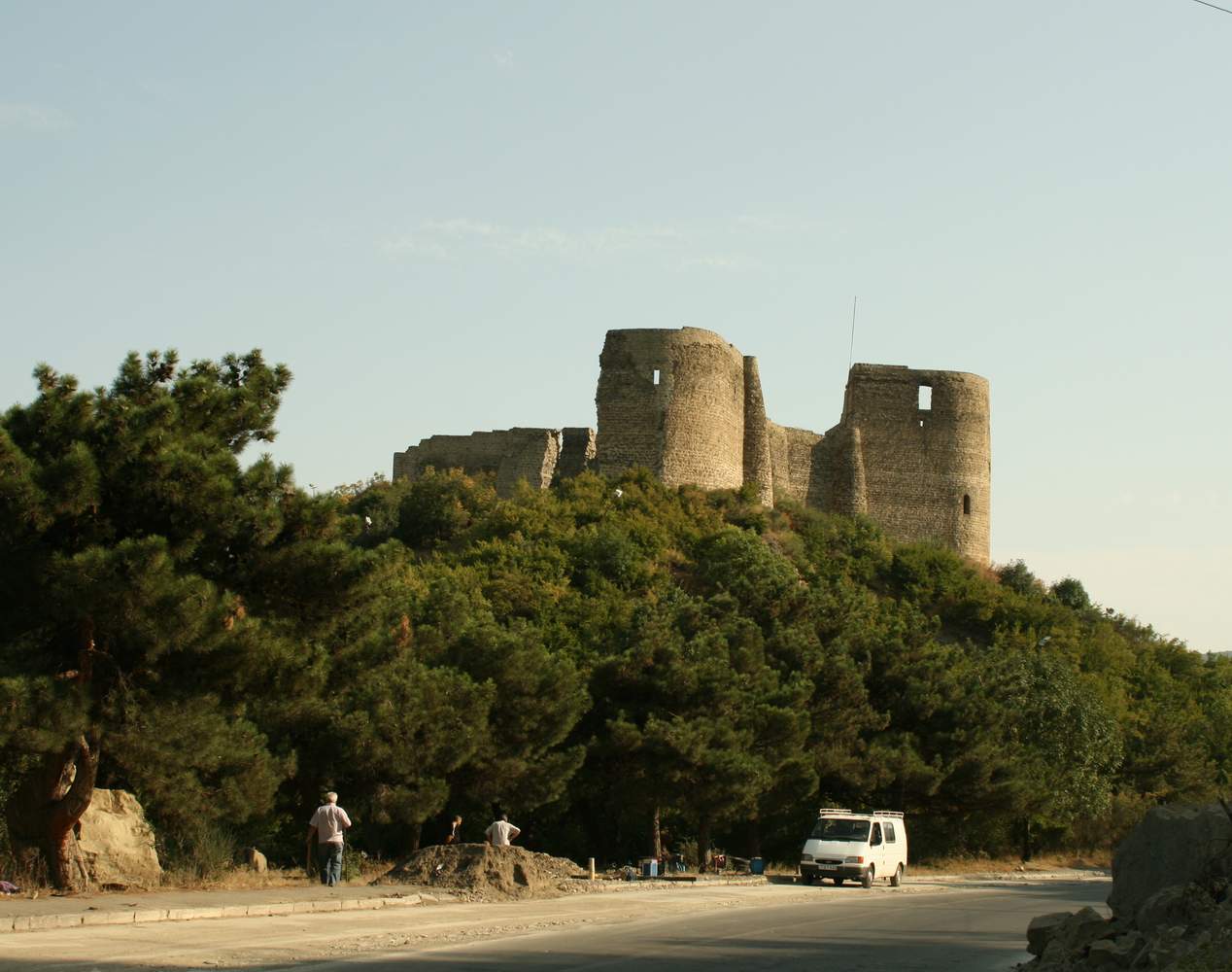
The Narikala Towers are historic remnants located in the heart of Tbilisi, Georgia, situated on the slope of the Tsavkisistskhali valley, beneath the imposing Narikala fortress. These two square towers, though less documented than the main fortress, are believed to date from the 17th to 18th centuries and formed a crucial part of the city's layered defensive system alongside the Narikala Castle itself. Positioned within or near the grounds of the National Botanical Garden of Georgia, the towers contribute to the rich architectural and military heritage of Tbilisi.
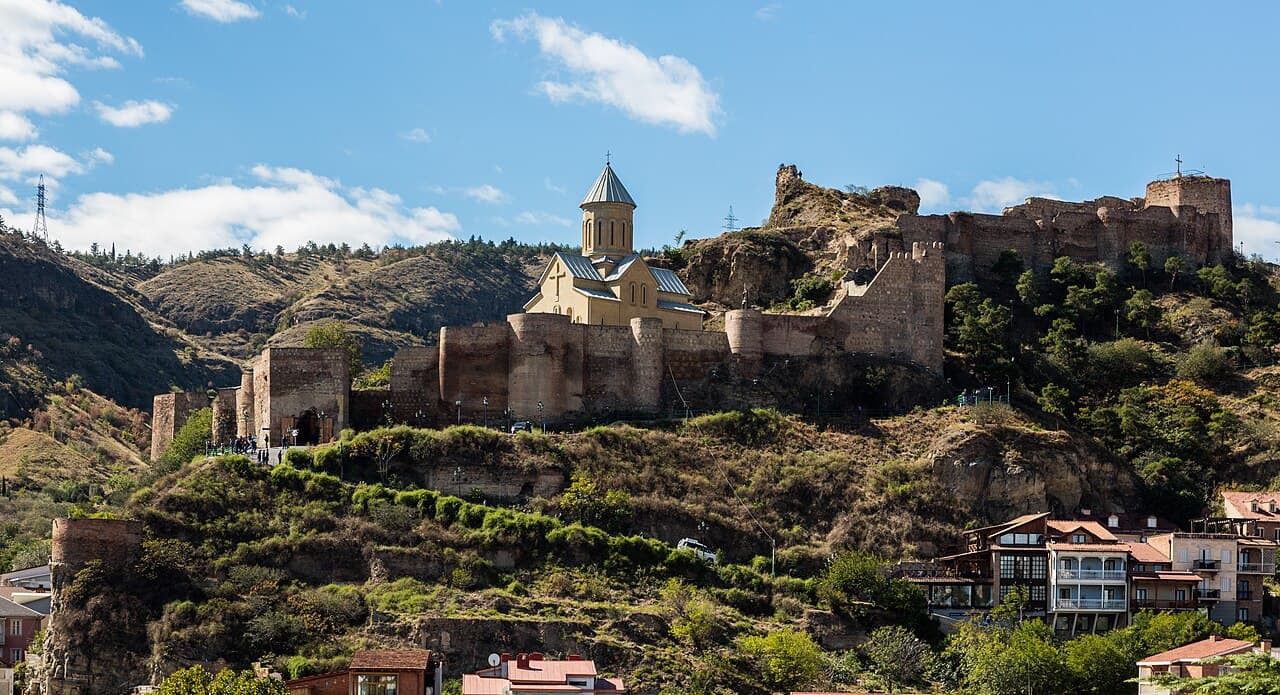
The Narikala fortress dominates the skyline of Tbilisi, perched on a steep hill overlooking the Mtkvari (Kura) River and the historic sulfur baths district. Its origins trace back to the mid-4th century, during the reign of Aspacures II of Iberia, making it one of the oldest fortifications in the region. Initially called Kala, and later Shuri, the name Narikala derives from one of its towers, eventually becoming the designation for the entire fortress complex.
Historical development of Narikala fortress
Early origins and Persian influence
The fortress site was under Sassanid Persian control from approximately 575 to 627 AD. During this period, the castle was likely fortified to serve as a strategic military stronghold. The architectural style and fortifications were influenced by Persian military design, adapting to the needs of the era.
Arab rule and the Emirate of Tbilisi
In 736 AD, the Arabs captured Tbilisi, establishing the Emirate of Tbilisi which lasted until the late 11th century. The fortress was expanded and reinforced to serve the administrative and military functions of the Emirate. Arab architectural and defensive techniques were incorporated, further strengthening the castle's fortifications.
Expansion under Georgian kings
King David IV of Georgia, known as David the Builder (1089–1125), significantly expanded Narikala fortress, transforming it into a sophisticated stronghold. By the 13th century, the fortress housed a king's palace, a church, and various buildings for economic and domestic use within its walls, reflecting its importance as a royal residence and military bastion.
Later history and decline
The fortress continued to be used and modified through the centuries. In the 17th century, Rostom of Kartli undertook a major rebuilding effort, with much of the visible fortifications dating from the 16th and 17th centuries. However, after the Russian annexation of Georgia in 1801, Narikala lost its strategic military role. It was garrisoned by Russian troops, with buildings repurposed for weapons and gunpowder storage.
Destruction and restoration
Earthquake damage and explosion
A devastating earthquake in 1827 severely damaged the fortress, leading to partial demolition. Further destruction occurred in 1847 when a gunpowder explosion destroyed all buildings inside the castle walls, including the 13th-century St. Nicholas Church. Since then, Narikala has remained largely in ruins.
Modern restoration efforts
The St. Nicholas Church was rebuilt in the 1990s, replacing the original medieval structure. The new church, constructed in 1996–1997, follows the traditional prescribed cross architectural style with doors on three sides. Its interior is richly decorated with frescos depicting biblical scenes and Georgian historical events, adding cultural significance to the site.
Architectural features of Narikala fortress and towers
Fortress layout and defensive structures
Narikala fortress comprises two main walled sections on a steep hill, strategically positioned between the sulfur baths and the botanical gardens of Tbilisi. The fortifications include thick outer walls with battlements, towers for surveillance and defense, and a complex system of courtyards and chambers. The fortress's elevated position allowed for commanding views of the city and the river, vital for early warning and defense.
The Narikala towers
The two square Narikala Towers below the main fortress are less preserved but remain significant as part of the city's historic defenses. Their exact construction date is uncertain, but architectural analysis suggests a post-medieval origin, likely in the 17th or 18th century. They stand as archaeological ruins within the botanical garden area and are accessible for viewing, although public access inside the towers may be limited.
Visiting Narikala and its surroundings
Narikala fortress is a popular tourist destination in Tbilisi, accessible by foot via steep streets or by the aerial tramway from Rike Park. Visitors can explore the restored sections of the fortress walls, the St. Nicholas Church, and enjoy panoramic views of the cityscape. The nearby National Botanical Garden adds natural beauty to the site, with the Narikala Towers located on its slopes.
The fortress is open to visitors during regular hours, and while much of the original internal structures have been lost, the site offers rich historical context and a tangible connection to Tbilisi's past. The combination of ancient fortifications, religious architecture, and natural setting makes Narikala a significant cultural landmark.
Significance in Georgian history and culture
Narikala fortress symbolizes the historical resilience of Tbilisi and Georgia through centuries of foreign invasions, cultural shifts, and political changes. It reflects the architectural evolution from early medieval fortifications to later post-medieval military constructions, including the Narikala Towers. The fortress and its towers are emblematic of the city's strategic importance and its role as a crossroads of empires.
Today, Narikala remains a cherished heritage site, representing Georgia's rich past and serving as a focal point for both locals and visitors interested in the country's architectural and historical legacy.
Frequently asked questions (FAQ)
- How do I get to Narikala Towers?
- Narikala Towers is accessible via a cable car from the Rike Park area or by walking up from the Old Town of Tbilisi. The cable car provides stunning views of the city and is a popular choice for visitors. If you prefer to walk, be prepared for a steep hike that rewards you with picturesque scenery.
- What is the historical significance of Narikala Towers?
- Narikala Towers, dating back to the 4th century, served as a fortress that protected the city of Tbilisi from invaders. Over the centuries, it has witnessed numerous battles and changes in power, making it a key historical site in Georgia. Today, it stands as a symbol of the rich heritage and resilience of the Georgian people.
- When was Narikala Towers built?
- The original construction of Narikala Towers is believed to have occurred in the 4th century, though it has undergone various modifications throughout the years. The fortifications were expanded in the 7th century under Arab rule and renovated in later centuries. This long history adds to its architectural and cultural significance.
- Can I visit Narikala Towers year-round?
- Yes, Narikala Towers is open for visitors throughout the year. However, the best time to visit is during the spring and early autumn when the weather is mild and conducive to exploring the site. Some areas may be less accessible in winter due to snow or icy conditions.
- Why is the architecture of Narikala Towers noteworthy?
- The architecture of Narikala Towers showcases a blend of different styles influenced by the various cultures that occupied Georgia over the centuries. Its strategic hilltop location and robust stone walls highlight the engineering skills of its builders. The ruins provide a fascinating glimpse into the medieval military architecture of the region.
- Is it possible to enter the towers?
- While some parts of Narikala Towers are open to the public, access to certain areas may be restricted for safety reasons. Visitors can explore the surrounding grounds and enjoy breathtaking views of Tbilisi from the towers. It’s advisable to wear comfortable shoes for walking on uneven terrain.
- What are the opening hours for Narikala Towers?
- Narikala Towers is generally open to visitors during daylight hours, typically from sunrise to sunset. However, it is recommended to check local listings or inquire at the nearby tourist information center for the most current information on opening hours. Visiting during sunset can enhance your experience with stunning views.
- Are there any nearby attractions to visit?
- Yes, there are several attractions near Narikala Towers, including the historic Old Town of Tbilisi, the sulfur baths, and the beautiful Botanical Garden. These sites are within walking distance and offer a deeper insight into the rich culture and history of the region. Combining your visit to Narikala with these nearby attractions makes for a full day of exploration.
- What are the ticket prices for visiting Narikala Towers?
- There is no entrance fee to visit Narikala Towers, making it an affordable attraction for all visitors. However, if you choose to take the cable car, there is a nominal fee for that ride. Enjoying the view from the towers and the surrounding area is free, allowing everyone to appreciate its beauty.
Photo gallery

Information
Loading map...
Visitor reviews
No reviews yet. Been here? Write the first review and help other travelers!
Write the first reviewVisited this castle? Share your experience
Your review helps other travelers and adds first-hand knowledge to our encyclopedia.