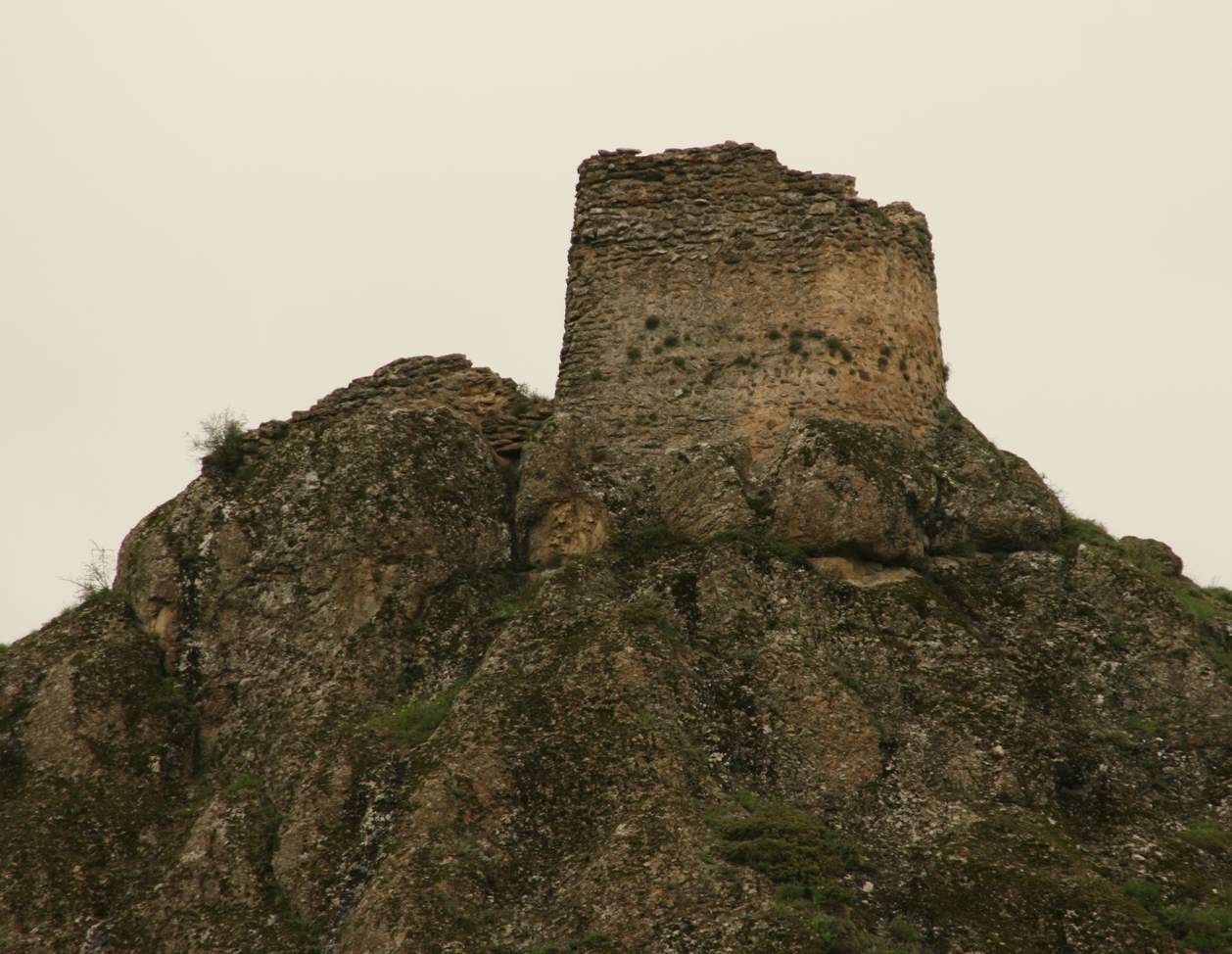
Partskhisi Castle
Partskhisi Castle is a historic fortress located near the village of Partskhisi in the Kvemo Kartli region of Georgia. This high medieval castle, first documented in the 11th century, is believed to have origins dating back to the 9th or 10th century. Archaeological evidence suggests that the site was occupied as far back as 3000 years ago, indicating its long-standing strategic importance.
Strategic location and historical significance
The castle occupies an elongated hill near the confluence of the Algeti River and a smaller stream, positioning it along one of the main historical routes through the Kvemo Kartli region. This location would have been crucial for controlling movement and trade in the area during the medieval period. The castle complex originally included a keep on the hilltop and a bailey that extended along the hill, although only limited remains of the bailey survive today.
Architectural features and layout
Partskhisi Castle was built as a typical hill castle, utilizing the natural elevation for defense. The main fortification consisted of stone walls enclosing the summit, with traces of these walls still visible. The bailey, which served as an outer courtyard, contained a small church that remains intact and is a significant feature for visitors. The castle's defensive structures included battlements and possibly towers, though much of these elements have not survived.
Underground tunnel legend
Local tradition holds that there is an entrance within the castle grounds to a hidden tunnel leading down to the river. This passage was reportedly sealed with rocks to prevent accidents. While no confirmed archaeological evidence has been published about this tunnel, such features were common in medieval fortifications to provide secret escape routes or access to water.
Archaeological findings and preservation
Excavations at the site have revealed that the hill was occupied long before the medieval period, with artifacts dating back approximately 3000 years. These findings highlight the site's continuous use and importance through various historical periods. Today, the castle is in a state of ruins, with only some wall sections and the small church on the bailey remaining. Due to the limited architectural remains, detailed study of the castle's original design is challenging.
Visiting Partskhisi Castle
The castle is freely accessible to visitors and offers scenic views of the surrounding landscape. The intact small church on the bailey provides a glimpse into the religious architecture associated with the fortress. The site is also a popular spot for local activities, as evidenced by groups camping within the ruins. Despite its modest remains, Partskhisi Castle is valued for its historical context and picturesque setting.
Nearby attractions and accessibility
Visitors to Partskhisi Castle can explore the wider Kvemo Kartli area, known for its rich history and natural beauty. The castle's proximity to Tetritsqaro municipality makes it accessible by road. While there are no formal visitor facilities on site, the open access allows for flexible exploration of the ruins and surrounding countryside.
Frequently asked questions (FAQ)
- When was Partskhisi Castle built?
- Partskhisi Castle was first mentioned in the 11th century, but it was likely constructed during the 9th or 10th century based on archaeological evidence.
- What remains can be seen at Partskhisi Castle today?
- Today, visitors can see parts of the castle walls and a small church on the bailey, although most of the original structures are in ruins.
- Is Partskhisi Castle open to the public?
- Yes, Partskhisi Castle is freely accessible to visitors, with no entrance fees or restrictions.
- Are there any legends associated with Partskhisi Castle?
- Local tradition mentions a sealed tunnel within the castle grounds that supposedly leads to the nearby river, though this has not been archaeologically confirmed.
- How can I get to Partskhisi Castle?
- The castle is located near the village of Partskhisi in the Kvemo Kartli region and can be reached by road from the Tetritsqaro municipality.
Information
Loading map...
Visitor reviews
No reviews yet. Been here? Write the first review and help other travelers!
Write the first reviewVisited this castle? Share your experience
Your review helps other travelers and adds first-hand knowledge to our encyclopedia.