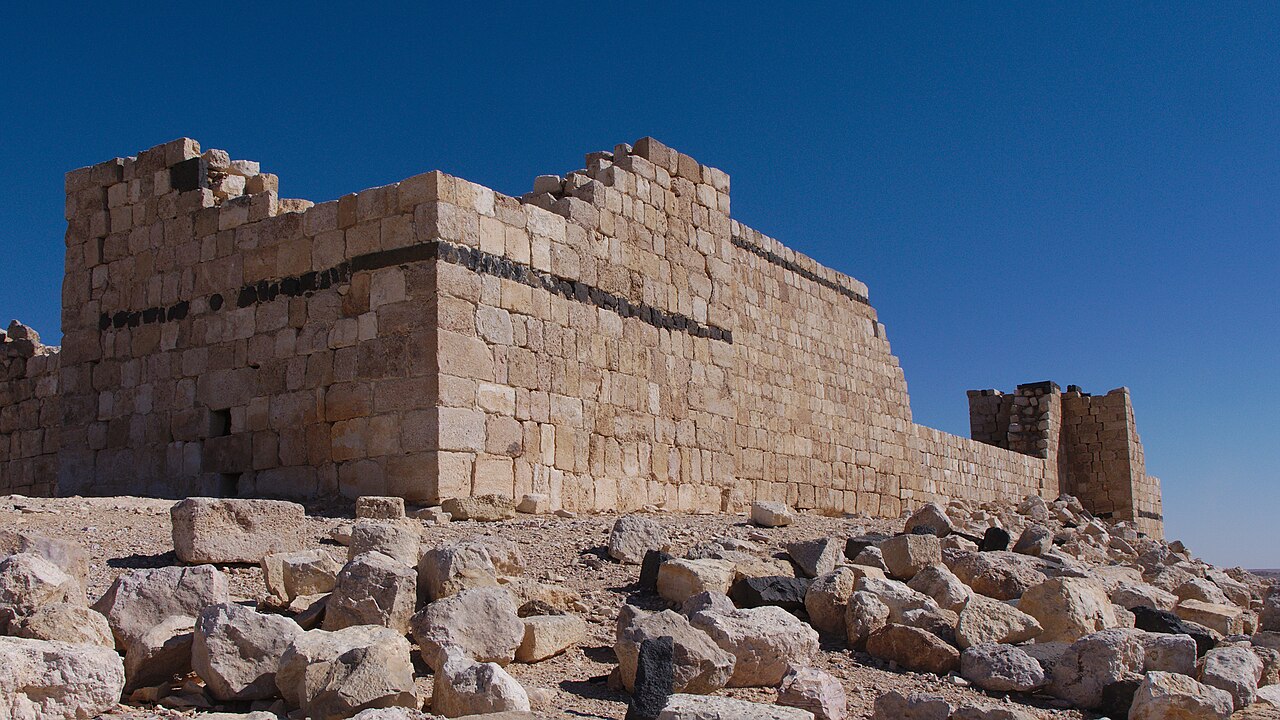
Salkhad Castle
Salkhad Castle, also known locally as Qalaat Salkhad, is a prominent hill castle situated on a basaltic mountain overlooking the town of Salkhad in southern Syria's Dar'a region. Its commanding position offers extensive views of the Jabal al-Arab hills and the Hauran plateau, underscoring its historical strategic importance near the border with Jordan and southeast of Damascus.
The site of Salkhad has a long history, with the town itself existing since biblical times. The earliest fortifications on this site were likely constructed under the Fatimid Caliph Al-Mustansir around 1073-74, marking the beginning of the castle's military significance. Over the following centuries, the castle changed hands among various regional powers, including the Seljuks, the Atabegs, and notably the Ayyubids and Mamluks, who played key roles in its development and fortification.
Historical development and military significance
Fatimid origins and early control
The initial fortification built during the Fatimid period laid the groundwork for the castle's defensive role in the region. After the Fatimids, the castle came under the control of the Seljuk ruler Tutush between 1078 and 1095 CE. His descendants maintained authority over the fortress for several decades, followed by the Atabegs under Fakhr al-Din Kamshikin until the mid-12th century.
The ayyubid era and crusader conflicts
In 1146, Salkhad Castle was besieged by the combined forces of Mu’in al-Din Unur, the lord of Damascus, and Nur ad-Din Mahmud, son of the famous Zengi, to suppress a revolt. This event highlights the castle's strategic importance during the turbulent Crusader period. Following the Battle of Hattin in 1187, the castle became part of the expanding realm of Saladin, further cementing its role as a frontier fortress against the Kingdom of Jerusalem.
The current ruins primarily date to the first half of the 13th century, when the Ayyubids rebuilt and fortified the castle to strengthen the defenses of Damascus. Notable figures during this period include Zayn al-Din Qaraja al-Salihi, who undertook extensive repairs in 1204, and Nasir al-Din Ya’qub, who contributed further renovations shortly thereafter.
Mamluk restoration and later history
The castle was conquered by the Mamluks in the latter half of the 13th century. In 1277, the Mamluk Sultan Baibars undertook significant rebuilding efforts, including restoration of the mosque and other key structures, to reinforce the fortress against the threat of Mongol invasions. The castle was entrusted to various Mamluk officials, including Balban al-Afram and Sayf al-Din Basiti, who oversaw its administration.
Throughout the medieval period, Salkhad Castle served not only as a military stronghold but also as a residence for regional leaders, military commanders, and scholars, reflecting its dual role in defense and governance.
Architectural features and layout
Salkhad Castle is constructed primarily from local basalt stone, which provides robust defensive walls suitable for withstanding sieges. The fortress is organized across three distinct levels, integrating residential quarters, administrative buildings, and a mosque within its enclosure.
The castle is surrounded by two concentric walls, with the outer wall forming an almost circular perimeter that enhances protection. Numerous watchtowers and observation posts are positioned along the walls, enabling surveillance over the surrounding landscape and communication with nearby fortifications.
Inside, the castle contains large halls, interconnected corridors, and a complex network of underground passageways and tunnels. These subterranean features likely served strategic purposes such as secret movement, storage, or refuge during attacks. Additionally, the presence of dungeons indicates the castle's role in detaining prisoners.
The mosque within the fortress is architecturally significant, featuring inscriptions linked to Izz al-Din Aybak from the early 13th century. It was renovated by Sultan Baibars following his military campaigns, symbolizing the religious and cultural importance of the site alongside its military functions.
Modern history and preservation
In the 20th century, during the period of the French Mandate over Syria, the castle became a focal point of resistance when the predominantly Druze population of Salkhad revolted against French control. The rebels used the castle as a stronghold, leading to a French air raid that heavily damaged the fortress, leaving it in ruins.
Despite its damaged state, the castle remained in military use for several decades during the late 20th century, which limited public access. Restoration efforts began in the 1990s to stabilize and preserve the remaining structures, although some military installations, such as radar equipment, remained on site for some time.
Today, Salkhad Castle is accessible to visitors, offering a unique glimpse into the layered history of southern Syria's medieval fortifications. While above-ground remains are modest, the extensive subterranean chambers and tunnels reveal the complexity and ingenuity of its design.
Cultural and historical significance
Salkhad Castle stands as a testament to the military architecture and political history of the Ayyubid and Mamluk periods in Syria. Its strategic location, robust construction, and historical role in regional conflicts highlight its importance as a frontier fortress guarding Damascus from Crusader and Mongol threats.
The castle's layered history, from its Fatimid origins through its Seljuk and Atabeg phases to its peak under the Ayyubids and Mamluks, provides valuable insights into the shifting power dynamics of medieval Syria. Its surviving architectural features, including the mosque and underground passages, enrich our understanding of the cultural and religious life intertwined with military defense.
Visitors to Salkhad Castle can explore a site that encapsulates centuries of Syrian history, reflecting the resilience and strategic ingenuity of its builders and occupants. The castle remains a significant cultural heritage site in the Dar'a region, attracting historians, archaeologists, and travelers interested in the medieval Islamic world.
Frequently asked questions (FAQ)
- How do I get to Salkhad Castle?
- Salkhad Castle is located in the town of Salkhad in the Syrian Arab Republic, approximately 40 kilometers south of Suwayda. You can reach the castle by car or local transport from nearby cities. The scenic route offers beautiful views of the surrounding landscape, making the journey enjoyable.
- What is the historical significance of Salkhad Castle?
- Salkhad Castle dates back to the 12th century and is an important example of Crusader architecture in the region. It served as a strategic stronghold during the Crusades and reflects the military and cultural history of the period. The castle's ruins tell the story of various civilizations that have inhabited the area over centuries.
- When was Salkhad Castle built?
- Salkhad Castle was constructed in the late 12th century, primarily by the Crusaders. It was strategically positioned to control the trade routes and protect the surrounding territories. Its construction reflects the military architecture of the time, designed to withstand sieges and attacks.
- Can I visit Salkhad Castle year-round?
- Yes, Salkhad Castle is open to visitors throughout the year, but it is advisable to check local conditions as accessibility may vary due to weather or maintenance. The best time to visit is during the spring and fall when the weather is mild and pleasant for exploration. Always check local guidelines before planning your trip.
- Why is Salkhad Castle considered an architectural marvel?
- Salkhad Castle is celebrated for its impressive fortifications, including thick walls and strategic towers that showcase the military engineering of the Crusader period. The castle's design incorporates local materials and blends harmoniously with the surrounding landscape. Its architecture not only served a defensive purpose but also reflected the power and prestige of those who occupied it.
- Is it possible to explore the interior of Salkhad Castle?
- Yes, visitors can explore certain areas of Salkhad Castle, including its towers and some ruins. While some parts may be restricted for safety reasons, the accessible areas offer a glimpse into the castle's historical significance. Guided tours may be available, providing deeper insights into the castle's history and architecture.
- What are the opening hours for Salkhad Castle?
- Salkhad Castle typically opens to visitors from 8 AM to 5 PM, but hours may vary seasonally. It is recommended to check ahead for any changes in operating hours before your visit. Arriving early allows you to enjoy the site with fewer crowds and take in the stunning views.
- Are there any nearby attractions to visit?
- Yes, nearby attractions include the ancient city of Suwayda, known for its archaeological sites, and the stunning landscapes of the Jabal al-Druze region. These locations provide additional opportunities for exploration and cultural experiences. Consider planning a day trip to enjoy the rich history and natural beauty of the area.
- What are the ticket prices for Salkhad Castle?
- The ticket prices for Salkhad Castle are generally affordable, with discounts available for students and groups. It is best to check the latest pricing information online or at the entrance before your visit. The fee contributes to the preservation of the castle and its surrounding area.
Information
Loading map...
Visitor reviews
No reviews yet. Been here? Write the first review and help other travelers!
Write the first reviewVisited this castle? Share your experience
Your review helps other travelers and adds first-hand knowledge to our encyclopedia.