Hammam al-Sarah
Hammam al-Sarah is a significant early Islamic bathhouse located near the desert castle complex of Qasr al-Hallabat in modern-day Jordan. Constructed during the reign of Umayyad Caliph Hisham ibn Abd al-Malik between approximately 710 and 725 CE, it served as an independent bathing facility complementing the nearby castle, which itself was built atop a former Roman fortress. The bathhouse is an important example of early Islamic architecture and social customs related to bathing practices in the desert environment of the Umayyad period.
The site of Qasr al-Hallabat reflects a complex history of occupation and transformation. Originally a Roman military fortress, it was deliberately demolished under caliphal orders before the Umayyads erected their desert palace complex. Hammam al-Sarah was constructed about two kilometers east of the main castle, functioning as a separate but integral annex to the Umayyad retreat. This separation of the bathhouse from the main castle complex is somewhat unusual and highlights the importance of bathing culture in Umayyad society.
Architectural design and layout
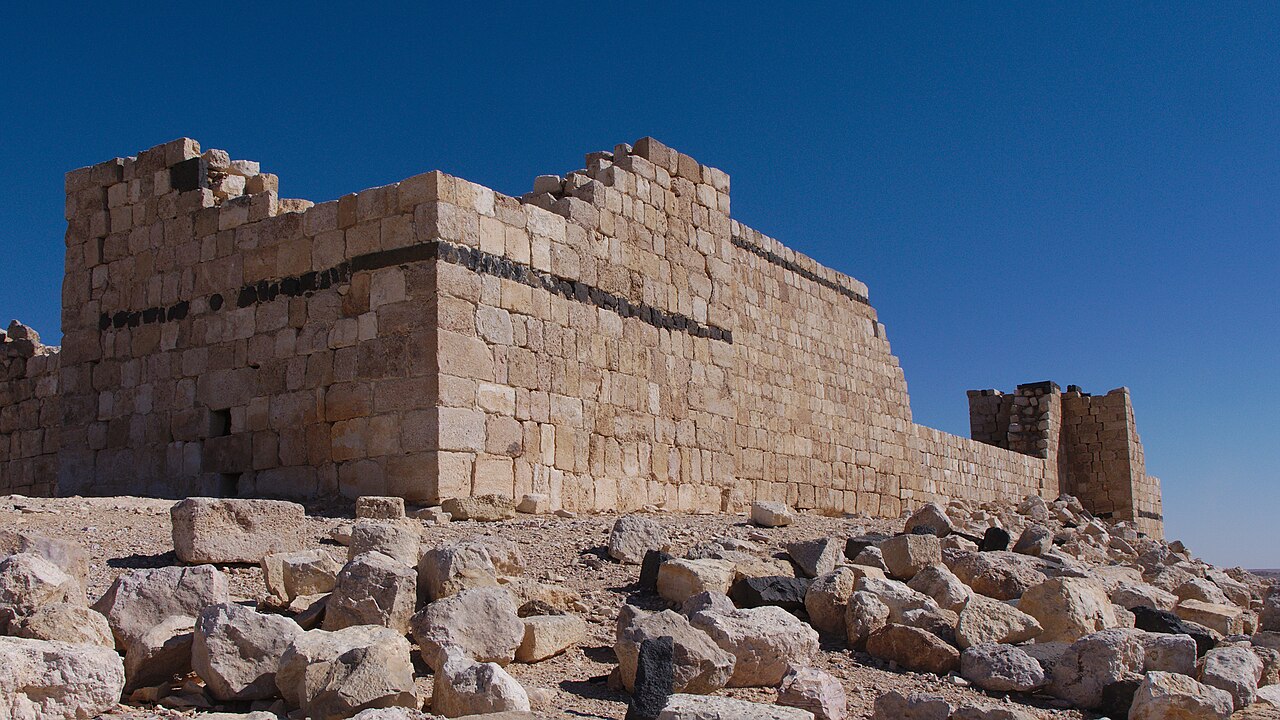
The bathhouse at Hammam al-Sarah follows a rectangular plan built primarily from finely cut limestone blocks and bricks. The structure showcases vaulted ceilings over multiple rooms designed for different stages of the bathing process. The sequence of rooms is arranged towards the northern section of the building, facilitating a smooth transition through the bathing ritual.
Bathing chambers and features
The complex includes three primary chambers: the apodyterium (changing room), the tepidarium (warm room), and the caldarium (hot room). Notably, Hammam al-Sarah lacks a frigidarium or cold room, which marks a departure from earlier Roman bath designs and reflects adaptations to Islamic bathing customs. The entrance was likely located on the southwestern side, leading visitors into the bathing sequence.
Decorative elements and interior finishes
Interior walls were once adorned with marble finishes, frescoes, and mosaics, enhancing the visual and sensory experience of the bathers. The carved stone moldings framing doorways and wall edges exhibit a level of craftsmanship more refined than similar features found in nearby Umayyad sites such as the mosque at Qasr al-Hallabat and the bath porch at Khirbat al-Mafjar. Small windows containing fragments of colored glazed glass allowed natural light to enter while controlling heat and ventilation.
Water supply and heating system
The bathhouse's water management system was sophisticated, incorporating a well, a sāqiyah (water-lifting wheel), and a raised water tank to store and distribute water efficiently. Heating was provided by a furnace attached to the building, which warmed the water and air in the caldarium, demonstrating advanced engineering adapted to the desert climate.
Historical context and later adaptations
Following its primary use in the early 8th century, Hammam al-Sarah fell into decline. At some point after the Umayyad era, a small mosque was added to the northernmost corner adjacent to the bathhouse's service rooms, near the furnace. Although the exact date of this addition is uncertain, it indicates continued, albeit limited, religious and functional use of the site beyond its original purpose. Today, this mosque stands roofless, a testament to the site's layered history.
Archaeological discovery and conservation efforts
The site was rediscovered by archaeologist H.C. Butler in 1905. Later, in 1926, K.A.C. Creswell documented and photographed Hammam al-Sarah while it was still largely intact. Unfortunately, during the 1950s, the bathhouse suffered severe damage due to the removal of stones, which threatened its structural integrity.
Emergency excavations and stabilization were undertaken by the Jordanian Department of Antiquities in 1974 and 1975 to prevent further deterioration. Since then, the Spanish Archaeological Mission, led by Ignacio Arce, has managed ongoing conservation efforts. These have included replacing earlier emergency repairs with more careful preservation techniques and reconstructing key architectural elements such as the dome. Restoration work has continued into the 21st century, with significant progress made as recently as 2017.
Significance and legacy
Hammam al-Sarah is a rare surviving example of an early Islamic desert bathhouse, illustrating the Umayyad dynasty's architectural innovation and adaptation of Roman bathhouse traditions to Islamic cultural needs. The site offers valuable insights into the social and religious life of the Umayyad period, particularly the importance of bathing rituals and water management in arid environments.
Its preservation and study contribute to understanding the broader network of Umayyad desert castles and their role as multifunctional complexes combining residential, military, and recreational functions. Hammam al-Sarah's architectural features, especially its vaulted rooms, water systems, and decorative elements, remain important for scholars and visitors interested in early Islamic art and architecture.
Frequently asked questions (FAQ)
- How do I get to Hammam al-Sarah from Amman?
- Hammam al-Sarah is located near Qasr al-Hallabat in Jordan. From Amman, you can reach the site by car in approximately 2 hours via Highway 15, followed by local roads. It is advisable to use a GPS or local guide for the final approach due to limited signage.
- What is the historical significance of Hammam al-Sarah?
- Hammam al-Sarah is an early 8th-century Umayyad bathhouse that illustrates the adaptation of Roman bathhouse architecture to Islamic customs. It provides valuable insights into Umayyad desert castle complexes and early Islamic social practices.
- Can I visit the mosque attached to the bathhouse?
- Yes, visitors can see the small mosque added to the northern corner of the bathhouse complex. Although roofless, it remains an important part of the site's historical layers and is accessible during site visits.
- What architectural features are notable at Hammam al-Sarah?
- The bathhouse features vaulted ceilings, finely cut limestone blocks, carved stone moldings, and a sophisticated water supply system including a well, water-lifting wheel, and raised water tank. Its decorative marble finishes and colored glazed glass windows are also significant.
- Is Hammam al-Sarah suitable for visitors with limited mobility?
- The site has uneven terrain and partially restored structures, which may pose challenges for visitors with limited mobility. It is recommended to contact the Jordanian Department of Antiquities for detailed accessibility information before visiting.
Information
Current owner
Jordanian Department of Antiquities
Loading map...
Visitor reviews
No reviews yet. Been here? Write the first review and help other travelers!
Write the first reviewVisited this castle? Share your experience
Your review helps other travelers and adds first-hand knowledge to our encyclopedia.