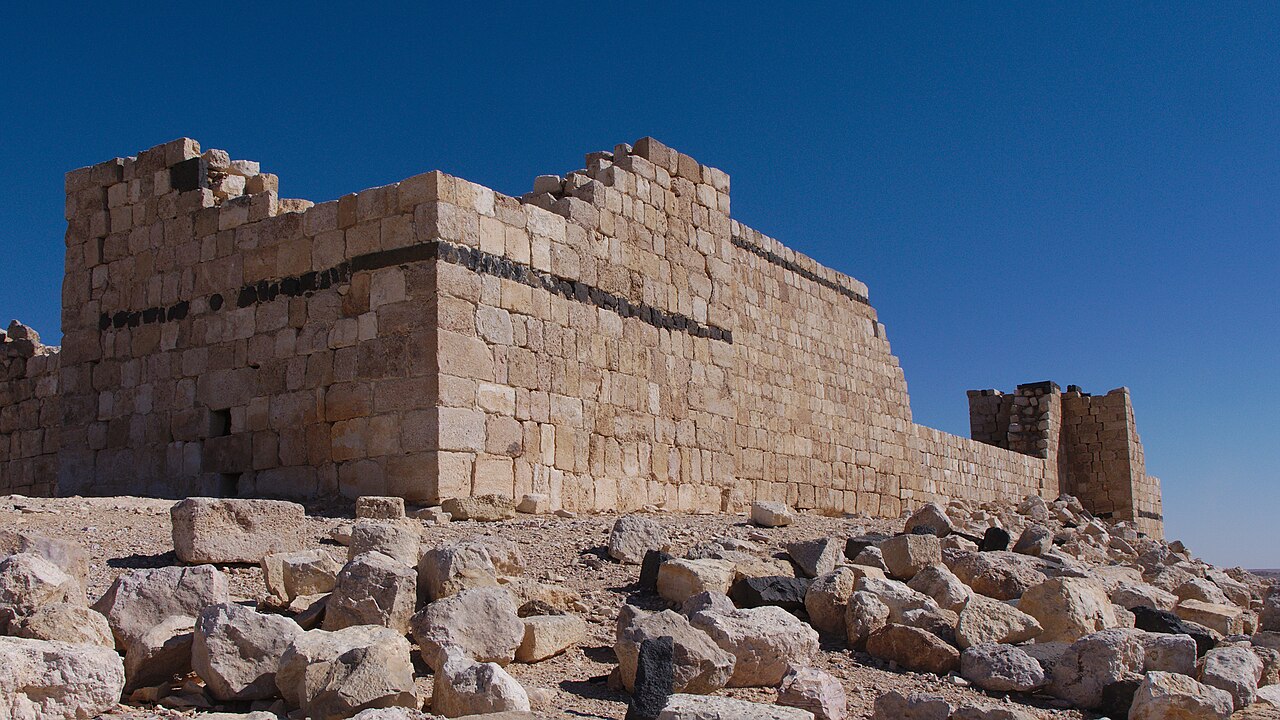
Bosra Citadel
Bosra Citadel stands as a remarkable testament to the layered history of Bosra, a city in southern Syria. Originally constructed in the late 2nd century as a Roman theater, this monumental structure was designed to accommodate between 9,000 and 15,000 spectators, showcasing the grandeur of Roman architectural and cultural influence in the region. Over the centuries, the citadel evolved dramatically, reflecting the changing political and military landscape of the Near East.
The roman origins and architectural grandeur
The core of Bosra Citadel is its Roman theater, one of the best-preserved examples of Roman entertainment architecture in the Middle East. Built in the 2nd century AD, the theater features a semi-circular auditorium, or cavea, with tiered seating arranged to maximize acoustics and visibility. The stage building, or scaenae frons, was richly decorated and designed to impress audiences with elaborate performances and ceremonies.
The theater's capacity and scale underscore Bosra's importance as a provincial capital in the Roman Empire, serving as a cultural hub in the region of Arabia Petraea. The use of local basalt stone in construction gave the theater a distinctive dark appearance, contrasting with the lighter stones typically used in Roman architecture elsewhere.
Transformation into a fortified citadel
Umayyad modifications
During the Umayyad period in the 7th and 8th centuries, the theater underwent significant changes. The original open portals of the theater were walled up, effectively converting the space from a public entertainment venue into a fortified structure. This adaptation reflects the shifting priorities of the era, emphasizing defense and security amid regional instability.
Abbasid refuge and seljuk fortifications
In the subsequent Abbasid period, the citadel served as a refuge, highlighting its strategic importance. Following the Seljuk Turks' conquest of Damascus and the surrounding areas in 1076, the building was transformed into a true military fortress for the first time. The Seljuks added two staircases into towers and sealed all openings, reinforcing its defensive capabilities.
Ayyubid enhancements under al-adil
Around 1202-1203, the citadel was extensively strengthened by the Ayyubids under the leadership of Al-Adil, brother of the famed Sultan Saladin. Up to nine massive square towers were constructed around the inner core of the citadel, projecting from blind ramparts that enhanced its defensive perimeter. A deep dry moat encircled the entire complex, adding another layer of protection against invaders.
Inside the citadel, visitors can find a complex arrangement of vaulted rooms, twisting passages, and rampart walks, all designed to maximize defense and control. The builders ingeniously reused materials from the ruins of the antique Roman city, including sections of pillars embedded in the towers' walls, showcasing a practical adaptation of available resources.
Later history and military significance
After Al-Adil's death in 1218, his son as-Salih Ismail made Bosra Citadel his residence until 1246. The citadel's strategic value continued through the turbulent 13th century. In 1260, it was surrendered to the Mongols without a fight, but they were soon expelled by the Mamluk Sultan Baibars, who restored the fortress and stationed a permanent garrison there.
This garrison remained active well into the Ottoman Empire era, with records from 1897 indicating a force of several hundred men. The citadel’s continuous military use over centuries underscores its enduring strategic importance in controlling the region.
Modern restoration and visitor experience
In the 20th century, the Syrian Department of Antiquities undertook significant restoration work at Bosra Citadel. This included the careful removal of medieval additions inside the Roman theater, revealing the original architectural splendor beneath. Today, the site offers a unique blend of ancient Roman cultural heritage and medieval military architecture.
Visitors to Bosra Citadel can explore freely the extensive network of hallways, rooms, and defensive structures. The site is accessible for a small entrance fee, making it an attractive destination for tourists interested in history, architecture, and archaeology. The juxtaposition of a Roman theater within a fortified medieval citadel provides a rare glimpse into the adaptive reuse of monumental architecture across different historical epochs.
Architectural highlights
- Roman theater with basalt stone construction and preserved cavea
- Blind ramparts and square towers from the Ayyubid period
- Deep dry moat surrounding the citadel
- Vaulted chambers and twisting defensive passages
- Reused Roman architectural elements integrated into medieval fortifications
Historical significance
Bosra Citadel exemplifies the evolution of a single architectural complex from a center of Roman public life to a fortified medieval stronghold. Its history reflects the broader geopolitical shifts in the Levant, from Roman provincial rule through Islamic caliphates, Seljuk dominance, Ayyubid consolidation, Mongol invasions, and Mamluk restoration.
The citadel's endurance and adaptations highlight the strategic importance of Bosra as a crossroads of cultures and military power. Today, it stands as a cultural heritage site of exceptional value, attracting scholars, historians, and tourists alike.
Frequently asked questions (FAQ)
- How do I visit Bosra Citadel?
- Bosra Citadel is open to visitors for a small entrance fee. It is advisable to check local travel advisories and opening hours before planning your visit.
- What is the historical significance of Bosra Citadel?
- Bosra Citadel uniquely combines a Roman theater with medieval fortifications, reflecting the region's complex history from Roman to Mamluk periods.
- Can I explore inside the citadel?
- Yes, visitors can freely explore the hallways, rooms, and defensive structures inside Bosra Citadel, experiencing its unique blend of Roman and medieval architecture.
- When was Bosra Citadel built?
- The original Roman theater at Bosra was built in the late 2nd century, with major medieval fortifications added from the 7th century onwards.
- Why is Bosra Citadel architecturally unique?
- Its architectural uniqueness lies in the transformation of a large Roman theater into a fortified citadel with multiple layers of defensive structures spanning several historical periods.
Information
Address
109, Syrian Arab Republic
Loading map...
Visitor reviews
No reviews yet. Been here? Write the first review and help other travelers!
Write the first reviewVisited this castle? Share your experience
Your review helps other travelers and adds first-hand knowledge to our encyclopedia.