Qasr al Hallabat
Qasr al Hallabat is an important example of an Umayyad desert castle located in the eastern desert of Jordan. This hill castle stands out for its strategic position and remarkable preservation of early Islamic military and residential architecture. Built primarily during the early 8th century, it served as a fortified palace complex designed to protect trade routes and provide a rural retreat for Umayyad elites.
Historical context and significance
The castle was constructed under the Umayyad Caliphate, a period spanning from 661 to 750 AD, which marked the first great Islamic dynasty following the Rashidun Caliphate. The Umayyads invested heavily in desert castles, or qusur, which functioned both as fortified outposts and as agricultural estates. Qasr al Hallabat is one of the best-preserved examples of these structures, reflecting the Umayyads' efforts to consolidate their power and control over the vast desert regions of the Middle East.
The site was originally a Roman military fortification before being adapted and expanded by the Umayyads. This layering of architectural influences is visible in the castle's construction, combining Roman and early Islamic elements.
Architectural features
Fortifications and layout
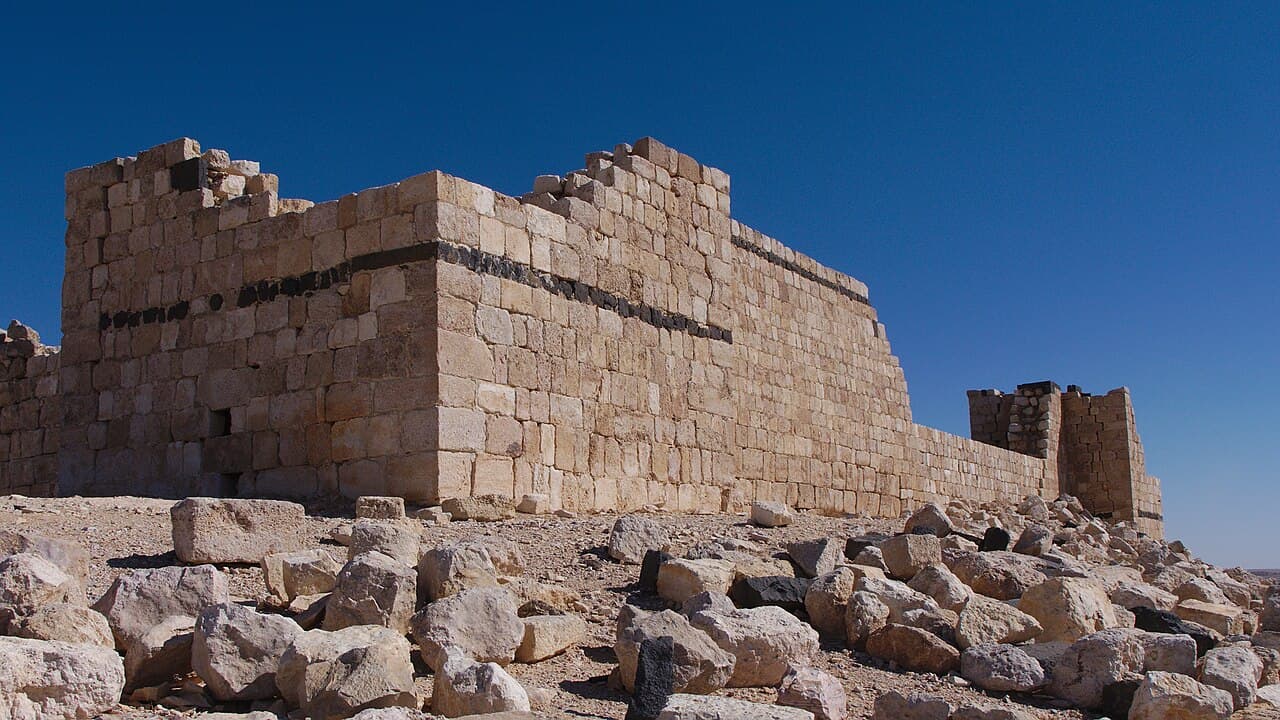
The castle is built on a rocky hill, which provided natural defense advantages. Its fortified walls enclose a roughly rectangular courtyard surrounded by towers at the corners and along the walls. The walls are constructed from large stone blocks, showcasing skilled masonry typical of the Umayyad period. The towers were designed for both defense and surveillance, allowing guards to monitor the surrounding desert landscape.
Residential and functional spaces
Inside the walls, the castle includes a variety of rooms and facilities. Notably, there is a bathhouse (hammam) that highlights the importance of hygiene and leisure in Umayyad culture. The bathhouse features typical elements such as a warm room (tepidarium), hot room (caldarium), and cold room (frigidarium), demonstrating the transfer of Roman bathing traditions into Islamic architecture.
Other residential quarters include audience halls and private chambers, indicating that the castle was not only a military installation but also a place for governance and retreat.
Artistic and cultural elements
The castle features decorative elements such as carved stonework and stucco, which reflect the artistic styles of the Umayyad period. These decorations often include geometric patterns and vegetal motifs, consistent with early Islamic art's aniconic tendencies. The fusion of Roman architectural techniques with Islamic aesthetics at Qasr al Hallabat illustrates the cultural synthesis during the early Islamic era.
Preservation and current status
Qasr al Hallabat is considered well preserved compared to many other desert castles. Its structures remain largely intact, allowing visitors and scholars to study early Islamic military and residential architecture firsthand. The site is managed as a cultural heritage monument in Jordan and is accessible to tourists interested in the region's history.
Visiting Qasr al Hallabat
The castle is located in a remote desert area, accessible by road from major cities in Jordan. Visitors can explore the extensive ruins, including the walls, towers, and bathhouse. The site offers insight into the Umayyad period's architectural innovation and the strategic importance of desert fortifications.
While facilities are limited due to its remote location, the castle provides a unique experience for those interested in early Islamic history and desert architecture.
Frequently asked questions (FAQ)
- How do I get to Qasr al Hallabat from Amman?
- Qasr al Hallabat is approximately 90 kilometers east of Amman. Visitors can reach the site by car via the desert highway, with a drive time of around 1.5 hours.
- What is the historical significance of Qasr al Hallabat?
- Qasr al Hallabat is a prime example of an Umayyad desert castle, showcasing early Islamic military and residential architecture and reflecting the dynasty's control over desert trade routes.
- Can I explore the bathhouse at Qasr al Hallabat?
- Yes, the castle includes a well-preserved bathhouse featuring typical Roman and Islamic bathing rooms, which visitors can explore to understand Umayyad leisure and hygiene practices.
- Is Qasr al Hallabat suitable for families and children?
- The site is open to all visitors, including families. However, due to its remote desert location and uneven terrain, caution is advised for young children and those with mobility issues.
- When is the best time to visit Qasr al Hallabat?
- The best time to visit is during the cooler months from October to April, as the desert climate can be extremely hot in summer.
Photo gallery

Information
Opening hours
08:00-17:00, daily
Ticket prices
Free
Current owner
Jordanian Department of Antiquities
Loading map...
Visitor reviews
No reviews yet. Been here? Write the first review and help other travelers!
Write the first reviewVisited this castle? Share your experience
Your review helps other travelers and adds first-hand knowledge to our encyclopedia.