Salegg Castle
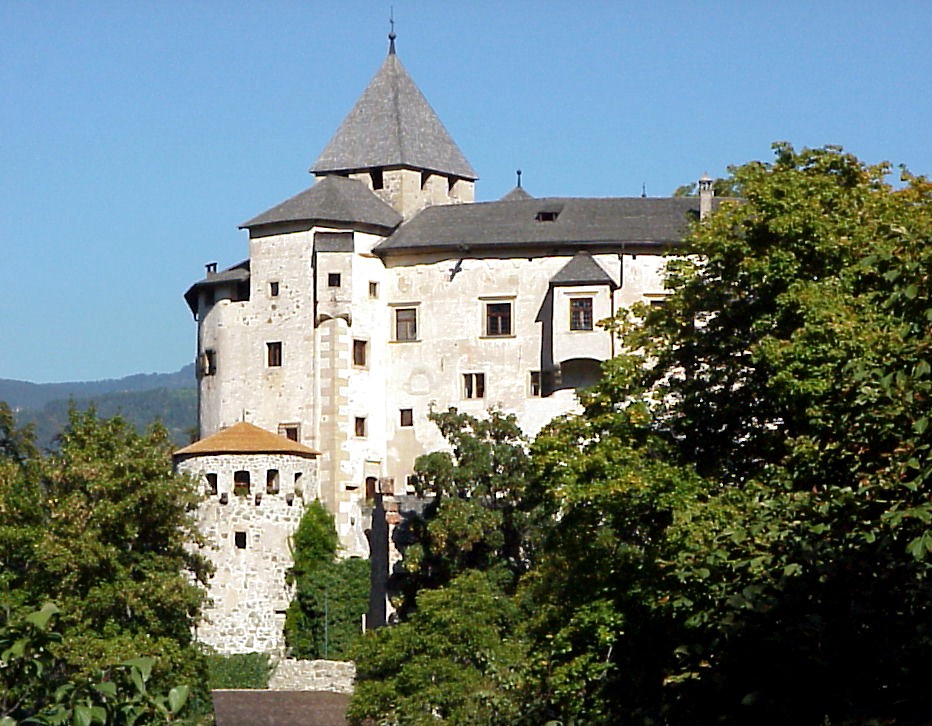
Salegg Castle stands as a remarkable example of a medieval hill fortress nestled within the municipality of Kastelruth in modern-day Italy. Constructed in the 12th century, this castle was originally established by the Lords of Saleck, a noble family serving as ministeriales—unfree knights entrusted with administrative and military duties—for the Bishop of Brixen. The earliest documentary mention of the castle dates back to 1178, confirming its long-standing historical presence in the region.
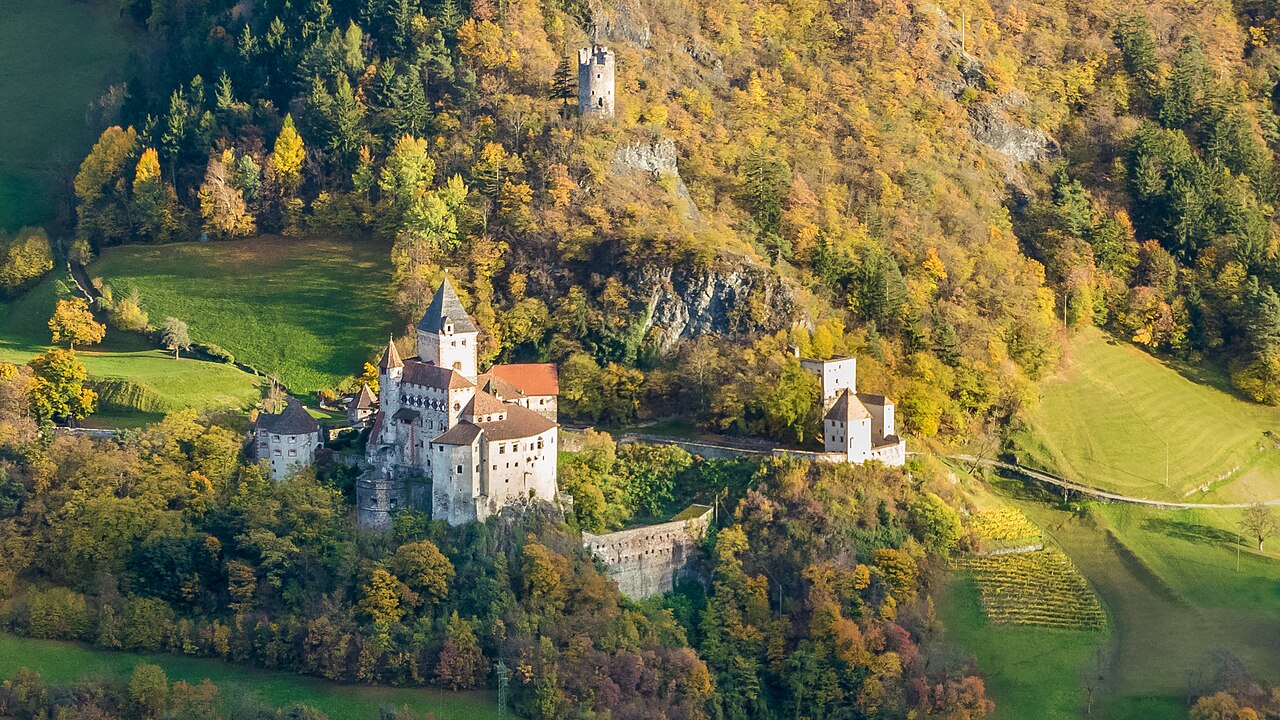
Perched at approximately 1,219 meters above sea level on a natural outcrop of black porphyry rock in the dense Hauensteiner Forest, Salegg Castle occupies a strategic position near the Santnerspitze peak. Its location provided commanding views and natural defenses, typical of hill castles designed to oversee and control surrounding territories. The castle lies about one kilometer west of the Hauenstein Castle ruins, another medieval fortress with close historical ties to Salegg.
Historical context and ownership
Throughout the late Middle Ages, Salegg Castle functioned as a fief and was notable for its status as a Ganerbenburg, a rare form of castle ownership where multiple branches of noble families jointly inherited and managed the estate. This arrangement often led to complex ownership and administrative structures, reflecting the feudal dynamics of the period.
Ownership of the castle changed hands several times over the centuries. In 1438, the estate was held by Kaspar von Gufidaun. By 1473, the Zwingenstein family acquired the castle, following an earlier association with Konrad von Kraig. By the mid-16th century, the Wolkenstein family took possession, linking Salegg to the neighboring Hauenstein Castle. The Wolkenstein family is historically significant due to the late medieval poet and musician Oswald von Wolkenstein, who was associated with Hauenstein, thereby connecting Salegg to wider cultural narratives of the era.
The castle's active use declined in the early 17th century, leading to gradual abandonment. Over time, portions of the structure were dismantled, with materials repurposed for other building projects in the vicinity. This decline reflects broader shifts in military technology and political power that rendered many medieval fortresses obsolete.
Architectural features and remains
Salegg Castle exemplifies the typical layout of a medieval hill castle, strategically sited amid dense coniferous woods. The surviving ruins reveal significant architectural elements, including fragments of a ring wall approximately one meter thick, which once encircled the castle's core areas to provide defense against attackers.
Within this enclosure, portions of the palas wall remain visible. The palas served as the main residential and administrative building, reflecting the castle's dual military and domestic functions. Architectural adaptations over time included the addition of corner turrets to the palas, enhancing both defensive capabilities and observation points.
The castle also historically included a chapel, underscoring the religious dimension of medieval noble life. While the chapel's physical remains have not survived, its altar and bell were relocated to the nearby Maria-Hilf Church in Seis, which was consecrated in 1657 by Bishop Jesse Perkhofer. This transfer preserves an important link between the castle's spiritual heritage and the local community.
Conservation efforts
The ruins suffered extensive deterioration due to centuries of abandonment and natural decay. Recognizing their cultural and historical value, a focused conservation plan was developed in 2000 by architect Albrecht Ebensberger. Subsequent masonry stabilization in 2001 reinforced the surviving structures, preventing further collapse. Vegetation clearing in 2002 improved site visibility and accessibility, enabling visitors and researchers to better appreciate the castle's remains.
Local legends and cultural significance
Salegg Castle is steeped in local folklore, most notably the legend of a secret underground passage connecting it to nearby Hauenstein Castle. This tunnel is said to have been guarded by a golden-haired maiden, a figure who features prominently in regional storytelling. Although no archaeological evidence supports the existence of such a passage, the legend enriches the castle's cultural narrative and attracts interest from visitors and historians alike.
In the 20th century, a hotel named after the castle was established at the foot of the ruins. This site gained additional historical interest as the place where the German philosopher Wilhelm Dilthey passed away in 1911. Today, the ruins are owned and managed by the Diocese of Bolzano-Brixen, which oversees their preservation as part of the region's cultural heritage.
Visiting salegg castle
Visitors to Salegg Castle can explore the evocative ruins set amidst the serene natural environment of the Hauensteiner Forest. The site's elevated position offers scenic views and a tangible connection to medieval history. While the castle itself is in a ruined state, ongoing conservation efforts ensure that its remains remain accessible and informative for those interested in medieval architecture and South Tyrolean history.
The proximity to Hauenstein Castle allows for a combined exploration of two historically linked medieval fortresses, enriching the visitor experience with layered insights into feudal life, noble families, and regional defense strategies during the Middle Ages.
Frequently asked questions (FAQ)
- How do I get to Salegg Castle?
- Salegg Castle is located in Kastelruth, Italy, and can be accessed by car or public transport. If you are driving, there is parking available nearby, and the castle is within walking distance from the town center. Public buses also connect Kastelruth to surrounding areas, making it convenient for visitors.
- What is the historical significance of Salegg Castle?
- Salegg Castle dates back to the 13th century and is a significant example of medieval architecture in South Tyrol. It served as a noble residence and has witnessed many historical events over the centuries. Today, it stands as a symbol of the region's rich history and cultural heritage.
- When was Salegg Castle built?
- Salegg Castle was constructed in the early 13th century, specifically around the year 1230. Its architecture reflects the design styles of the medieval period, and it has been preserved to showcase the historical significance of that era. The castle has undergone various restorations to maintain its structure and beauty.
- Can I visit Salegg Castle year-round?
- Yes, Salegg Castle is open to visitors year-round, though the opening hours may vary seasonally. It is always best to check the official website or local tourist information for the most accurate hours before planning your visit. Guided tours are available to enhance your experience and understanding of the castle's history.
- Why is Salegg Castle a popular tourist attraction?
- Salegg Castle is popular due to its stunning architecture, breathtaking views of the surrounding landscape, and rich history. Visitors are captivated not only by the castle itself but also by the picturesque scenery of the Dolomites. Its accessibility and proximity to other attractions in Kastelruth make it a must-visit destination.
- Is it possible to take guided tours of Salegg Castle?
- Yes, guided tours of Salegg Castle are available and highly recommended for a comprehensive understanding of its history and architecture. These tours provide insights that enhance the visitor experience, allowing you to appreciate the castle's significance fully. Be sure to check the schedule for tour times when planning your visit.
- What are the ticket prices for Salegg Castle?
- Ticket prices for Salegg Castle are generally affordable, with discounts available for students and seniors. Children under a certain age may enter for free or at a reduced rate. It's advisable to check the official website for the latest pricing information and any special offers that may be available.
- What is the best time to visit Salegg Castle?
- The best time to visit Salegg Castle is during the spring and early autumn months when the weather is mild and the surrounding nature is at its most beautiful. During these seasons, the views from the castle are particularly stunning, and the crowds are generally smaller. Summer can also be a good time, but expect more visitors.
- Are there any nearby attractions to visit alongside Salegg Castle?
- Yes, there are several nearby attractions that complement a visit to Salegg Castle. The charming town of Kastelruth offers shops, restaurants, and cultural experiences. Additionally, the breathtaking Dolomites and various hiking trails make for excellent outdoor activities in the area.
Information
Loading map...
Visitor reviews
No reviews yet. Been here? Write the first review and help other travelers!
Write the first reviewVisited this castle? Share your experience
Your review helps other travelers and adds first-hand knowledge to our encyclopedia.