Castle Hauenstein
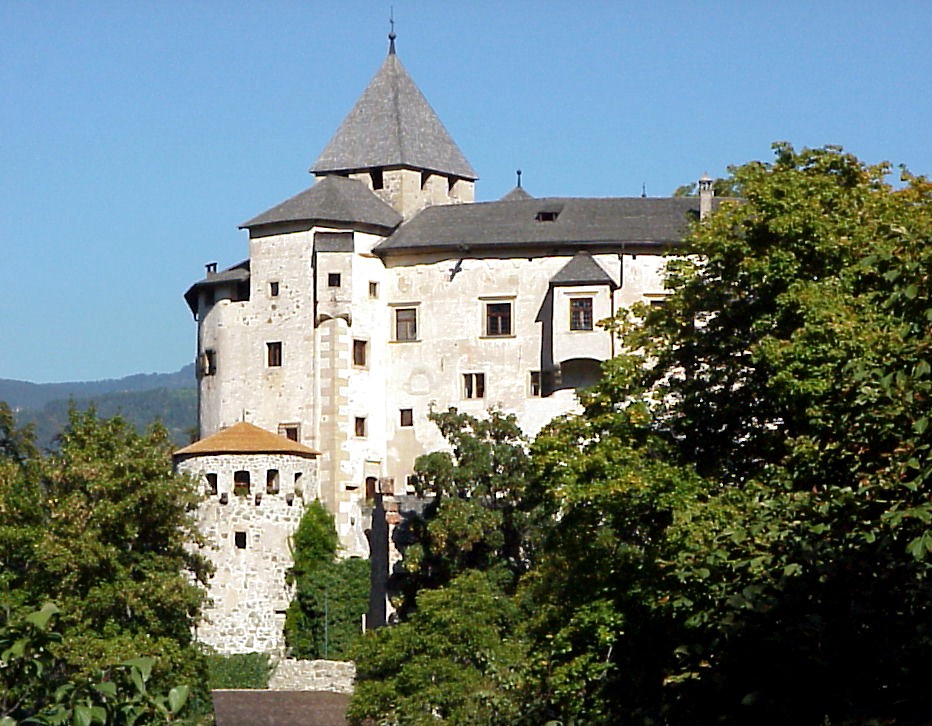
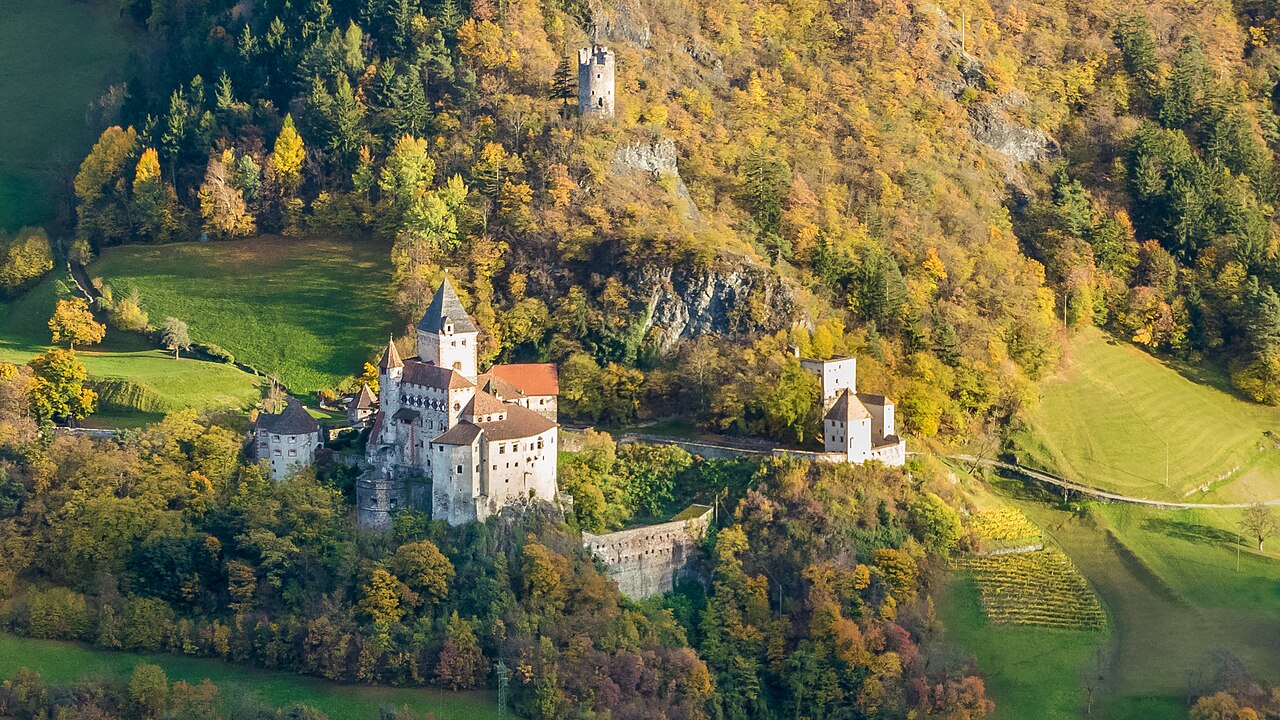
Castle Hauenstein, also known as Castelvecchio, is a remarkable example of a medieval hill castle situated above the village of Seis am Schlern in northern Italy. Constructed in the 12th century by the noble lords of Hauenstein, this fortress occupies a commanding position at approximately 1,273 meters above sea level on a prominent dolomitic rock formation at the foot of the Schlern mountain. Its strategic location provided natural defenses and panoramic views over the surrounding Alpine landscape, a typical feature of hill castles designed for both protection and territorial control.
Historic significance and ownership
The earliest known record of Castle Hauenstein dates back to 1186, establishing its importance in the region during the high medieval period. Over the subsequent centuries, the castle underwent expansions and modifications, particularly during the 15th and 16th centuries, reflecting the changing needs and elevated status of its owners. A notable figure associated with the castle is the Tyrolean poet and knight Oswald von Wolkenstein, who inherited a partial share in the late medieval era. Oswald's residency at the castle was culturally significant; he composed many of his songs here and hosted his family, including his wife Margareta von Schwangau and their children, within its fortified walls.
The castle's history is marked by a series of ownership disputes involving noble families such as the Hauensteins, Ekhard von Villanders, Friedrich von Wolkenstein, and the Jäger family. These conflicts culminated in a legal resolution in 1427 through Oswald von Wolkenstein's intervention, securing his full rights to the estate. Subsequently, on January 1, 1551, the castle passed officially to Baron Christoph von Wolkenstein. Despite this formal transfer, the castle gradually fell into neglect from the 17th century onward, leading to its eventual ruin.
Architectural features and construction
Castle Hauenstein was primarily constructed using local stone, a common material in medieval Alpine architecture, which provided durability and blended with the natural environment. The fortress was designed around the natural rocky outcrop, utilizing the terrain for defense. Although the full layout is not completely documented, surviving structures suggest a compact complex with thick defensive walls, a chapel, and residential quarters.
Among the most significant architectural remnants are the thick stone walls that have been carefully restored during conservation efforts in the 1970s. These walls reveal the castle's once formidable fortifications, including battlements and defensive towers that would have protected the inhabitants from invaders. Within the ruins lies a chapel adorned with traces of fresco paintings, which were uncovered and conserved during archaeological excavations. These frescoes provide valuable insight into the religious and cultural life within the castle during the medieval period.
Defensive and residential elements
The castle's position on a dolomitic rock formation enhanced its natural defenses, making it difficult to assault. The thick walls and elevated location would have allowed defenders to observe and repel attackers effectively. Residential sections within the castle accommodated the noble family and their retainers, with spaces for living, administration, and storage.
Archaeological discoveries and restoration
Modern archaeological excavations at Castle Hauenstein have uncovered a variety of artifacts that shed light on the daily life and status of its medieval inhabitants. Among the most notable finds is a distinctive bronze sword believed to have belonged to Oswald von Wolkenstein, highlighting the poet's direct connection to the site. Other artifacts include household items and weaponry, illustrating the castle's dual role as a noble residence and military stronghold.
In the 1970s, restoration efforts were undertaken to stabilize the ruins and preserve the site's historical integrity. These efforts coincided with the 600th anniversary of Oswald von Wolkenstein's death, emphasizing the cultural importance of the castle. The restoration work included consolidating the remaining walls, preserving the fresco fragments in the chapel, and making the site accessible to the public.
Visitor experience and access
Today, Castle Hauenstein is a captivating historical site open to visitors who wish to explore its ruins and enjoy the stunning Alpine scenery. A well-marked hiking trail, designated as trail number 8, connects the nearby village of Siusi am Schlern to the castle ruins, with an approximate walking time of 30 minutes. The path offers a pleasant and scenic route through the Dolomites, making the castle accessible to hikers of moderate ability.
Visitors can explore the restored sections of the castle walls, the chapel with its conserved frescoes, and the surrounding landscape that once defined the castle's strategic importance. The site is maintained by the local diocese, ensuring ongoing preservation and interpretation for future generations.
Cultural legacy and significance
Castle Hauenstein holds a unique place in the cultural and historical heritage of the region. Its association with Oswald von Wolkenstein, a prominent medieval poet and knight, links the site to the broader narrative of late medieval European culture. The castle's enduring ruins stand as a testament to the architectural ingenuity and feudal history of the Alpine region.
As a hill castle built in the high medieval period, Castle Hauenstein exemplifies the strategic use of natural terrain in fortress construction. Its preservation and archaeological study contribute valuable knowledge about medieval life, noble residences, and defensive architecture in the Dolomites.
Frequently asked questions (FAQ)
- How do I reach Castle Hauenstein from Siusi am Schlern?
- Castle Hauenstein is accessible via a well-marked hiking trail number 8 from Siusi am Schlern. The hike takes approximately 30 minutes and offers scenic views of the Dolomites.
- What is the historical significance of Castle Hauenstein?
- Castle Hauenstein dates back to the 12th century and is linked to the noble lords of Hauenstein and the Tyrolean poet Oswald von Wolkenstein, highlighting its importance in medieval Alpine history.
- Can I explore the castle ruins and chapel?
- Yes, visitors can explore the restored stone walls and the chapel with conserved fresco paintings, providing insight into the castle's medieval architecture and religious life.
- When were the restoration efforts carried out at Castle Hauenstein?
- Restoration and conservation work took place in the 1970s, coinciding with the 600th anniversary of Oswald von Wolkenstein's death, to stabilize the ruins and preserve frescoes.
- Who currently manages Castle Hauenstein?
- The castle ruins are currently under the care of the local diocese, which maintains the site and facilitates public access.
Information
Sources & official resources
Verify the information above using these authoritative references.
Loading map...
Visitor reviews
No reviews yet. Been here? Write the first review and help other travelers!
Write the first reviewVisited this castle? Share your experience
Your review helps other travelers and adds first-hand knowledge to our encyclopedia.