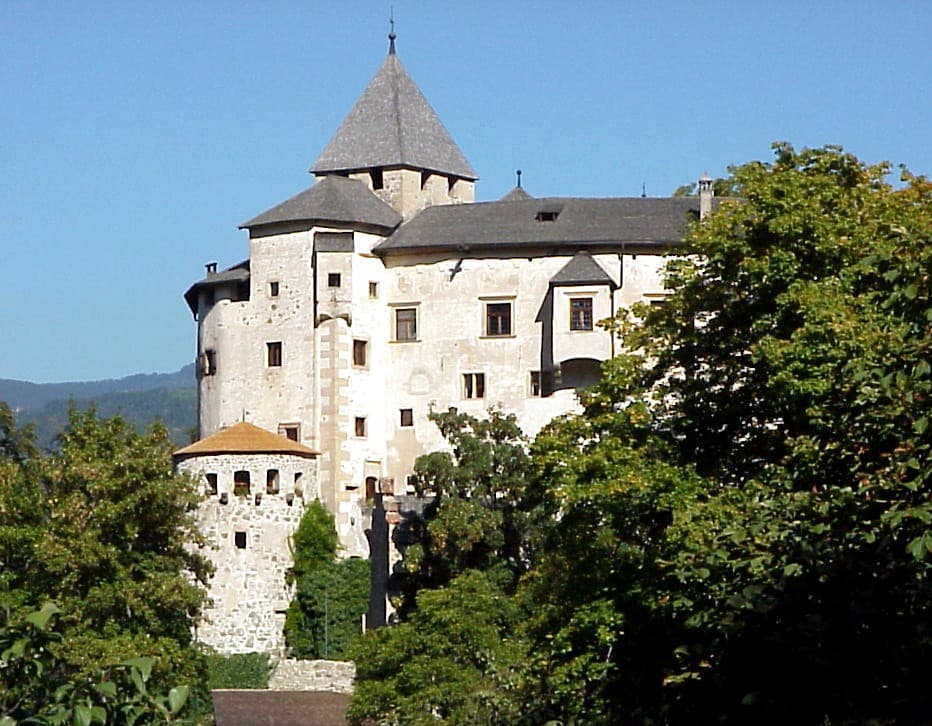
Prösels Castle — Italy castle

Prösels Castle

Prösels Castle: a medieval hill castle in Trentino-Alto Adige, Italy
Völs am Schlern, Trentino-Alto Adige, Italy
High Medieval (11th–13th c.)
Well Preserved

Prösels Castle, also known as Castello di Presule or Castel Colonna, is a remarkable example of a medieval hill castle located in the municipality of Völs am Schlern in the Trentino-Alto Adige region of northern Italy. Its history spans several centuries, beginning around the early 13th century, with its first documented mention under the name "castrum Presil" in 1279. The castle stands prominently on a rocky outcrop overlooking the Eisack valley, embodying the strategic and defensive architectural principles of its time.

Constructed circa 1200 by the Lords of Völs, who were ministerial nobles serving the Bishops of Brixen, Prösels Castle originally functioned as a fortified manor and ancestral home. The castle's initial structure featured characteristic Romanesque elements, including a notable archway that survives to this day. Over the centuries, the castle underwent significant expansions and stylistic transformations, especially during the late Gothic period under the stewardship of Leonhard the Elder of Völs (1458–1530), who was a prominent regional figure and governor of Tyrol.

Historical development and ownership

The castle's early history is closely tied to the Lords of Völs, a family originally serving as ministeriales under the ecclesiastical authority of the Bishopric of Brixen. As feudal dynamics evolved, these lords gained increasing autonomy and influence, eventually holding key administrative and military roles in the region. The castle served as their hereditary residence and symbol of power for several centuries.

Leonhard the Elder, who expanded the castle significantly during the late 15th and early 16th centuries, leveraged his wealth and political connections to transform Prösels into a refined residence that combined defensive features with Renaissance and late Gothic architectural flourishes. His position as governor of Tyrol and administrator of the lucrative salt mines of Hall in Tirol enabled him to fund extensive building projects.

During the turbulent Peasants' War of 1525, the castle was briefly occupied by revolting farmers who attempted to destroy debt records by burning documents. The uprising was suppressed, with harsh reprisals against the leaders. Additionally, the castle was the site of grim witch trials in the early 1500s, resulting in numerous executions and leaving a dark legacy commemorated by a memorial installed in 2006.

The Völs family maintained ownership until 1810, when the last heir died childless. Subsequently, Prösels Castle passed through multiple owners, experiencing periods of neglect and decay. By the mid-19th century, the castle was largely abandoned and fell into ruin. It changed hands at least 14 times between 1860 and 1978, with intermittent restoration attempts.

In 1981, the Kuratorium Schloss Prösels cooperative acquired the property and undertook comprehensive restoration work, completed by 1982. The castle was then opened to the public and adapted for cultural events, including exhibitions, concerts, and theatrical performances, preserving its historical and architectural heritage.

Architectural features and styles

Prösels Castle is a complex structure that showcases a blend of architectural styles reflecting its long history. The surviving Romanesque archway at the entrance is a testament to the castle's early medieval origins, featuring rounded arches typical of the 12th and 13th centuries. This element anchors the castle's identity as a fortified manor of the high medieval period.

The most visually striking parts of the castle date from the late Gothic expansion commissioned by Leonhard the Elder. These include the main palace with its elegant Gothic arcade courtyard, characterized by pointed arches and frescoes. Among the frescoes is a notable depiction of Emperor Maximilian I, underscoring the castle's political connections and the owner's loyalty to the Holy Roman Emperor.

A particularly remarkable feature is the chapel of Saint Anne, built in the 1520s. It boasts a net rib vault, an intricate ceiling design where stone ribs intersect in a net-like pattern, demonstrating advanced Gothic masonry and artistic sophistication. The chapel's portal and interior decoration remain well-preserved, offering insight into the religious and cultural life of the castle's inhabitants.

Above the main complex stands the Pulverturm or powder tower, which functions as a bergfried-type defensive tower. Unlike residential towers, bergfrieds served as strongholds and places of last refuge during sieges. The tower's commanding position and robust construction highlight the castle's military purpose.

Interior collections and cultural spaces

The castle houses an extensive collection of historical arms and armor, primarily from the 19th century, including weapons from significant battles such as Solferino and Custoza. There are also artifacts dating back to the era of Leonhard the Elder, providing a tangible link to the castle's martial past. An unusual exhibit is a piece of samurai armor, reflecting a broader cultural interest beyond European history.

The Tischlerhaus within the castle grounds serves as an exhibition gallery for rotating art displays. Since 1982, it has hosted numerous exhibitions featuring paintings and sculptures, including works by artists like Lotte Copì and the Batzenhäusl collection from Bolzano. This integration of art and history enriches the castle's role as a cultural hub.

Visiting prösels castle today

After its restoration in the early 1980s, Prösels Castle is now a well-preserved historic site open to the public. Guided tours are available during the summer months, offering visitors detailed insights into the castle's architecture, history, and collections. The site also hosts various cultural events throughout the year, including concerts, exhibitions, and theatrical performances, making it a vibrant center for heritage and arts.

The castle's location in the scenic Eisack valley provides stunning views and a picturesque setting, enhancing the visitor experience. Its combination of medieval fortifications, Gothic elegance, and cultural programming makes Prösels Castle a significant destination for those interested in history, architecture, and the arts.

Frequently asked questions (FAQ)

How do I get to Prösels Castle?
Prösels Castle is located in Völs am Schlern, Italy, easily accessible by car or public transport. If you are coming by train, the nearest station is Bolzano, from where you can take a bus or taxi to reach the castle.
What is the historical significance of Prösels Castle?
Prösels Castle dates back to the 12th century and is a remarkable example of medieval architecture in South Tyrol. It has served various purposes throughout history, including as a noble residence and a strategic military stronghold.
When was Prösels Castle built?
Construction of Prösels Castle began in the early 12th century, making it over 800 years old. The castle has undergone several renovations over the centuries, preserving its historical charm while adapting to modern needs.
Can I explore the castle grounds?
Yes, visitors are welcome to explore the castle grounds, including the gardens and surrounding areas. Guided tours are also available, offering insights into the castle's rich history and architecture.
Why is Prösels Castle considered an architectural gem?
Prösels Castle is known for its stunning medieval architecture, including well-preserved towers, frescoed rooms, and a beautiful chapel. Its unique blend of Gothic and Renaissance styles makes it a fascinating site for architecture enthusiasts.
Is it possible to host events at Prösels Castle?
Yes, Prösels Castle offers facilities for various events, including weddings, corporate meetings, and cultural events. The picturesque setting and historical ambiance create a memorable backdrop for any occasion.
What are the opening hours for Prösels Castle?
Prösels Castle is typically open to the public from March to November, with specific opening hours varying by season. It's advisable to check the official website for the most up-to-date information before your visit.
Are there any ticket prices for visiting Prösels Castle?
Yes, there is an admission fee to visit Prösels Castle, which helps maintain the site. Ticket prices may vary for adults, children, and guided tours, so it's best to check the official website for current rates.
What is the best time to visit Prösels Castle?
The best time to visit Prösels Castle is during the spring and early autumn when the weather is mild and the surrounding landscapes are lush. These seasons also offer fewer crowds, allowing for a more enjoyable experience.
What nearby attractions can I visit while in Völs am Schlern?
While visiting Prösels Castle, you can explore nearby attractions such as the beautiful Sciliar-Catinaccio Nature Park and the charming village of Völs. The region is also known for hiking trails, local cuisine, and stunning mountain scenery.

Photo gallery

Prösels Castle
Click to view
1 photo • Click any image to view in full screen

Information

Hill Castle

Sources & official resources

Verify the information above using these authoritative references.

Loading map...

Visitor reviews

No reviews yet. Been here? Write the first review and help other travelers!

Write the first review

Visited this castle? Share your experience

Your review helps other travelers and adds first-hand knowledge to our encyclopedia.

Write a review

(5/5)

0/2000 characters

Your review will be visible after admin approval

Nearby castles

6 km

Salegg Castle

Kastelruth, Italy

Salegg Castle stands as a remarkable example of a medieval hill fortress nestled within the municipality of Kastelruth in modern-day Italy. Constructed in the 12th century, this castle was originally established by the Lords of Saleck, a noble family serving as ministeriales—unfree knights entrusted with administrative and military duties—for the Bishop of Brixen. The earliest documentary mention of the castle dates back to 1178, confirming its long-standing historical presence in the region. Perched at approximately 1,219 meters above sea level on a natural outcrop of black porphyry rock in the dense Hauensteiner Forest, Salegg Castle occupies a strategic position near the Santnerspitze peak. Its location provided commanding views and natural defenses, typical of hill castles designed to oversee and control surrounding territories. The castle lies about one kilometer west of the Hauenstein Castle ruins, another medieval fortress with close historical ties to Salegg. Historical context and ownership Throughout the late Middle Ages, Salegg Castle functioned as a fief and was notable for its status as a Ganerbenburg, a rare form of castle ownership where multiple branches of noble families jointly inherited and managed the estate. This arrangement often led to complex ownership and administrative structures, reflecting the feudal dynamics of the period. Ownership of the castle changed hands several times over the centuries. In 1438, the estate was held by Kaspar von Gufidaun. By 1473, the Zwingenstein family acquired the castle, following an earlier association with Konrad von Kraig. By the mid-16th century, the Wolkenstein family took possession, linking Salegg to the neighboring Hauenstein Castle. The Wolkenstein family is historically significant due to the late medieval poet and musician Oswald von Wolkenstein, who was associated with Hauenstein, thereby connecting Salegg to wider cultural narratives of the era. The castle's active use declined in the early 17th century, leading to gradual abandonment. Over time, portions of the structure were dismantled, with materials repurposed for other building projects in the vicinity. This decline reflects broader shifts in military technology and political power that rendered many medieval fortresses obsolete. Architectural features and remains Salegg Castle exemplifies the typical layout of a medieval hill castle, strategically sited amid dense coniferous woods. The surviving ruins reveal significant architectural elements, including fragments of a ring wall approximately one meter thick, which once encircled the castle's core areas to provide defense against attackers. Within this enclosure, portions of the palas wall remain visible. The palas served as the main residential and administrative building, reflecting the castle's dual military and domestic functions. Architectural adaptations over time included the addition of corner turrets to the palas, enhancing both defensive capabilities and observation points. The castle also historically included a chapel, underscoring the religious dimension of medieval noble life. While the chapel's physical remains have not survived, its altar and bell were relocated to the nearby Maria-Hilf Church in Seis, which was consecrated in 1657 by Bishop Jesse Perkhofer. This transfer preserves an important link between the castle's spiritual heritage and the local community. Conservation efforts The ruins suffered extensive deterioration due to centuries of abandonment and natural decay. Recognizing their cultural and historical value, a focused conservation plan was developed in 2000 by architect Albrecht Ebensberger. Subsequent masonry stabilization in 2001 reinforced the surviving structures, preventing further collapse. Vegetation clearing in 2002 improved site visibility and accessibility, enabling visitors and researchers to better appreciate the castle's remains. Local legends and cultural significance Salegg Castle is steeped in local folklore, most notably the legend of a secret underground passage connecting it to nearby Hauenstein Castle. This tunnel is said to have been guarded by a golden-haired maiden, a figure who features prominently in regional storytelling. Although no archaeological evidence supports the existence of such a passage, the legend enriches the castle's cultural narrative and attracts interest from visitors and historians alike. In the 20th century, a hotel named after the castle was established at the foot of the ruins. This site gained additional historical interest as the place where the German philosopher Wilhelm Dilthey passed away in 1911. Today, the ruins are owned and managed by the Diocese of Bolzano-Brixen, which oversees their preservation as part of the region's cultural heritage. Visiting salegg castle Visitors to Salegg Castle can explore the evocative ruins set amidst the serene natural environment of the Hauensteiner Forest. The site's elevated position offers scenic views and a tangible connection to medieval history. While the castle itself is in a ruined state, ongoing conservation efforts ensure that its remains remain accessible and informative for those interested in medieval architecture and South Tyrolean history. The proximity to Hauenstein Castle allows for a combined exploration of two historically linked medieval fortresses, enriching the visitor experience with layered insights into feudal life, noble families, and regional defense strategies during the Middle Ages.

High Medieval (11th–13th c.)
Details
6.7 km

Castle Hauenstein

Siusi am Schlern, Italy

Castle Hauenstein, also known as Castelvecchio, is a remarkable example of a medieval hill castle situated above the village of Seis am Schlern in northern Italy. Constructed in the 12th century by the noble lords of Hauenstein, this fortress occupies a commanding position at approximately 1,273 meters above sea level on a prominent dolomitic rock formation at the foot of the Schlern mountain. Its strategic location provided natural defenses and panoramic views over the surrounding Alpine landscape, a typical feature of hill castles designed for both protection and territorial control. Historic significance and ownership The earliest known record of Castle Hauenstein dates back to 1186, establishing its importance in the region during the high medieval period. Over the subsequent centuries, the castle underwent expansions and modifications, particularly during the 15th and 16th centuries, reflecting the changing needs and elevated status of its owners. A notable figure associated with the castle is the Tyrolean poet and knight Oswald von Wolkenstein, who inherited a partial share in the late medieval era. Oswald's residency at the castle was culturally significant; he composed many of his songs here and hosted his family, including his wife Margareta von Schwangau and their children, within its fortified walls. The castle's history is marked by a series of ownership disputes involving noble families such as the Hauensteins, Ekhard von Villanders, Friedrich von Wolkenstein, and the Jäger family. These conflicts culminated in a legal resolution in 1427 through Oswald von Wolkenstein's intervention, securing his full rights to the estate. Subsequently, on January 1, 1551, the castle passed officially to Baron Christoph von Wolkenstein. Despite this formal transfer, the castle gradually fell into neglect from the 17th century onward, leading to its eventual ruin. Architectural features and construction Castle Hauenstein was primarily constructed using local stone, a common material in medieval Alpine architecture, which provided durability and blended with the natural environment. The fortress was designed around the natural rocky outcrop, utilizing the terrain for defense. Although the full layout is not completely documented, surviving structures suggest a compact complex with thick defensive walls, a chapel, and residential quarters. Among the most significant architectural remnants are the thick stone walls that have been carefully restored during conservation efforts in the 1970s. These walls reveal the castle's once formidable fortifications, including battlements and defensive towers that would have protected the inhabitants from invaders. Within the ruins lies a chapel adorned with traces of fresco paintings, which were uncovered and conserved during archaeological excavations. These frescoes provide valuable insight into the religious and cultural life within the castle during the medieval period. Defensive and residential elements The castle's position on a dolomitic rock formation enhanced its natural defenses, making it difficult to assault. The thick walls and elevated location would have allowed defenders to observe and repel attackers effectively. Residential sections within the castle accommodated the noble family and their retainers, with spaces for living, administration, and storage. Archaeological discoveries and restoration Modern archaeological excavations at Castle Hauenstein have uncovered a variety of artifacts that shed light on the daily life and status of its medieval inhabitants. Among the most notable finds is a distinctive bronze sword believed to have belonged to Oswald von Wolkenstein, highlighting the poet's direct connection to the site. Other artifacts include household items and weaponry, illustrating the castle's dual role as a noble residence and military stronghold. In the 1970s, restoration efforts were undertaken to stabilize the ruins and preserve the site's historical integrity. These efforts coincided with the 600th anniversary of Oswald von Wolkenstein's death, emphasizing the cultural importance of the castle. The restoration work included consolidating the remaining walls, preserving the fresco fragments in the chapel, and making the site accessible to the public. Visitor experience and access Today, Castle Hauenstein is a captivating historical site open to visitors who wish to explore its ruins and enjoy the stunning Alpine scenery. A well-marked hiking trail, designated as trail number 8, connects the nearby village of Siusi am Schlern to the castle ruins, with an approximate walking time of 30 minutes. The path offers a pleasant and scenic route through the Dolomites, making the castle accessible to hikers of moderate ability. Visitors can explore the restored sections of the castle walls, the chapel with its conserved frescoes, and the surrounding landscape that once defined the castle's strategic importance. The site is maintained by the local diocese, ensuring ongoing preservation and interpretation for future generations. Cultural legacy and significance Castle Hauenstein holds a unique place in the cultural and historical heritage of the region. Its association with Oswald von Wolkenstein, a prominent medieval poet and knight, links the site to the broader narrative of late medieval European culture. The castle's enduring ruins stand as a testament to the architectural ingenuity and feudal history of the Alpine region. As a hill castle built in the high medieval period, Castle Hauenstein exemplifies the strategic use of natural terrain in fortress construction. Its preservation and archaeological study contribute valuable knowledge about medieval life, noble residences, and defensive architecture in the Dolomites.

High Medieval (11th–13th c.)
Details
7.5 km

Karneid Castle

Karneid, Italy

Karneid Castle is a striking example of a high medieval fortress located in the municipality of Karneid in northern Italy. Constructed around the late 12th and early 13th centuries, it was built by vassals of the Prince-Bishopric of Brixen, an influential imperial estate within the Holy Roman Empire. The castle's strategic position atop an inaccessible cliff face overlooks the confluence of the Eggental and the Eisack rivers, a location of great historic significance as it marked the ancient border between the kingdoms of the Lombards and the Bavarii.Historical context and originsThe origins of Karneid Castle are closely tied to the political and military landscape of the high medieval period. The castle was likely erected as a defensive stronghold and administrative center by local nobles loyal to the Prince-Bishopric of Brixen. This ecclesiastical principality wielded considerable power in the region, and castles like Karneid served to assert control over key trade routes and territorial boundaries.The name "Karneid" is derived from the Latin word "cornus," meaning "horn," which aptly describes the castle's prominent position on a horn-shaped rocky outcrop. This natural feature made the fortress particularly defensible and visually imposing, enhancing its role as a symbol of feudal authority.Architectural features and layoutKarneid Castle's architecture reflects the typical design elements of medieval fortifications adapted to its challenging terrain. The castle complex includes a courtyard that remains one of its most picturesque features, complete with a historic fountain that would have served both practical and aesthetic functions. The courtyard is surrounded by defensive walls and buildings that housed the castle's inhabitants and garrison.One of the castle's distinctive architectural highlights is its free-standing staircases, which connect different levels of the fortress and add to its visual complexity. Additionally, the castle boasts a two-story loggia, an open gallery that provided a sheltered outdoor space for residents to enjoy views of the surrounding landscape and river valleys.The fortress's construction on a steep cliff required innovative engineering solutions to integrate the natural rock formations into its defensive structures. This integration not only enhanced the castle's security but also contributed to its dramatic silhouette against the alpine backdrop.Defensive elementsThe castle's defensive features include thick stone walls, battlements, and narrow arrow slits designed to protect against invaders. Its elevated position made direct assaults difficult, while the surrounding natural barriers of the rivers and cliffs further secured the site. The layout likely included a keep or donjon as a final refuge during sieges, although specific details about this structure are less documented.Cultural significance and preservationKarneid Castle holds considerable cultural and historical importance as a well-preserved example of medieval fortification in the South Tyrol region. It represents the power dynamics of the Holy Roman Empire's ecclesiastical territories and their defensive strategies during the high medieval period.Today, the castle remains in a well-preserved condition, allowing visitors to experience its medieval atmosphere and architectural details firsthand. The site is accessible via guided tours offered primarily in the months of May, June, September, and October, which provide insights into its history, architecture, and the lives of its former inhabitants.Visitor experience and accessibilityThe castle's remote location on a cliff means that access involves some hiking and careful approach, but the effort is rewarded with spectacular views and a rich historical environment. The guided tours typically explore the courtyard, loggia, and other key areas, highlighting the castle's defensive features and residential quarters.Visitors interested in medieval architecture, history, and alpine landscapes will find Karneid Castle a compelling destination. Its combination of natural setting and architectural heritage makes it a unique example of a high medieval hill castle in Italy.

High Medieval (11th–13th c.)
Details

