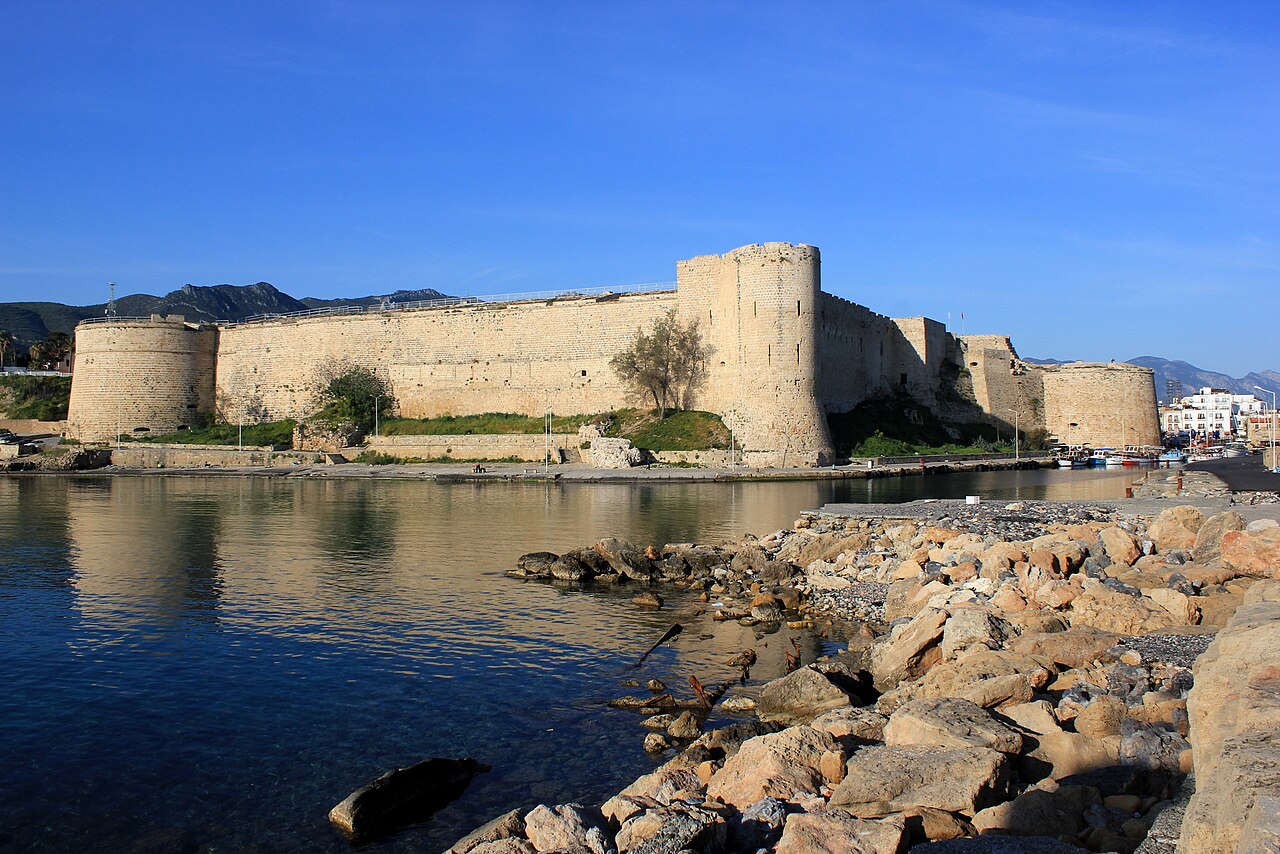
Saint Hilarion Castle
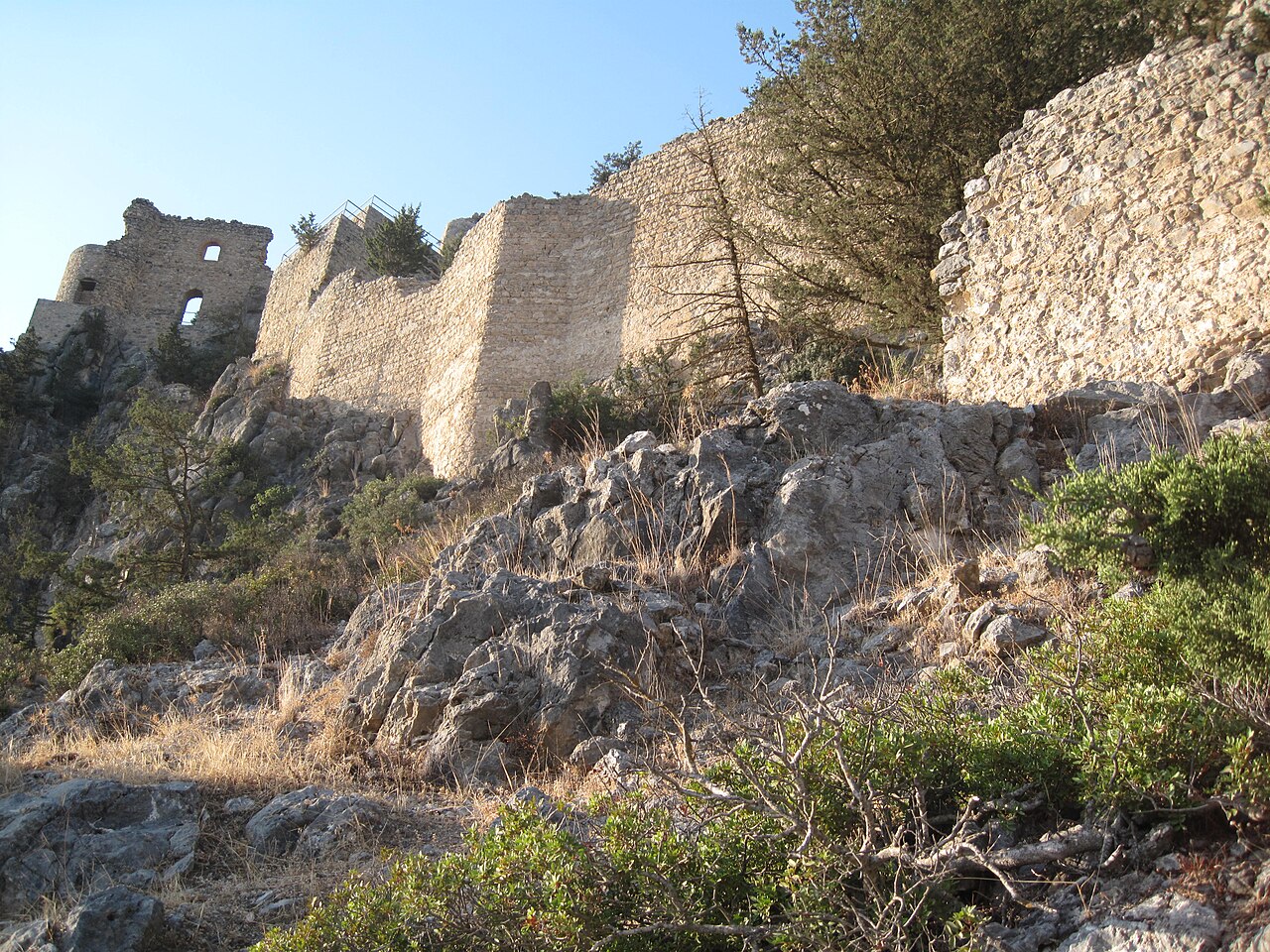
Saint Hilarion Castle stands majestically in the Kyrenia District of Cyprus, perched at an elevation of 732 meters in the rugged Besparmak mountains. It is the most westerly and best-preserved of the three Crusader castles in the region, alongside Kantara and Buffavento. Its dramatic walls and towers appear to grow organically from the rocky terrain, creating a fairy tale-like silhouette that is said to have inspired Walt Disney's design for the castle in Snow White and the Seven Dwarfs.
The castle is named after Saint Hilarion, a little-known hermit who fled Palestine during the 7th century. According to legend, he lived atop this mountain to purge it of pagan demons. Remarkably, the hermit was stone deaf, which allowed him to resist the demons' tempting cries. After a spiritual struggle, the demons admitted defeat and left the mountain in peace. Around his tomb, a Byzantine monastery was established, which later evolved into a fortified castle.
Historical background and strategic importance
Saint Hilarion Castle was initially fortified by the Byzantines in the 11th century as part of a defensive network to protect Cyprus from Arab pirate raids. Its location near the pass between Nicosia and Kyrenia made it strategically vital for controlling access between the island's interior and northern coast. The castle's fortifications were significantly enhanced during the Early Medieval period, particularly under the rule of the Lusignan dynasty in the 13th century.
In 1191, the castle was one of the last strongholds to fall to the Crusaders. During the early 13th century, the Lusignans improved the fortifications and transformed parts of the castle into a luxurious summer residence. The castle was a focal point of a prolonged struggle between the Lusignans and the Holy Roman Emperor Frederick II, who sought control of Cyprus until his defeat in 1232.
Over the next century and a half, sumptuous royal apartments were added, reflecting the castle's dual role as both a fortress and a royal retreat. Notably, in 1349, it served as a refuge during the devastating Black Death pandemic that swept the island, which resulted in the death of an estimated quarter to half of Cyprus's population.
Architectural features and layout
Defensive structures and wards
The castle is divided into three main defensive units or wards situated at different elevations. The lower and middle wards were primarily used for economic and military purposes, including stables, barracks, and storage. The upper ward housed the royal family and contained the most refined architectural elements.
The outer walls and main gate date back to Byzantine construction and feature a robust gatehouse with an arch that originally closed with a drawbridge. The walls are well preserved and follow the natural contours of the mountain, enhancing the castle's formidable appearance.
Religious and residential buildings
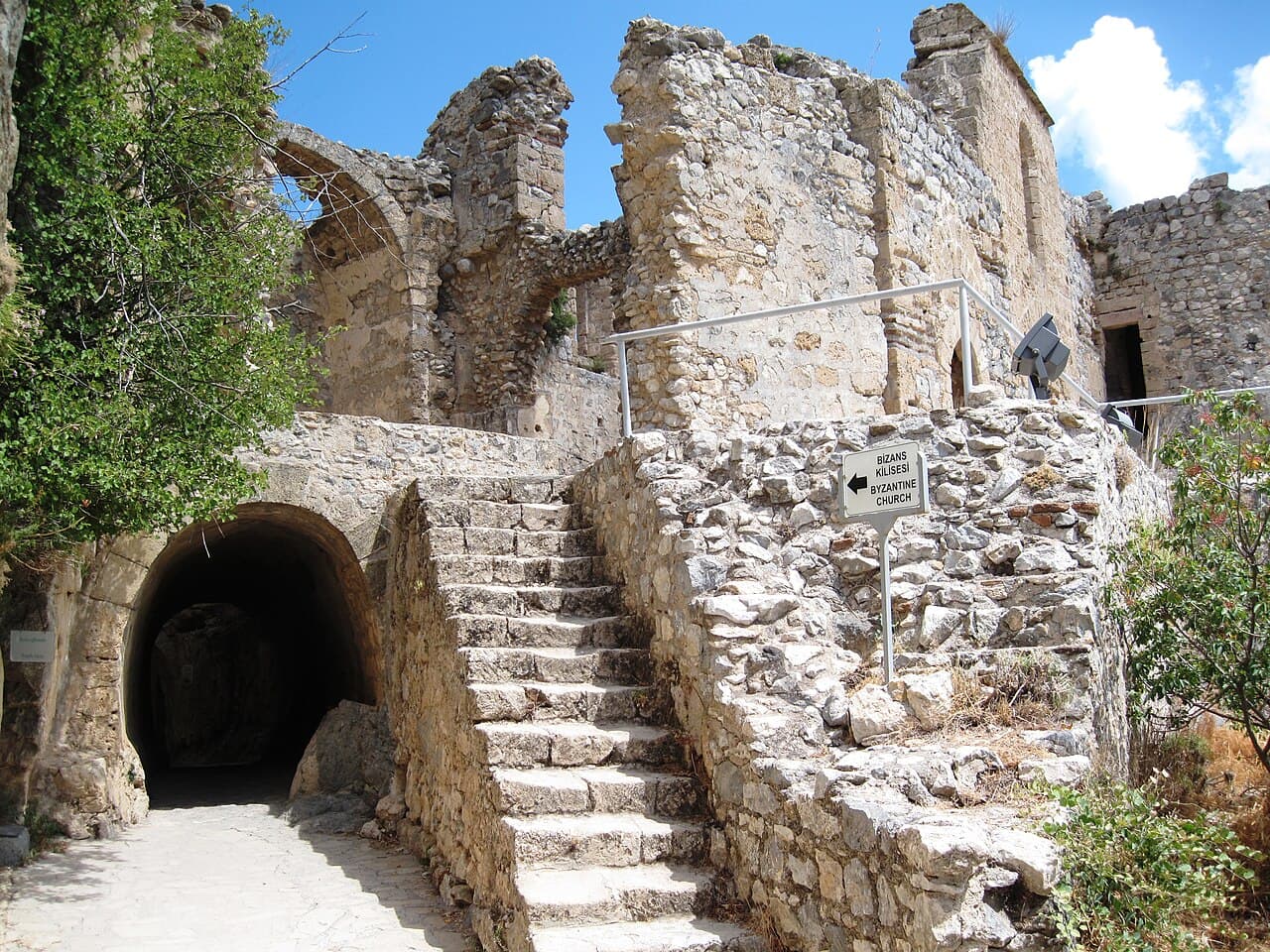
Within the middle ward lies the castle chapel, built of bricks and stone blocks. Although the chapel was in danger of collapse, it was restored in 1959. Traces of ancient religious paintings from around 1150 remain visible, suggesting the chapel was originally part of a Byzantine monastery founded circa 800. The chapel's size indicates it was not merely a garrison church but part of a larger monastic complex.
Adjacent to the chapel are rooms that served as cellars, kitchens, and a refectory. Below these are barracks believed to have housed Crusader knights in the 14th century. The castle's upper ward contains the royal apartments, including the famous Queen's Window — an elegant gallery with two Gothic windows, one featuring stone window seats intact. This vantage point offers sweeping views of the northern coast and the city of Kyrenia.
Notable towers and legends
One of the castle's most dramatic features is Prince John's tower, perched on a rocky promontory above the lower castle. This tower is historically significant as the site where Prince John's Bulgarian mercenary bodyguards were allegedly executed for treason by being thrown from the tower during a turbulent period in the 14th century.
Later history and military significance
Following the Lusignan period, the castle's military importance continued during the Genoese invasion of 1373, serving as a refuge for the under-age King Peter II. The castle was also involved in political intrigue and violence, notably the execution of John of Antioch, the king's uncle and regent.
When the Venetians took control of Cyprus in 1489, they deemed Saint Hilarion obsolete for island defense and abandoned it, focusing instead on fortifying Kyrenia, Nicosia, and Famagusta. Parts of the castle were dismantled to reduce maintenance costs.
In the 20th century, the castle regained strategic importance during the intercommunal conflicts in Cyprus. In 1964, it served as the headquarters for Turkish Cypriot forces defending their enclave against EOKA attacks. The castle's natural defensibility allowed a small garrison to hold out effectively. It again played a role in the 1974 conflict over control of the Kyrenia pass.
Visiting saint hilarion castle today
Today, Saint Hilarion Castle is open to the public and is a popular tourist destination. Visitors can reach the castle via a car park below, followed by an ascent of about an hour, depending on stops to admire the panoramic views. The initial path includes concrete steps and paved sections, but some walkways can be slippery and uneven, so sturdy footwear is recommended.
The castle's extensive ruins include the well-preserved main gate, cisterns, stables, chapel, royal apartments, and defensive towers. The Queen's Window remains a highlight, offering breathtaking views of the northern coastline and the city of Kyrenia. Visitors can also climb to the southern peak for further vistas.
Safety precautions should be taken due to steep drops, especially for families with children. Refreshments are available at the café near the car park, making the visit comfortable and enjoyable. Access to the castle can occasionally be restricted due to its proximity to a military zone.
Cultural significance and legacy
Saint Hilarion Castle is not only a remarkable example of Early Medieval military architecture but also a symbol of the island's turbulent history and cultural heritage. Its blend of Byzantine, Crusader, and Lusignan influences reflects the diverse rulers who shaped Cyprus over centuries.
The castle's fairy tale appearance continues to captivate visitors and historians alike, standing as a testament to the strategic importance of mountain fortresses in medieval Cyprus. Its preservation allows insight into the lives of knights, royalty, and monks who once inhabited this commanding stronghold.
Frequently asked questions (FAQ)
- How do I get to Saint Hilarion Castle?
- Saint Hilarion Castle is accessible via a car park located near the base of the mountain. From there, visitors must hike up a path that takes about an hour, with some steep and uneven sections, so sturdy footwear is recommended.
- What is the historical significance of Saint Hilarion Castle?
- Saint Hilarion Castle played a crucial role in defending Cyprus from Arab pirates and later served as a royal summer residence under the Lusignans. It was also involved in key historical conflicts, including the struggle for control of Cyprus in the 13th century and the 20th-century intercommunal conflicts.
- Can I visit the royal apartments and chapel?
- Yes, visitors can explore the remains of the royal apartments and the castle chapel, which features traces of 12th-century religious paintings. These areas provide insight into the castle's dual role as a fortress and a royal residence.
- Is the castle suitable for families with children?
- While the castle is open to visitors of all ages, caution is advised due to many steep drops and uneven pathways. Parents should supervise children closely and wear appropriate footwear to ensure safety.
- When is the best time to visit Saint Hilarion Castle?
- Visiting during the cooler early morning or late afternoon hours in the summer is recommended to avoid the midday heat. The castle offers spectacular views year-round, but weather conditions can affect accessibility.
Photo gallery

Information
Loading map...
Visitor reviews
No reviews yet. Been here? Write the first review and help other travelers!
Write the first reviewVisited this castle? Share your experience
Your review helps other travelers and adds first-hand knowledge to our encyclopedia.