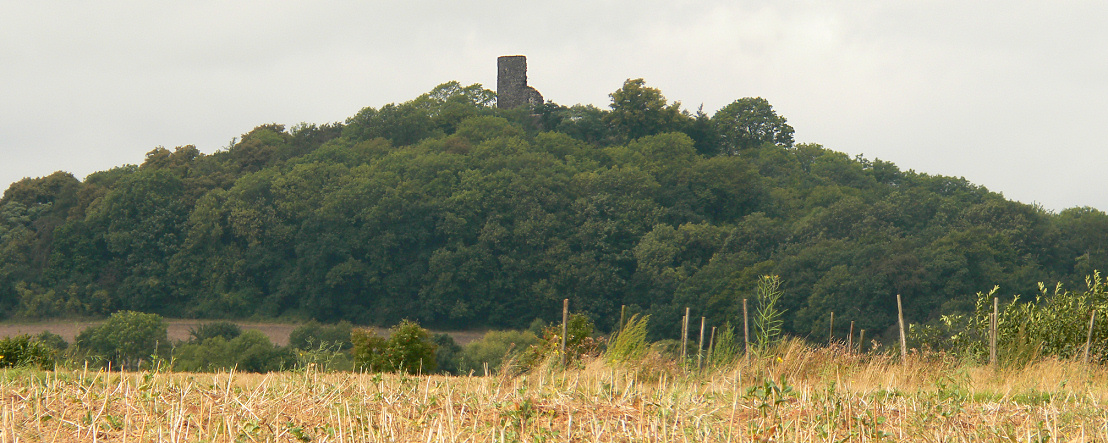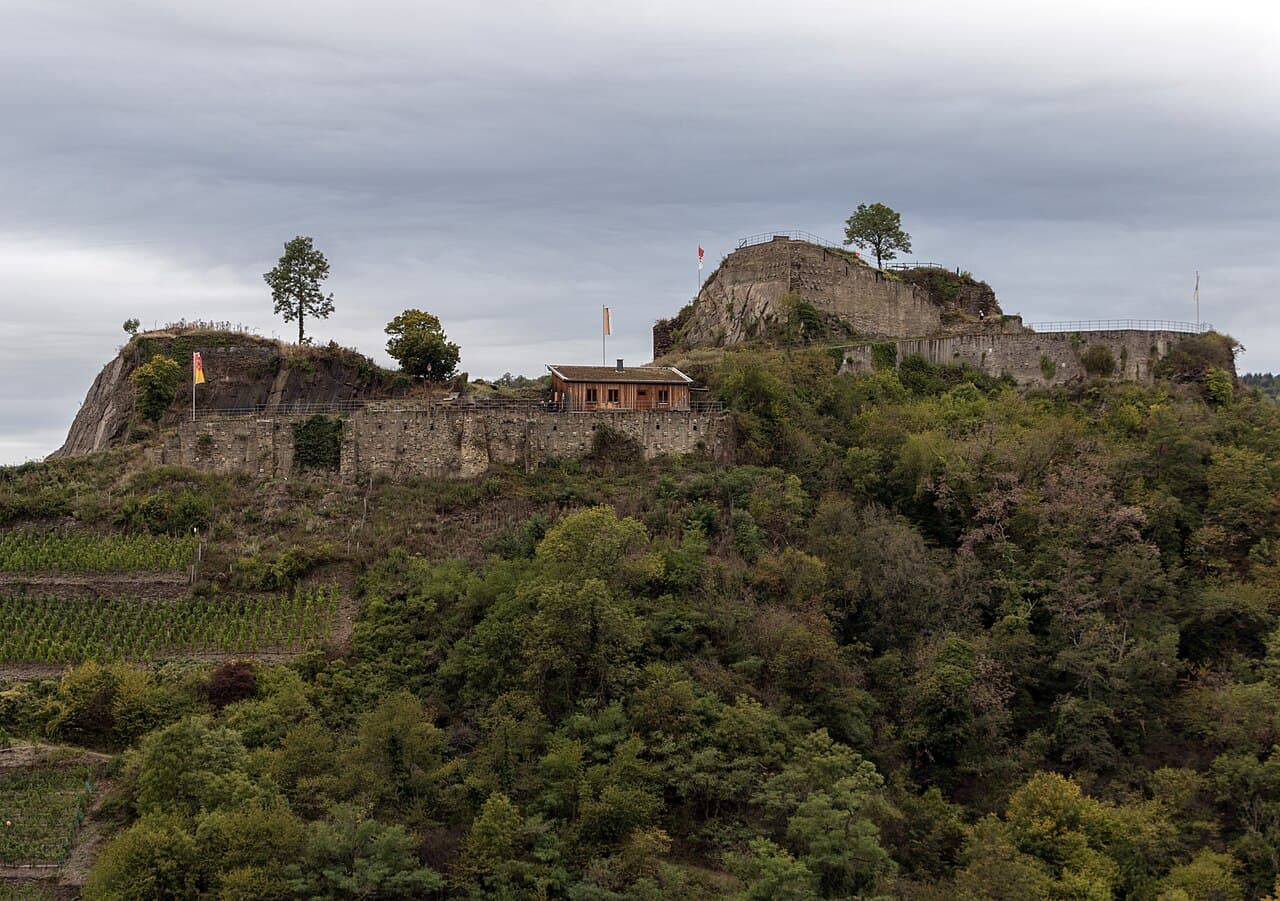
Saffenburg — Germany castle

Saffenburg

Saffenburg castle ruins in Germany
High Medieval (11th–13th c.)
Ruins

Saffenburg Castle is a notable example of a medieval hill castle located in Germany, recognized today primarily as archaeological ruins. Though much of the original structure has not survived intact, the site offers valuable insight into the defensive architecture and historical landscape of the region during the High Medieval period.

Historical background and significance

The origins of Saffenburg Castle date back to the 12th or 13th century, a time when castles were crucial for territorial control and defense. It was likely constructed to oversee and protect important trade routes and local settlements. While specific historical records about the castle’s founders or notable inhabitants are scarce, its strategic location on a hilltop provided a commanding view of the surrounding terrain, typical of hill castles built during the High Medieval era.

Architectural features and layout

As a hill castle, Saffenburg was designed to take advantage of elevated terrain for defense. The castle complex would have included a fortified keep or donjon, defensive curtain walls, and possibly a gatehouse to control access. The remains visible today suggest a typical medieval fortification style, with stone walls adapted to the natural contours of the hill.

Although the castle is now in ruins, archaeological investigations have uncovered foundations and wall fragments that help reconstruct its original layout. These ruins indicate a compact, well-defended stronghold rather than an expansive palace or residential castle.

Defensive structures

The castle’s defensive system likely included battlements for archers, and possibly a moat or ditch carved into the hillside to hinder attackers. The elevated position itself served as a natural defense, making direct assaults difficult.

Current condition and archaeological importance

Today, Saffenburg Castle stands as an archaeological site with ruined remains. The site is important for understanding medieval fortification techniques and the historical development of hill castles in Germany. Preservation efforts focus on stabilizing the ruins and facilitating archaeological research rather than full reconstruction.

Visiting Saffenburg castle ruins

The ruins are accessible to visitors interested in medieval history and castle architecture. While no extensive visitor facilities exist, the site offers a glimpse into medieval defensive architecture and the historical landscape of the region. Visitors can explore the remains and enjoy panoramic views from the hilltop location.

Nearby attractions and context

The castle’s location in Germany places it within a rich cultural and historical context, with many other medieval castles and historic towns nearby. Exploring the region provides a broader understanding of the medieval period and the role of castles like Saffenburg in regional power dynamics.

Architectural style and period classification

Saffenburg Castle is classified as a hill castle from the High Medieval period. Its architectural style aligns with typical medieval fortifications characterized by robust stone construction and functional defensive design rather than ornamental features.

Frequently asked questions (FAQ)

How do I get to Saffenburg Castle?
Saffenburg Castle is located in Germany, easily accessible by car or public transport. The nearest train station is in the town of Alzenau, from where you can take a bus or taxi to the castle. Make sure to check local transport schedules for the best routes and times.
What is the historical significance of Saffenburg Castle?
Saffenburg Castle dates back to the 13th century and was strategically built to oversee the surrounding area. It played a crucial role in regional defense and governance throughout the Middle Ages. Today, it stands as a testament to the rich history of feudal Germany.
When was Saffenburg Castle built?
Construction of Saffenburg Castle began in 1260, and it was completed in the late 13th century. The castle was built by the Lords of Saffenburg and has undergone various renovations over the centuries. This makes it a fascinating site for those interested in medieval architecture.
Can I visit Saffenburg Castle year-round?
Yes, Saffenburg Castle is open to visitors throughout the year, although specific opening hours may vary by season. It is advisable to check the official website or contact the castle's visitor center for the most accurate information on opening times. Guided tours may also be available to enhance your experience.
Why is Saffenburg Castle a popular tourist attraction?
Saffenburg Castle is popular for its stunning views of the surrounding landscape and its well-preserved medieval architecture. Visitors are drawn to its historical significance and the various events that take place throughout the year, including medieval festivals and reenactments. The castle’s picturesque setting makes it an ideal spot for photography and exploration.
Is it possible to access Saffenburg Castle with mobility aids?
While Saffenburg Castle has some paths and areas accessible to visitors with mobility aids, the terrain can be uneven, and certain sections may be challenging. It is recommended to contact the castle staff ahead of your visit to inquire about specific accessibility options and assistance available. They strive to accommodate all visitors to the best of their ability.
What are the ticket prices for Saffenburg Castle?
Ticket prices for Saffenburg Castle are generally affordable, with discounts available for students, seniors, and groups. Children under a certain age may enter for free, making it a great family destination. For the most current pricing information, it's best to check the castle's official website.
What are the best times to visit Saffenburg Castle?
The best times to visit Saffenburg Castle are during the spring and fall when the weather is mild and the surrounding landscape is particularly beautiful. Summer can be busy with tourists, while winter may limit accessibility due to weather conditions. Planning your visit during weekdays can also help avoid larger crowds.
Are there any nearby attractions to explore after visiting Saffenburg Castle?
Yes, there are several nearby attractions worth exploring, including the charming town of Alzenau, with its quaint shops and cafes. Additionally, the scenic Spessart Nature Park offers opportunities for hiking and outdoor activities. Local vineyards and historical sites also provide a rich experience for visitors looking to extend their trip.

Photo gallery

Saffenburg
Click to view

Photo by Derzno•CC BY-SA 4.0

1 photo • Click any image to view in full screen

Information

Hill Castle

Loading map...

Visitor reviews

No reviews yet. Been here? Write the first review and help other travelers!

Write the first review

Visited this castle? Share your experience

Your review helps other travelers and adds first-hand knowledge to our encyclopedia.
Write a review

(5/5)

0/2000 characters

Your review will be visible after admin approval

Nearby castles

2 km
Are Castle Ruins — Germany castle

Are Castle Ruins

Altenahr, Germany

Are Castle stands as a prominent high medieval hill castle ruin located above the town of Altenahr in the scenic Ahr Valley, Germany. Constructed around 1100 by Count Dietrich I of Are, it originally served as a fortified stronghold and administrative center for the noble House of Are. The castle's strategic position atop a hill approximately 240 meters above sea level provided commanding views and defensive advantages over the surrounding landscape. The castle's earliest documented mention dates to 1121, with its initial construction phase reflecting typical Romanesque architectural features of the period, including thick slate stone walls and a rectangular plan. The House of Are split into two branches by the mid-12th century, Are-Hochstaden and Are-Nürburg, with members attaining significant ecclesiastical positions such as bishops and archbishops. Notably, Conrad of Hochstaden was influential in the construction of Cologne Cathedral. Historical development and ownership In 1246, the castle and its surrounding county were transferred to the Archbishopric of Cologne when Count Frederick of Hochstaden and his brother Conrad of Are-Hochstaden ceded the estates, including Are, Hardt, and Hochstaden castles. This marked a significant shift, as the castle became a key military and administrative asset within the Electorate of Cologne. Throughout the 14th and 15th centuries, the castle underwent extensive expansion, notably the construction of a surrounding enceinte defensive wall to protect the Electorate's holdings in the Ahr region. These fortifications included multiple gates, towers, and curtain walls designed to withstand sieges and assert control over the territory. During the 16th and 17th centuries, Are Castle experienced only minor modifications, mainly repairs and replacement buildings, reflecting a period of relative stability. The castle also served as a prison for enemies of the Cologne archbishops, emphasizing its role in enforcing ecclesiastical authority. It functioned as a spiritual and cultural center for the region, with the archbishops frequently enfeoffing the castle alongside the district of Altenahr to their vassals, who often resided within the castle walls. Military conflicts and decline The castle's military significance led to its involvement in several conflicts during the late 17th and early 18th centuries. In 1690, French troops captured Are Castle after a prolonged nine-month siege, inflicting severe damage through artillery bombardment. Although the French withdrew in 1697, they reoccupied the fortress during the War of the Spanish Succession starting in 1701. Electoral Cologne forces regained control of the castle in 1706, but the region remained unstable. In 1714, under the directive of Prince Elector Joseph Clemens of Bavaria, the castle walls were deliberately demolished with the consent of local villagers to prevent further military use. This act transformed Are Castle into the ruin that remains today. Salvaged materials such as wood and stone were repurposed for constructing the district house at the base of the castle hill. Architectural features and surviving remains Are Castle occupies a rectangular site primarily composed of local slate rock, a common building material in the region. Archaeological excavations and preservation efforts have uncovered significant remains of the castle's outer ward, defensive walls, and gate structures. Gymnicher Porz gate complex Below the main castle lies the Gymnicher Porz, a fortified lower gateway that controlled access along the approach road. This complex includes a gatehouse spanning the road, an attached castle house with a basement and two floors of living quarters, and an adjoining tower. The name derives from the House of Gymnich, who held the castle as a fief during the 14th and 16th centuries. The remains of chimneys indicate domestic habitation within this structure. Schellenturm and palas ruins On the southern side of the castle site stands the Schellenturm, an old gate tower adjacent to the ruins of the palas, the main residential building. The palas contained a heated bishop’s chamber, signifying its high-status function. Restoration work in 1997 stabilized the palas wall, approximately 22 meters long, along with two adjoining side walls. Metal anchors were installed deep into the underlying rock to ensure structural integrity. Bergfried and Romanesque chapel The castle's original bergfried, or main defensive tower, likely stood on a pointed rock outcrop at the northern corner of the site. Nearby are the ruins of the Romanesque castle chapel dating from the 12th century, underscoring the castle's religious significance. The chapel remains include foundational walls and architectural fragments characteristic of early medieval ecclesiastical design. Castle well excavation A vital feature for sustaining the castle during sieges was its deep well, reaching approximately 29 meters. Excavations between 2005 and 2012 cleared debris accumulated since the early 18th century and installed a protective metal grate, preserving it as an important archaeological and historical element. Preservation and cultural legacy Since the 20th century, efforts have been made to stabilize and conserve Are Castle's ruins. A major stabilization project from 1997 to 1999 prevented further deterioration and improved accessibility for visitors. Despite a tragic helicopter accident during restoration logistics in 1997, the site remains a protected cultural monument. The castle's legacy endures in the local community, notably through the naming of the Are Gymnasium in Bad Neuenahr-Ahrweiler since 1965, honoring the noble family and their historic seat. The ruins continue to attract historians, archaeologists, and tourists interested in medieval architecture and regional history. Today, visitors can explore the extensive remains of defensive walls, gatehouses, residential quarters, and the Romanesque chapel, all situated within a landscape that reflects centuries of military, religious, and administrative history. The castle's story is a vivid testament to the evolving nature of medieval fortifications and their role in shaping regional power dynamics.

High Medieval (11th–13th c.)
Details
3.6 km

Kreuzberg Castle

Altenahr, Germany

Kreuzberg Castle, located in Altenahr, Germany, is a significant example of a late-medieval fortress with origins tracing back to the early medieval period. First documented in 893 as "Cruceberg," the site has a rich history spanning over a millennium. Around 1100, the castle and its surrounding settlement came under the ownership of the Counts of Are, who established an initial residential structure for their administrator, marking the beginning of the castle's development as a noble residence and defensive stronghold. Historical development and ownership The castle's early history is closely tied to the Counts of Are, a noble family influential in the region during the Middle Ages. The initial construction likely began with a residential house built for administrative purposes on the strategic hill known as Kreuzberg. This early phase set the foundation for the later expansion of the castle complex. Although the castle is primarily recognized for its 14th-century origins, there is some debate about the dating of its bergfried (keep). While traditionally attributed to the 15th century, architectural analysis suggests that the bergfried may be part of the oldest surviving structures, possibly dating back to the 14th century, making it a key element of the castle's medieval fortifications. Architectural features and layout The castle is situated on an artificial plateau with an almost triangular ground plan, a design that follows the natural contours of the hill and enhances its defensive capabilities. The main castle area is enclosed by an inner curtain wall, which would have served as a formidable barrier against attackers. This wall defines the perimeter of the core fortress and protects the residential and administrative buildings within. The bergfried (keep) The bergfried is a prominent feature of Kreuzberg Castle, traditionally considered the central defensive tower. Its robust construction and strategic placement provided a vantage point for surveillance and defense. The possibility that it dates from the 14th century highlights its importance as one of the earliest components of the castle, reflecting medieval military architecture focused on strong vertical elements for defense and refuge. Residential buildings On the northern side of the main castle area stands a baroque, two-story residential building constructed from rubble stones. This structure represents a later phase of architectural development, indicating the castle's continued use and adaptation through the centuries. The Baroque style of this residence contrasts with the medieval fortifications, reflecting changes in architectural tastes and the transformation of castles from purely military fortresses to more comfortable noble residences. Destruction and current condition Kreuzberg Castle suffered significant damage when it was destroyed by French troops in 1686. This event marked the end of the castle's military significance and led to its decline as a defensive structure. Despite this, the main castle remains partially preserved, with key elements such as the bergfried and the curtain walls still standing. The baroque residential building also survives, providing insight into the castle's post-medieval history. Significance and heritage The castle's long history from the early medieval period through the late medieval and baroque eras makes it an important cultural and historical monument in the region. Its architectural evolution from a medieval fortress with a bergfried to a residence with baroque features illustrates broader trends in castle construction and usage in Germany. Today, Kreuzberg Castle stands as a valuable site for understanding medieval military architecture, noble residence development, and the impact of historical conflicts on regional landmarks.

Late Medieval (14th–15th c.)
Details
9.1 km
Tomburg Castle — Germany castle

Tomburg Castle

Rheinbach, Germany

Tomburg Castle stands as a significant historical monument near Rheinbach, Germany, embodying a rich legacy that spans over a millennium. Constructed around the year 900 AD, this hill castle was originally established by local rulers as a strategic fortified stronghold atop the volcanic Tomberg hill. The site itself holds a deeper antiquity, with archaeological evidence revealing that the Romans utilized this basalt dome for military purposes during the 4th century. This early occupation highlights the site's long-standing strategic importance in the region. By the turn of the first millennium, Tomburg Castle had risen in prominence as the residence of Count Palatine Ezzo and his wife Mathilda, sister of Emperor Otto III. This noble family played a pivotal role in the political landscape of the Holy Roman Empire. Their daughter, Richeza, became the Queen of Poland, while their son Otto inherited the Palatinate and served as Duke of Swabia until his death at Tomburg in 1047. This association firmly places the castle within the sphere of imperial influence and power during the High Medieval period. Historical significance and ownership transitions In the mid-11th century, control of Tomburg Castle transitioned to the Archbishopric of Cologne, a shift confirmed by Pope Leo IX in 1052. This transfer included not only the castle but also the associated church, underscoring the intertwined nature of secular and ecclesiastical power. From 1090 onward, the castle was held by the Counts of Cleves as vassals under the archbishops, marking a period of feudal stewardship that lasted until the 13th century. The Lords of Müllenark acquired the castle in the 13th century, adopting the name "von Tomburg" and securing the office of burgrave in 1253. This title reflected their authority as castle governors and local lords, responsible for the administration and defense of the fortress. Over the following centuries, the castle's military role diminished, particularly in the 14th century as the advent of gunpowder artillery revolutionized siege warfare and rendered many traditional hilltop fortifications vulnerable. Siege and destruction in the 15th century The castle's decline culminated in a violent conflict in the early 15th century. After the death of a prominent family member around 1420, Tomburg Castle became embroiled in inheritance disputes involving Frederick of Tomburg and Duke Gerhard VII of Jülich. These tensions led to a decisive siege on September 7, 1473, when Duke Gerhard VII's forces attacked the fortress. The siege notably employed artillery bombardment, which inflicted severe damage and resulted in the castle's near-total destruction. Following the siege, Tomburg Castle was abandoned and never restored as a military stronghold. The ruins gradually suffered further degradation as local inhabitants quarried basalt from the volcanic hill, diminishing the site's structural remains. Architectural features and archaeological remains The castle ruins occupy the summit of the Tomberg hill, a basalt dome formed by volcanic activity during the Tertiary period. The hill rises approximately 310 meters above sea level and features an elliptical volcanic vent about 175 meters across. Despite centuries of quarrying, roughly 70 percent of the original volcanic hill remains intact, preserving the natural foundation upon which the castle was built. Among the most prominent surviving structures is the bergfried, the main tower of the castle. Although its upper sections have collapsed, the lower portion remains standing and has been secured to prevent further damage. This tower would have served as a crucial lookout and final defensive refuge within the castle complex. Another significant archaeological feature is the , excavated in 1883 by a local heritage society. This well descends approximately 46 meters into the basalt hill, demonstrating the advanced engineering techniques employed to ensure a reliable water supply for the castle's inhabitants. Its preservation offers valuable insight into the daily life and logistical challenges faced by medieval occupants. Excavations have also uncovered stone cannonballs, tangible evidence of the castle's involvement in military conflicts and the artillery siege that led to its downfall. These artifacts corroborate historical accounts of the fortress's destruction in the 15th century. Conservation and cultural legacy Today, Tomburg Castle's ruins and the surrounding hill are protected within a designated nature reserve. This status safeguards both the archaeological remains and the ecological environment, including an adjacent meadow that forms part of the European Natura 2000 conservation network. This dual protection underscores the site's importance as a cultural and natural heritage asset. The castle has also inspired artistic representation, notably a 1920s painting by Fritz von Wille, which captures the dramatic basalt hill and the decayed structures. Aerial photographs from 2015 further document the site's condition and landscape context, supporting ongoing preservation efforts. Tomburg Castle remains a compelling testament to the region's medieval history, architectural evolution, and the shifting tides of political power within the Holy Roman Empire. Its ruins invite exploration and study, offering a tangible connection to a turbulent past marked by noble ambition, military innovation, and enduring cultural significance.

Early Medieval (5th–10th c.)
Details