Are Castle Ruins
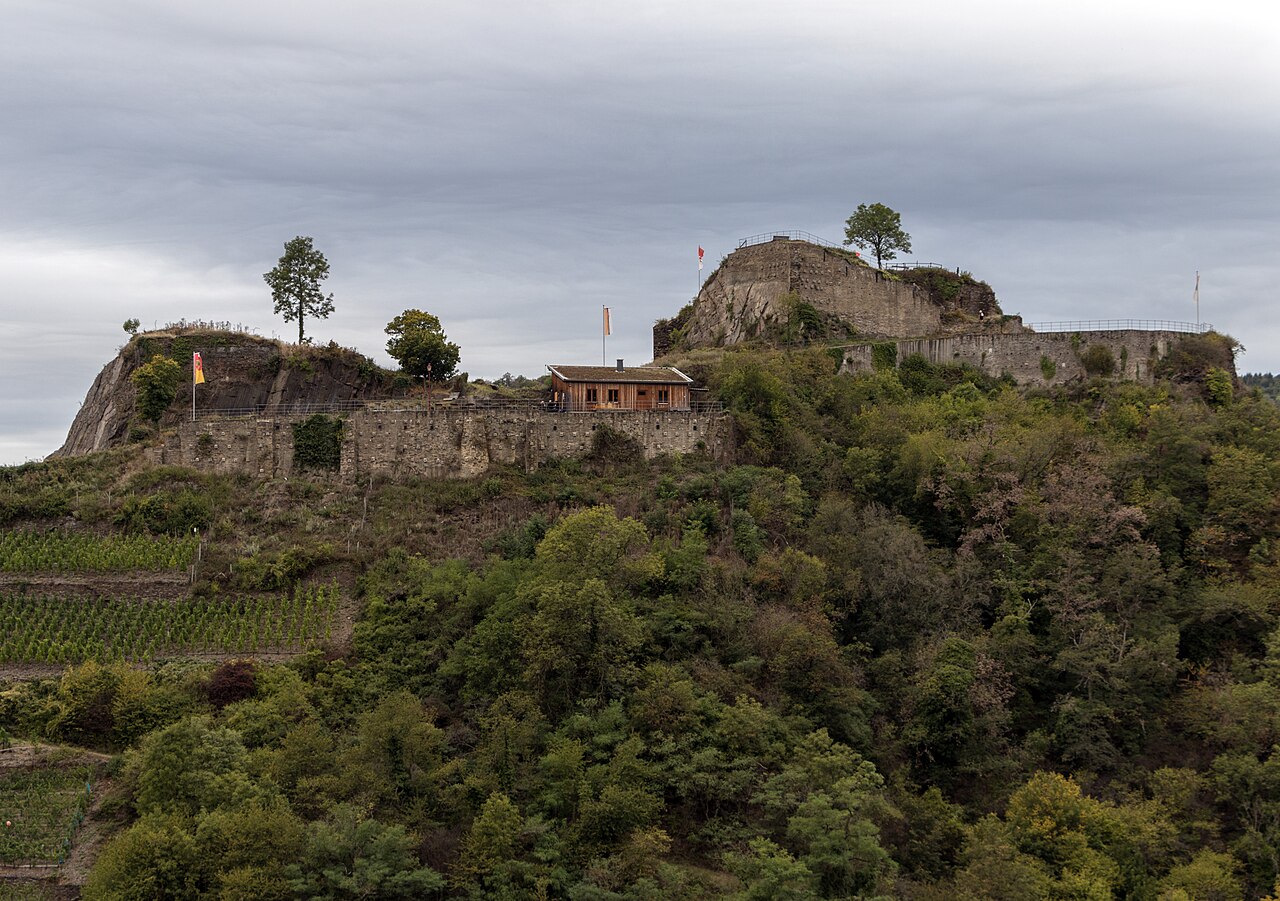
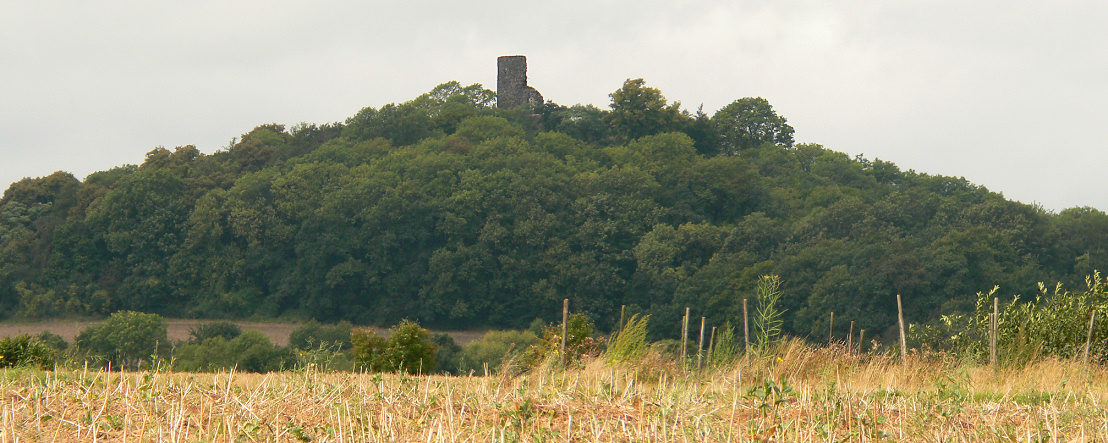
Are Castle stands as a prominent high medieval hill castle ruin located above the town of Altenahr in the scenic Ahr Valley, Germany. Constructed around 1100 by Count Dietrich I of Are, it originally served as a fortified stronghold and administrative center for the noble House of Are. The castle's strategic position atop a hill approximately 240 meters above sea level provided commanding views and defensive advantages over the surrounding landscape.
The castle's earliest documented mention dates to 1121, with its initial construction phase reflecting typical Romanesque architectural features of the period, including thick slate stone walls and a rectangular plan. The House of Are split into two branches by the mid-12th century, Are-Hochstaden and Are-Nürburg, with members attaining significant ecclesiastical positions such as bishops and archbishops. Notably, Conrad of Hochstaden was influential in the construction of Cologne Cathedral.
Historical development and ownership
In 1246, the castle and its surrounding county were transferred to the Archbishopric of Cologne when Count Frederick of Hochstaden and his brother Conrad of Are-Hochstaden ceded the estates, including Are, Hardt, and Hochstaden castles. This marked a significant shift, as the castle became a key military and administrative asset within the Electorate of Cologne.
Throughout the 14th and 15th centuries, the castle underwent extensive expansion, notably the construction of a surrounding enceinte defensive wall to protect the Electorate's holdings in the Ahr region. These fortifications included multiple gates, towers, and curtain walls designed to withstand sieges and assert control over the territory.
During the 16th and 17th centuries, Are Castle experienced only minor modifications, mainly repairs and replacement buildings, reflecting a period of relative stability. The castle also served as a prison for enemies of the Cologne archbishops, emphasizing its role in enforcing ecclesiastical authority. It functioned as a spiritual and cultural center for the region, with the archbishops frequently enfeoffing the castle alongside the district of Altenahr to their vassals, who often resided within the castle walls.
Military conflicts and decline
The castle's military significance led to its involvement in several conflicts during the late 17th and early 18th centuries. In 1690, French troops captured Are Castle after a prolonged nine-month siege, inflicting severe damage through artillery bombardment. Although the French withdrew in 1697, they reoccupied the fortress during the War of the Spanish Succession starting in 1701.
Electoral Cologne forces regained control of the castle in 1706, but the region remained unstable. In 1714, under the directive of Prince Elector Joseph Clemens of Bavaria, the castle walls were deliberately demolished with the consent of local villagers to prevent further military use. This act transformed Are Castle into the ruin that remains today. Salvaged materials such as wood and stone were repurposed for constructing the district house at the base of the castle hill.
Architectural features and surviving remains
Are Castle occupies a rectangular site primarily composed of local slate rock, a common building material in the region. Archaeological excavations and preservation efforts have uncovered significant remains of the castle's outer ward, defensive walls, and gate structures.
Gymnicher Porz gate complex
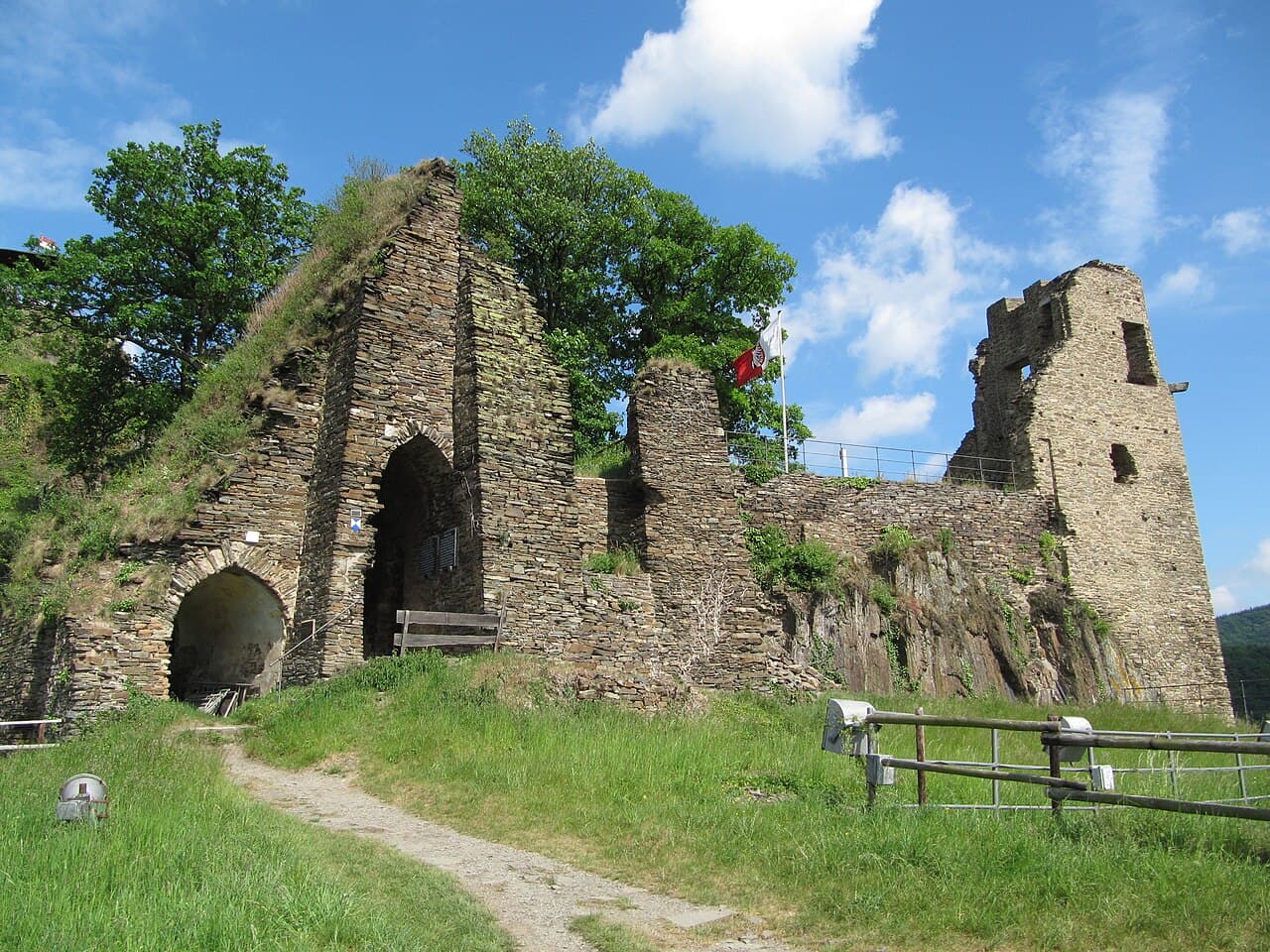
Below the main castle lies the Gymnicher Porz, a fortified lower gateway that controlled access along the approach road. This complex includes a gatehouse spanning the road, an attached castle house with a basement and two floors of living quarters, and an adjoining tower. The name derives from the House of Gymnich, who held the castle as a fief during the 14th and 16th centuries. The remains of chimneys indicate domestic habitation within this structure.
Schellenturm and palas ruins
On the southern side of the castle site stands the Schellenturm, an old gate tower adjacent to the ruins of the palas, the main residential building. The palas contained a heated bishop’s chamber, signifying its high-status function. Restoration work in 1997 stabilized the palas wall, approximately 22 meters long, along with two adjoining side walls. Metal anchors were installed deep into the underlying rock to ensure structural integrity.
Bergfried and Romanesque chapel
The castle's original bergfried, or main defensive tower, likely stood on a pointed rock outcrop at the northern corner of the site. Nearby are the ruins of the Romanesque castle chapel dating from the 12th century, underscoring the castle's religious significance. The chapel remains include foundational walls and architectural fragments characteristic of early medieval ecclesiastical design.
Castle well excavation
A vital feature for sustaining the castle during sieges was its deep well, reaching approximately 29 meters. Excavations between 2005 and 2012 cleared debris accumulated since the early 18th century and installed a protective metal grate, preserving it as an important archaeological and historical element.
Preservation and cultural legacy
Since the 20th century, efforts have been made to stabilize and conserve Are Castle's ruins. A major stabilization project from 1997 to 1999 prevented further deterioration and improved accessibility for visitors. Despite a tragic helicopter accident during restoration logistics in 1997, the site remains a protected cultural monument.
The castle's legacy endures in the local community, notably through the naming of the Are Gymnasium in Bad Neuenahr-Ahrweiler since 1965, honoring the noble family and their historic seat. The ruins continue to attract historians, archaeologists, and tourists interested in medieval architecture and regional history.
Today, visitors can explore the extensive remains of defensive walls, gatehouses, residential quarters, and the Romanesque chapel, all situated within a landscape that reflects centuries of military, religious, and administrative history. The castle's story is a vivid testament to the evolving nature of medieval fortifications and their role in shaping regional power dynamics.
Frequently asked questions (FAQ)
- How do I get to Are Castle ruins in Altenahr?
- Are Castle ruins are located on a hill above Altenahr in Rhineland-Palatinate, Germany. Visitors can reach the site by car or public transport to Altenahr town, followed by a walk uphill on marked trails leading to the ruins.
- What can I see when visiting Are Castle?
- Visitors to Are Castle can explore the extensive ruins including the Gymnicher Porz gate complex, the Schellenturm gate tower, the palas ruins with the bishop’s chamber, the Romanesque chapel remains, and the bergfried foundation rock.
- When was Are Castle built and by whom?
- Are Castle was built around 1100 by Count Dietrich I of Are. It was first recorded in historical documents in 1121.
- Is Are Castle accessible to visitors year-round?
- The castle ruins are generally accessible year-round, but it is advisable to check local conditions and weather, especially in winter months, due to the hilltop location and uneven terrain.
- Why was Are Castle demolished in 1714?
- In 1714, Prince Elector Joseph Clemens of Bavaria ordered the demolition of Are Castle’s walls with local villagers' consent to prevent its further military use during ongoing regional conflicts.
Photo gallery

Information
Current owner
Municipality
Loading map...
Visitor reviews
No reviews yet. Been here? Write the first review and help other travelers!
Write the first reviewVisited this castle? Share your experience
Your review helps other travelers and adds first-hand knowledge to our encyclopedia.