Sacsayhuamán
Sacsayhuamán, located on the northern outskirts of Cusco, Peru, stands as a monumental example of Inca architecture and engineering. This ancient fortress is situated at an elevation of 3,701 metres (12,142 feet), overlooking the historic capital of the Inca Empire. The name "Sacsayhuamán" derives from the Quechua words saksay (to satiate or satisfy) and waman (falcon or hawk), often translated as "fortress of the royal falcon." It is renowned for its massive dry stone walls constructed without mortar, showcasing the Incas' advanced masonry techniques.
Historical context and construction
The construction of Sacsayhuamán is traditionally attributed to the reign of Sapa Inca Pachacuti (1438–1471), who transformed the Inca state into an empire. His successors, Topa Inca Yupanqui and Huayna Capac, are also credited with continuing the work on the fortress. This places the construction primarily in the 15th century, a period corresponding to the Late Medieval era in European chronology, although the Inca civilization's timeline is distinct.
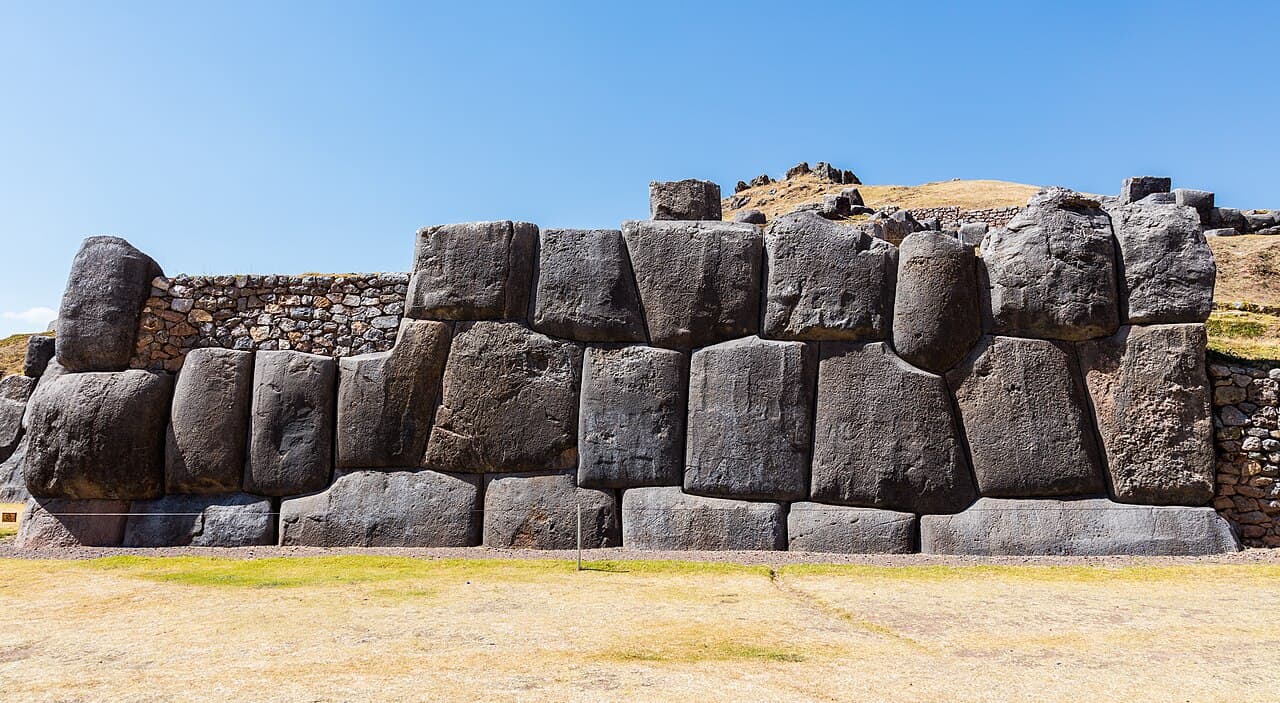
The fortress was designed as a military complex with massive defensive walls forming a zigzag pattern that created a formidable barrier. The walls consist of enormous, irregularly shaped stones, some weighing over 100 tons. These stones were meticulously cut and shaped to fit together perfectly without the use of mortar, a hallmark of Inca stonework that provided remarkable stability and resistance to earthquakes.
The site includes three main walls, each rising up to 6 meters in height, enclosing a large plaza used for military and ceremonial purposes. The precision of the stone fitting is such that it is impossible to insert even a blade of grass between many of the stones. This technique not only enhanced the fortress's strength but also its aesthetic appeal.
Architectural features and engineering marvels
Sacsayhuamán's architecture exemplifies the Inca mastery of dry stone construction. The stones are polygonal and interlock in complex patterns that absorb seismic shocks, which is crucial given the region's seismic activity. The fortress's design includes terraces, ramps, and staircases integrated into the walls, facilitating movement and defense.
Archaeologists have noted the strategic placement of the fortress, which allowed the Incas to control access to Cusco and defend the city effectively. The elevated position provided wide visibility over the surrounding landscape, enabling early detection of approaching enemies.
Within the complex are remains of buildings that likely served administrative, residential, and religious functions. Some scholars suggest that Sacsayhuamán also held symbolic significance, representing the Inca's power and connection to the natural and spiritual world.
Cultural significance and historical events
Sacsayhuamán played a pivotal role during the Spanish conquest of the Inca Empire in the 16th century. It was the site of fierce battles between the Spanish conquistadors and Inca warriors. The fortress's walls provided strong resistance, but eventually, the Spanish forces captured Cusco.
Despite damage sustained during the conquest and subsequent centuries, Sacsayhuamán remains an iconic symbol of Inca heritage and ingenuity. It is a testament to the advanced engineering skills and cultural achievements of the Inca civilization.
Modern preservation and tourism
In 1983, Cusco and Sacsayhuamán were jointly designated as a UNESCO World Heritage Site, recognizing their outstanding universal value. Today, the site is a major tourist attraction, drawing visitors from around the world who come to admire its impressive stonework and learn about Inca history.
Efforts to preserve and study the fortress continue, including archaeological excavations and conservation projects. The site hosts cultural events and traditional festivals, maintaining its role as a living part of Peruvian heritage.
Visiting sacsayhuamán
Visitors to Sacsayhuamán can explore the extensive ruins, including the massive walls, terraces, and plazas. The site offers panoramic views of Cusco and the surrounding Andes mountains. Guided tours provide insights into the fortress's construction, historical context, and cultural importance.
Access to the site is generally open year-round, with the best visiting times during the dry season from May to September. Visitors should prepare for high altitude conditions and uneven terrain.
Frequently asked questions (FAQ)
- What is the historical significance of Sacsayhuamán?
- Sacsayhuamán was a key military fortress for the Inca Empire, built during the reign of Pachacuti and his successors. It played a major role in defending Cusco and was the site of battles during the Spanish conquest.
- How were the massive stones of Sacsayhuamán fitted together without mortar?
- The Incas used advanced dry stone masonry techniques, precisely cutting and shaping stones to fit tightly together. This method provided earthquake resistance and remarkable stability without mortar.
- When is the best time to visit Sacsayhuamán?
- The best time to visit is during the dry season from May to September, when weather conditions are more favorable for exploring the outdoor ruins.
- Are there guided tours available at Sacsayhuamán?
- Yes, guided tours are available and highly recommended to understand the historical and architectural significance of the fortress.
- Is Sacsayhuamán accessible for visitors with mobility issues?
- Due to uneven terrain and steep areas, accessibility is limited. Visitors with mobility challenges should plan accordingly and may require assistance.
Photo gallery

Information
Opening hours
06:00-18:00 daily
Ticket prices
Approximately 70 PEN (Peruvian Sol) for foreigners, lower rates for locals
Current owner
State museum
Loading map...
Visitor reviews
No reviews yet. Been here? Write the first review and help other travelers!
Write the first reviewVisited this castle? Share your experience
Your review helps other travelers and adds first-hand knowledge to our encyclopedia.