Huchuy Qosqo
Huchuy Qosqo, also spelled Yuchuy Cuzco, is a significant Incan archaeological site located north of Cuzco, Peru. The name translates from Quechua as "Little Cuzco," reflecting its role as a smaller counterpart to the historic capital of the Inca Empire. Situated at a high elevation of approximately 3,650 meters (11,980 feet), the site overlooks the Sacred Valley and is positioned about 3 kilometres west and above the town of Lamay, which lies at 2,920 meters (9,580 feet).
The site was historically known as Caquia Xaquixaguana or Kakya Qawani before receiving the modern name Huchuy Qosqo in the 20th century. These earlier names appear in Incan records and reflect the site's original Quechua heritage. The construction of Huchuy Qosqo is attributed to the Inca Emperor Viracocha, who likely established it as a royal estate around 1420 CE. This timeline places the site firmly within the Late Medieval period of Andean history, during the height of the Inca Empire's expansion.
Architectural features and site layout
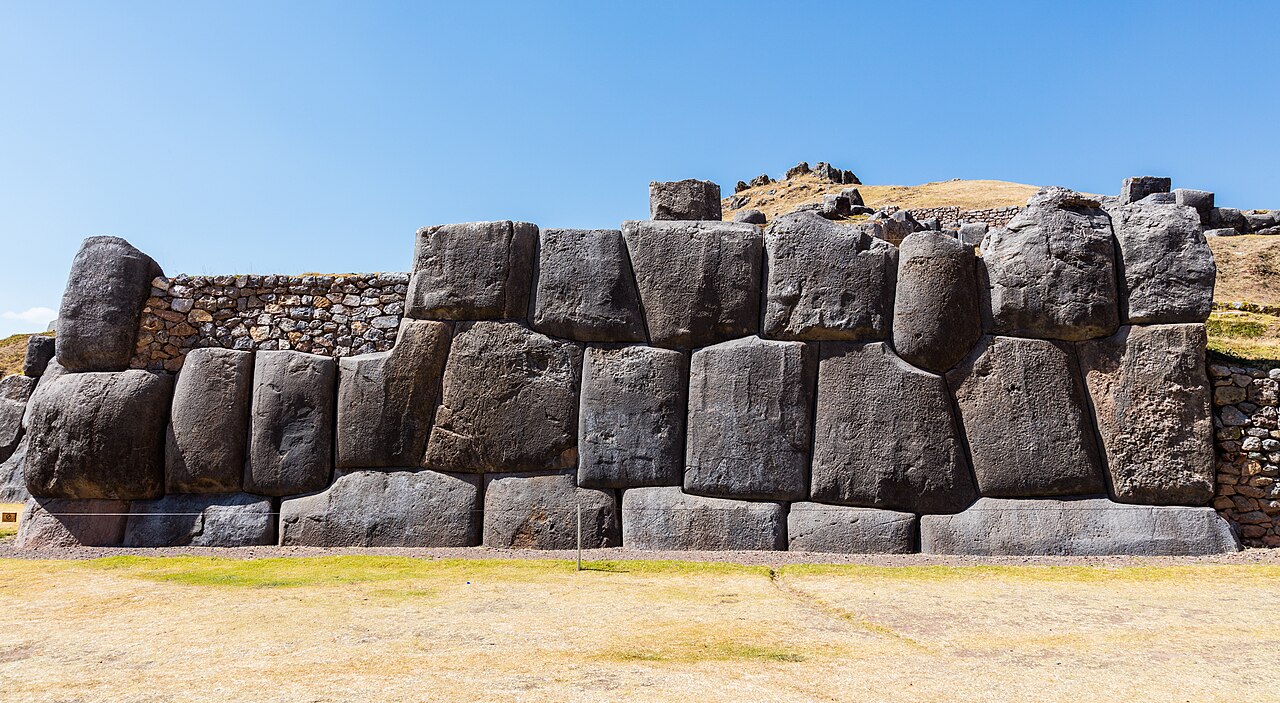
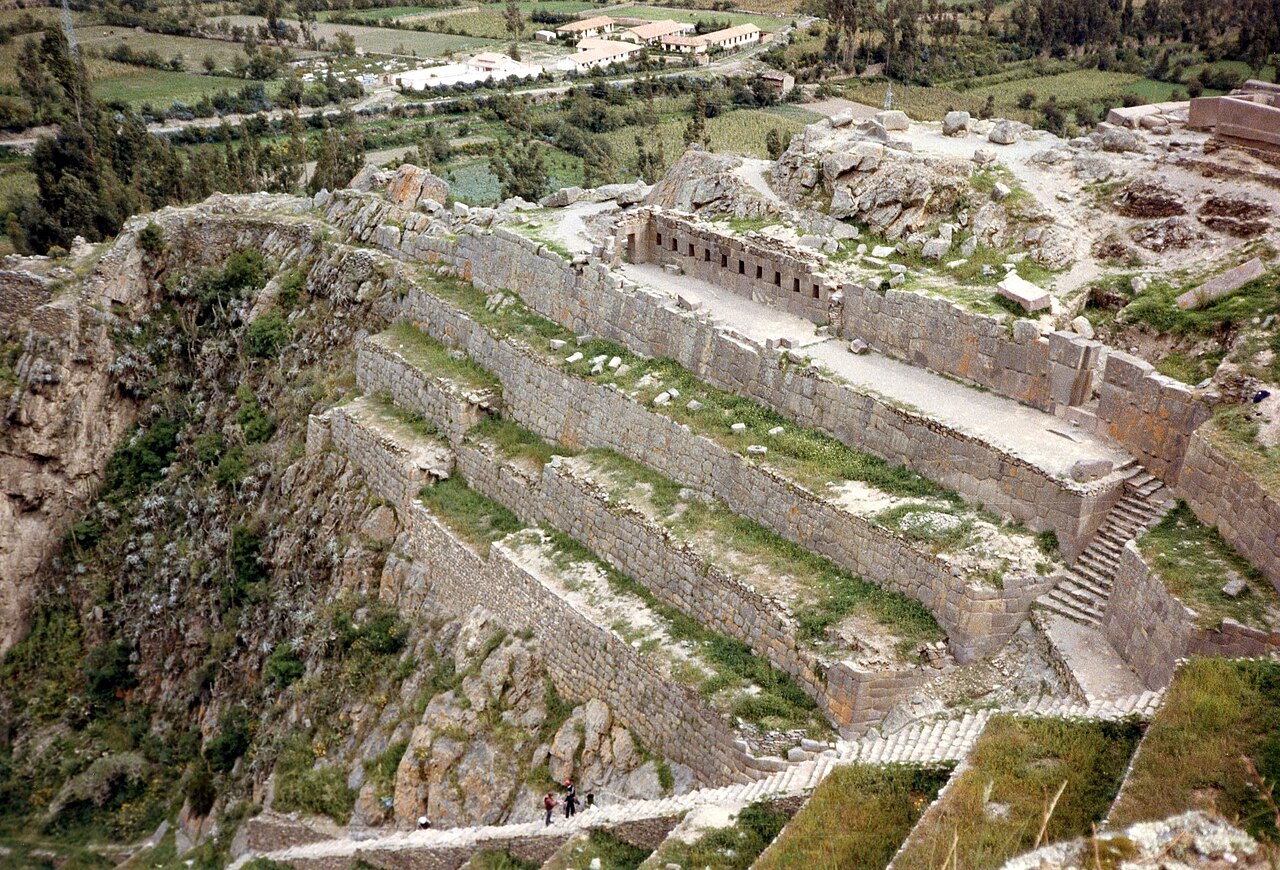
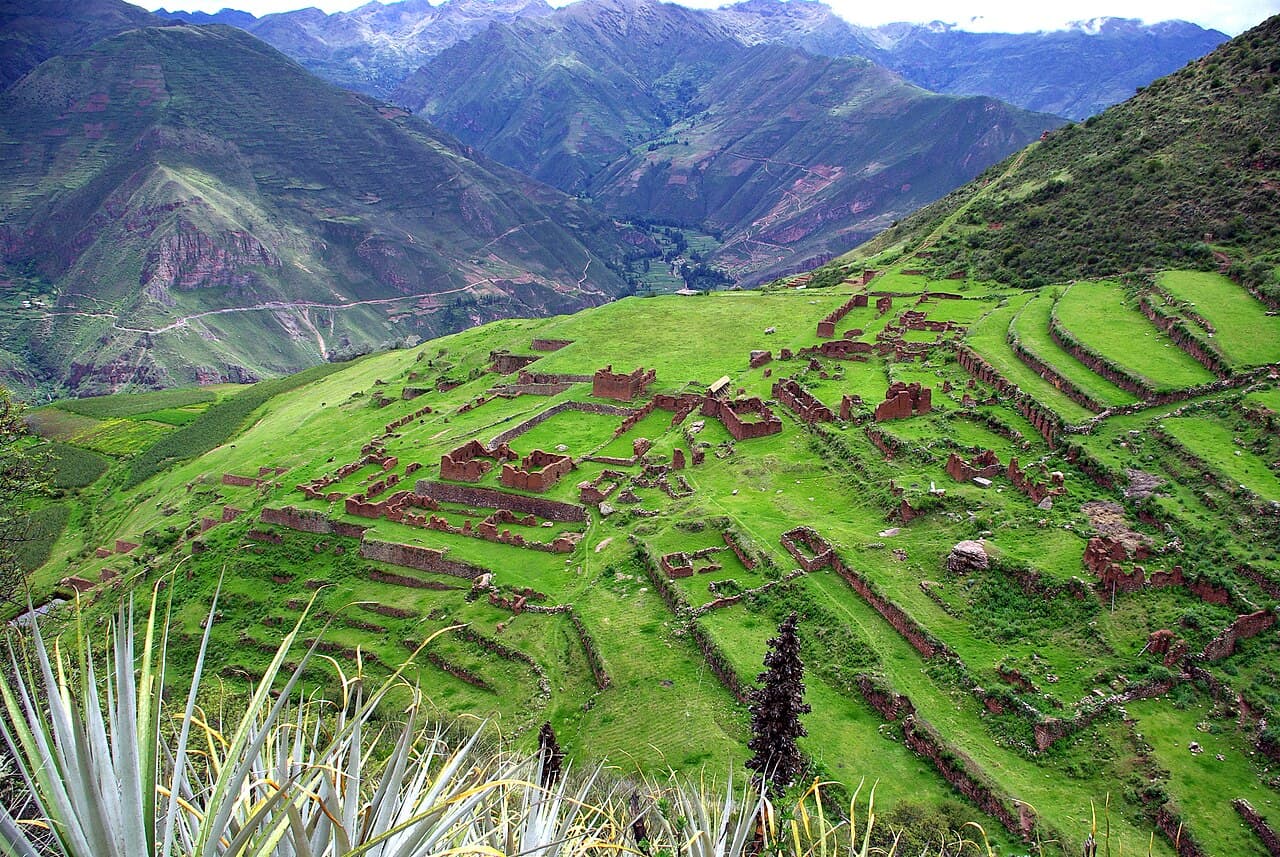
Huchuy Qosqo exemplifies Incan stone masonry with finely cut and fitted stones characteristic of their construction techniques. The site includes a series of terraces carved into the hillside, which were used for agriculture and to stabilize the steep terrain. These terraces demonstrate the Inca's advanced knowledge of hydraulic engineering and soil conservation.
The complex features several rectangular buildings and enclosures arranged around a central plaza. Among these structures are residential quarters, storage facilities known as qullqas, and ceremonial spaces. The buildings are constructed primarily from finely shaped stones without mortar, a technique known as ashlar masonry, which provided seismic resistance.
One notable architectural element is the presence of trapezoidal doorways and niches, a distinctive feature of Incan design intended to strengthen the structures against earthquakes. The site also contains a series of water channels and fountains, highlighting the importance of water management in Incan settlements.
Historical significance and cultural context
Huchuy Qosqo served as a royal estate and possibly a religious retreat for the Inca elite. Its proximity to Cuzco and commanding views over the Sacred Valley suggest it was strategically important for both governance and spiritual activities. The estate likely functioned as a center for agricultural production supporting the capital.
The site provides valuable insights into the social organization and economic practices of the Inca Empire. The extensive terraces and storage facilities indicate a well-planned system for food production and distribution. The architectural style reflects the empire's emphasis on durability and harmony with the natural landscape.
Excavations and preservation
Today, Huchuy Qosqo remains in a state of ruins, with many structures partially preserved. Archaeological investigations have helped clarify the site's layout and function, although much of the original complex is still buried or eroded. Preservation efforts focus on stabilizing the remaining stonework and protecting the terraces from further degradation.
Visitors to Huchuy Qosqo can explore the ruins and appreciate the ingenuity of Incan engineering and architecture. The site's remote location and elevation make it a less frequented but rewarding destination for those interested in Andean history and culture.
Access and visitor information
Huchuy Qosqo is accessible via hiking trails from Lamay and other nearby communities. The trek involves significant altitude gain, requiring visitors to be prepared for high-elevation conditions. There are no formal visitor facilities on site, so travelers should bring adequate supplies and plan accordingly.
The best time to visit is during the dry season, from May to September, when weather conditions are more favorable for hiking and exploration. Guided tours are available and recommended to fully understand the historical and cultural context of the site.
Frequently asked questions (FAQ)
- How do I get to Huchuy Qosqo?
- To reach Huchuy Qosqo, you can take a guided tour from Cusco, which typically includes transportation. Alternatively, you can hike from the nearby village of Lamay, enjoying stunning views along the way. The trek usually takes about 2-3 hours, making it a rewarding journey for adventurous visitors.
- What is the historical significance of Huchuy Qosqo?
- Huchuy Qosqo, meaning "Little Cusco" in Quechua, was an important Incan site believed to be a royal estate. It served as a strategic location with agricultural terraces and religious significance during the Inca Empire. The ruins provide insight into Incan architecture and the cultural practices of the time.
- When was Huchuy Qosqo built?
- Huchuy Qosqo is thought to have been built in the 15th century during the reign of the Inca emperor Pachacuti. The site showcases the architectural ingenuity of the Incas, characterized by its impressive stone constructions and terraces. Its historical timeline offers a glimpse into the rise of the Inca civilization.
- Can I visit Huchuy Qosqo year-round?
- Yes, Huchuy Qosqo is accessible year-round, but the best time to visit is during the dry season, from May to September. During this period, the weather is more favorable for hiking and exploring the site. However, be prepared for occasional rain in the shoulder months of April and October.
- Is it possible to take a guided tour of Huchuy Qosqo?
- Absolutely! Guided tours are highly recommended as they provide deeper insights into the history and significance of the site. Many local tour companies offer half-day or full-day excursions that include transportation, a guide, and sometimes meals.
- What are the opening hours for Huchuy Qosqo?
- Huchuy Qosqo is generally open to visitors from 7:00 AM to 5:00 PM daily. It's advisable to arrive early to avoid crowds and fully enjoy the tranquility of the site. Check with local guides or tour operators for any seasonal changes in hours.
- Are there any nearby attractions to Huchuy Qosqo?
- Yes, nearby attractions include the Sacred Valley of the Incas, Ollantaytambo, and the archaeological site of Pisac. These sites can be easily visited in conjunction with a trip to Huchuy Qosqo, providing a fuller experience of Incan history and culture. Many visitors take advantage of the proximity to explore multiple locations in one trip.
- What are the ticket prices for Huchuy Qosqo?
- Currently, entrance to Huchuy Qosqo is typically included in the Sacred Valley tourist ticket, which costs around $45 for adults and is valid for several days. If you're part of a guided tour, the price may vary depending on what the tour includes. Always check with your tour provider for the most accurate pricing information.
Photo gallery

Information
Loading map...
Visitor reviews
No reviews yet. Been here? Write the first review and help other travelers!
Write the first reviewVisited this castle? Share your experience
Your review helps other travelers and adds first-hand knowledge to our encyclopedia.