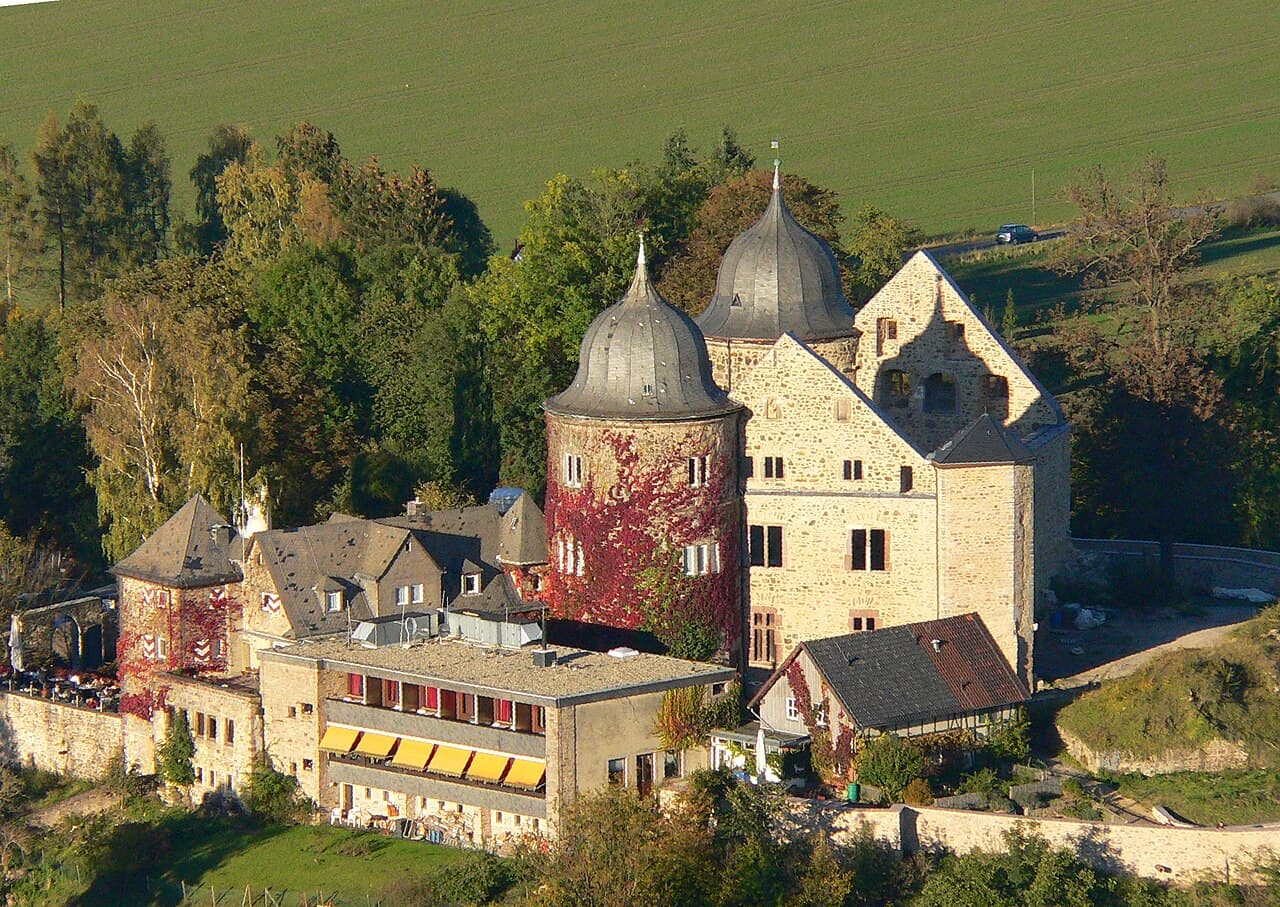
Sababurg — Germany castle

Sababurg

Sababurg castle in Hessen, Germany
Hofgeismar, Hessen, Germany
Late Medieval (14th–15th c.)
Partially Restored

Sababurg castle, famously known as the Sleeping Beauty Castle due to its association with the Brothers Grimm fairy tale, is a remarkable example of a late medieval hill castle nestled in the legendary Reinhardswald forest in Hessen, Germany. This castle stands near the town of Hofgeismar, in the scenic uplands of North Hesse, within the county of Kassel. The castle's evocative ruins and its fairy tale connections have made it a cultural and historical landmark, attracting visitors interested in medieval architecture, folklore, and natural beauty.

Historical background and construction

The Sababurg castle was originally constructed in the 14th century as a strategic fortification. It was built to secure the region and to protect the hunting grounds of the local nobility. The castle's location on a hill provided a commanding view of the surrounding Reinhardswald, a dense forest that was a favored hunting area for the ruling families of the time.

Throughout its history, Sababurg played a role in regional conflicts and served as a residence for various noble families. Its architecture reflects the defensive needs of the late medieval period, with thick walls, towers, and battlements designed to withstand sieges and attacks.

Architectural features and layout

Sababurg is characterized by its typical hill castle design, adapted to the natural terrain of the Reinhardswald. The castle's remains include substantial portions of the curtain walls, gatehouse, and towers, which once formed a formidable defensive complex. The castle's layout includes a central courtyard surrounded by residential and service buildings.

The surviving structures exhibit elements of late medieval military architecture, including arrow slits, battlements, and thick stone masonry. The castle's elevated position on the hill enhanced its defensive capabilities and provided a vantage point over the forest and nearby settlements.

Restoration and modern use

After centuries of decline and partial ruin, the state of Hesse undertook restoration efforts to preserve Sababurg as a cultural heritage site. Beginning in the mid-20th century, the ruins were carefully stabilized and adapted for public access.

In 1959, a significant transformation began when the ruins were converted into a high-class hotel, complete with a restaurant and café, which opened in 1960. This adaptive reuse has allowed visitors to experience the castle's historic ambiance while enjoying modern hospitality. Additionally, the castle houses the SabaBurgTheater, a cultural venue that hosts theatrical performances and events, further enriching the castle's role as a center of arts and culture.

Sababurg in folklore and tourism

The castle's nickname, Sleeping Beauty Castle, stems from its connection to the famous fairy tale collected by the Brothers Grimm. The enchanting forest setting and the romantic ruins evoke the atmosphere of the classic story, making Sababurg a popular destination for tourists and fairy tale enthusiasts alike.

Visitors to Sababurg can explore the castle grounds, enjoy the surrounding natural beauty of the Reinhardswald, and participate in cultural events hosted on site. The castle's blend of historical significance, architectural interest, and fairy tale charm makes it a unique attraction in the Hessen region.

Access and visitor information

Sababurg is accessible by road from nearby towns such as Hofgeismar and Kassel. The site welcomes visitors who wish to tour the castle ruins, dine in the hotel restaurant, or attend performances at the SabaBurgTheater. The castle's location within the Reinhardswald also offers opportunities for hiking and nature exploration.

Opening hours and ticket prices vary depending on the season and the specific attractions, so visitors are advised to check current information before planning their visit. The castle's combination of historical architecture, cultural programming, and natural surroundings ensures a rewarding experience for all who come to Sababurg.

Frequently asked questions (FAQ)

How do I get to Sababurg Castle?
Sababurg Castle is located in Hofgeismar, Germany, and is easily accessible by car or public transport. If you are traveling by train, the nearest station is in Hofgeismar, from where local buses or taxis can take you to the castle.
What is the historical significance of Sababurg Castle?
Sababurg Castle, often referred to as the "Sleeping Beauty Castle," has a rich history dating back to the 14th century. It is renowned for its connection to the Brothers Grimm fairy tale, adding to its cultural importance and drawing visitors interested in both history and literature.
When was Sababurg Castle built?
Sababurg Castle was constructed in the early 14th century, specifically around 1324. Its architecture reflects the medieval style of the time, showcasing impressive fortifications and beautiful landscapes surrounding the castle.
Can I take guided tours of Sababurg Castle?
Yes, guided tours are available at Sababurg Castle, providing visitors with in-depth knowledge about its history and architecture. These tours are typically offered in multiple languages and can enhance your experience by providing context to the castle's significance.
Why is Sababurg Castle known as the "Sleeping Beauty Castle"?
Sababurg Castle is famously linked to the fairy tale of Sleeping Beauty, as the Brothers Grimm drew inspiration from this enchanting location. This association has made the castle a popular destination for fairy tale enthusiasts and those interested in German folklore.
Is it possible to host events at Sababurg Castle?
Yes, Sababurg Castle offers facilities for hosting various events, including weddings and corporate gatherings. Its picturesque setting and historical ambiance provide a unique backdrop for any special occasion.
What are the opening hours of Sababurg Castle?
Sababurg Castle typically opens to visitors from April to October, with specific hours varying by season. It is advisable to check the official website for the most up-to-date information regarding opening times before your visit.
What are the ticket prices for visiting Sababurg Castle?
Ticket prices for Sababurg Castle vary depending on the type of tour and age group. Generally, adults pay a standard entrance fee, while discounts are available for children and seniors, making it accessible for families and groups.
What is the best time to visit Sababurg Castle?
The best time to visit Sababurg Castle is during the spring and summer months when the weather is pleasant and the gardens are in full bloom. Additionally, special events and festivals often take place during this period, enhancing the visitor experience.
Are there any nearby attractions to visit along with Sababurg Castle?
Yes, there are several nearby attractions, including the beautiful Reinhardswald forest and the charming town of Hofgeismar. Visitors can also explore other historical sites and enjoy outdoor activities in the surrounding area, making for a fulfilling day trip.

Photo gallery

Sababurg
Click to view

Photo by Presse03•CC BY-SA 3.0

1 photo • Click any image to view in full screen

Information

Hill Castle

Sources & official resources

Verify the information above using these authoritative references.

Loading map...

Visitor reviews

No reviews yet. Been here? Write the first review and help other travelers!

Write the first review

Visited this castle? Share your experience

Your review helps other travelers and adds first-hand knowledge to our encyclopedia.

Write a review

(5/5)

0/2000 characters

Your review will be visible after admin approval

Nearby castles

6.5 km

Grebenstein Castle

Grebenstein, Germany

Grebenstein Castle stands as a remarkable example of a medieval hilltop fortress in Germany, perched strategically above the town of Grebenstein. Its origins trace back to the second half of the 11th century, when it was initially constructed by German builders as a modest defensive stronghold. Over the centuries, the castle evolved in response to the shifting political and military landscape of the region, becoming a significant site of feudal power and territorial control. Early construction and medieval significance The castle's earliest phase reflects typical high medieval fortification techniques, with a focus on defense and control of the surrounding territory. The choice of the Burgberg hill—a basalt cone rising approximately 56 meters above the town and situated at 249 meters above sea level—provided a natural vantage point and formidable defensive advantage. The site’s natural defenses were further enhanced by the nearby Esse stream, which partially encircles the hill and feeds into the Diemel River, creating a natural moat-like barrier. In the mid-13th century, Count Ludolf V of Dassel undertook significant expansions and reinforcements, transforming the castle into a more formidable fortress to protect his estates. This period marked a turning point, as the castle became deeply entwined with the regional power struggles between the Bishopric of Paderborn and the Landgraviate of Hesse. The first documented mention of Grebenstein Castle in 1272 coincides with these territorial disputes, highlighting its strategic importance. Ownership changes and political role Through marriage alliances, the castle passed to Otto von Everstein around 1279, who held it as a fief under the Archbishopric of Mainz. Despite agreements to dismantle the fortress, the castle remained intact, partly due to the intervention of Landgrave Heinrich I of Hesse, who gained partial control by 1282. Otto von Everstein’s appointment as a Burgmann in 1293 and subsequent sale of the castle to Heinrich I in 1297 marked the beginning of Hessian dominance. Grebenstein Castle then functioned primarily as a Hessian administrative center and military stronghold, particularly in opposition to Mainz territories. The fortified town of Grebenstein itself was considered more strategically vital than the castle, but the fortress remained a key component of regional defense. In 1328, the castle was granted as a Paragium to Ludwig the Junker, brother of Landgrave Heinrich II, indicating its continued importance within the Hessian feudal system. The castle’s historical significance is further underscored by its association with notable figures such as Hermann II, born there in 1341, who later became Landgrave. In 1385, Grebenstein Castle successfully withstood a siege by forces led by Archbishop Adolf I of Mainz, demonstrating its defensive capabilities and strategic resilience. Decline and later history Following the Mainz Stiftsfehde conflict (1461–1463), which resulted in the transfer of Mainz possessions in the region to Hesse, Grebenstein Castle's strategic role diminished considerably. By 1471, it appears the castle was occupied only by a scribe, signaling its reduced military importance. By around 1540, the fortress ceased to serve as a noble residence and was repurposed as a granary, reflecting changing functional needs. The castle suffered significant destruction during the Thirty Years’ War in 1631, when both the fortress and the town were devastated. Subsequent decades saw the castle fall into ruin, as local inhabitants quarried stone from the remains for building materials. This extensive decay continued until the late 20th century, when conservation efforts began to stabilize and preserve the surviving structures. Architectural features and surviving ruins The most prominent remains of Grebenstein Castle are dominated by the large palas, the main residential building of the fortress. Measuring approximately 37 meters in length and 12 meters in width, the palas was constructed with thick masonry walls nearly three meters thick on the first floor, designed to withstand sieges and attacks. The exterior walls have survived to heights exceeding 13 meters, allowing visitors to appreciate the scale and defensive strength of the original construction. The palas originally included a basement and three upper floors. Remnants of oriel windows—small projecting windows that provided additional light and vantage points—and chimneys remain visible, offering insights into the castle’s domestic arrangements. The basement housed the kitchen, while the upper floors contained the Kemenate or women's chamber, reflecting the residential and functional diversity of the castle’s interior spaces. Surrounding the palas is a partial moat, which formed an integral part of the castle’s defensive system. Although traces of an outer bailey and additional defensive ditches are faint, the moat itself remains, delineating the extent of the fortifications. The castle's position atop the Burgberg hill, combined with these man-made defenses, made it a formidable stronghold in its prime. Cultural significance and visitor experience Today, Grebenstein Castle’s ruins offer a tangible connection to the region’s medieval past. Beneath the hill lies a small Jewish cemetery, marking the historical presence of a local Jewish community and adding cultural depth to the site. Visitors can access the ruins via a modern steel staircase leading to a viewing platform atop the upper walls. From this vantage point, panoramic views extend across the historic town of Grebenstein and the surrounding Habichtswald and Reinhardswald forests, emphasizing the castle’s commanding position within the landscape. The castle’s ruins are a testament to the architectural ingenuity and historical endurance of medieval fortifications in Germany. The site continues to attract historians, architecture enthusiasts, and tourists interested in exploring the layers of feudal history and medieval military architecture preserved in the remaining structures. Historical officials and administration Throughout its history, Grebenstein Castle was governed by a series of Hessian Amtmänner (officials), recorded from 1336 to 1529. These included notable figures such as Ludwig von Grebenstein and Dietrich von Schachten, who served multiple terms. Their administration reflects the castle’s role as a center of regional governance and military oversight during the late medieval period.

High Medieval (11th–13th c.)
Details
9.3 km

Burg Trendelburg

Trendelburg, Germany

Burg Trendelburg is a remarkable example of a hill castle situated in the municipality of Trendelburg, Germany. Constructed in the late 13th century by the nobleman Konrad III von Schöneberg, the castle occupies a commanding position atop a sandstone ridge overlooking the Diemel River. This strategic location was chosen to control vital medieval trade routes, underscoring the castle's significance in regional defense and governance during the High Medieval period. The site’s historical roots extend deeper, with the area originally part of Saxon lands subdued by Charlemagne during his campaigns. Subsequently, the territory came under the jurisdiction of the Bishopric of Paderborn and the County of Warburg. In the early 14th century, after Konrad III lost his ancestral castle to Paderborn, Burg Trendelburg emerged as a joint administrative center. This dual control was formalized through a peace agreement in 1306 between the Bishopric of Paderborn and the Landgrave of Hesse, highlighting the castle’s role in regional power dynamics. Medieval origins and strategic importance The castle’s initial construction reflects typical spur castle design, leveraging natural topography for defense. Positioned at an elevation of 172 meters on a sandstone ridge, the site features steep drops on three sides towards the Diemel River, providing formidable natural barriers. Only the western side slopes gently towards the medieval town of Trendelburg, which historically adjoined the castle walls, facilitating access and trade. The trapezoidal layout of Burg Trendelburg was originally fortified with a moat and an earthen embankment, both now filled in. A distinctive rock-cut neck ditch separates the fortress from the town, with access controlled via a wooden bridge equipped with a drawbridge. This entrance led to a low gate opening into the courtyard, serving as the castle’s first line of defense. Architectural features and defensive elements One of the castle’s most iconic features is its bergfried, a tall stone tower commonly known as the "Rapunzel Tower." Rising over 40 meters with walls up to seven meters thick, the bergfried served multiple defensive functions. Inside, a spiral staircase of more than 130 steps ascends its height, leading to vantage points equipped with four machicolations—openings for dropping projectiles on attackers—and three arrow slits facing west. The bergfried also housed a dungeon and a courtyard-facing escape doorway, illustrating its dual role in defense and imprisonment. In 2012, restoration efforts added a protective roof modeled after historical depictions to preserve this significant structure. The castle’s curtain walls remain well-preserved and crenellated, allowing for defensive patrols. Opposite the bergfried stands the main gate, flanked by two corner towers. One tower retains a timber-framed superstructure that historically accommodated the gatekeeper and the town prison, reflecting the castle’s judicial functions. The other tower has lost its original spire. Additional fortifications include two more corner towers, one featuring a garderobe—a medieval latrine projecting beyond the wall. The main residential building, the Festes Haus, rises three stories and is roofed with traditional sandstone slabs. It includes a visible stair tower that once contained a spiral staircase, replaced in later renovations by a robust oak staircase. Historical developments and transformations By 1472, the settlement beneath the castle was granted town rights by Landgrave Ludwig II, strengthening the castle’s administrative role. It served as the residence and office for officials appointed by the Landgrave, cementing its importance in late medieval governance. The Thirty Years’ War (1618–1648) was a turbulent period for Burg Trendelburg. The castle was repeatedly attacked and set ablaze by forces under General Tilly, underscoring its strategic military value. Post-war, Landgrave Karl expanded the castle, transforming it into a fortified hunting lodge, blending residential comfort with defensive features. During the Seven Years’ War (1756–1763), the castle experienced occupation by French troops and sustained severe damage amid battles with forces led by Duke Ferdinand. This conflict further impacted the castle’s structure and necessitated later repairs. In the 19th century, as administrative functions moved elsewhere, Burg Trendelburg became a Prussian forestry office. At the dawn of the 20th century, it was acquired by the von Stockhausen family and converted into a private residence. From 1949 onwards, the castle began a new chapter as a hotel, incorporating restaurant services and later additions such as a wedding tower. Cultural significance and modern restoration Burg Trendelburg holds a special place in German cultural heritage, notably through its association with the Brothers Grimm fairy tale "Rapunzel". This connection has made the castle a key site along the German Fairy Tale Route, attracting visitors interested in folklore and history alike. The castle also served as a filming location for a 1958 movie featuring comedian Heinz Erhardt, adding to its cultural footprint. Since 1996, ownership by the Dr. Lohbeck hotel group has focused on careful restoration, preserving the castle’s historic fabric while adapting it for tourism. Significant restoration efforts culminated in 2012 with the completion of work on the bergfried, including the installation of a protective roof. These efforts have made the tower accessible to visitors, enhancing public engagement with the castle’s medieval architecture and history. Visitor experience and preserved features The castle courtyard remains open and accessible, featuring exhibitions such as the dungeon and a former torture chamber. These spaces provide tangible insights into the castle’s medieval defensive and judicial roles, enriching the visitor experience. The combination of natural defensive advantages, well-preserved medieval architecture, and layered historical narratives makes Burg Trendelburg a significant heritage site. Its enduring presence atop the sandstone ridge continues to dominate the landscape, inviting exploration of its rich past and architectural splendor.

High Medieval (11th–13th c.)
Details
12.1 km

Sababurg Castle

Germany, Germany

Sababurg Castle stands prominently on a basalt hill in the Reinhardswald forest near Hofgeismar, Hessen, Germany. This historic hill castle is renowned not only for its medieval origins but also for its rich association with German folklore and the Brothers Grimm fairy tales, earning it the nickname "Sleeping Beauty Castle." Originally constructed in the early 14th century, Sababurg has served various roles—from a strategic border fortress to a princely hunting lodge and now a cultural heritage site and hotel complex. The castle’s history begins with its foundation by the Bishopric of Mainz on 19 April 1334. Initially called Zappenburg or Zapfenburg, it was built to protect pilgrims traveling to Gottsbüren, the site of a reported miraculous discovery of the incorrupt body of Jesus in 1330. Sababurg’s location was strategically significant, situated at a contested frontier among Mainz, the Landgraviate of Hesse, the Bishopric of Paderborn, and the Duchy of Brunswick. This geopolitical tension shaped its early military and administrative importance. Medieval origins and strategic significance After its completion in 1336, Sababurg was entrusted to Arnold von Portenhagen as its first castellan. However, the castle’s control shifted following Mainz’s defeat in 1346, resulting in a division of ownership between Hesse and Paderborn. By the mid-15th century, the castle had fallen into disuse and was described as abandoned by 1455. The aftermath of the Mainz Diocesan Feud in 1462 saw Sababurg fully integrated into Hessian territory, marking a new chapter in its history. Transformation into a princely hunting lodge In 1490, Landgrave Wilhelm I of Hesse undertook a significant transformation of the site, converting the former fortress into an elaborate hunting lodge. This adaptation reused much of the original medieval foundations but introduced Renaissance architectural elements and amenities suitable for aristocratic leisure. Construction of the main residential building, or palas, commenced in 1508 and was completed in 1519 under the reign of his grandson, Philip I. The castle became a prestigious venue for hunting parties and courtly gatherings for approximately three centuries. During this period, a stud farm was also established on the castle grounds to support the landgrave’s equestrian interests. The castle’s name evolved to Sababurg by 1582, the same year the chancellery building was constructed, which later served as the administrative center for the Gieselwerder district. Architectural evolution and wartime impacts Sababurg’s architecture reflects a blend of medieval and Renaissance styles. Notably, the two large round towers originally featured Gothic helmets, which were replaced in the mid-17th century by distinctive welsche Hauben (barrel-shaped domes) characteristic of Renaissance taste. Defensive features included a ring wall with flanking gates, ditches, and embankments, some of which remain visible today. Between 1571 and 1591, a remarkable five-kilometer-long thorn hedge, three meters high, was planted around the castle to protect livestock from wild animals, highlighting the castle’s role in regional land management and hunting culture. The castle suffered significant damage during the Thirty Years’ War when Catholic troops under Field Marshal Tilly occupied it in 1628. Subsequent occupations, including by French forces during the Seven Years’ War in 1760, further contributed to its decline. By the late 18th century, Sababurg had largely fallen into ruin and was repurposed as a forester’s house. Decline, romanticization, and modern restoration Following the annexation of Hesse by Prussia in 1866, Sababurg’s decline accelerated. The castle’s wings were gradually demolished between 1824 and 1826, and its precious furnishings were dispersed. Despite its dilapidated state, the castle became a symbol of romantic ruin and inspired numerous legends, including tales of the "Three Giant Daughters Saba, Trendela, and Brama" and the story of "Count Reinhard and the emergence of the Reinhardswald." In 1957, the Koseck family initiated a restoration project that reimagined Sababurg as the "Sleeping Beauty Castle," drawing on the Brothers Grimm fairy tales to enhance its cultural appeal. Restoration efforts included preserving the remaining ring walls, corner towers with their unique Renaissance domes, and the chancellery building, which was expanded with a modern annex in 1976. From 1959 onwards, the castle ruins were adapted into a high-class hotel with restaurant and café facilities, opening to the public in 1960. The site also became home to the SabaBurgTheater, fostering cultural events and performances. In 1987, Sababurg made history as the first venue in Germany outside a town hall to offer civil wedding ceremonies, later expanding its facilities in 2002. Recent developments and future plans Since 2018, extensive renovations have limited visitor access to the castle’s exterior on weekends and holidays. Hotel and catering operations ceased the same year, and civil weddings were discontinued. In 2020, demolition of the old hotel began to make way for a new four-star hotel with 40 rooms, a restaurant, and conference facilities designed to harmonize with the historic ruins. The new construction aims to echo the castle’s architectural diversity, incorporating horizontal lines reminiscent of the palas and sloping roof shapes. The planned restaurant and catering areas are situated in the basement, featuring a terrace overlooking the Sababurg Wildlife Park below. Initial construction costs were estimated at €12 million but escalated to €43 million due to a shift toward primarily wooden structures. Work was halted in 2024 due to economic challenges and ground conditions. Architectural remains and landscape setting Sababurg is classified as a hill castle ruin, situated approximately 315 meters above sea level on a basalt hill between the villages of Beberbeck and Gottsbüren. The castle’s layout includes remnants of the ring wall, flanking gate, defensive ditches, and embankments, some restored to preserve the site’s historical integrity. The palas survives primarily as outer walls, with the interior lost to time. Two large corner towers with their distinctive welsche Hauben remain intact and are currently utilized within the hotel complex. A smaller stair tower also survives, adding to the castle’s architectural complexity. The chancellery building from 1582 remains a prominent feature, expanded in the 20th century with a modern annex. Historically, the castle was uniquely protected by a five-kilometer thorn hedge, underscoring its role in regional land and wildlife management. Cultural significance and tourism today Today, Sababurg Castle is celebrated not only for its historical and architectural heritage but also as a cultural landmark tied to the Brothers Grimm fairy tales. The castle and its surrounding wildlife park attract visitors interested in history, nature, and folklore. The SabaBurgTheater continues to offer dramatic and musical performances, enriching the visitor experience. Despite recent construction halts, plans for the new hotel aim to blend modern hospitality with the castle’s historic ambiance, promising a renewed destination for guests seeking a unique blend of history, culture, and natural beauty in Hessen.

Late Medieval (14th–15th c.)
Details
