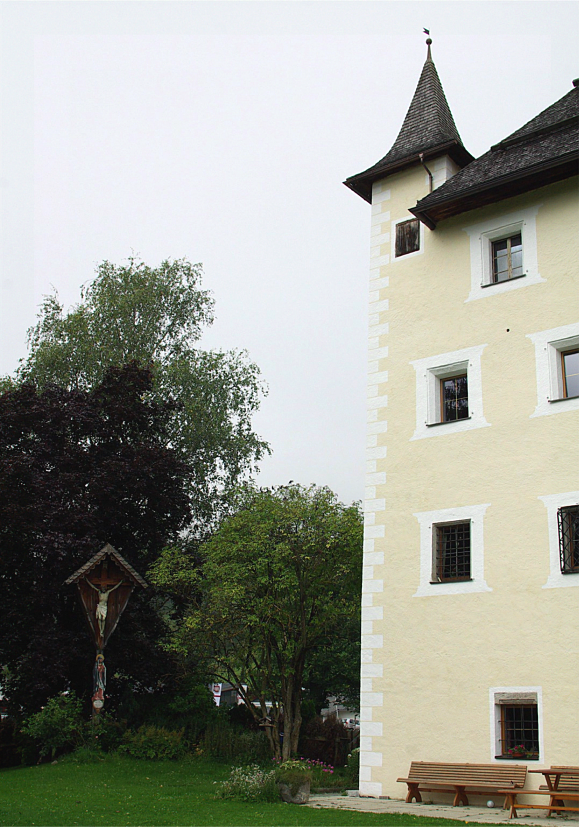
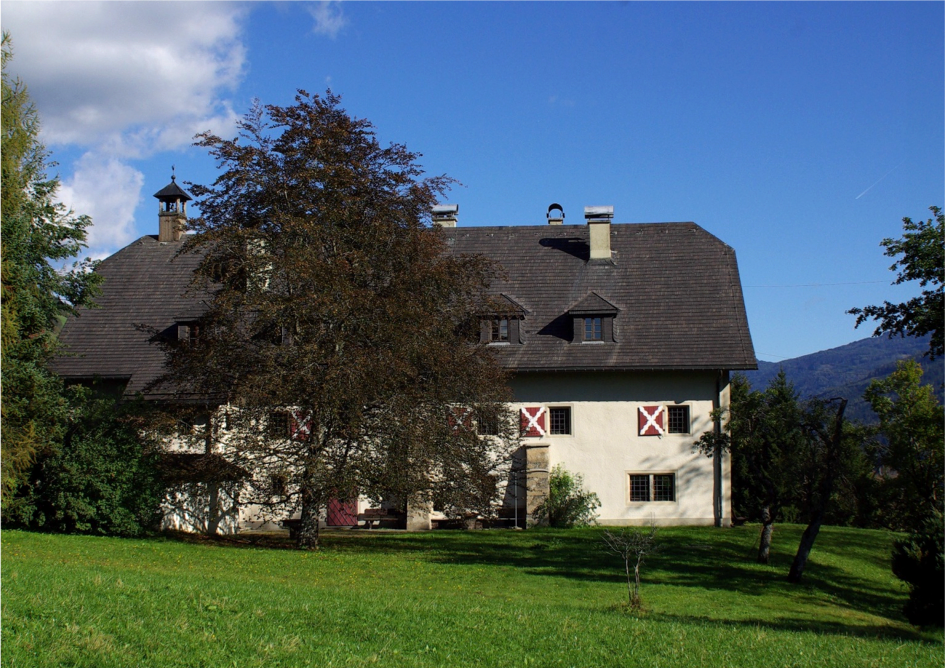
Saalhof Castle
Saalhof Castle is among the oldest surviving castles in the Pinzgau region of Austria, with origins tracing back to the 11th century. It initially served as a residence for the Counts of the region, marking it as a significant feudal seat during the early medieval period. The castle's long history is reflected in its architectural evolution, combining medieval foundations with later Renaissance modifications.
Early history and medieval origins
The castle's earliest sections, particularly on the north-east side, were uncovered during a facade renovation in 2010. These revealed elements date back to the original 11th-century construction, highlighting Saalhof's role as a fortified noble residence in the High Middle Ages. The castle likely functioned as both a defensive stronghold and an administrative center for the ruling Counts, overseeing the surrounding lands.
Renaissance rebuilding and architectural features
In 1600, the castle underwent significant reconstruction under Christoff Amann from Judendorf and Saal. This rebuilding introduced Renaissance architectural elements, which are prominently visible in the castle's facade and interior. One notable feature is the marble relief and emblem above the main entrance, laid in 1606, symbolizing the castle's renewed status and the prestige of its owner.
The interior arrangement also largely dates from this Renaissance period, reflecting contemporary styles and functional adaptations. The blend of medieval structure with Renaissance aesthetics makes Saalhof a valuable example of architectural transition in Austrian castle design.
Architectural layout and defensive elements
Saalhof Castle's layout retains characteristics typical of early medieval fortifications, including thick stone walls and strategic positioning to oversee the surrounding terrain. While much of the original defensive features have been modified or softened during the Renaissance renovation, the castle's robust construction and elevated site underscore its historic role in regional defense and governance.
Cultural significance and preservation
As one of the oldest castles in the Pinzgau area, Saalhof holds cultural and historical importance for the region. Its preservation and the 2010 renovation work have helped to maintain the castle's structural integrity and reveal its layered history. Saalhof continues to attract interest from historians, architects, and visitors interested in Austria's medieval and Renaissance heritage.
Visiting saalhof castle
While Saalhof Castle is primarily a historic site, its accessibility and visitor information are limited. Prospective visitors should check local resources for current visiting hours and tour availability. The castle's setting in Atzing offers picturesque views and a glimpse into the region's feudal past.
Frequently asked questions (FAQ)
- When was Saalhof Castle originally built?
- Saalhof Castle dates back to the 11th century, making it one of the oldest castles in the Pinzgau region.
- What architectural styles are present in Saalhof Castle?
- The castle features a mix of early medieval construction and Renaissance renovations from around 1600.
- Who was responsible for the Renaissance rebuilding of the castle?
- Christoff Amann from Judendorf and Saal led the significant rebuilding of Saalhof Castle in 1600.
- What notable features were added during the 1606 renovations?
- A marble relief and emblem above the main entrance were added in 1606, reflecting the Renaissance style.
- Is Saalhof Castle open to visitors?
- Visitor access to Saalhof Castle may be limited; it is advisable to check local information for current visiting hours and tour availability.
Information
Loading map...
Visitor reviews
No reviews yet. Been here? Write the first review and help other travelers!
Write the first reviewVisited this castle? Share your experience
Your review helps other travelers and adds first-hand knowledge to our encyclopedia.