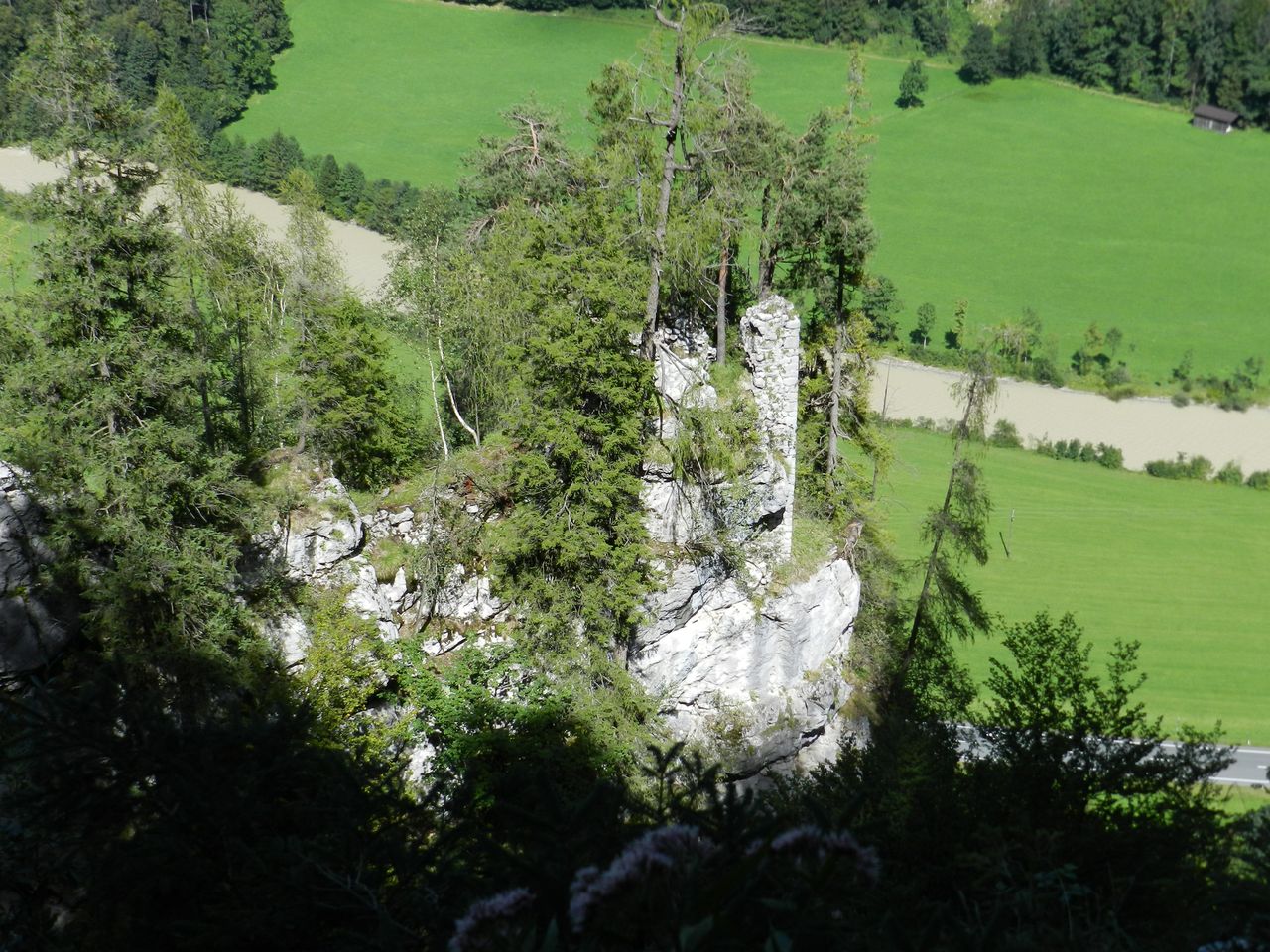
Dorfheim Castle

Dorfheim Castle in Saalfelden am Steinernen Meer
Saalfelden am Steinernen Meer, Salzburg, Austria
Renaissance (15th–17th c.)
Restored

Dorfheim Castle is located in Saalfelden am Steinernen Meer, Austria, and has a history that stretches back to the 12th century. Originally established as a fortified estate, the site evolved over the centuries into the castle known today. The castle's most significant transformation occurred in 1601 when it was rebuilt by Josef Hunt during the Renaissance period. This reconstruction introduced architectural elements characteristic of the Renaissance style, blending functional fortification with the aesthetic sensibilities of the era.

Historical development and architectural features

The original estate, dating to the medieval period, likely served as a fortified residence for local nobility or landowners. Its strategic location in Saalfelden provided a defensive advantage amid the alpine landscape. The 1601 rebuilding by Josef Hunt marked a significant shift, replacing older medieval structures with a more modern Renaissance design. This included the use of symmetrical layouts, larger windows, and ornamental details that reflected the changing tastes and increased stability of the region at the time.

The castle's architecture features a robust stone construction typical of the period, with thick walls designed for defense. While detailed records of the castle's original Renaissance architectural elements are limited, the rebuilding would have incorporated typical features such as arched windows, decorative cornices, and possibly a courtyard surrounded by residential and service buildings. The castle's layout was adapted to both residential comfort and defensive needs.

Destruction and restoration

In 1901, Dorfheim Castle suffered a devastating fire that almost completely destroyed the structure. This event marked a critical turning point in the castle's history. The fire's aftermath left the castle in ruins, threatening the loss of a significant cultural landmark. Restoration efforts began in 1912 under the direction of Martin Hartl, who undertook the task of rebuilding the castle. Hartl's restoration aimed to preserve the castle's Renaissance character while incorporating necessary modernizations to ensure structural stability and usability.

The restoration work included rebuilding damaged walls, repairing or replacing roof structures, and restoring interior spaces. While the castle's original Renaissance details were respected, some elements were adapted to contemporary building standards of the early 20th century. This blend of historical preservation and modernization allowed Dorfheim Castle to regain its status as a notable architectural and historical site in the region.

Current use and cultural significance

Today, Dorfheim Castle serves a new role as a cultural and social venue. The ground floor houses a restaurant, which welcomes visitors and locals alike, offering a unique dining experience within the historic walls. This adaptive reuse of the castle helps maintain its upkeep and allows the public to engage directly with the site's heritage.

The castle remains an important landmark in Saalfelden am Steinernen Meer, contributing to the town's historical landscape and tourism appeal. Its survival through centuries of change, destruction, and restoration reflects the resilience and enduring significance of such estates in Austria's architectural history.

Architectural context and regional importance

Dorfheim Castle exemplifies the transformation of medieval estates into Renaissance residences in the Alpine region. Its construction and subsequent restoration highlight the architectural trends and historical developments in Salzburg state during the late Renaissance and early modern periods. The castle's location in Saalfelden, near the Steinernes Meer mountain range, situates it within a landscape that combines natural beauty with historical depth.

While not as large or famous as some Austrian castles, Dorfheim holds value as a well-preserved example of a Renaissance estate adapted over time. It offers insights into regional building practices, noble lifestyles, and the challenges of preserving heritage sites that have faced significant damage.

Frequently asked questions (FAQ)

What is the historical significance of Dorfheim Castle?
Dorfheim Castle, located in Saalfelden am Steinernen Meer, is a remarkable example of medieval architecture that dates back to the 12th century. It has served various purposes over the centuries, from a noble residence to a military stronghold, reflecting the region's rich history and strategic importance.
When is the best time to visit Dorfheim Castle?
The best time to visit Dorfheim Castle is during the late spring and early fall when the weather is pleasant and the surrounding landscape is at its most beautiful. These seasons offer visitors the chance to enjoy outdoor activities and explore the nearby trails and natural attractions.
Is it possible to access Dorfheim Castle with public transportation?
Yes, Dorfheim Castle is accessible by public transportation, with regular bus services operating from Saalfelden. Visitors can easily plan their journey using local transit maps and schedules to ensure a smooth visit.
Can I take guided tours of Dorfheim Castle?
Yes, guided tours of Dorfheim Castle are available, providing visitors with in-depth knowledge of its history and architecture. These tours are led by knowledgeable guides who can share fascinating stories and insights about the castle and its surroundings.
What are the opening hours of Dorfheim Castle?
Dorfheim Castle is open to visitors from 10 AM to 5 PM daily, but it is advisable to check the specific schedule, especially during the off-peak season. Special events and holidays may affect these hours, so planning ahead is recommended.
How much do tickets to Dorfheim Castle cost?
Ticket prices for Dorfheim Castle are typically affordable, with discounts available for students and seniors. Children under a certain age may enter for free, making it an accessible destination for families.
Are there any nearby attractions to visit while at Dorfheim Castle?
Yes, there are several nearby attractions, including hiking trails in the stunning Steinernes Meer mountain range and the scenic Saalfelden lakes. These natural wonders complement the historical experience of the castle, making it an ideal day trip destination.
What architectural features should I look for at Dorfheim Castle?
Dorfheim Castle showcases a blend of Romanesque and Gothic architectural styles, with its imposing stone walls and elegant towers. Visitors should pay attention to the intricate details of the stonework and the castle's overall layout, which offers a glimpse into the medieval building techniques.

Information

Lowland Castle

Loading map...

Visitor reviews

No reviews yet. Been here? Write the first review and help other travelers!

Write the first review

Visited this castle? Share your experience

Your review helps other travelers and adds first-hand knowledge to our encyclopedia.
Write a review

(5/5)

0/2000 characters

Your review will be visible after admin approval

Nearby castles

8.1 km
Castle Saalhof — Austria castle

Castle Saalhof

Maishofen, Austria

Castle Saalhof stands as one of the oldest and most historically significant castles in the Pinzgau region of Salzburg, Austria. Originating in the 11th century, this hill castle was initially the residence of the local ruling counts, reflecting the feudal landscape of medieval Austria. Its strategic location near the main road connecting Zell am See and Saalfelden, close to the entrance of the Glemm valley, underscores its historical importance as a defensive and administrative center. The castle's architecture is a testament to centuries of evolution, with major expansions and renovations shaping its current form. Around 1606, under the stewardship of Christof Aman, Castle Saalhof underwent significant transformation, acquiring much of the character it retains today. This period introduced refined interior furnishings and a commemorative plaque bearing the coats of arms of the Aman and Grimming families, emblematic of the castle's noble heritage. Historical lineage and ownership The documented history of Castle Saalhof reveals a complex tapestry of ownership reflecting the political and ecclesiastical dynamics of the region. By 1296, the estate was likely under the control of Bishop Conrad of Fohnsdorf, known as "Teufel" or "Devil," marking its integration into the Archdiocese of Salzburg. This ecclesiastical affiliation highlights the church's influence over regional lands during the late medieval period. In the 15th century, the castle was owned by Oswald Eisenstang (documented in 1433), and later passed through marriage to Heinrich Hackl. After Hackl's death in 1584, financial difficulties led to the property's transfer to Sigmund Aman von Judendorf. The Aman family played a pivotal role in the castle's history, particularly during the early 17th century renovations. The 18th century witnessed several changes in ownership, including figures such as Jakob Riedl, Johann Matheus Kobald von Dambach, Baron Hackledt, and Rochus von Braun. These transitions reflect the typical inheritance and property disputes among noble families of the era. In the 19th century, the castle was acquired by Josef Zetner in 1840 and later by the Schattbacher family in 1874. The current owners, the Rieder family, are descendants of the Schattbachers, maintaining the castle's lineage into the modern era. Architectural features and structure Castle Saalhof exemplifies a typical Pinzgau residence with distinctive architectural elements. The castle features four square corner towers topped with a pavilion roof covered in wooden shingles, a traditional roofing method that adds to its historic charm. The building's layout includes four floors on the east and west sides and three floors on the north and south sides, creating a balanced and imposing structure. The main entrance is situated on the east facade, above which a square red marble plaque depicts an angel holding the coats of arms of the Aman and Grimming families, dated 1606. This plaque commemorates the extensive renovations carried out by Christof Aman and his wife Felicitas Grimming. The first floor is adorned with several portals framed by fluted pilasters, adding decorative refinement to the castle's exterior. Originally, the castle housed a noble chapel, now deconsecrated, which once served the spiritual needs of its inhabitants. Inside, many early 17th-century architectural and decorative elements remain preserved, showcasing the craftsmanship and aesthetic sensibilities of that period. Location and surroundings Perched at approximately 766 meters above sea level, Castle Saalhof enjoys a commanding position in a valley oriented from north to south. The surrounding landscape is characterized by mountainous terrain to the southwest and hilly countryside to the northeast, with expanses of farmland and natural vegetation nearby. This rural setting, combined with a low population density of about 34 inhabitants per square kilometer, preserves the castle's tranquil and historic atmosphere. Modern adaptations and preservation In recent decades, Castle Saalhof has undergone thoughtful renovations to balance preservation with contemporary use. Since 2006, newly renovated apartments within the castle have been available, allowing visitors and residents to experience its historic ambiance firsthand. The 2010 facade renovation restored the castle's exterior to its original 17th-century colors, revealing some of the oldest structural elements, particularly on the north-east side. The castle's designation as a protected monument by the Austrian Republic in 1993 underscores its cultural and historical significance. This status ensures ongoing preservation efforts and highlights Castle Saalhof as a valuable heritage site within the Salzburg region. Notable figures and cultural significance Castle Saalhof has been associated with several prominent individuals, enriching its historical narrative. Franz Anton Alexander von Braune, a renowned Salzburg botanist born in 1766, is among the notable personalities linked to the castle. Additionally, Anton Faistauer, a celebrated Salzburg painter, frequently depicted the castle in his works and was buried nearby, further cementing its place in regional cultural history. The castle's enduring presence and well-preserved state make it a remarkable example of medieval and early modern architecture in Austria. Its layered history, architectural details, and cultural connections offer valuable insights into the region's feudal past and evolving heritage.

High Medieval (11th–13th c.)
Details
8.4 km

Saalhof Castle

Atzing, Austria

Saalhof Castle is among the oldest surviving castles in the Pinzgau region of Austria, with origins tracing back to the 11th century. It initially served as a residence for the Counts of the region, marking it as a significant feudal seat during the early medieval period. The castle's long history is reflected in its architectural evolution, combining medieval foundations with later Renaissance modifications. Early history and medieval origins The castle's earliest sections, particularly on the north-east side, were uncovered during a facade renovation in 2010. These revealed elements date back to the original 11th-century construction, highlighting Saalhof's role as a fortified noble residence in the High Middle Ages. The castle likely functioned as both a defensive stronghold and an administrative center for the ruling Counts, overseeing the surrounding lands. Renaissance rebuilding and architectural features In 1600, the castle underwent significant reconstruction under Christoff Amann from Judendorf and Saal. This rebuilding introduced Renaissance architectural elements, which are prominently visible in the castle's facade and interior. One notable feature is the marble relief and emblem above the main entrance, laid in 1606, symbolizing the castle's renewed status and the prestige of its owner. The interior arrangement also largely dates from this Renaissance period, reflecting contemporary styles and functional adaptations. The blend of medieval structure with Renaissance aesthetics makes Saalhof a valuable example of architectural transition in Austrian castle design. Architectural layout and defensive elements Saalhof Castle's layout retains characteristics typical of early medieval fortifications, including thick stone walls and strategic positioning to oversee the surrounding terrain. While much of the original defensive features have been modified or softened during the Renaissance renovation, the castle's robust construction and elevated site underscore its historic role in regional defense and governance. Cultural significance and preservation As one of the oldest castles in the Pinzgau area, Saalhof holds cultural and historical importance for the region. Its preservation and the 2010 renovation work have helped to maintain the castle's structural integrity and reveal its layered history. Saalhof continues to attract interest from historians, architects, and visitors interested in Austria's medieval and Renaissance heritage. Visiting saalhof castle While Saalhof Castle is primarily a historic site, its accessibility and visitor information are limited. Prospective visitors should check local resources for current visiting hours and tour availability. The castle's setting in Atzing offers picturesque views and a glimpse into the region's feudal past.

Renaissance (15th–17th c.)
Details
13 km
Burgruine Saalegg — Austria castle

Burgruine Saalegg

, Austria

Burgruine Saalegg, also known as Saalegg Castle, is a notable medieval ruin situated in the state of Salzburg, Austria. This site represents the remnants of a once strategically important fortress that played a role in the regional defense and control during the High to Late Medieval periods. While much of the castle has succumbed to ruin, the remaining structures provide valuable insight into medieval fortification techniques and the historical landscape of Salzburg. Historical background and significance The origins of Burgruine Saalegg likely date back to the 13th or 14th century, a time when many castles were constructed across Austria to assert territorial dominance and protect trade routes. The castle's location in Salzburg was strategic, overseeing important valleys and routes that connected various parts of the region. Although detailed records about the castle's founders and specific historical events are scarce, its ruins attest to its role as a defensive stronghold during a period marked by frequent regional conflicts and feudal disputes. Architectural features and layout As a hill castle, Burgruine Saalegg was built on elevated terrain to maximize defensive advantages. The castle's remains include portions of its defensive walls and foundations, which hint at a compact layout typical of medieval fortresses designed for both defense and habitation. The surviving masonry suggests the use of local stone materials and construction techniques consistent with medieval Austrian castles. Defensive structures The castle featured a curtain wall surrounding the main enclosure, which would have been equipped with battlements and possibly towers at key points for surveillance and defense. The elevated position provided natural protection, supplemented by man-made fortifications. Although no intact towers remain, the foundations indicate their former presence. Residential and functional areas Within the castle's walls, there would have been essential buildings such as a keep or donjon, living quarters, storage rooms, and perhaps a chapel. The exact layout is difficult to reconstruct fully due to the ruinous condition, but archaeological studies have uncovered foundation outlines consistent with these typical castle components. Preservation and current condition Today, Burgruine Saalegg stands as ruins, with much of the original structure lost to time and natural decay. The site is classified as an archaeological site, reflecting its importance for historical and architectural research rather than as a tourist attraction with extensive restoration. Visitors can explore the remains, which offer a tangible connection to the medieval past and the castle's role in Salzburg's history. Visiting information and cultural context While the site is accessible to the public, facilities are minimal, and visitors should be prepared for a walk over uneven terrain. The castle ruins are often appreciated by enthusiasts of medieval architecture and history, as well as hikers exploring the scenic Salzburg region. The surrounding landscape provides a picturesque backdrop, enhancing the experience of visiting this historic site. Nearby attractions Visitors to Burgruine Saalegg can also explore other historical sites and natural landmarks in Salzburg, including nearby castles, churches, and hiking trails that showcase the region's rich cultural heritage.

Details