Castle Saalhof
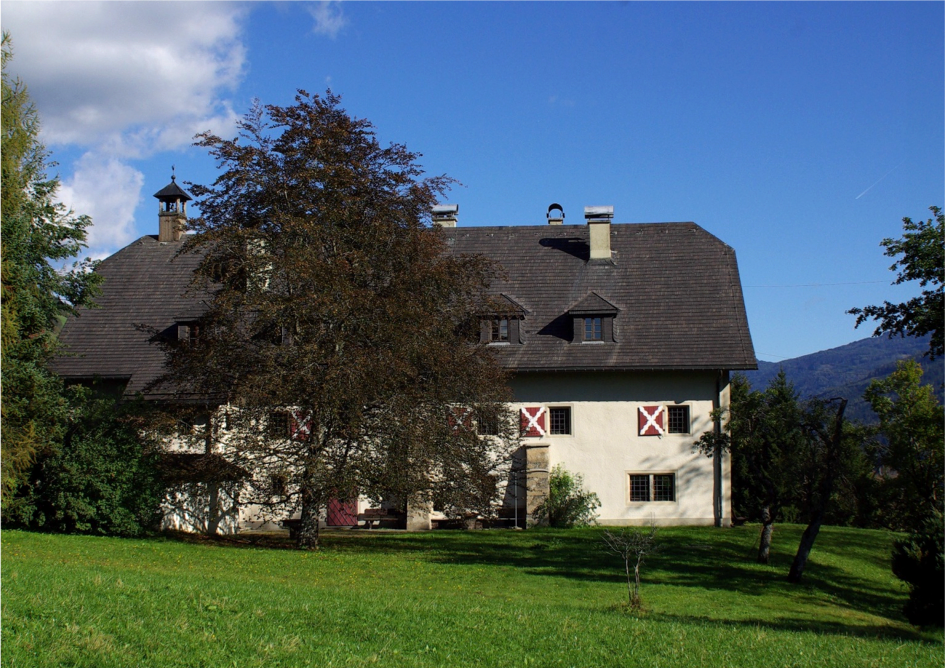
Castle Saalhof stands as one of the oldest and most historically significant castles in the Pinzgau region of Salzburg, Austria. Originating in the 11th century, this hill castle was initially the residence of the local ruling counts, reflecting the feudal landscape of medieval Austria. Its strategic location near the main road connecting Zell am See and Saalfelden, close to the entrance of the Glemm valley, underscores its historical importance as a defensive and administrative center.
The castle's architecture is a testament to centuries of evolution, with major expansions and renovations shaping its current form. Around 1606, under the stewardship of Christof Aman, Castle Saalhof underwent significant transformation, acquiring much of the character it retains today. This period introduced refined interior furnishings and a commemorative plaque bearing the coats of arms of the Aman and Grimming families, emblematic of the castle's noble heritage.
Historical lineage and ownership
The documented history of Castle Saalhof reveals a complex tapestry of ownership reflecting the political and ecclesiastical dynamics of the region. By 1296, the estate was likely under the control of Bishop Conrad of Fohnsdorf, known as "Teufel" or "Devil," marking its integration into the Archdiocese of Salzburg. This ecclesiastical affiliation highlights the church's influence over regional lands during the late medieval period.
In the 15th century, the castle was owned by Oswald Eisenstang (documented in 1433), and later passed through marriage to Heinrich Hackl. After Hackl's death in 1584, financial difficulties led to the property's transfer to Sigmund Aman von Judendorf. The Aman family played a pivotal role in the castle's history, particularly during the early 17th century renovations.
The 18th century witnessed several changes in ownership, including figures such as Jakob Riedl, Johann Matheus Kobald von Dambach, Baron Hackledt, and Rochus von Braun. These transitions reflect the typical inheritance and property disputes among noble families of the era. In the 19th century, the castle was acquired by Josef Zetner in 1840 and later by the Schattbacher family in 1874. The current owners, the Rieder family, are descendants of the Schattbachers, maintaining the castle's lineage into the modern era.
Architectural features and structure
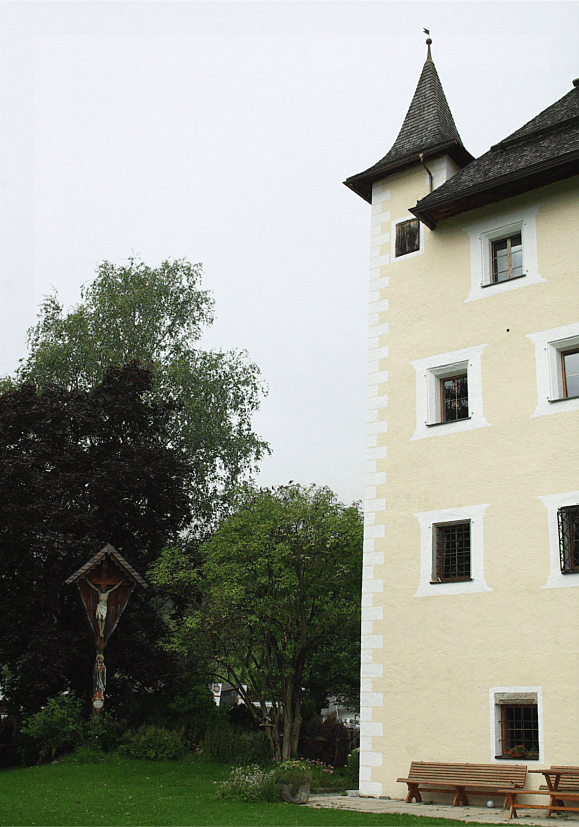
Castle Saalhof exemplifies a typical Pinzgau residence with distinctive architectural elements. The castle features four square corner towers topped with a pavilion roof covered in wooden shingles, a traditional roofing method that adds to its historic charm. The building's layout includes four floors on the east and west sides and three floors on the north and south sides, creating a balanced and imposing structure.
The main entrance is situated on the east facade, above which a square red marble plaque depicts an angel holding the coats of arms of the Aman and Grimming families, dated 1606. This plaque commemorates the extensive renovations carried out by Christof Aman and his wife Felicitas Grimming. The first floor is adorned with several portals framed by fluted pilasters, adding decorative refinement to the castle's exterior.
Originally, the castle housed a noble chapel, now deconsecrated, which once served the spiritual needs of its inhabitants. Inside, many early 17th-century architectural and decorative elements remain preserved, showcasing the craftsmanship and aesthetic sensibilities of that period.
Location and surroundings
Perched at approximately 766 meters above sea level, Castle Saalhof enjoys a commanding position in a valley oriented from north to south. The surrounding landscape is characterized by mountainous terrain to the southwest and hilly countryside to the northeast, with expanses of farmland and natural vegetation nearby. This rural setting, combined with a low population density of about 34 inhabitants per square kilometer, preserves the castle's tranquil and historic atmosphere.
Modern adaptations and preservation
In recent decades, Castle Saalhof has undergone thoughtful renovations to balance preservation with contemporary use. Since 2006, newly renovated apartments within the castle have been available, allowing visitors and residents to experience its historic ambiance firsthand. The 2010 facade renovation restored the castle's exterior to its original 17th-century colors, revealing some of the oldest structural elements, particularly on the north-east side.
The castle's designation as a protected monument by the Austrian Republic in 1993 underscores its cultural and historical significance. This status ensures ongoing preservation efforts and highlights Castle Saalhof as a valuable heritage site within the Salzburg region.
Notable figures and cultural significance
Castle Saalhof has been associated with several prominent individuals, enriching its historical narrative. Franz Anton Alexander von Braune, a renowned Salzburg botanist born in 1766, is among the notable personalities linked to the castle. Additionally, Anton Faistauer, a celebrated Salzburg painter, frequently depicted the castle in his works and was buried nearby, further cementing its place in regional cultural history.
The castle's enduring presence and well-preserved state make it a remarkable example of medieval and early modern architecture in Austria. Its layered history, architectural details, and cultural connections offer valuable insights into the region's feudal past and evolving heritage.
Frequently asked questions (FAQ)
- What is the historical significance of Castle Saalhof?
- Castle Saalhof is a notable historical site in Maishofen, Austria, with roots dating back to the Middle Ages. It served as a strategic fortification and later became a residence for various noble families, reflecting the region's rich heritage and architectural evolution.
- When was Castle Saalhof built?
- Castle Saalhof was originally constructed in the late 12th century, showcasing medieval architectural styles. Over the centuries, it has undergone several renovations, which have added to its historical charm and significance.
- Can I visit Castle Saalhof?
- Yes, Castle Saalhof is open to visitors, allowing you to explore its historical interiors and beautiful grounds. Guided tours are often available, providing insights into its history and architectural features.
- What are the opening hours for Castle Saalhof?
- Castle Saalhof typically opens its doors to visitors from 10 AM to 5 PM, but it's advisable to check the official website or contact the castle directly for the most current hours, especially during holidays or special events.
- Is there an admission fee to enter Castle Saalhof?
- Yes, there is an admission fee to visit Castle Saalhof, which helps maintain the site and its grounds. Ticket prices are generally reasonable, with discounts available for students, seniors, and children.
- What is the best time to visit Castle Saalhof?
- The best time to visit Castle Saalhof is during the spring and early autumn months when the weather is mild and the surrounding landscapes are particularly beautiful. This timing also allows visitors to enjoy outdoor activities and nearby attractions.
- How accessible is Castle Saalhof for visitors with disabilities?
- Castle Saalhof strives to be accessible to all visitors, with ramps and designated pathways for those with mobility challenges. However, some areas may still present challenges due to the historic nature of the castle, so it’s recommended to inquire about specific accessibility features before your visit.
- What nearby attractions can I explore while visiting Castle Saalhof?
- While visiting Castle Saalhof, you can also explore the stunning landscapes of the Zeller See lake and the scenic hiking trails in the surrounding areas. Additionally, the charming town of Zell am See is just a short drive away, offering shops, restaurants, and other cultural experiences.
Photo gallery

Information
Website
Visit websiteSources & official resources
Verify the information above using these authoritative references.
Loading map...
Visitor reviews
No reviews yet. Been here? Write the first review and help other travelers!
Write the first reviewVisited this castle? Share your experience
Your review helps other travelers and adds first-hand knowledge to our encyclopedia.