Ryga Biały Zamek
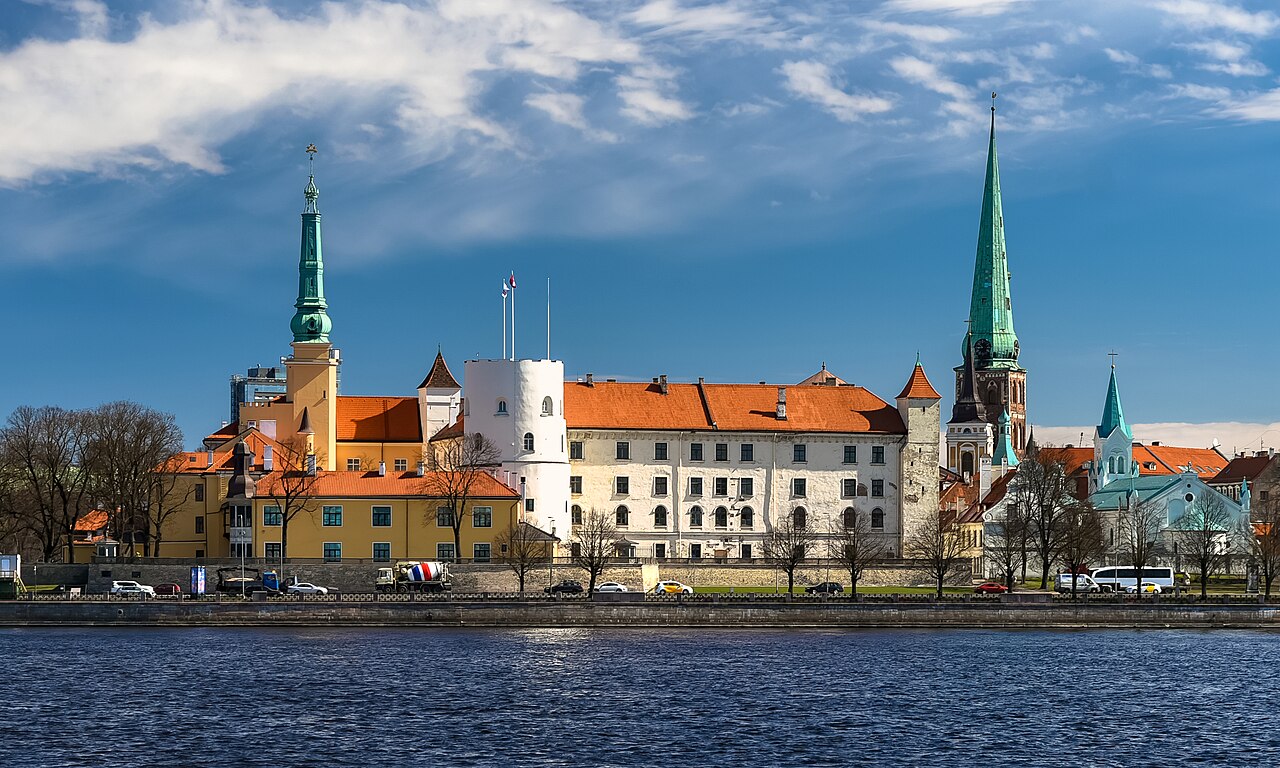
Ryga Biały Zamek, known as the White Castle, stands as a significant historical monument in Riga, Latvia. Constructed in the 12th century, it served as the original fortress and headquarters of the Livonian Brothers of the Sword (Fratres Militiae Christi), a military order pivotal in the Christianization and conquest of the Baltic region during the High Medieval period. This castle, built from distinctive white limestone, earned its popular name from the bright hue of its walls, symbolizing both strength and purity in the crusading context.
The castle was strategically located near the mouth of the Daugava River (then known as the river Ryga), facilitating control over trade routes and military movements. Its rectangular footprint measured approximately 95 by 63 meters, encompassing a fortified complex that included defensive walls, towers, and residential quarters. Although later destruction and modifications obscure the full original layout, historical records indicate the presence of two prominent towers and a main building of substantial size (14 by 17 meters), which housed the master of the order's residence, knights' chambers, and a large hall.
Historical context and foundation
At the end of the 12th century, the Baltic region of Livonia was the focus of missionary efforts aiming to convert the indigenous pagan populations to Christianity. These peaceful missions met limited success, prompting the initiation of a military crusade in 1198 from Lübeck. The Bishop Albert of Bremen, appointed as the missionary bishop, transformed this crusade into an annual campaign, bringing successive waves of crusaders from Germany to the Baltic shores.
In 1201, Bishop Albert founded the city of Riga at the confluence of the river Ryga and the Daugava. The following year, he established the Livonian Brothers of the Sword, a military order tasked with securing and expanding Christian control in the region. By 1204, the first castle of the order in Riga was completed, adjacent to the bishop's residence, marking a significant milestone in the consolidation of crusader power.
Architectural features and layout
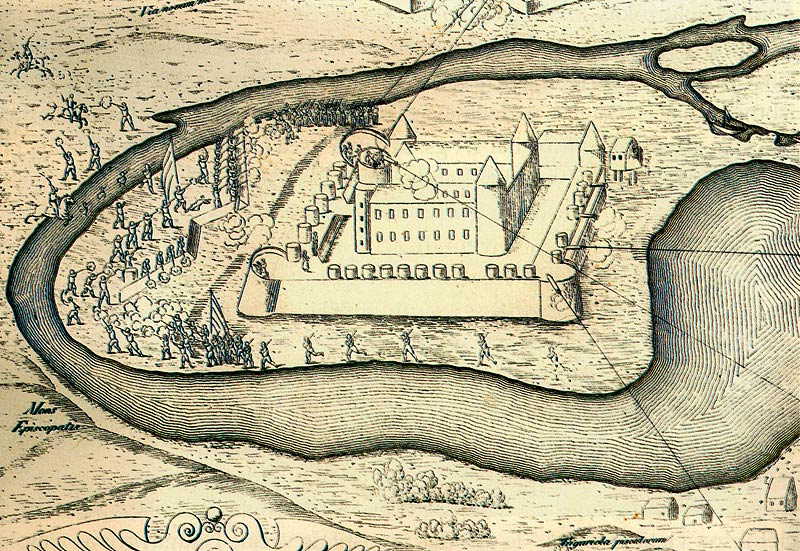
The White Castle was constructed on a rectangular plan measuring approximately 95 by 63 meters. The castle was likely surrounded by a robust defensive wall, which on the northern side also served as part of the city's fortifications. Attached to this wall were three or four buildings, forming a compact fortified complex.
Historical documents from later periods mention the castle having two towers, which would have been key defensive and observational points. The main building, measuring 14 by 17 meters, served multiple purposes: it was the residence of the order's master, contained living quarters for knights, and included a large hall for gatherings and official functions.
In the southwest corner of the castle stood the chapel of St. George, first mentioned in 1208. This small religious structure measured about 7.5 by 7.5 meters and featured an eastern apse, typical of Romanesque ecclesiastical architecture. The chapel underscored the spiritual dimension of the castle's function as both a military and religious center.
Later history and transformations
Following the defeat of the Livonian Brothers of the Sword in the Battle of Saule in 1236, their territory was absorbed by the Teutonic Order, which established the Livonian branch of their order. The first Landmeister of Livonia, Hermann von Balk, chose the castle in Wenden as his main residence, reducing the strategic importance of the White Castle in Riga.
In 1297, tensions between the Riga townspeople and the Teutonic Order escalated over the construction of a bridge near the castle. The castle commander ordered its demolition, sparking a conflict that led to the townspeople capturing and destroying the castle, sparing only the chapel. The captured knights were executed, marking a violent episode in the castle's history.
The surviving chapel of St. George was converted for use by a nearby Franciscan monastery, undergoing architectural modifications that included the addition of a western nave divided by two square pillars and transforming the chapel into a presbytery. After 1330, the site hosted a medieval hospital, and the chapel was renamed the Church of the Holy Spirit.
Reformation and later uses
Following the Reformation in 1525, the church was secularized and repurposed as a storage warehouse. A fire in 1689 led to further rebuilding, dividing the structure into four separate granaries. Architectural changes included bricking up windows, creating new openings, and installing hoists in the attic to facilitate goods transport.
Preservation and modern significance
Between 1983 and 1985, restoration efforts aimed to revive the castle's original Romanesque character. Despite numerous reconstructions, the thick 2.5-meter dolomite walls and remnants of cross vaulting have survived, representing the only remaining physical traces of the first castle of the Swordbrothers in Riga.
Today, the ruins of Ryga Biały Zamek offer valuable insights into the military, religious, and urban history of medieval Livonia. The site is a testament to the crusading era's architectural and cultural impact on the Baltic region and remains a significant heritage landmark within the city of Riga.
Architectural style and classification
The castle's original construction reflects the Romanesque architectural style, characterized by solid masonry, thick walls, and semi-circular arches, particularly evident in the chapel's apse and surviving vaults. As a hill castle, it was strategically positioned to oversee the river and surrounding terrain, typical of medieval fortifications intended for both defense and control.
Frequently asked questions
- What is the historical significance of Ryga Biały Zamek? Ryga Biały Zamek was the first headquarters of the Livonian Brothers of the Sword and played a crucial role in the Christianization and military conquest of the Baltic region in the High Medieval period.
- Can visitors see the original castle structures today? Visitors can view the well-preserved remains, including thick dolomite walls and vault fragments, which are the only surviving parts of the original White Castle.
- When was the castle built? The castle was constructed in the 12th century, with completion of the first fortress by 1204.
- What architectural style does the castle represent? The castle exemplifies Romanesque architecture, evident in its thick walls and chapel design.
- Is the castle accessible to the public? The site is accessible for visitors interested in medieval history and architecture, though facilities may be limited due to its ruinous state.
- What happened to the castle after the 1297 conflict? The castle was destroyed by Riga's townspeople except for the chapel, which was later converted for religious and secular uses.
- How has the castle been preserved? Restoration efforts in the 1980s helped reveal and preserve the castle's Romanesque features, maintaining it as a significant historical site.
Frequently asked questions (FAQ)
- How do I get to Ryga Biały Zamek?
- Ryga Biały Zamek is conveniently located in the heart of Riga, making it easily accessible by public transport. You can take tram or bus lines that stop nearby, or if you prefer, enjoy a scenic walk from the city center.
- What is the historical significance of Ryga Biały Zamek?
- Ryga Biały Zamek, also known as the White Castle, has a rich history dating back to the 13th century. It has served various roles, including a fortress and a royal residence, and is emblematic of Latvia's medieval past.
- When was Ryga Biały Zamek built?
- Construction of Ryga Biały Zamek began in the early 13th century, with significant modifications made during the following centuries. Its architecture reflects the styles of different periods, showcasing the castle's evolution over time.
- Can I take guided tours of Ryga Biały Zamek?
- Yes, guided tours are available and offer visitors in-depth insights into the castle's history and architecture. These tours are conducted by knowledgeable guides and typically last around one hour.
- Why is Ryga Biały Zamek a popular tourist attraction?
- Ryga Biały Zamek attracts visitors due to its stunning architecture and its pivotal role in Latvian history. Its picturesque setting and historical exhibits make it a must-see for anyone interested in the region's cultural heritage.
- Is it possible to visit the castle year-round?
- Yes, Ryga Biały Zamek is open for visitors year-round, although hours may vary by season. It's advisable to check the official website for the most current opening hours and any seasonal events.
- What are the ticket prices for visiting Ryga Biały Zamek?
- Ticket prices for Ryga Biały Zamek are generally affordable, with discounts available for students and seniors. Family packages are also offered, making it an economical choice for group visits.
- What is the best time to visit Ryga Biały Zamek?
- The best time to visit Ryga Biały Zamek is during the late spring and early autumn when the weather is pleasant and ideal for exploring the castle and its surroundings. During these seasons, you can also enjoy various cultural events held in the area.
- Are there nearby attractions to visit after touring Ryga Biały Zamek?
- Yes, there are several nearby attractions including the Latvian National Museum of Art and the historic Old Town of Riga. These sites complement your visit to the castle and provide a fuller experience of Riga's rich culture.
Information
Loading map...
Visitor reviews
No reviews yet. Been here? Write the first review and help other travelers!
Write the first reviewVisited this castle? Share your experience
Your review helps other travelers and adds first-hand knowledge to our encyclopedia.