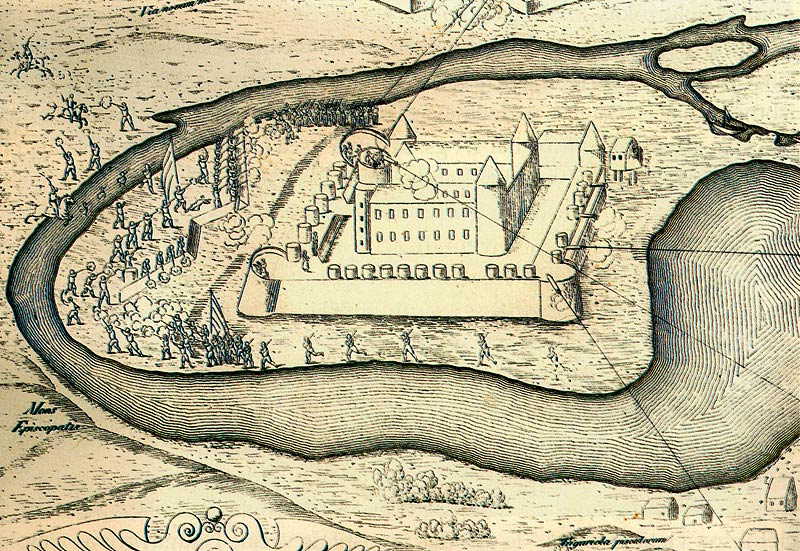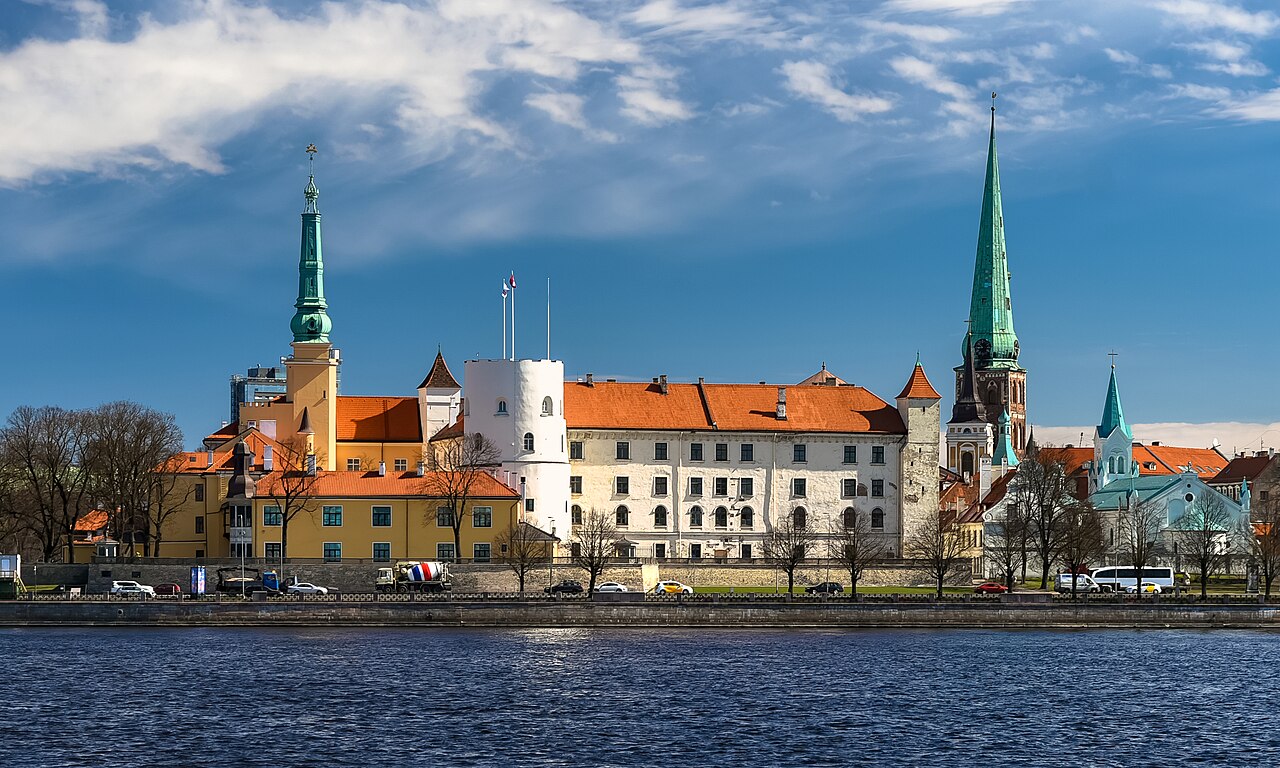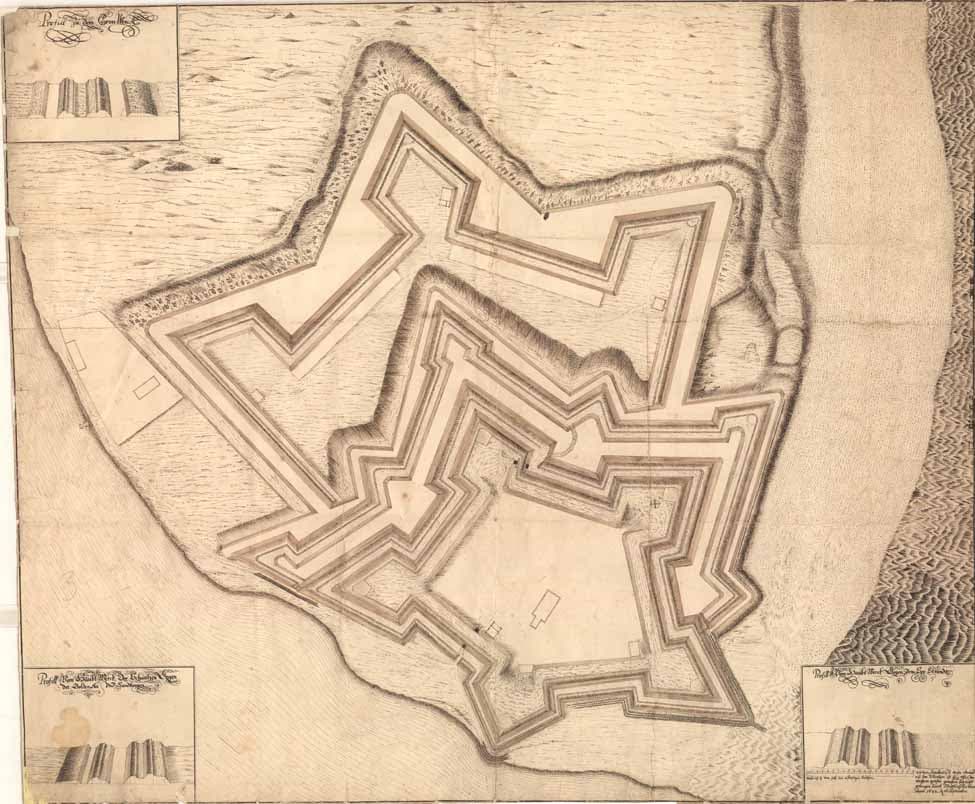
Daugavgrīva fortress, known in several languages including German (Dünamünder Schanze, Festung Dünamünde), Polish (twierdza Dynemunt), Russian (крепость Дюнамюнде, Усть-Двинск), and Swedish (Neumünde), is a prominent 17th-century bastioned fortress situated in Daugavgrīva, Riga, Latvia. It occupies a strategic location near the mouth of the Buļļupe river branch where it meets the Daugava river, serving historically as a critical defensive stronghold controlling access to Riga from the Baltic Sea.
Constructed during the Renaissance period under the rule of Swedish Livonia, the fortress exemplifies the bastioned fortress architectural style that was prevalent in Europe at the time. This style is characterized by angular bastions designed to withstand artillery fire and provide overlapping fields of defensive fire, marking a significant evolution in military architecture responding to the advent of gunpowder weaponry.
Architectural features and design
The fortress’s layout is typical of bastioned fortifications, with star-shaped bastions projecting from the main walls, allowing defenders to cover all approaches. Thick earthworks and stone walls were integrated to absorb cannon fire, and the design included deep moats fed by the nearby river branches, enhancing its defensive capabilities.
The positioning of the fortress at the river mouth was strategic for controlling naval traffic and protecting Riga from maritime threats. The fortifications included ramparts, curtains, and casemates for artillery placement, alongside gates and drawbridges that regulated access. The design reflects the military engineering principles of the 17th century, combining functionality with the natural landscape to maximize defense.
Historical significance and events
Daugavgrīva fortress holds a significant place in Latvian history due to its military and cultural roles. Between 1680 and 1683, the fortress was home to Johann Ernst Glück, a notable Bible translator who contributed to Latvian cultural heritage by translating the Bible into Latvian, which was a monumental achievement in the development of Latvian literature and language.
During World War I, the fortress served as the formation site for the 1st Daugavgrīva Latvian Riflemen Battalion in 1915, marking the beginning of organized Latvian military units within the Russian Imperial Army. This battalion played a crucial role in the Eastern Front and in the national awakening of Latvians.
In the Latvian War of Independence in 1919, the fortress was a contested military site. It was captured during the Bermontiade by the 9th Rēzekne Infantry Regiment of the Latvian Army, reflecting its ongoing strategic importance in the struggle for Latvian sovereignty.
Current status and preservation
Today, Daugavgrīva fortress is recognized as a monument of national significance in Latvia. While parts of the fortress have deteriorated over time, its remains still convey the scale and sophistication of 17th-century military architecture. The site is partially preserved and integrated into the customs territory of the Republic of Latvia, indicating its continued relevance in national heritage and border control.
Efforts to maintain and study the fortress contribute to understanding Latvia’s military history and architectural evolution. The fortress remains accessible for educational and cultural purposes, attracting visitors interested in Baltic history and Renaissance fortifications.
Geographical and strategic context
The fortress’s location at the mouth of the Daugava river was vital for controlling the waterways leading to Riga, one of the most important cities in the Baltic region. This strategic placement allowed the fortress to serve as a maritime defense point against naval incursions and as a checkpoint for goods and people entering the city by water.
The surrounding landscape, including the river branches and marshlands, was incorporated into the fortress’s defensive system, enhancing its natural barriers and complicating enemy approaches. This integration of natural and man-made defenses is characteristic of bastioned fortresses of the period.
Frequently asked questions (FAQ)
- What is the historical significance of Daugavgrīva Fortress?
- Daugavgrīva Fortress is a significant historical landmark in Latvia, built in the 17th century as a defense structure by the Swedish Empire. It played a crucial role in military history and has been part of various conflicts in the region. Today, it stands as a testament to the architectural and strategic importance of fortifications in Baltic history.
- When was Daugavgrīva Fortress built?
- Construction of Daugavgrīva Fortress began in 1630 and continued over several decades. It was completed in the late 17th century, with various modifications made in subsequent years. The fortress reflects the military architectural styles of its time, showcasing the evolution of fortification techniques.
- What are the opening hours for Daugavgrīva Fortress?
- Daugavgrīva Fortress is typically open to visitors from 10 AM to 6 PM during the summer months and from 10 AM to 4 PM in the winter. However, it's advisable to check the official website or contact the fortress for any seasonal changes or special events that may affect opening hours. Guided tours are often available during these times.
- Can I visit Daugavgrīva Fortress with children?
- Yes, Daugavgrīva Fortress is family-friendly and offers educational opportunities for children. There are guided tours that can engage younger visitors with stories of the fortress's history and architecture. Parents should ensure to supervise young children, as some areas may have uneven surfaces.
- Is it possible to explore the fortress grounds freely?
- While there are designated areas for free exploration, guided tours are highly recommended to fully appreciate the history and architecture of Daugavgrīva Fortress. Guided tours provide insightful commentary and access to parts of the fortress that may be restricted to unaccompanied visitors. Always check for any specific guidelines upon arrival.
- What is the best time to visit Daugavgrīva Fortress?
- The best time to visit Daugavgrīva Fortress is during the late spring and summer months when the weather is pleasant and conducive to outdoor exploration. This period also sees various cultural events and activities that enhance the visitor experience. Autumn offers beautiful foliage, while winter is less crowded but can be quite chilly.
- Are there any nearby attractions to visit?
- Yes, the area around Daugavgrīva Fortress features several attractions, including the picturesque beaches of the Gulf of Riga and the charming town of Jūrmala. You can also explore the nearby nature reserves and hiking trails, which provide a beautiful backdrop for a day of adventure. Don't miss the chance to experience the local culture and cuisine in nearby establishments.
- What are the ticket prices for Daugavgrīva Fortress?
- Ticket prices for Daugavgrīva Fortress are generally affordable, with discounts available for students and seniors. Children under a certain age may enter for free. It's best to check the official website for the most current pricing information and any special promotions that may be offered.
- How do I get to Daugavgrīva Fortress?
- Daugavgrīva Fortress is accessible by public transportation, with local buses connecting it to Riga and other nearby areas. If you prefer to drive, there are parking facilities available near the fortress. It’s approximately a 30-minute drive from Riga, making it an easy day trip for visitors.
Photo gallery

Photo by Matthias Richter•Public domain
Information
Loading map...
Visitor reviews
No reviews yet. Been here? Write the first review and help other travelers!
Write the first reviewVisited this castle? Share your experience
Your review helps other travelers and adds first-hand knowledge to our encyclopedia.