Daugavgriva Castle Ruins
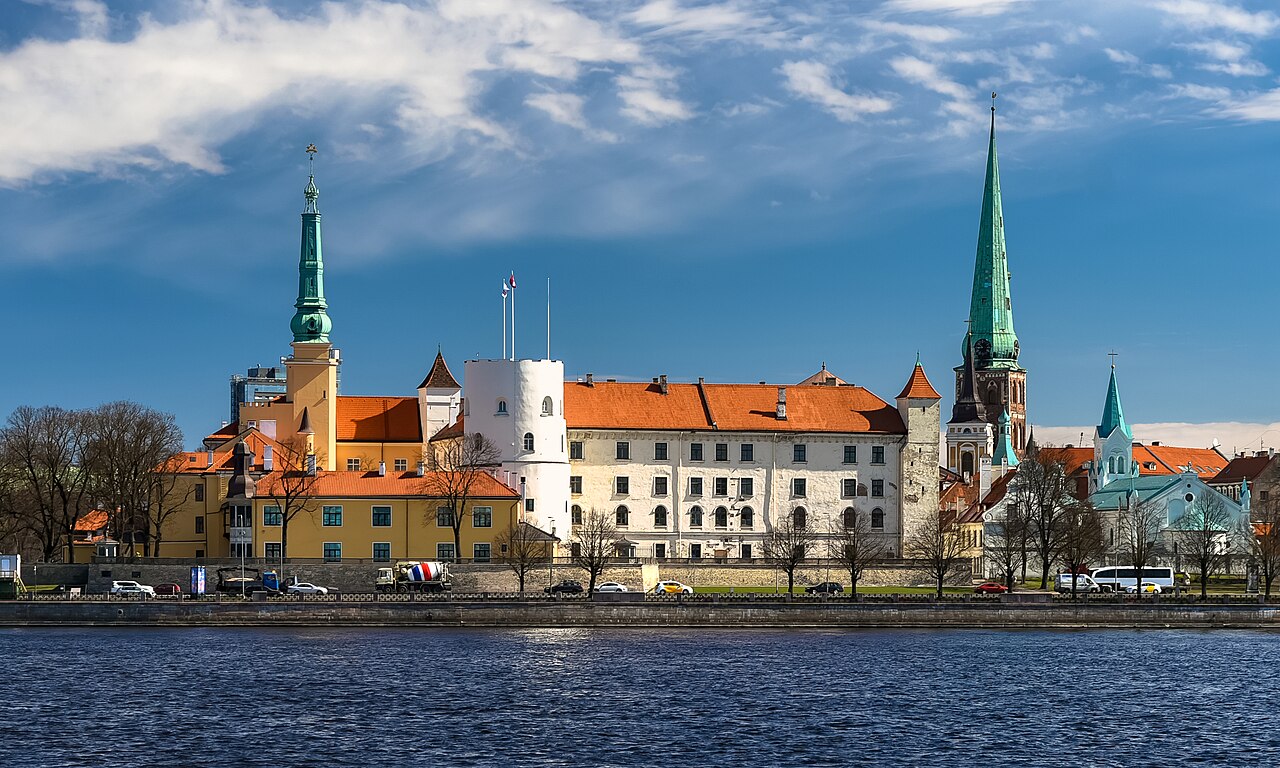
Daugavgrīva Castle, located in the northern part of Riga, Latvia, stands as a historic site with a complex past spanning several centuries and rulers. Originally established as a medieval monastery in the early 13th century, the site evolved through various transformations, including its conversion into a fortress by the Swedish military in the 17th century and later significant reconstruction by the Russian Empire.
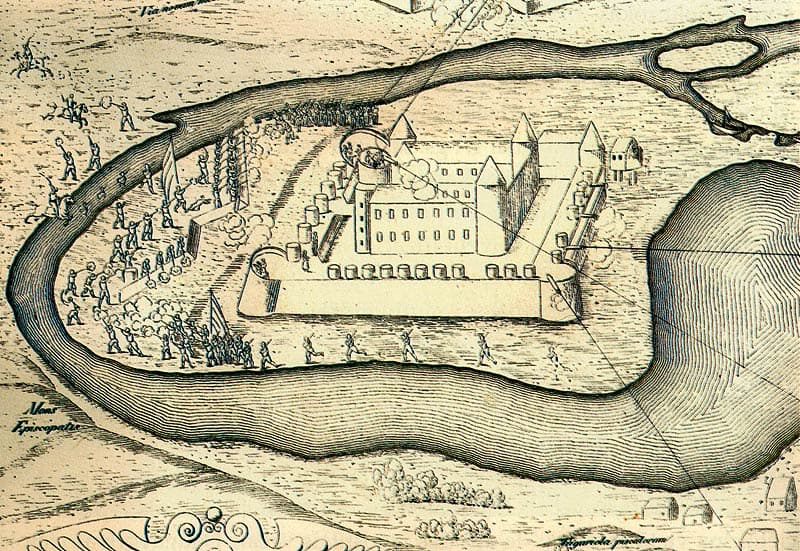
The earliest known structure on the site was the Dünaburg castle, built in 1208 by the Teutonic Knights. This initial establishment served primarily as a monastery before its military significance grew. Over time, the original medieval castle fell into ruin, paving the way for new fortifications aligned with the military needs of the era.
Swedish fortress and Dutch-style fortifications
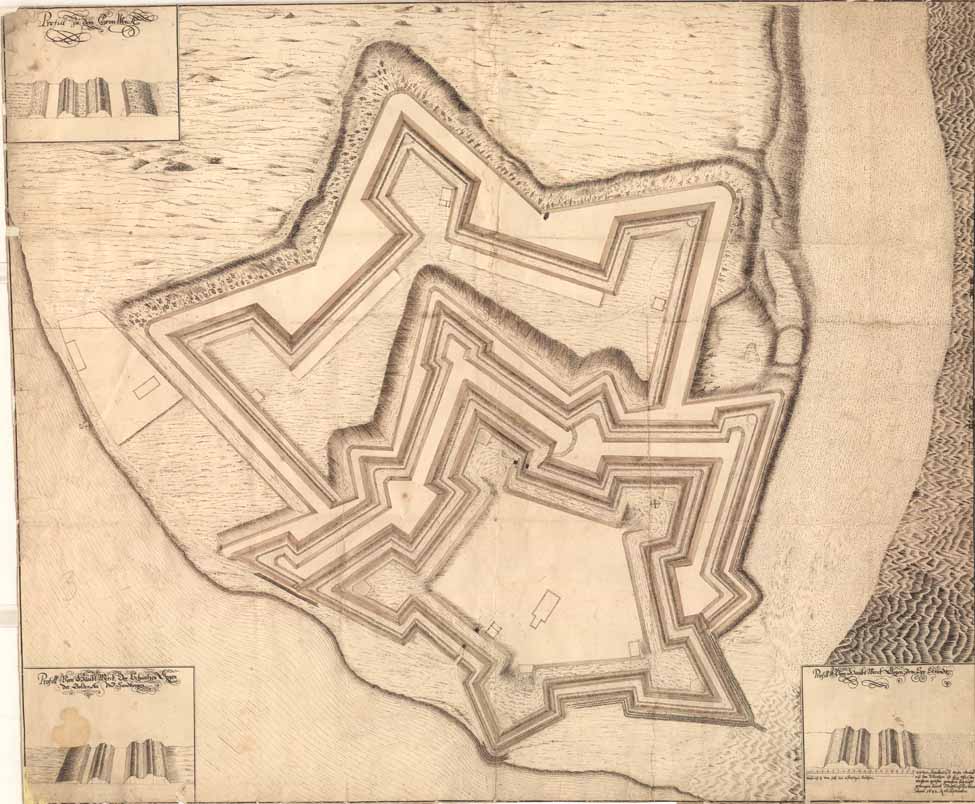
In 1641, the Swedish authorities commissioned the construction of a new fortress called Dünamünde, designed in the Dutch style by General Rothenburg. This style was characterized by angular bastions and earthworks optimized for artillery defense, reflecting the military architectural innovations of the Renaissance period. By 1680, the Swedish fortress had replaced the older medieval castle ruins, marking a significant shift in the site's defensive capabilities.
The fortress was strategically important, guarding the mouth of the Daugava River and controlling access to Riga. Commandants such as Captain Heinrich Nicolaus Rüdinger, who was knighted by Charles XI of Sweden, played key roles in its operation. Rüdinger is notable not only for his military leadership but also as the ancestor of Patriarch Alexy II of Russia. Later, Joachim Cronman served as commandant until his death in 1703.
Russian control and transformation
Following the capture of the fortress by Russian forces, the site underwent extensive reconstruction. In 1742, it served as a prison for prominent figures such as Regent Anna Leopoldovna of Russia, her husband Anthony Ulrich, and their son Ivan VI. This highlights the fortress's continued strategic and political importance during the 18th century.
The religious landscape of the site also changed when a local Lutheran church was converted into the Orthodox Church of the Saviour's Transfiguration in 1775, reflecting the Russian Empire's influence over the region. In 1893, the fortress was renamed Ust-Dvinsk by the Russian government, and only Russian soldiers were stationed there.
Modern fortifications and World War I
Before World War I, the fortress's fortifications were completely reconstructed to meet contemporary military standards. During the war, it was bombarded by the German Army's Schütte-Lanz Airship SL 7. In 1917, after the fortress was captured by Imperial Germany, it was inspected by Emperor Wilhelm II, underscoring its military significance.
However, after Latvia gained independence, much of the fortress's fortifications were demolished, reducing its military role. During the Cold War, the site served as a base for Soviet troops, continuing its long association with military use.
Present-day site and features
Today, the site known as Daugavgrīva reveals mostly earthen ramparts and ruins, with no significant medieval structures visible above ground. The castle's location at the Vecdaugava oxbow on the right bank of the Daugava River remains a notable geographic feature.
A prominent landmark at the site is the Daugavgrīva lighthouse, originally built in 1818. It has been rebuilt several times—in 1863, 1920, and after World War II—serving as a functional navigational aid on the Baltic Sea coast.
Visitors today can access the area near the northeastern corner of the former fortress. Remnants of the old road that once connected the northeastern tower around the forepart of the castle to the southeastern corner are still partly visible, offering a glimpse into the castle's former layout and defensive design.
Architectural style and classification
The fortress is classified as a hill castle due to its strategic placement on elevated terrain near the riverbank. Its architectural style reflects the Renaissance military engineering principles, particularly the Dutch style fortifications introduced by General Rothenburg. These include angled bastions, earthen ramparts, and other features designed to withstand artillery attacks, a significant advancement from the original medieval stone structures.
Frequently asked questions (FAQ)
- What is Daugavgriva Castle Ruins?
- Daugavgriva Castle Ruins are the remnants of a 17th-century fortress located near Riga, Latvia. Originally built to protect the Daugava River and the nearby port, it now stands as a historical site that showcases the architectural styles of its time and the region's military history.
- When was Daugavgriva Castle built?
- Construction of Daugavgriva Castle began in 1620 and was completed in 1635. The castle has undergone several modifications throughout its history and was an important military base until it fell into disrepair in the 19th century.
- Can I visit Daugavgriva Castle Ruins?
- Yes, visitors are welcome to explore the Daugavgriva Castle Ruins. The site is open to the public, allowing guests to walk around the remains and enjoy the scenic views of the surrounding area.
- What are the opening hours for Daugavgriva Castle Ruins?
- Daugavgriva Castle Ruins are generally accessible year-round, but it is advisable to visit during daylight hours for safety and to fully appreciate the surroundings. Specific opening hours may vary, so checking local tourism websites before your visit is recommended.
- Is it possible to access Daugavgriva Castle by public transport?
- Yes, Daugavgriva Castle is accessible via public transport from Riga. Several bus routes connect the city with the nearby area, making it convenient for visitors to reach the castle.
- Why is Daugavgriva Castle significant?
- Daugavgriva Castle is significant due to its historical role in defending the region and its unique architectural features that reflect military design from the 17th century. It provides insight into Latvia's past and the strategic importance of the Daugava River.
- What is the best time to visit Daugavgriva Castle Ruins?
- The best time to visit Daugavgriva Castle is during the late spring and early autumn months when the weather is pleasant for outdoor exploration. This period also allows visitors to enjoy the beautiful natural surroundings and capture stunning photographs.
- Are there any nearby attractions to Daugavgriva Castle?
- Yes, nearby attractions include the scenic beaches of Jurmala and the historic town of Riga, which is a UNESCO World Heritage Site. Visitors can also explore other historical sites and parks in the vicinity, making it a great addition to a day trip.
- What are the ticket prices for Daugavgriva Castle Ruins?
- Entry to Daugavgriva Castle Ruins is typically free, but some organized tours may charge a fee for guided experiences. It’s advisable to check ahead for any special events or exhibitions that may have associated costs.
Photo gallery

Photo by Giacomo Lauro•Public domain
Information
Loading map...
Visitor reviews
No reviews yet. Been here? Write the first review and help other travelers!
Write the first reviewVisited this castle? Share your experience
Your review helps other travelers and adds first-hand knowledge to our encyclopedia.