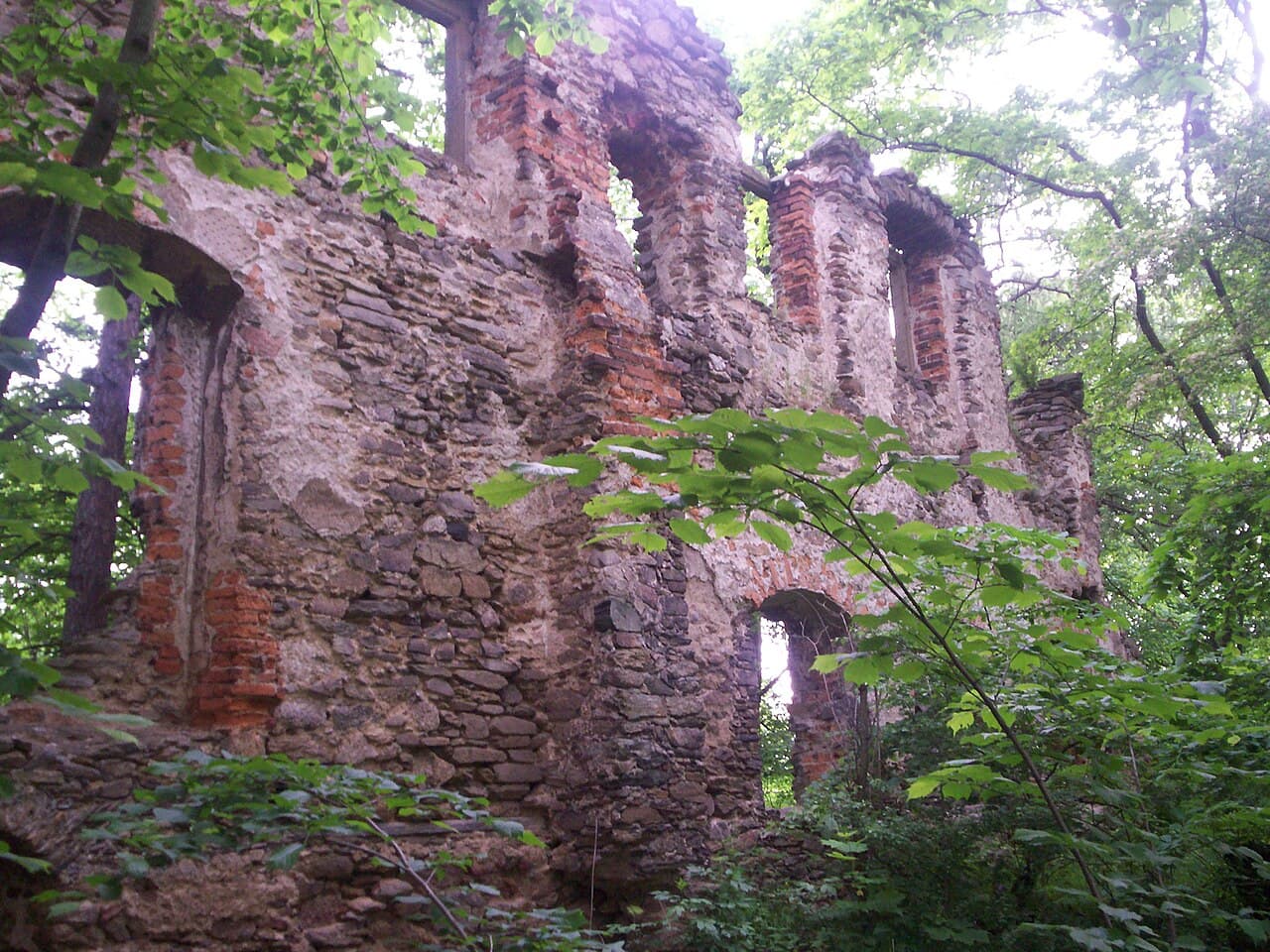
Rybnica
Rybnica Castle stands as a significant medieval bastioned fortress ruin located near the village of Rybnica in the municipality of Jelenia Góra, Poland. Its history traces back to the 13th century, reflecting the feudal and noble dynamics of the region during the High Medieval period. The castle's strategic placement atop a rocky granite hill with natural steep slopes provided formidable defense, a common feature in medieval fortifications.
Early history and ownership
The origins of Rybnica Castle are closely tied to the village's early medieval settlement, which was first documented in the late 13th century. Initially, the site likely hosted a wooden fortified residence surrounded by earthworks, serving as the seat for the local knightly family, the Reibnitzs. By the end of the 13th century, Rybnica was a fiefdom under the Reibnitz noble lineage, a fact supported by historical records from 1288 and 1316 mentioning Henryk Reibnicz in connection with the Piast and Jawor dukes.
In 1345, the property was granted by the Duke of Świdnica-Jawor to Konrad von Czirn, marking a transition in ownership. Around 1370, Rybnica was divided into two estates held by different knightly families, reflecting the common medieval practice of partitioning land among noble heirs. The castle itself is first referenced in documents from 1365 under its Latin name, Laudis Palatium, later corrupted to Läusepelz in German sources.
Architectural evolution and features
Originally a wooden stronghold, Rybnica Castle underwent significant transformation in the late 14th century when it was rebuilt in stone. The surviving ruins suggest the castle was constructed primarily from local granite using broken stone masonry, a technique involving irregular stones set in mortar to create robust defensive walls.
The castle's most notable architectural element was a rectangular three-story building measuring approximately 24 by 13 meters, positioned on the western end of a granite promontory. This placement exploited the natural topography, with steep slopes on three sides providing natural protection. The eastern approach was defended by a deep ditch, possibly artificially enhanced to impede attackers.
A distinctive feature was a small alkier tower (a projecting corner tower) on the northeast corner, measuring about 1.7 by 4.4 meters. This tower housed the kitchen in its ground floor, a practical design to isolate cooking activities from the main living quarters. The building's ground floor lacked windows, emphasizing its defensive purpose, while the upper floors contained representative and residential chambers. Large windows on the middle floor likely served as a hall or gathering space, and the top floor included living quarters with latrine bays projecting outward for sanitation.
Unlike many medieval castles, Rybnica did not have a surrounding defensive wall, indicating its function as a fortified manor house rather than a full-scale military fortress. This architectural choice reflects the evolving nature of noble residences in the 16th century, balancing defense with domestic comfort.
Destruction, reconstruction, and later history
The castle's history was marked by destruction and rebuilding phases. It was likely damaged or destroyed during the early 15th century, possibly in connection with the Hussite Wars that caused widespread conflict in Central Europe. The castle was then rebuilt in the early 16th century into the form whose remains survive today.
Throughout the 18th century, Rybnica Castle underwent renovations in 1758 and 1786, preserving its overall form while updating its facilities. In 1794, the estate passed to Count Gottlieb Wilhelm von Bressler. However, by the mid-19th century, the castle was abandoned and fell into ruin. By the late 19th century, it was recorded as an uninhabited ruin, with only fragments of stone walls remaining.
Current remains and preservation
Today, the ruins of Rybnica Castle stand as a protected historic monument, symbolizing the region's medieval heritage. The most intact surviving structure is the northern wall, which remains nearly complete with window openings still visible. Portions of the western wall and the alkier tower also survive partially, offering insight into the castle's original layout.
The castle's foundations and cellars are mostly buried, with only fragments of architectural details visible above ground. Historical engravings from the 18th century by artists such as Friedrich Bernhard Werner provide valuable visual documentation of the castle's original appearance, including its steep gabled roof and rectangular form.
Near the ruins, a large residential building was constructed in the 19th century on the mountain saddle in front of the castle site, marking the continued use of the area though not the castle itself.
Architectural significance and cultural heritage
Rybnica Castle exemplifies the transition from early medieval wooden fortifications to stone bastioned manor houses adapted to the natural landscape. Its granite masonry and alkier tower reflect regional building traditions and defensive strategies of the High Medieval and Renaissance periods. The castle's ruins contribute to understanding the feudal history of Silesia and the architectural evolution of fortified residences in Poland.
As a protected ruin, Rybnica Castle attracts historians, archaeologists, and visitors interested in medieval architecture and Polish heritage. Its location near Jelenia Góra situates it within a landscape rich in castles and historic sites, enhancing its cultural tourism value.
Visitor information
While Rybnica Castle remains in a ruined state, it is accessible to visitors who wish to explore its historic site and surrounding natural environment. Due to its condition, visitors should exercise caution when navigating the ruins. The site offers a glimpse into medieval defensive architecture and the lifestyle of noble families in the region.
Efforts to conduct detailed archaeological research could further illuminate the castle's history and construction, potentially revealing more about its role in regional conflicts and noble life.
Frequently asked questions (FAQ)
- How do I get to Rybnica Castle?
- Rybnica Castle is located in the picturesque town of Rybnica, Poland. You can reach it by car or public transport, with local buses connecting the town to nearby cities. The castle is well-signposted, making it easy to find once you arrive in Rybnica.
- What is the historical significance of Rybnica Castle?
- Rybnica Castle dates back to the 14th century and has played an important role in the region’s history. It served as a defensive structure and residence for local nobility, reflecting the architectural styles of its time. The castle has witnessed numerous historical events, making it a significant landmark in Polish heritage.
- When was Rybnica Castle built?
- Construction of Rybnica Castle began in the late 14th century, with various renovations and expansions occurring over the centuries. The castle showcases a blend of Gothic and Renaissance architectural styles, which is a testament to its long history. Visitors can see elements from different periods throughout the structure.
- Can I visit Rybnica Castle year-round?
- Yes, Rybnica Castle is open to visitors throughout the year, although opening hours may vary by season. It is advisable to check the official website or contact the castle administration for the most current visiting hours. Special events may also be held during the summer months, enhancing the visitor experience.
- Why is Rybnica Castle a popular tourist attraction?
- Rybnica Castle attracts visitors due to its rich history, stunning architecture, and beautiful surroundings. The castle offers guided tours that provide insights into its past and the region’s culture. Additionally, the scenic landscape surrounding the castle makes it a perfect spot for photography and leisurely walks.
- Is it possible to access Rybnica Castle for people with disabilities?
- Yes, efforts have been made to improve accessibility at Rybnica Castle for visitors with disabilities. While some areas may have limitations due to the castle's historical structure, there are accessible paths and facilities available. It is recommended to contact the castle staff in advance for specific accessibility arrangements.
- What are the ticket prices for visiting Rybnica Castle?
- Ticket prices for Rybnica Castle are quite reasonable, with discounts available for students and seniors. Admission fees help maintain and preserve the castle, ensuring that future generations can enjoy this historical site. It's best to check the official site for current pricing and any special promotions.
- What is the best time to visit Rybnica Castle?
- The best time to visit Rybnica Castle is during the spring and summer months when the weather is pleasant, and the surrounding gardens are in full bloom. Additionally, many cultural events and festivals occur during this time, enhancing the visitor experience. Autumn can also be beautiful, with colorful foliage adding to the castle's charm.
- Are there any nearby attractions to visit after Rybnica Castle?
- Yes, there are several attractions near Rybnica Castle that visitors can explore. The surrounding area features beautiful parks, historical sites, and local museums that showcase the region's culture and history. A visit to nearby towns can offer additional experiences, including local cuisine and crafts.
Photo gallery

Information
Loading map...
Visitor reviews
No reviews yet. Been here? Write the first review and help other travelers!
Write the first reviewVisited this castle? Share your experience
Your review helps other travelers and adds first-hand knowledge to our encyclopedia.



