Ruperra Castle
Ruperra Castle, also known as Rhiwperra Castle in Welsh, stands as a significant example of early 17th-century mock castle architecture in Wales. Constructed in 1626 by Sir Thomas Morgan, Steward to the Earl of Pembroke, it was among the first of such ornamental castles built in the region, blending Renaissance influences with traditional defensive features to create a stately home that evoked medieval fortifications.
The castle was originally designed as a country residence rather than a military fortress, reflecting the Renaissance-era trend among the British gentry to build grand homes with the appearance of castles. Its architectural layout included characteristic elements such as battlemented walls and towers, which were intended to impress rather than defend. The estate surrounding Ruperra Castle was extensive, encompassing thousands of acres of parkland and woodland, which were later developed with additional structures and landscaping features.
Early history and architectural significance
Ruperra Castle's construction in the early 17th century places it within the Renaissance period, a time when castle building in Britain shifted from purely defensive to more residential and aesthetic purposes. The castle's design reflects this transition, combining the romantic appeal of medieval castles with the comforts and style of a country manor.
The castle's original structure included a main residential block flanked by towers and surrounded by curtain walls, creating a courtyard typical of mock castles of the period. The use of local stone and the integration of Renaissance decorative motifs distinguished Ruperra from purely medieval fortifications. This blend of styles makes it an important architectural example of the early Renaissance influence in Welsh country houses.
The morgan family and 19th-century developments
The castle was home to the Morgan family for several centuries, notably to Godfrey Charles Morgan, 2nd Baron and 1st Viscount Tredegar, born at Ruperra. He was a distinguished military figure, serving as a captain in the 17th Lancers during the Charge of the Light Brigade at the Battle of Balaklava in the Crimean War. His connection to Ruperra adds historical depth to the site, linking it to significant 19th-century military history.
During the early Victorian era, Lord Tredegar undertook considerable improvements to the estate, including the addition of three new lodges and the construction of a now-listed iron bridge in 1826. This bridge facilitated carriage access through the wooded area of Coed Craig Ruperra and across the Rhymney River to Lower Machen Church, where the family and their servants attended services. These enhancements reflect the Victorian interest in landscaping and estate management, contributing to the castle's role as a prominent country seat.
20th-century changes and decline
Following the death of Colonel Frederick Courtenay Morgan in 1909, his son Courtenay Morgan, 1st Viscount Tredegar, initiated a refurbishment program. While minor alterations were made to the main house, significant investments were directed towards estate infrastructure, including a new stable block replacing one lost to fire in 1895, a reservoir and pump house in the deer park, and a power house equipped with steam-driven generators and boilers. The conversion of the 1840s brew house, laundry, and dairy range into staff accommodations also took place during this period.
Despite these improvements, by the mid-1930s, the Morgan family's fortunes had waned. Ruperra Castle was primarily used as a weekend hunting lodge, with Tredegar House remaining the main family residence. The entire estate, covering approximately 3,000 acres, was put up for sale. The castle's contents were either relocated or auctioned off, and the property was left largely unoccupied.
Wartime use and destruction
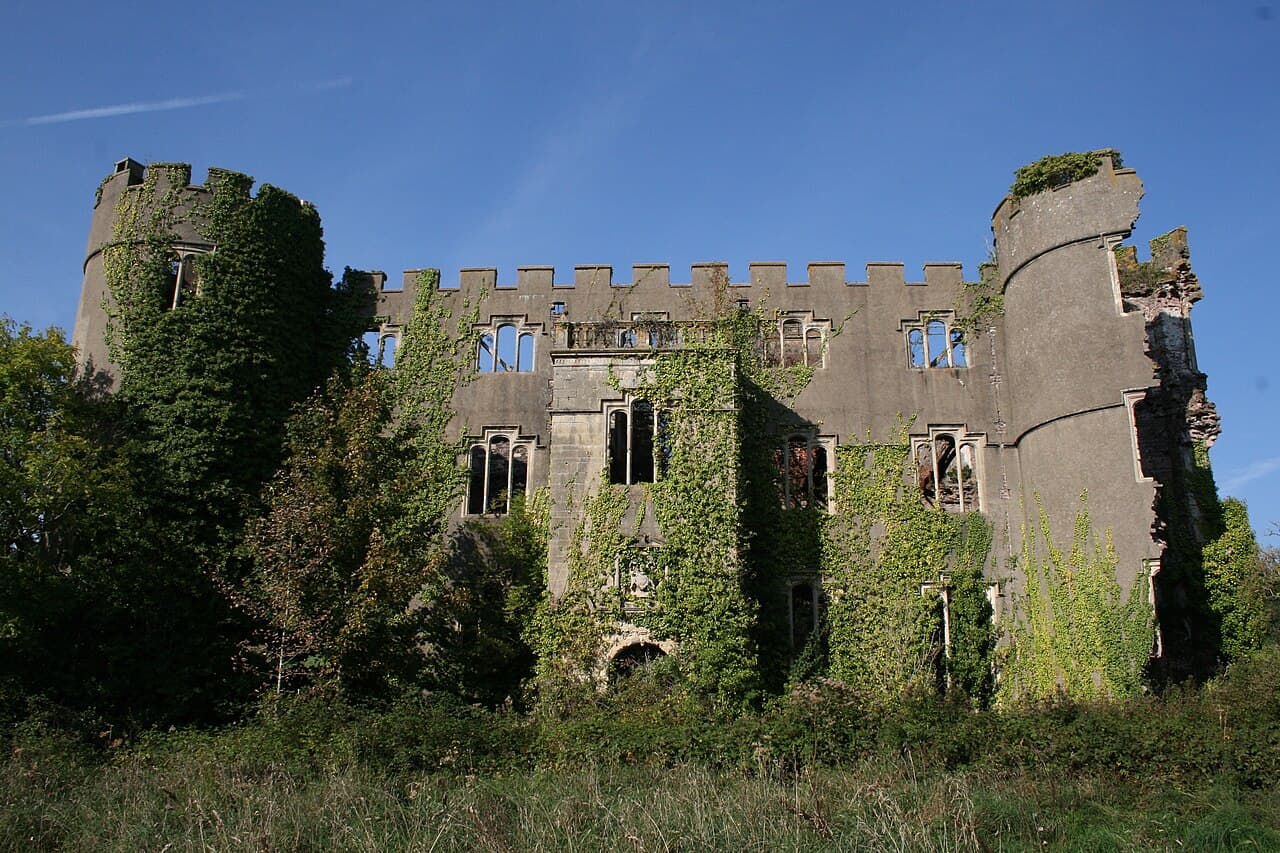
At the onset of World War II, Ruperra Castle, like many large country houses, was requisitioned by the British Army. Unfortunately, in 1941, the castle suffered another devastating fire under military control, which left it in a ruinous state. Post-war, the estate was sold as farmland, and the castle remained abandoned, gradually deteriorating into the ruins visible today.
Modern ownership and conservation challenges
In 1998, the castle was purchased by Ashraf Barakat, who sought to revive polo in Wales and proposed residential redevelopment plans for the castle. However, these plans were halted due to the presence of protected Greater and Lesser horseshoe bats roosting on the premises, which led to the refusal of planning permission for conversion or demolition.
The castle was subsequently offered for sale in 2010 and again around 2014, with the property including surrounding acreage. Its status as a Grade II* Listed building and Scheduled Ancient Monument underscores its historical and architectural importance, while its grounds are recognized on the Cadw/ICOMOS Register of Parks and Gardens of Special Historic Interest in Wales.
Architectural features and landscape setting
Ruperra Castle's design features typical Renaissance mock castle elements, including battlemented curtain walls, corner towers, and a central courtyard. The surrounding landscape was historically managed as a deer park and ornamental grounds, with Victorian additions such as lodges and iron bridges enhancing access and aesthetic appeal.
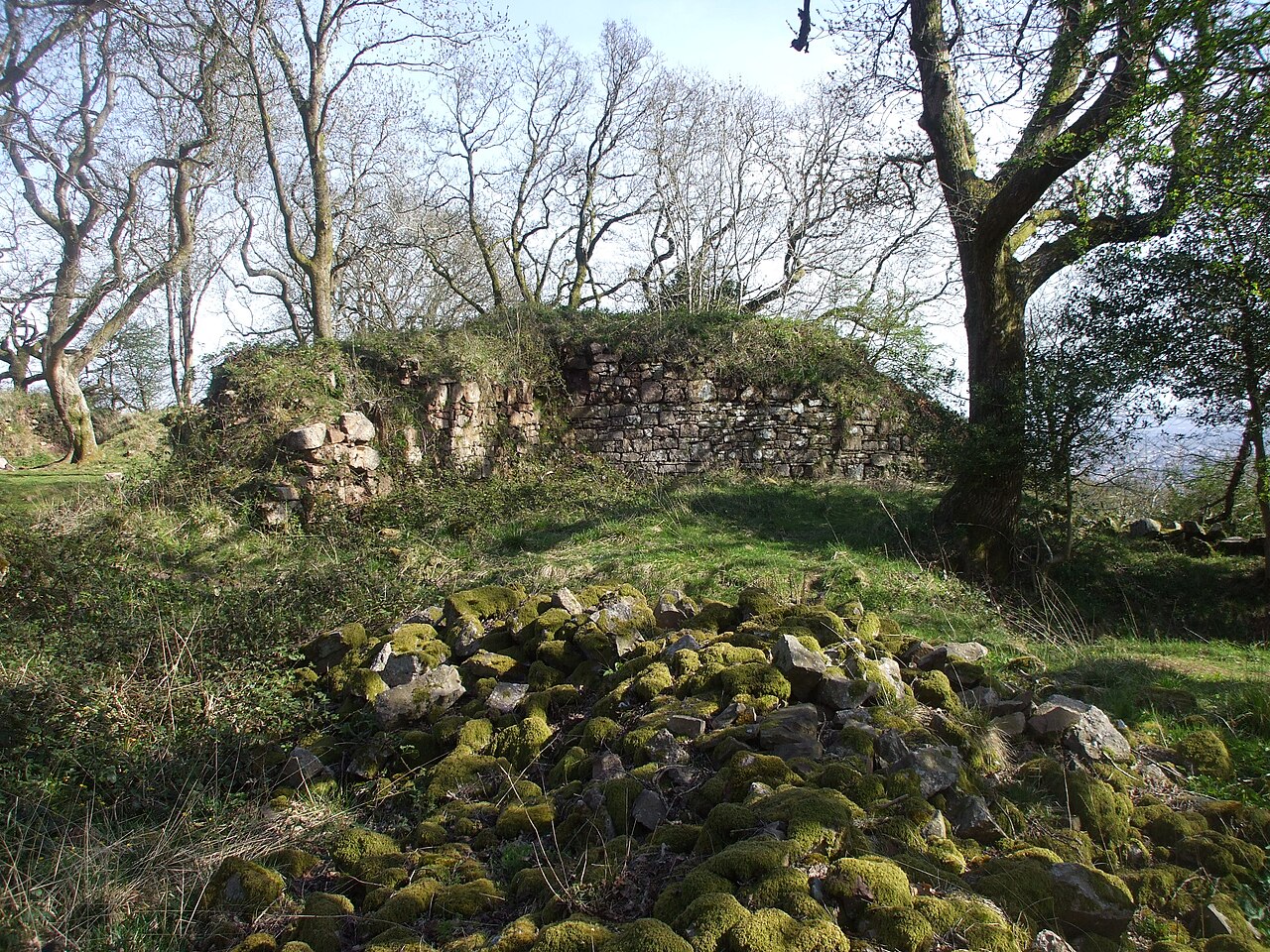
Despite its ruinous condition, key architectural elements remain visible, offering insight into early 17th-century castle-building trends in Wales. The castle's location in Lower Machen, within the county borough of Caerphilly, situates it in a region rich with medieval and Renaissance heritage sites.
Cultural and heritage significance
As one of the earliest mock castles in Wales, Ruperra Castle represents an important phase in the evolution of British country houses, where defensive architecture gave way to ornamental and residential design. Its association with the Morgan family connects it to notable historical events and figures, particularly in military history.
The castle's current ruinous state highlights challenges in preserving large historic estates, especially those affected by war damage and changing economic fortunes. Conservation efforts are complicated by ecological considerations, such as protected bat species, reflecting the complex balance between heritage preservation and environmental protection.
Frequently asked questions (FAQ)
- What is the historical significance of Ruperra Castle?
- Ruperra Castle is significant as one of the earliest mock castles in Wales, built in 1626 during the Renaissance period. It was home to the Morgan family, including Godfrey Charles Morgan, a notable military figure from the Crimean War.
- Can visitors explore Ruperra Castle today?
- As Ruperra Castle is in a ruinous condition and privately owned, public access is limited. Visitors should check local guidelines and permissions before attempting to visit the site.
- Why was Ruperra Castle destroyed?
- The castle suffered two major fires, one in 1785 and another in 1941 during British Army occupation in World War II, which left it in ruins.
- Are there any notable architectural features at Ruperra Castle?
- The castle features Renaissance-era mock castle elements such as battlemented walls, corner towers, and a central courtyard, reflecting early 17th-century country house design trends.
- What conservation challenges does Ruperra Castle face?
- Conservation is complicated by the presence of protected Greater and Lesser horseshoe bats, which has affected redevelopment plans and highlights the balance between heritage preservation and environmental protection.
Photo gallery

Information
Loading map...
Visitor reviews
No reviews yet. Been here? Write the first review and help other travelers!
Write the first reviewVisited this castle? Share your experience
Your review helps other travelers and adds first-hand knowledge to our encyclopedia.