Rupea
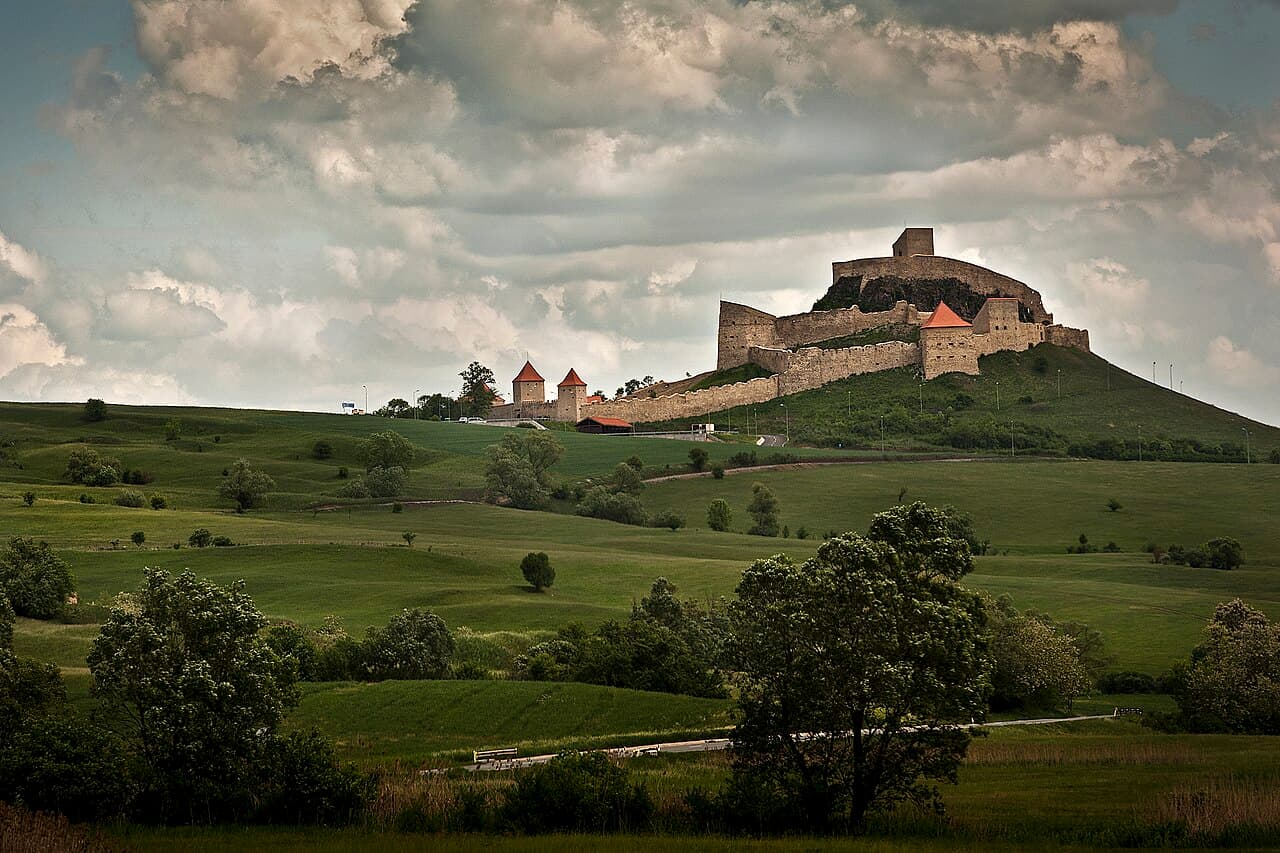
Rupea Fortress, perched atop a 120-meter high hill in Mures County, Romania, is a remarkable example of a late medieval bastioned fortress with a rich history spanning several centuries. Its strategic location and robust fortifications have made it a significant stronghold in Transylvania, witnessing numerous sieges, reconstructions, and historical events that reflect the turbulent past of the region.
Early history and archaeological significance
The hill on which Rupea Fortress stands has been a site of human settlement since prehistoric times. Archaeological evidence confirms traces of habitation dating back to the paleolithic and early neolithic periods. During the Dacian era, the site was fortified as a settlement, and later, following the Roman conquest, it served as a Roman military camp. This long history of occupation underscores the hill's strategic importance across different civilizations.
Medieval origins and initial fortifications
Following the devastating Mongol invasion of 1242, a stone castle was constructed on the hill's highest point. This castle became a royal possession of the Hungarian kings. The fortress was built utilizing the natural rock formations to enhance its defensive walls, with a western gate leading to a narrow passage flanked by steep rocky cliffs. The earliest written record of the castle, referred to as castrum Kuholm, dates to 1324, documenting its capture by the Transylvanian Saxons during their rebellion against King Charles Robert of Hungary.
Sieges and reconstructions in the 15th and 16th centuries
Throughout the 15th century, Rupea Fortress faced multiple assaults, notably by the Ottoman Turks in 1421, 1432, and 1437. After these attacks, the castle underwent significant rebuilding in the early 16th century, transitioning into the property of the nearby town at the hill's base. The fortress served as a refuge for the townspeople and villagers during times of danger.
The castle's middle section was fortified with a wall featuring numerous embrasures and machicolations, and reinforced by several towers adapted for the use of firearms. Behind the walls, small houses were constructed to function as storage spaces and private dwellings during sieges. A walkway along the wall allowed defenders to move swiftly between towers and battlements.
Expansion and architectural features in the 17th century
The 17th century saw further expansion of the fortress, including the development of the lower castle area. In 1623, a deep well measuring 59 meters was dug to ensure a reliable water supply during sieges. A massive pentagonal tower was erected in the wall separating the lower and middle castles. Its sharply angled walls face north, possibly serving as a rudimentary sundial for the inhabitants. The tower's primary function was defensive, equipped with multiple levels of firing positions to protect the extensive lower castle.
The lower castle's size suggests it was used to shelter livestock and horses during times of threat, highlighting the fortress's role as a comprehensive refuge for both people and animals.
Continued conflict and eventual decline
Despite these fortifications, the fortress was captured again by the Turks in 1643, suffering severe damage. After reconstruction, it was besieged once more in 1661 and remained under Ottoman control until the Austrian forces expelled the Turks from Transylvania following the 1683 Battle of Vienna. Between 1691 and 1699, the castle was rebuilt with imperial funding. In 1704, it was occupied without resistance by the Kuruc rebels led by Francis II Rákóczi.
Use as refuge and abandonment
During the plague outbreak of 1716, Rupea Fortress served as a shelter for the healthy population, and again in 1788, it provided refuge from another Turkish incursion. However, a severe storm in 1790 destroyed the castle roofs, leading to its abandonment. Since then, the fortress remained in ruins for over two centuries.
Modern restoration and tourism
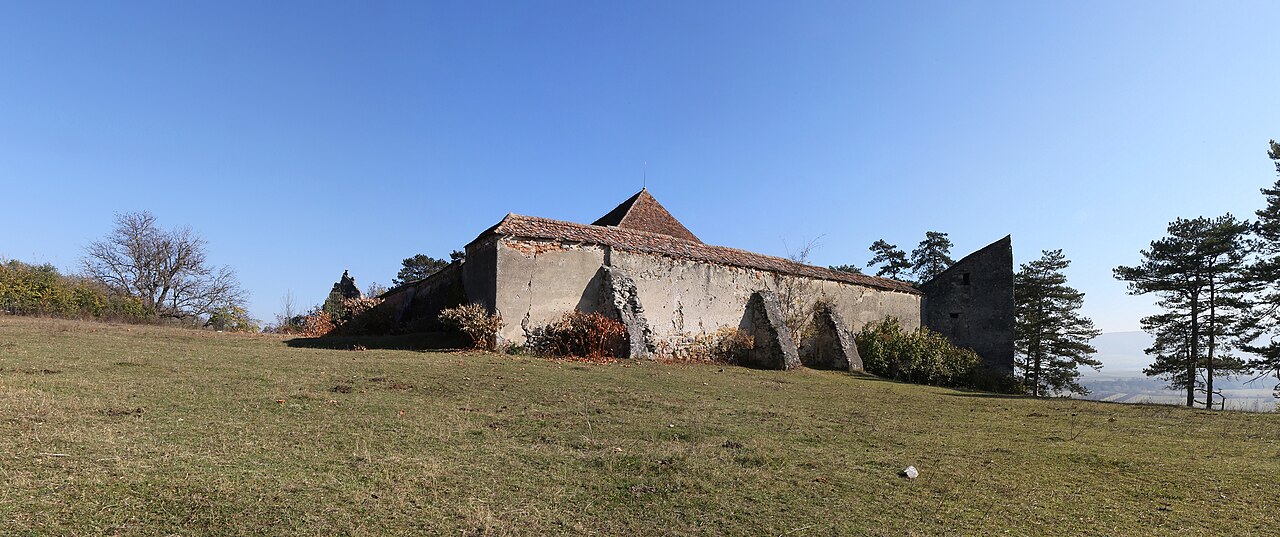
Between 2010 and 2013, extensive restoration efforts were undertaken to preserve and restore the fortress. All seven towers and the peasant houses within the castle grounds were carefully rebuilt, reviving the fortress's imposing silhouette visible from afar.
Today, Rupea Fortress is open to visitors, offering a unique glimpse into a type of fortress known as a "peasant castle"—a defensive refuge not permanently inhabited but designed to protect the local population in times of danger. The route from the lower castle ascends through successive gates, walls, and towers, spiraling upward in a shell-like pattern to the citadel at the summit.
Architectural highlights
- Bastioned walls incorporating natural rock formations for enhanced defense
- Seven restored towers with firing positions adapted for firearms
- Machicolations and embrasures facilitating active defense
- Deep well within the lower castle ensuring water supply during sieges
- Pentagonal tower with angled walls serving both defensive and practical functions
- Peasant houses inside the walls used as storage and shelter during attacks
- Spiral ascent pathway leading to the summit citadel
Historical and cultural significance
Rupea Fortress remains an important cultural landmark in Transylvania, illustrating the evolution of medieval military architecture adapted to the challenges of firearms and prolonged sieges. Its role as a refuge for local populations during invasions and epidemics highlights its social as well as military function. The fortress's restoration has helped preserve this heritage, making it accessible for educational tourism and cultural appreciation.
Frequently asked questions (FAQ)
- What is the historical significance of Rupea Castle?
- Rupea Castle, dating back to the 14th century, served as a strategic military stronghold and a refuge for local populations during invasions. Its historical importance is underscored by its role in the defense against Ottoman incursions and its position as a hub of trade and commerce in Transylvania.
- When was Rupea Castle built?
- Rupea Castle was first documented in 1324, although its construction likely began earlier in the 13th century. Over the centuries, it underwent several renovations and expansions, reflecting various architectural styles influenced by its turbulent history.
- Can I visit Rupea Castle year-round?
- Yes, Rupea Castle is open for visitors year-round, although the best time to visit is during the warmer months from April to October when the weather is favorable for exploring the outdoors. It's advisable to check for any specific seasonal events or maintenance closures before planning your trip.
- What are the opening hours for Rupea Castle?
- The castle typically opens at 9 AM and closes at 6 PM from April to October, while winter hours may vary. Visitors should verify the current opening hours on the official website or local tourism information before their visit.
- Is it possible to access Rupea Castle with mobility challenges?
- While efforts have been made to improve accessibility, the castle's historical structure includes steep paths and uneven surfaces that may pose challenges for those with mobility impairments. It is recommended to contact the castle administration in advance to inquire about specific accessibility options.
- What are the ticket prices for visiting Rupea Castle?
- As of the latest information, the ticket prices for Rupea Castle are quite reasonable, with discounts available for children, students, and seniors. Check the official website for the most current pricing and any special offers or group rates.
- When is the best time to visit Rupea Castle?
- The best time to visit Rupea Castle is during the spring and summer months, particularly from May to September, when the weather is pleasant and various events are held. Visiting during this time allows you to enjoy the scenic views and explore the surrounding natural beauty.
- What nearby attractions can I explore while visiting Rupea Castle?
- Nearby attractions include the picturesque town of Rupea itself, as well as the stunning Viscri Village, known for its traditional Saxon architecture and fortified church. Visitors can also explore the surrounding natural landscapes, perfect for hiking and photography.
Photo gallery

Information
Loading map...
Visitor reviews
No reviews yet. Been here? Write the first review and help other travelers!
Write the first reviewVisited this castle? Share your experience
Your review helps other travelers and adds first-hand knowledge to our encyclopedia.