Dacia
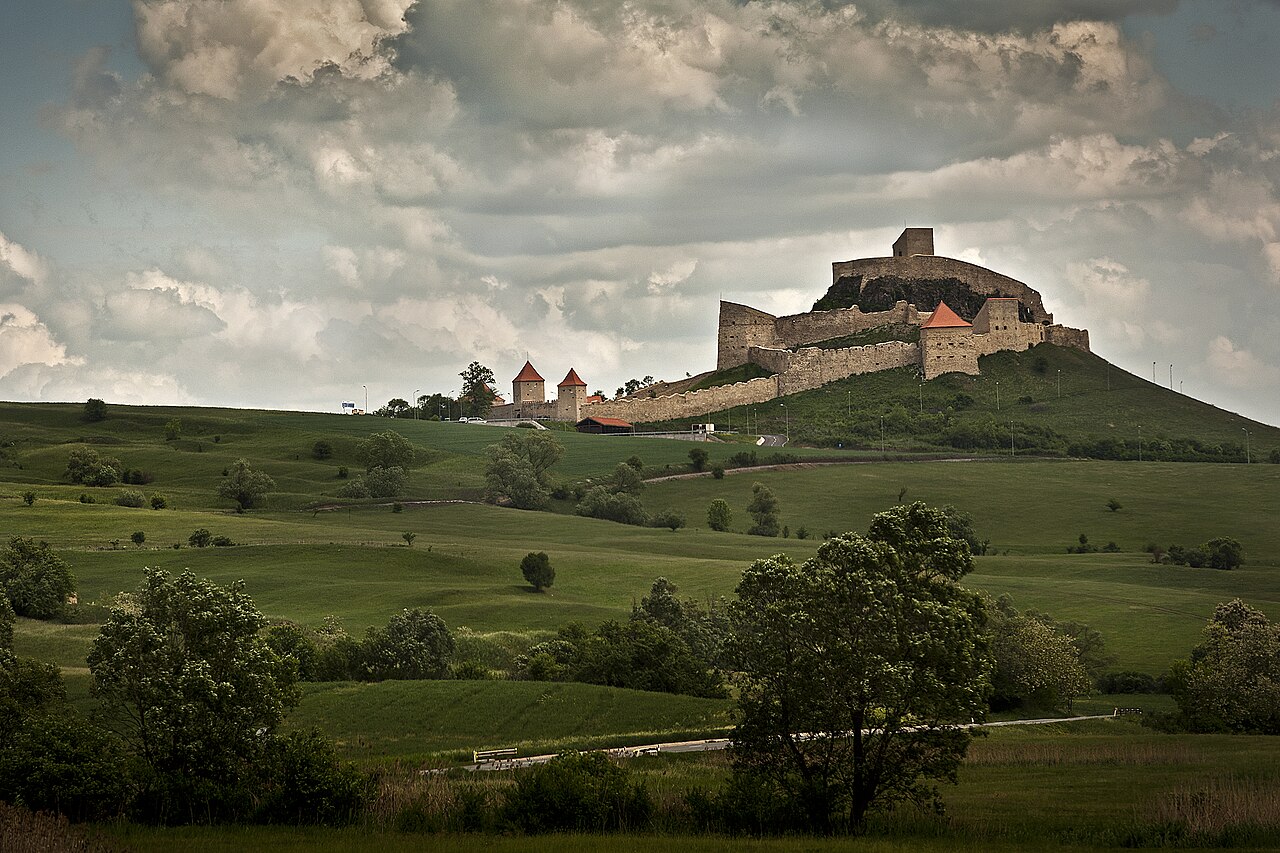
The fortified church of Dacia, located in the Alba region of Romania, stands as a remarkable example of medieval ecclesiastical architecture adapted for defense. Founded by the Saxons, the first recorded mention of the village dates back to 1309, but the origins of the church itself trace to the mid-13th century. This period saw the construction of a Romanesque three-nave basilica without a tower, featuring a square presbytery and a semi-circular apse. The lateral naves were separated from the main nave by four pairs of semi-circular arcades supported on columns, a characteristic element of Romanesque style that emphasized solidity and simplicity.
Architectural evolution and fortification
Around the year 1500, the church underwent a significant transformation known as incastellation, a process of fortifying ecclesiastical buildings to serve defensive purposes during turbulent times. The side naves were demolished and the arcades were bricked up to create a stronger structure. A defensive level was added above the main nave and apse, equipped with shooting openings for archers or firearms. The original wooden ceiling was replaced with a barrel vault, dated to 1517, enhancing both the structural integrity and fire resistance of the building.
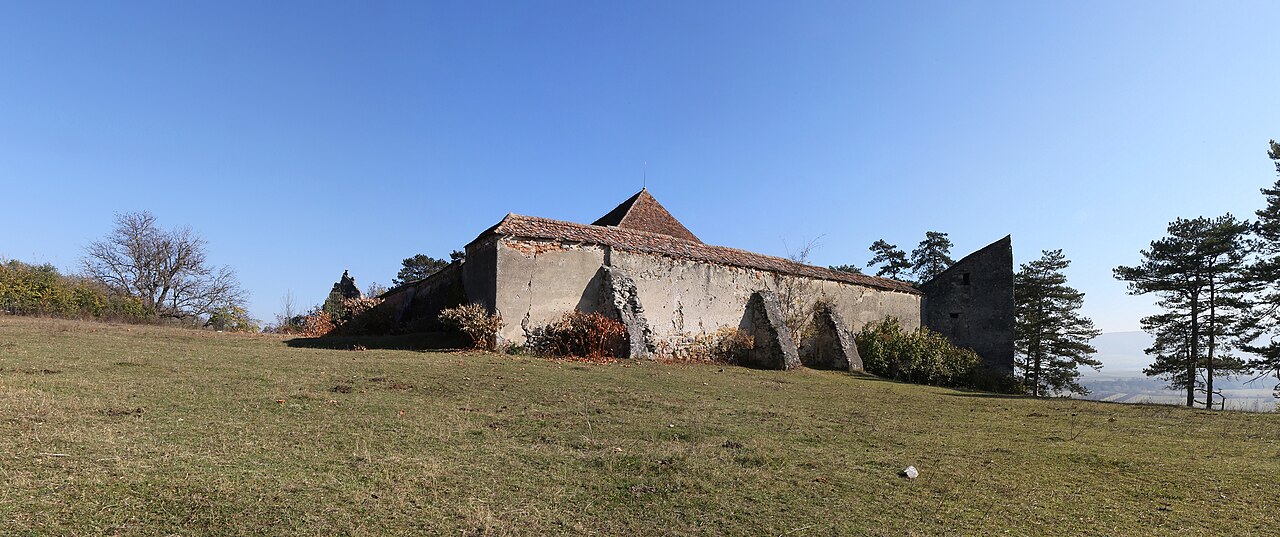
Surrounding the church was a robust rectangular defensive wall measuring approximately 64 by 55 meters. This wall rose to a height of seven to eight meters and featured a defensive gallery with loopholes, protected by oak shutters that could be closed from the inside. At each corner of the wall stood square towers slightly taller than the curtain walls, each crowned with a hipped roof. These towers were strategically designed with flanking firing positions through loopholes on all sides, allowing defenders to cover the adjacent walls effectively.
In the middle of the northern curtain wall, a rectangular bastion was constructed with a single-pitched roof and equipped with machicolations, openings through which defenders could drop projectiles or boiling substances on attackers below. It is believed that a similar bastion existed on the southern curtain wall, reinforcing the defensive capabilities of the complex. This fortified church served as a safe haven for the local population during attacks, providing storage for supplies and a defensible refuge that could withstand sieges or raids.
19th-century modifications and preservation
In 1845, the church underwent major alterations that gave it much of its current appearance. The defensive level above the main nave was removed, and the nave was extended westward. The exact date of the construction of the first church tower is uncertain, but the current tower, dating from 1845, replaced two earlier ones destroyed by earthquakes in 1738 and 1763. This tower reflects the architectural style of the 19th century and marks a departure from the purely defensive character of the earlier structure.
At the beginning of the 20th century, the southwestern corner of the fortifications was demolished to make way for a school building. Despite these changes, the church complex retains significant elements of its defensive architecture, including three surviving defensive towers, the northern bastion, and much of the defensive wall, except for the southeastern corner.
Defensive features and historical significance
The preserved shooting openings in the apse are among the few remaining indicators of the church's fortified nature within the building itself. The combination of religious and military architecture in the church of Dacia exemplifies the dual role of fortified churches in Transylvania and other parts of medieval Europe, where communities often faced threats from invasions and local conflicts.
This fortified church not only served as a place of worship but also as a crucial community refuge and storage site during times of danger. Its well-maintained walls and towers continue to attract historians, architects, and visitors interested in the medieval defensive strategies employed in ecclesiastical settings.
Architectural details and style
The original Romanesque basilica design is evident in the structural elements such as the semi-circular arches, the robust columns, and the simple geometric forms of the presbytery and apse. The later additions, including the defensive walls and towers, reflect the High Medieval period's emphasis on fortification and protection, blending functionality with the sacred purpose of the building.
The 19th-century modifications introduced elements typical of that era, including the new tower with its distinct roof and the extended nave, which altered the church's silhouette but preserved its historical essence. The use of oak for defensive shutters and the construction of machicolations demonstrate advanced medieval military architecture adapted to the local context.
Visiting information and cultural heritage
Today, the fortified church of Dacia stands as a well-preserved monument to the region's medieval history and architectural ingenuity. It is a significant cultural heritage site within the Alba region, offering visitors a glimpse into the past defensive needs of rural communities and the architectural responses to those challenges.
Visitors can explore the remaining towers, walk along the defensive walls, and appreciate the blend of sacred and military architecture. The church remains a testament to the resilience and resourcefulness of the Saxon settlers in Transylvania.
Frequently asked questions (FAQ)
- What is the historical significance of Castle Dacia?
- Castle Dacia is a remarkable symbol of Romania's medieval history, showcasing the architectural style and strategic importance of the region during the 14th century. It served as a fortress to protect against invasions and has witnessed numerous historical events that shaped the area.
- When was Castle Dacia built?
- Castle Dacia was constructed in the late 14th century, with its foundations believed to date back to 1380. The castle has undergone several renovations over the centuries, reflecting the architectural trends and needs of its time.
- What are the opening hours for Castle Dacia?
- Castle Dacia is open to visitors from 9:00 AM to 6:00 PM, Tuesday through Sunday. It is closed on Mondays, so plan your visit accordingly to ensure you can explore this historic site.
- Can I take guided tours of Castle Dacia?
- Yes, guided tours are available at Castle Dacia, offering visitors a deeper insight into its rich history and architecture. Tours typically last about an hour and are led by knowledgeable guides who can answer any questions you may have.
- Is it possible to visit Castle Dacia year-round?
- Castle Dacia is generally open year-round, but it is advisable to check for seasonal changes in opening hours or special events. The winter months may affect accessibility due to weather conditions, so planning ahead is recommended.
- What is the best time to visit Castle Dacia?
- The best time to visit Castle Dacia is during the spring and autumn months when the weather is mild and the tourist crowds are smaller. This allows for a more enjoyable experience as you explore the castle and surrounding landscapes.
- How much do tickets cost to enter Castle Dacia?
- Tickets for Castle Dacia are reasonably priced, typically around 20 lei for adults and 10 lei for students. Discounts may be available for groups or special occasions, so it’s worth inquiring at the ticket office.
- Are there any nearby attractions to visit while at Castle Dacia?
- Yes, nearby attractions include the beautiful Dacia National Park and the charming town of Dacia, known for its local restaurants and cultural sites. You can easily spend a day exploring both the castle and the surrounding area.
- How do I get to Castle Dacia?
- Castle Dacia is accessible by car, with parking available on-site, or you can use public transportation options that connect to the nearby town. Local buses and taxis frequently service the area, making it convenient for visitors.
Information
Loading map...
Visitor reviews
No reviews yet. Been here? Write the first review and help other travelers!
Write the first reviewVisited this castle? Share your experience
Your review helps other travelers and adds first-hand knowledge to our encyclopedia.