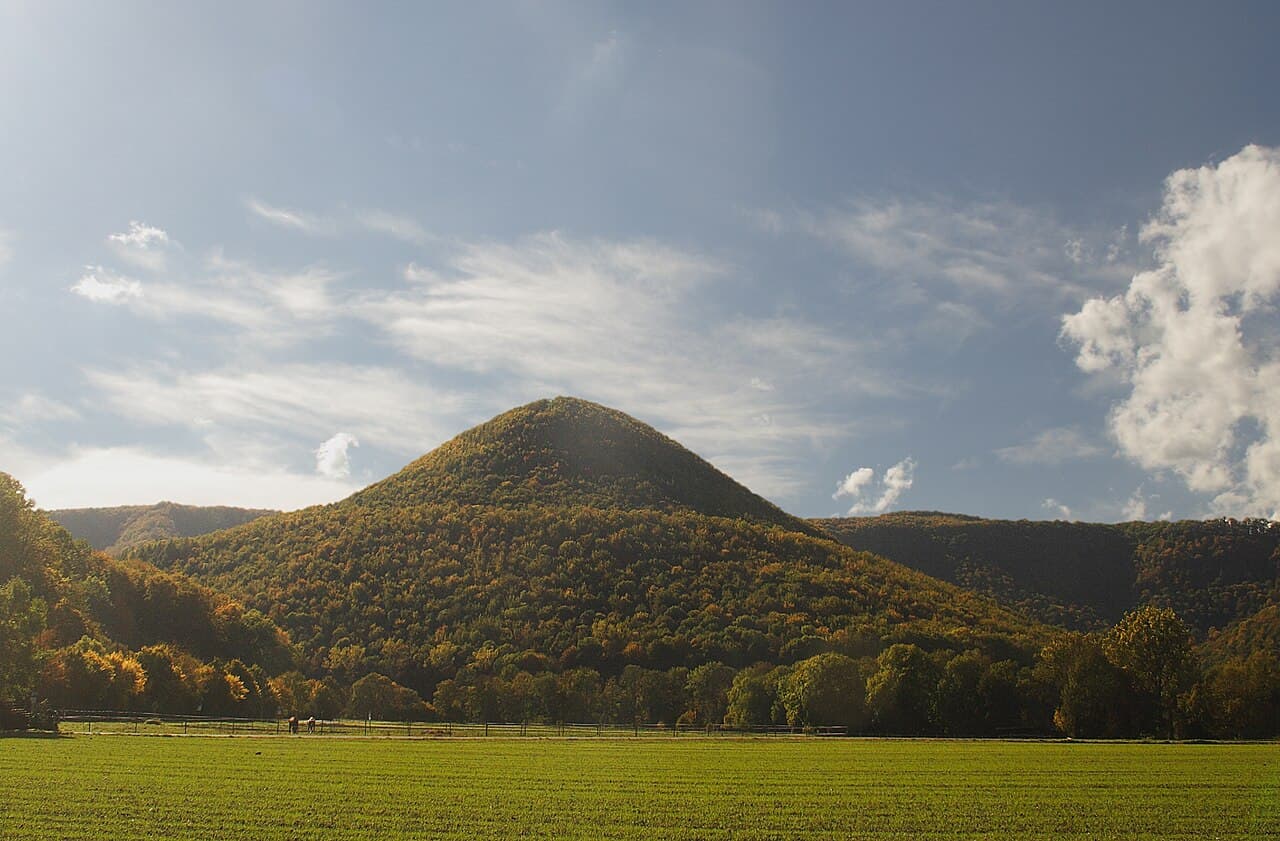
Runder Berg
Runder Berg is a remarkable hill castle site located near the town of Bad Urach in Germany. This oval-shaped hilltop, rising about 45 meters above the surrounding landscape, has served as a strategic settlement and fortified center for more than two millennia. Its long history of human occupation spans from the early Bronze Age through the early Middle Ages, reflecting evolving cultural, military, and architectural developments in the region.
Early human occupation and prehistoric significance
The earliest evidence of human activity on Runder Berg dates back to around 1600 BCE during the early Bronze Age. Archaeological findings show intermittent habitation phases continuing through the late Iron Age, with notable settlement periods between 1100 and 750 BCE, around 550 BCE during the Hallstatt period, and again in the late La Tène period of the 2nd and 1st centuries BCE. These repeated occupations highlight the hill's ongoing importance as a defensible and resourceful location in prehistoric times.
The Alamannic stronghold in the 4th and 5th centuries
During the 4th and 5th centuries CE, Runder Berg became the seat of a local Alamannic regulus or petty king. This fortified settlement was protected by a substantial wood and earth rampart approximately 220 meters in length. Within this enclosure, specialized workshops produced gold and bronze items as well as bone carvings, indicating a sophisticated economy and skilled craftsmanship. The Alamannic community likely played a significant role in regional power dynamics until its destruction around 500 CE, an event possibly linked to the expansion of the Frankish kingdom under King Chlodwig I, who defeated the Alamanni and exiled their ruling elite.
The Frankish noble residence in the 7th and 8th centuries
Following the Alamannic period, the site was occupied by a Frankish noble family during the 7th and 8th centuries. Archaeological evidence reveals a large timber palas or main hall with three aisles measuring approximately 20 by 9 meters. This central building was surrounded by heated residential structures known as kemenaten, which provided comfort and status. The settlement also included a variety of craft workshops such as weaving rooms, a smithy, a mill, and a kitchen, suggesting a self-sufficient fortified residence. Finds of arms and spurs indicate the presence of heavily armed cavalry, emphasizing the site's military significance. This Frankish stronghold may have been destroyed around 750 CE, possibly during the Blood Court at Cannstatt, an event that suppressed Alamannic resistance.
The medieval stone castle and its architectural features
Between the 9th and 10th centuries, the hilltop was transformed with the construction of a stone castle. This fortress featured a defensive wall running along the hillside and was reinforced by at least three rectangular towers. The interior buildings were equipped with tiled stoves for heating and glass windows, reflecting a degree of wealth and comfort uncommon in earlier periods. The castle remained in use until the early 11th century, after which it was abandoned. It is uncertain whether this fortress was directly succeeded by the nearby Hohenurach castle.
Archaeological investigations and preservation
Research into Runder Berg's extensive history began with private excavations by Helmut Burkert after World War II. More comprehensive archaeological work was carried out from 1967 to 1984 under the auspices of the Heidelberg Academy of Sciences. These investigations have been crucial in uncovering the site's multi-layered occupation and its role as a fortified center of power during the early Middle Ages.
The summit's oval plateau, covering roughly 0.45 hectares, reveals stratified remains from various periods. Visitors today can observe earthworks, remnants of the wooden and earth ramparts from the Alamannic period, and the stone foundations and walls from the medieval castle. These features illustrate the site's continuous adaptation and strategic importance through centuries.
Remains of the Alamannic settlement
The 4th and 5th century Alamannic fortification included a 220-meter long rampart of wood and earth. Inside this enclosure, workshop areas specialized in producing gold and bronze objects as well as bone carvings, demonstrating a complex and skilled economy within the fortified space.
Frankish period structures and artifacts
The Frankish phase is distinguished by a prominent three-aisled timber hall at the site's core, surrounded by heated kemenaten. Additional craft buildings such as weaving workshops, a smithy, a mill, and a kitchen indicate a self-contained noble residence. Numerous finds including jewelry, fibulae (disc-shaped brooches), spindle whorls, and spurs support the interpretation of a fortified community with a strong cavalry presence.
Medieval stone castle remains
The later medieval fortress was fortified by a hillside defensive wall and at least three rectangular towers. Interior buildings featured tiled stoves and glass windows, signaling comfort and status. The surviving stone walls and foundations have been systematically recorded, providing valuable insights into early medieval castle architecture in the region.
Visiting Runder Berg today
Today, Runder Berg stands as an important archaeological and historical site open to visitors interested in early medieval fortifications and prehistoric settlements. The visible earthworks and stone remains offer a tangible connection to the site's rich past. Interpretive signage and guided tours help contextualize the site's significance in the broader history of the region.
Runder Berg's layered history, from prehistoric occupation through Alamannic and Frankish fortifications to medieval stone castle construction, makes it a unique destination for those fascinated by the evolution of defensive architecture and early European history.
Frequently asked questions (FAQ)
- What is the historical significance of Runder Berg?
- Runder Berg is a prominent historical site in Bad Urach, Germany, known for its strategic location and role in medieval defenses. The castle, dating back to the 13th century, showcases the architectural styles of the time and provides insights into the region's feudal history.
- When was Runder Berg built?
- Runder Berg was constructed in the early 13th century, around the year 1200. Its establishment marked a significant development in the defensive structures of the area, reflecting the turbulent times of the Middle Ages.
- What are the opening hours for Runder Berg?
- Runder Berg is open to visitors from 9 AM to 6 PM daily during the summer months and from 10 AM to 4 PM in the winter. It's advisable to check the official website for any seasonal changes or special events that might affect these hours.
- Is it possible to access Runder Berg by public transportation?
- Yes, Runder Berg is accessible by public transportation, with several bus routes connecting Bad Urach to nearby towns. Visitors can take advantage of local buses that drop off at convenient points close to the castle.
- Can I buy tickets in advance for Runder Berg?
- Yes, tickets for Runder Berg can be purchased online in advance. This is recommended during peak tourist seasons to avoid long queues and ensure a smooth entry.
- What is the best time to visit Runder Berg?
- The best time to visit Runder Berg is during the spring and early autumn months when the weather is mild and the surrounding landscapes are at their most beautiful. Additionally, visiting during weekdays can help avoid larger crowds.
- Are there any nearby attractions to Runder Berg?
- Yes, near Runder Berg, visitors can explore the charming town of Bad Urach, known for its spa culture and historical buildings. The Urach Waterfall and the Swabian Jura mountain range are also popular attractions for nature lovers.
- What architectural features can I expect to see at Runder Berg?
- Runder Berg features a mix of Romanesque and Gothic architectural styles, evident in its sturdy stone structure and intricate detailing. The castle's towers and fortifications reflect its purpose as a defensive stronghold while providing breathtaking views of the surrounding countryside.
Photo gallery

Information
Website
Visit websiteSources & official resources
Verify the information above using these authoritative references.
Loading map...
Visitor reviews
No reviews yet. Been here? Write the first review and help other travelers!
Write the first reviewVisited this castle? Share your experience
Your review helps other travelers and adds first-hand knowledge to our encyclopedia.


