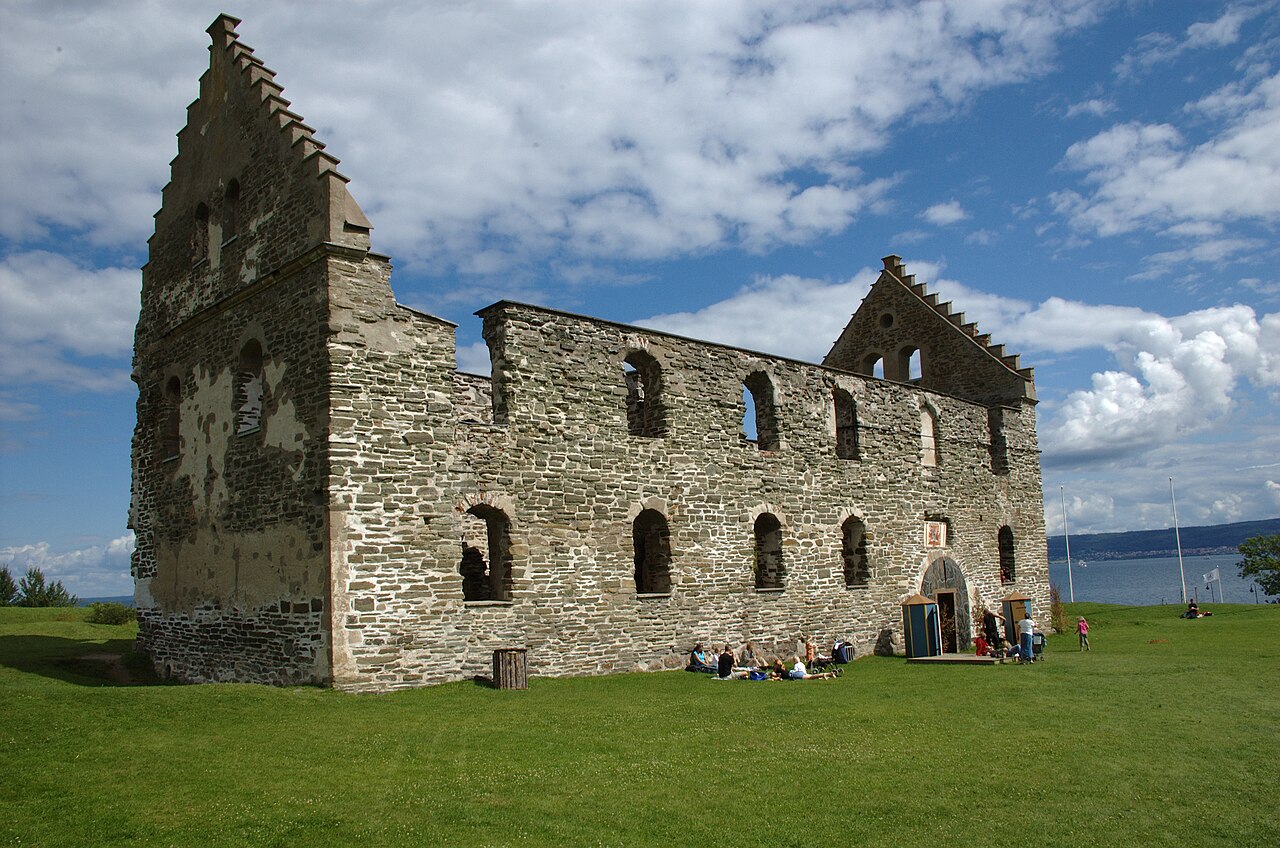
Rumlaborg Castle Ruins
Rumlaborg Castle is a significant medieval fortress located in Huskvarna, Sweden, with origins dating back to around 1360. The earliest written record of the castle appears in 1366, marking its establishment as a strategic stronghold during the late medieval period. Constructed initially to safeguard important travel routes and defend Swedish territory, Rumlaborg played a crucial role in regional military and administrative history.
The origins and early history of Rumlaborg
The site of Rumlaborg was originally part of a bishop’s estate known as Humblarum, established in the 13th or early 14th century. In 1366, Albrekt of Mecklenburg fortified the location by building a stronghold to protect two vital roads, Västra Holavedsvägen and Östra Holavedsvägen, from incursions by Danish forces. Initially called Humlaborg, the fortress later adopted the name Rumlaborg. It became the administrative center for the region known as Rumlaborgs län until the mid-1500s.
The castle's strategic importance is underscored by its role during the Engelbrekt rebellion in 1434. At that time, the fortress was defended by Otto Snaps but was eventually overtaken and burned by the rebel forces. This event marked a significant moment in the castle's history, demonstrating its military relevance in the conflicts of the period.
Reconstruction and military significance in the 15th century
Following its destruction, Rumlaborg was rebuilt in 1448 under the direction of Karl Knutsson Bonde, who reinforced the fortress to restore its defensive capabilities. Throughout the mid-15th century, Rumlaborg was a contested site, changing hands multiple times amid ongoing conflicts.
In 1452, Danish forces under Eggert Krummedige attempted to seize the fortress. Although Krummedige later defected, Swedish forces led by Eric Nipertz regained control. The fortress was again contested during Karl Knutsson’s return in 1464, when Kettil Karlsson (Vasa) captured it and appointed his brother Erik Karlsson (Vasa) as commander. These events highlight Rumlaborg's continued strategic importance in regional power struggles.
Decline and transformation in the early modern period
During the rule of Sten Sture the Elder, the fortress was deliberately destroyed as military strategies evolved and regional defense priorities shifted. Subsequently, King Gustav Vasa focused fortification efforts on the nearby Jönköpingshus fortress, leading to Rumlaborg's decline and eventual abandonment as a military site.
By the 17th century, Rumlaborg had lost its defensive purpose. In the 1850s, the site was transformed into an English-style park by H.C. Mörk, who introduced landscaping and a pavilion, marking a shift from military use to recreational and cultural significance.
Architectural features and fortifications
The earthworks and defensive structures
The remains of Rumlaborg primarily consist of an irregular earthen mound at the center, which served as the fortress’s core. This mound was protected by two defensive earth walls, known as skansvallar, designed to absorb and deflect attacks. Surrounding the mound are three moats (vallgravar), which provided additional layers of defense by isolating the stronghold from the surrounding terrain.
Outlying redoubts and strategic control points
Rumlaborg was part of a broader defensive network that included two outlying redoubts to secure approaches along key routes. Varpa skans lay to the north near Brunstorp farm, while Garpa skans guarded the southern access along the Huskvarnaån river. These earthwork fortifications complemented the main fortress by monitoring and controlling movement through the area, enhancing the overall defensive capability.
Kavlabron bridge and logistical significance
A notable feature of the site is Kavlabron, a bridge constructed from cross-laid logs spanning the Huskvarnaån. This timber bridge was essential for maintaining access across the river, facilitating the movement of troops and supplies, and reinforcing Rumlaborg’s control over vital transport routes.
Archaeological investigations and preservation
Archaeological excavations conducted in the 1930s, led by Georg Sahlström and overseen by the local heritage society in cooperation with the National Heritage Board, uncovered significant elements of the fortress and its surroundings. These investigations revealed structural details and artifacts that provide insight into the castle’s medieval military function.
Many artifacts recovered during these excavations are now preserved at the Huskvarna City Museum, located in an old powder magazine near Lake Vättern. These items offer tangible connections to the daily life and defense activities at Rumlaborg during its active period.
Today, the site remains primarily as visible earthworks, with the original stone or wooden structures no longer extant. The landscape modifications, including mounds, ditches, and moats, clearly reflect the fortress’s design and defensive strategy. Rumlaborg stands as an important cultural heritage site illustrating medieval fortification techniques and regional history in southern Sweden.
Frequently asked questions (FAQ)
- When was Rumlaborg Castle originally built?
- Rumlaborg Castle was originally constructed around 1360, with the first written record dating to 1366.
- What happened to Rumlaborg Castle during the Engelbrekt rebellion?
- During the Engelbrekt rebellion in 1434, Rumlaborg Castle was defended by Otto Snaps but was eventually captured and burned by rebel forces.
- Are there any visible remains of Rumlaborg Castle today?
- Today, the remains of Rumlaborg Castle exist mainly as earthworks, including defensive mounds, ditches, and moats, with no standing stone structures.
- Can visitors access Rumlaborg Castle ruins?
- Yes, visitors can access the Rumlaborg Castle ruins, which are open to the public as a historical site with visible earthwork fortifications.
- What is the significance of Kavlabron bridge at Rumlaborg?
- Kavlabron is a timber bridge made of cross-laid logs that spans the Huskvarnaån river, crucial for controlling transport routes near the fortress.
Information
Sources & official resources
Verify the information above using these authoritative references.
Loading map...
Visitor reviews
No reviews yet. Been here? Write the first review and help other travelers!
Write the first reviewVisited this castle? Share your experience
Your review helps other travelers and adds first-hand knowledge to our encyclopedia.