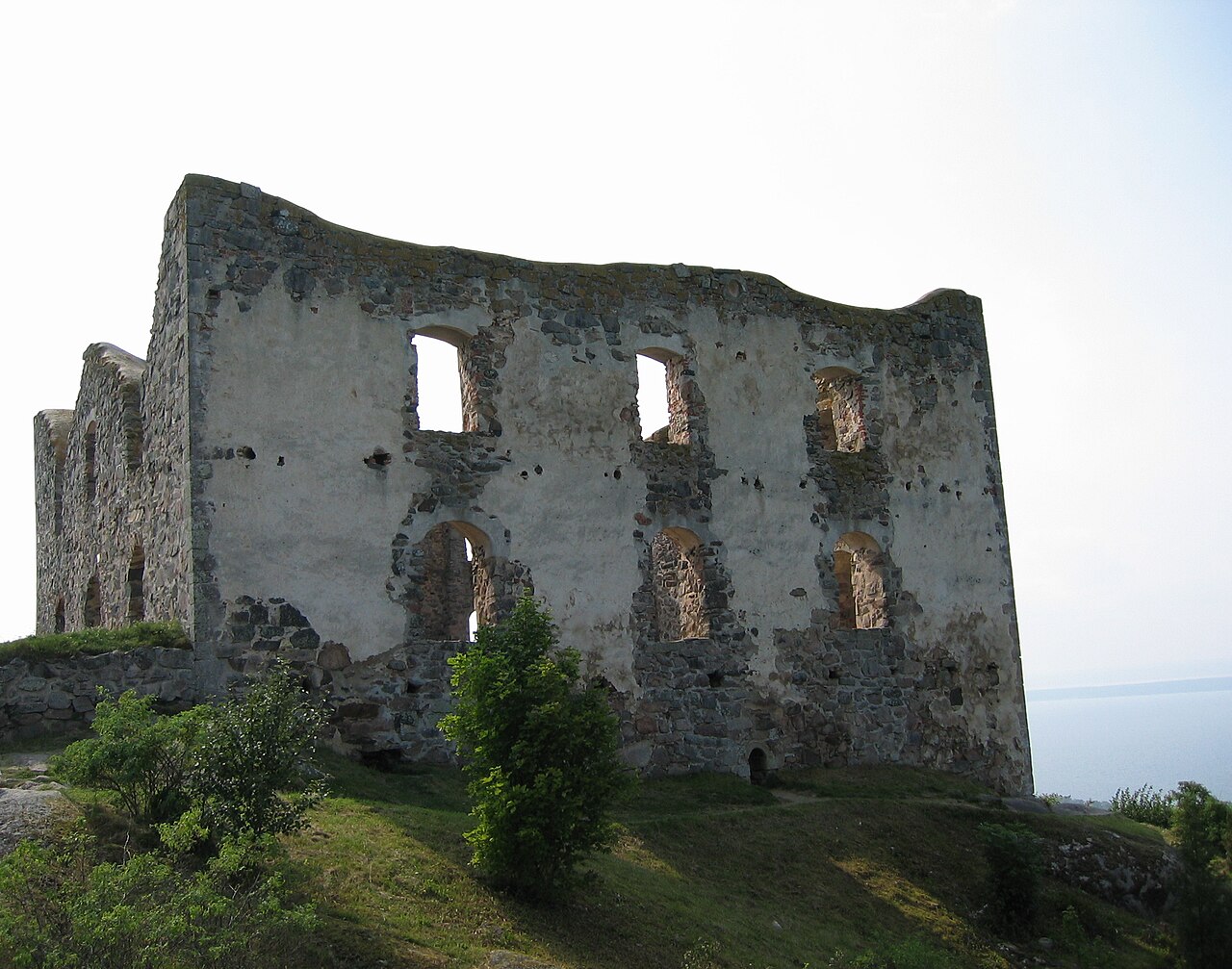
Näs Castle Ruins

Näs castle ruins on visingsö island, sweden
Visingsö, Sweden
High Medieval (11th–13th c.)
Ruins

Näs Castle ruins are located on the southern end of Visingsö island in Sweden, marking the site of the country's oldest known royal castle. Constructed in the mid-12th century, the castle served as a significant royal residence during the 12th and 13th centuries, a period when the Swedish monarchy was notably fragile and frequently contested. The castle's establishment is generally attributed to either Sverker I of Sweden, who died in 1156, or his son Charles VII of Sweden (Karl Sverkersson). This lineage of kingship situates Näs Castle as a central seat of power for early medieval Swedish rulers.

Historical significance of Näs castle

Näs Castle was not only a royal residence but also a symbol of early Swedish monarchy's attempts to consolidate power. It housed approximately five to six kings before the early 14th century. The castle's strategic location on Visingsö island in Lake Vättern provided natural defenses and control over important waterways and trade routes.

By 1318, the castle's importance had diminished when King Birger Magnusson (Birger I) pawned it to the Danish crown, reflecting the turbulent political climate of the period. Soon after this transaction, the castle was likely demolished, possibly due to military conflicts or as a result of shifting power dynamics in the region.

Architectural features and construction

Although only ruins remain today, historical records and archaeological findings suggest that Näs Castle was a substantial stone fortress typical of early medieval Scandinavian royal residences. The castle likely featured thick defensive walls, a keep or donjon serving as the main fortified residence, and possibly a courtyard surrounded by ancillary buildings for administration and domestic use.

The castle's construction in the mid-1100s places it within the High Medieval period, when stone castles began replacing wooden fortifications in Sweden. This transition marked an important evolution in military architecture, emphasizing durability and defense against siege warfare.

Defensive advantages

Positioned on an island, Näs Castle benefited from natural water barriers, enhancing its defensive capabilities. The surrounding lake and the island's terrain would have made direct assaults difficult, providing the royal occupants with a secure stronghold during times of conflict.

The decline and legacy of Näs castle

After its pawning to Denmark in 1318, Näs Castle ceased to function as a royal residence. The reasons for its demolition remain uncertain but are likely connected to the political instability and military actions of the era. The castle's ruins today serve as an important archaeological site that offers insights into Sweden's medieval royal history and early castle architecture.

The site is a cultural heritage landmark on Visingsö, attracting historians and visitors interested in Sweden's medieval past. Its ruins are a tangible reminder of the early Swedish monarchy's challenges and the architectural developments that accompanied the consolidation of royal power.

Visiting Näs castle ruins

Visitors to Visingsö island can explore the remains of Näs Castle, which provide a glimpse into medieval fortification and royal life. The ruins are accessible by ferry from the mainland and offer scenic views of Lake Vättern. Interpretive signage and local guides often provide historical context to enhance the visitor experience.

The site is open to the public year-round, with no entrance fee, making it an accessible destination for those interested in Swedish history and medieval architecture.

Frequently asked questions (FAQ)

How do I get to Näs Castle Ruins?
Näs Castle Ruins is located on Visingsö Island, which can be accessed via a ferry from Gränna. Once on the island, you can reach the castle by walking or cycling along the designated paths that lead to the ruins.
What is the historical significance of Näs Castle?
Näs Castle was built in the late 16th century and served as a royal residence for the Swedish monarchy. Its ruins are a testament to the architectural style of the time and reflect the turbulent history of Sweden during the period of its construction.
When was Näs Castle built?
Construction of Näs Castle began in 1556 and was completed in the early 1600s. It was one of the key strongholds in the region and played an important role in the defense strategies of Sweden.
Can I enter the castle ruins?
Visitors are welcome to explore the ruins of Näs Castle, which are open to the public. While there are no guided tours, informative signs around the site provide insights into the history and architecture of the castle.
Why is Näs Castle a popular tourist attraction?
Näs Castle Ruins attract visitors due to their rich history and stunning location overlooking Lake Vättern. The scenic views and serene atmosphere make it a perfect spot for photography and leisurely walks.
Is it possible to visit Näs Castle year-round?
Yes, Näs Castle Ruins are open for visitors year-round, allowing you to experience the site in different seasons. However, some facilities may have limited availability in the off-peak months, so it's advisable to check ahead before your visit.
What are the opening hours for Näs Castle Ruins?
Näs Castle Ruins are generally open from sunrise to sunset, allowing for ample time to explore the site. During peak tourist season, there may be extended hours, so it's best to verify current timings before your visit.
Are there any ticket prices for visiting Näs Castle?
Entry to Näs Castle Ruins is free, making it an accessible attraction for all visitors. However, donations to support the preservation of the site are appreciated and can be made on-site.
What is the best time to visit Näs Castle Ruins?
The best time to visit Näs Castle Ruins is during the late spring to early autumn months when the weather is pleasant. This season allows for lovely walks around the site and opportunities to enjoy the natural beauty of Visingsö Island.
What nearby attractions can I visit while in Visingsö?
While visiting Näs Castle Ruins, you can also explore other nearby attractions such as the Visingsö Church and the beautiful gardens at the nearby Visingso Museum. The island offers lovely bike paths and hiking trails for those looking to enjoy the outdoors.

Information

Hill Castle

Loading map...

Visitor reviews

No reviews yet. Been here? Write the first review and help other travelers!

Write the first review

Visited this castle? Share your experience

Your review helps other travelers and adds first-hand knowledge to our encyclopedia.
Write a review

(5/5)

0/2000 characters

Your review will be visible after admin approval

Nearby castles

5.4 km
Visingsborg Castle Ruins — Sweden castle

Visingsborg Castle Ruins

Visingsö, Sweden

Visingsborg Castle stands as a significant example of Renaissance architecture on Visingsö Island in Sweden. Its origins trace back to the 1560s, when the castle was constructed as a square-shaped fortress featuring a moat and four defensive towers. This design reflected the military and residential needs of the period, combining fortification with noble living quarters. Architectural design and features The castle's layout was typical of Renaissance fortifications, emphasizing symmetry and defense. The moat surrounding the castle provided an effective barrier against invaders, while the four towers at each corner allowed for strategic surveillance and defense. The walls were robust, designed to withstand sieges common in the 16th century. Inside, the castle was richly decorated, with sculptures and paintings adorning the walls, demonstrating the Brahe family's wealth and cultural interests. Interior embellishments and facilities The interior housed a large library filled with numerous books, reflecting the intellectual pursuits of its residents. The presence of an armoury capable of equipping up to 800 soldiers indicates the castle's dual role as a noble residence and a military stronghold. Surrounding the castle were extensive orchards and gardens, which not only provided food but also enhanced the aesthetic appeal of the estate. Historical significance and the brahe family The Brahe family, prominent Swedish nobility, occupied Visingsborg Castle throughout the 16th and 17th centuries. Under their stewardship, the castle became one of the most impressive buildings in Sweden, symbolizing their power and influence. The castle served as a center of administration and culture during this time, with Count Per Brahe the Younger being a notable figure associated with the estate. Decline and destruction Following the death of Count Per Brahe the Younger in 1680, the castle was left unoccupied for several years. In the early 18th century, it was repurposed as a camp for Russian war prisoners during conflicts between Sweden and Russia. It is believed that these prisoners were responsible for the fire that destroyed much of the castle in 1718. Today, only the left wing of Visingsborg Castle remains, standing as ruins that offer insight into its former grandeur. Current status and preservation Visingsborg Castle is classified as a hill castle due to its elevated location on Visingsö Island. The ruins are a valuable cultural heritage site, attracting visitors interested in Swedish history and Renaissance architecture. Efforts to preserve the remaining structures focus on maintaining the ruins as a historical monument, allowing for educational and touristic exploration. Visiting information and experience Visitors to Visingsborg Castle Ruins can explore the remnants of the defensive walls and the surviving left wing, imagining the castle's original scale and design. The site offers scenic views of the surrounding island and the nearby lake, enhancing the historical atmosphere. Informational displays provide context about the castle's construction, the Brahe family's legacy, and the events leading to its destruction. Nearby attractions Visingsö Island itself is rich in history and natural beauty, with several other historical sites and walking trails. The island's combination of cultural heritage and landscape makes it a compelling destination for those interested in Swedish history and outdoor activities.

Renaissance (15th–17th c.)
Details
14 km
Brahehus Castle Ruins — Sweden castle

Brahehus Castle Ruins

Gränna, Sweden

Brahehus Castle stands as a notable example of a Renaissance-era fortress, constructed between 1637 and 1650 under the direction of Count Per Brahe the Younger, a prominent Swedish nobleman and statesman. Situated near the town of Gränna in Småland province, the castle was strategically positioned on a hilltop approximately 270 meters above sea level and 180 meters above lake Vättern. This elevated location offered commanding views over the lake and the island of Visingsö, underscoring its defensive and administrative significance during the 17th century. Historical background and significance The construction of Brahehus was commissioned by Per Brahe the Younger, who was a key figure in Swedish governance and development during the early 1600s. The castle served both as a fortified residence and a symbol of Brahe's status and influence in the region. Despite its relatively short period of active use, the castle played a role in the local administration and defense. Following the death of Per Brahe in 1680, the castle was abandoned. This abandonment coincided with the Great Reduction under King Charles XI of Sweden, a policy that reclaimed lands and properties from the nobility for the Crown. As a result, Brahehus became Crown property but was no longer maintained as a residence or military stronghold. In 1708, a devastating fire destroyed much of the castle. Unlike many other castles of the period, Brahehus was never rebuilt, and it gradually fell into ruin. Today, the remains of the castle offer insight into 17th-century Swedish Renaissance architecture and noble life. Architectural features and layout Brahehus was designed in the Renaissance style, which was characterized by symmetry, proportion, and the incorporation of classical elements. The castle originally featured robust stone walls, defensive towers, and residential quarters arranged around a central courtyard. The elevated position on a rocky hilltop enhanced its defensive capabilities and allowed for surveillance of the surrounding landscape. Although only ruins remain today, the surviving walls and foundations reveal the castle's original layout. The structure likely included multiple floors with living spaces, storage areas, and defensive battlements. The castle's design reflected contemporary trends in fortress construction, balancing residential comfort with military functionality. Location and natural surroundings Located approximately 3 kilometers outside Gränna in Jönköping County, Brahehus occupies a prominent position overlooking lake Vättern, Sweden's second-largest lake. The site rises sharply above the lake, providing panoramic views that extend to the island of Visingsö. This vantage point not only served defensive purposes but also offers modern visitors spectacular scenery. The castle ruins are accessible via nearby roads, including the modern E4 highway, making it a popular destination for tourists and locals interested in history, hiking, and nature. The surrounding landscape includes forested areas and walking trails that complement visits to the ruins. Current condition and preservation Today, Brahehus is classified as ruins, with only partial walls and foundations remaining. Despite the destruction caused by the fire in 1708 and centuries of exposure to the elements, the site retains significant archaeological and historical value. Preservation efforts have focused on stabilizing the remaining structures to prevent further deterioration. The ruins are open to the public and serve as an educational site where visitors can learn about Swedish Renaissance architecture, noble history, and regional heritage. Informational signage and guided tours help contextualize the castle's past and its role in 17th-century Sweden. Visitor experience and tourism Visitors to Brahehus can explore the ruins and enjoy the natural beauty of the site. The elevated location offers some of the most impressive views of lake Vättern and the surrounding countryside. Hiking paths lead to the castle, making it accessible for outdoor enthusiasts. The proximity to Gränna, known for its traditional candy cane production and charming town center, adds to the appeal for tourists. Brahehus is a favored spot for both history buffs and nature lovers, combining cultural heritage with scenic landscapes.

Renaissance (15th–17th c.)
Details
23 km

Rumlaborg Castle Ruins

Huskvarna, Sweden

Rumlaborg Castle is a significant medieval fortress located in Huskvarna, Sweden, with origins dating back to around 1360. The earliest written record of the castle appears in 1366, marking its establishment as a strategic stronghold during the late medieval period. Constructed initially to safeguard important travel routes and defend Swedish territory, Rumlaborg played a crucial role in regional military and administrative history. The origins and early history of Rumlaborg The site of Rumlaborg was originally part of a bishop’s estate known as Humblarum, established in the 13th or early 14th century. In 1366, Albrekt of Mecklenburg fortified the location by building a stronghold to protect two vital roads, Västra Holavedsvägen and Östra Holavedsvägen, from incursions by Danish forces. Initially called Humlaborg, the fortress later adopted the name Rumlaborg. It became the administrative center for the region known as Rumlaborgs län until the mid-1500s. The castle's strategic importance is underscored by its role during the Engelbrekt rebellion in 1434. At that time, the fortress was defended by Otto Snaps but was eventually overtaken and burned by the rebel forces. This event marked a significant moment in the castle's history, demonstrating its military relevance in the conflicts of the period. Reconstruction and military significance in the 15th century Following its destruction, Rumlaborg was rebuilt in 1448 under the direction of Karl Knutsson Bonde, who reinforced the fortress to restore its defensive capabilities. Throughout the mid-15th century, Rumlaborg was a contested site, changing hands multiple times amid ongoing conflicts. In 1452, Danish forces under Eggert Krummedige attempted to seize the fortress. Although Krummedige later defected, Swedish forces led by Eric Nipertz regained control. The fortress was again contested during Karl Knutsson’s return in 1464, when Kettil Karlsson (Vasa) captured it and appointed his brother Erik Karlsson (Vasa) as commander. These events highlight Rumlaborg's continued strategic importance in regional power struggles. Decline and transformation in the early modern period During the rule of Sten Sture the Elder, the fortress was deliberately destroyed as military strategies evolved and regional defense priorities shifted. Subsequently, King Gustav Vasa focused fortification efforts on the nearby Jönköpingshus fortress, leading to Rumlaborg's decline and eventual abandonment as a military site. By the 17th century, Rumlaborg had lost its defensive purpose. In the 1850s, the site was transformed into an English-style park by H.C. Mörk, who introduced landscaping and a pavilion, marking a shift from military use to recreational and cultural significance. Architectural features and fortifications The earthworks and defensive structures The remains of Rumlaborg primarily consist of an irregular earthen mound at the center, which served as the fortress’s core. This mound was protected by two defensive earth walls, known as skansvallar, designed to absorb and deflect attacks. Surrounding the mound are three moats (vallgravar), which provided additional layers of defense by isolating the stronghold from the surrounding terrain. Outlying redoubts and strategic control points Rumlaborg was part of a broader defensive network that included two outlying redoubts to secure approaches along key routes. Varpa skans lay to the north near Brunstorp farm, while Garpa skans guarded the southern access along the Huskvarnaån river. These earthwork fortifications complemented the main fortress by monitoring and controlling movement through the area, enhancing the overall defensive capability. Kavlabron bridge and logistical significance A notable feature of the site is Kavlabron, a bridge constructed from cross-laid logs spanning the Huskvarnaån. This timber bridge was essential for maintaining access across the river, facilitating the movement of troops and supplies, and reinforcing Rumlaborg’s control over vital transport routes. Archaeological investigations and preservation Archaeological excavations conducted in the 1930s, led by Georg Sahlström and overseen by the local heritage society in cooperation with the National Heritage Board, uncovered significant elements of the fortress and its surroundings. These investigations revealed structural details and artifacts that provide insight into the castle’s medieval military function. Many artifacts recovered during these excavations are now preserved at the Huskvarna City Museum, located in an old powder magazine near Lake Vättern. These items offer tangible connections to the daily life and defense activities at Rumlaborg during its active period. Today, the site remains primarily as visible earthworks, with the original stone or wooden structures no longer extant. The landscape modifications, including mounds, ditches, and moats, clearly reflect the fortress’s design and defensive strategy. Rumlaborg stands as an important cultural heritage site illustrating medieval fortification techniques and regional history in southern Sweden.

Late Medieval (14th–15th c.)
Details