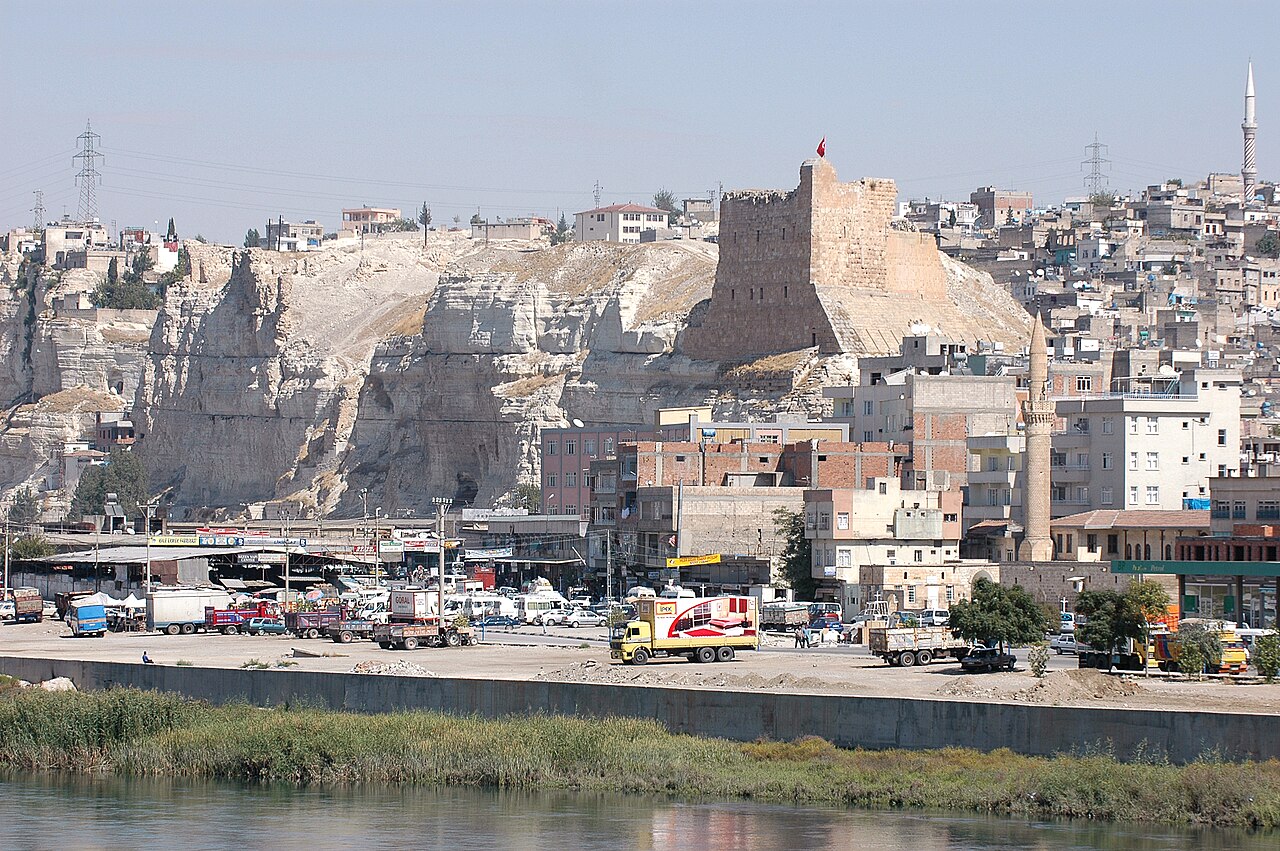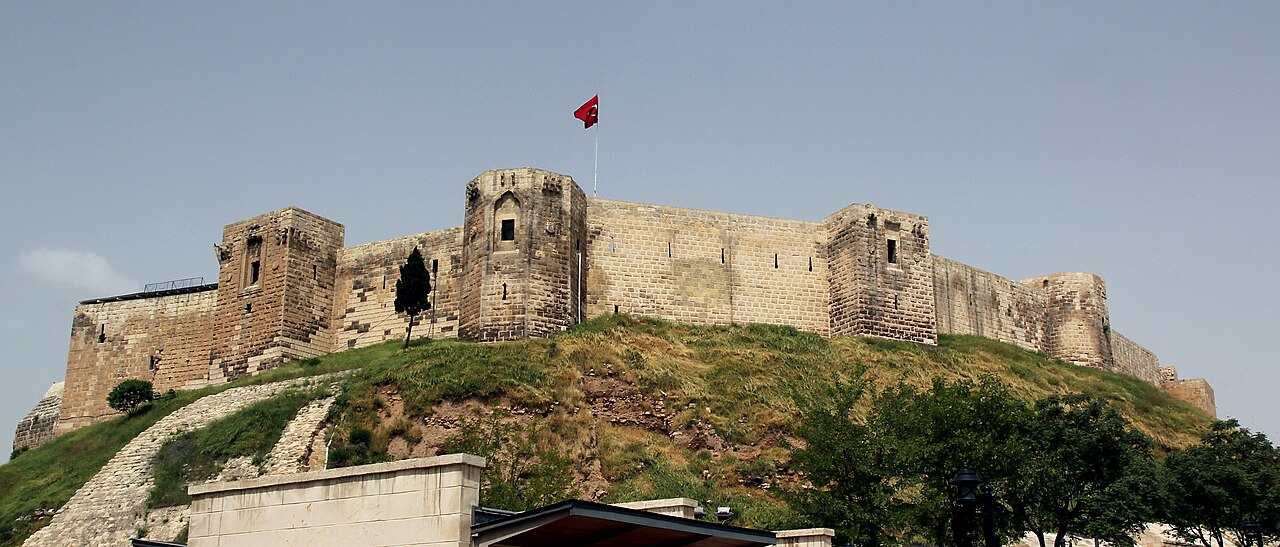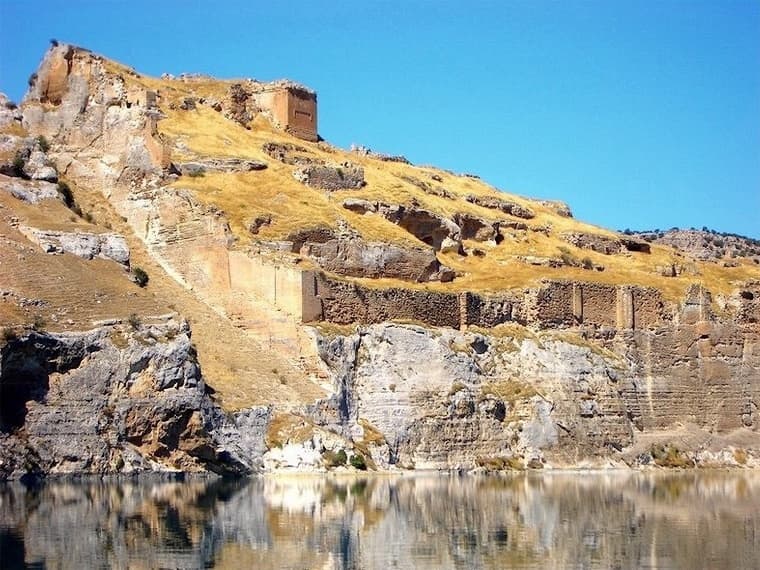
Rumkale Castle
Rumkale Castle, also known locally as simply Rumkale, is a striking example of a strategic hill castle located on a commanding rocky peninsula formed by the Euphrates River and the Merziman Creek in the Gaziantep province of southeastern Turkey. Its name translates to "Castle of the Romans," reflecting its deep historical roots tied to the Roman and Byzantine periods. This fortress has played a significant role throughout history as a military stronghold, religious center, and cultural hub.
Situated on a natural rock formation rising approximately 50 meters above the river, Rumkale's location was chosen for its natural defensibility and control over the surrounding region. The rock is almost vertically cut beneath the castle walls, enhancing its impregnability. Although often called a castle, Rumkale functioned more as a fortified settlement or citadel with multiple defensive features including massive stone walls, rectangular towers, and a deep dry moat carved by hand to protect its southern landward approach.
Ancient origins and early history
The site of Rumkale has a history extending back to antiquity, with early records identifying it as the fortress of Shitamrat, conquered by the Assyrian king Shalmaneser III in 855 BCE. The strategic importance of this location was recognized by successive civilizations, including the Hellenistic and Roman empires, who contributed to the development of the fortress structures visible today. The castle guarded an important Roman road along the Euphrates, underscoring its military significance.
Byzantine and armenian period: religious and cultural significance
By the 5th and 6th centuries, Rumkale had become a religious center, serving as the seat of a Syriac Orthodox bishopric. In the 11th century, the fortress saw the growth of an Armenian community. Control shifted from Byzantine hands to Armenian lords in the late 11th and early 12th centuries. The fortress was briefly captured by Crusader forces under Baldwin II of Edessa in 1116.
Between approximately 1148 and 1150, Rumkale, then known as Hromgla, was acquired by Armenian Catholicos Grigor III Pahlavuni and became the seat of the Armenian Apostolic Church. This status lasted until 1292. The fortress hosted important religious synods, including those held in 1178 and 1179, which focused on church union efforts. It was also the residence of notable Armenian Catholicoi such as Nerses IV Schnorhali. The site became a center for manuscript illumination and Armenian religious art, attracting artists like Toros Roslin in the mid-13th century.
Religious buildings and ecclesiastical architecture
Within the fortress walls, several churches were constructed, including those dedicated to St. Gregory the Illuminator (Surb Grigor Lusavorich), the Holy Mother of God (Surb Astvatsatsin), and the Holy Savior (Surb Prkich). The largest church, built in the mid-12th century, was later converted into a mosque in the 13th century but collapsed in the 18th century. The fortress also housed the Syriac Orthodox monastery of Barshavma, reflecting the religious diversity of the settlement.
Military history and later periods
Rumkale endured numerous military challenges. It withstood a Mamluk siege in 1280 but ultimately fell after a prolonged siege in 1292 to the Mamluks, who renamed it Qal'at al-Muslimin (Castle of the Muslims). The Mamluks reinforced its role as a border fortress guarding against the Ilkhanate. Although later called Kale-i Zerrin (Golden Citadel), Rumkale never regained its former prominence.
The fortress suffered damage during the invasions of Timur's forces around 1400–1401 but was restored by the Mamluks. It peacefully surrendered to the Ottoman Empire in 1516 following their victory over the Mamluks at Marj Dabiq and became an administrative center known as a sanjak, later downgraded to a district (kaza). By the 19th century, Rumkale's strategic importance declined, especially after a local rebellion in 1831 led to its depopulation by Ottoman authorities. The fortress was bombarded in 1832 by Egyptian forces under Ibrahim Pasha, causing severe damage and eventual abandonment.
Architectural features and fortifications
The fortress is enclosed by massive stone walls made of white chalk or limestone blocks, reaching heights of about 18 meters. These walls are reinforced by rectangular towers topped with battlements. Access was strictly controlled by a winding path carved into the rock, passing through six successive gates before reaching the interior.
Defensive features include a deep artificial ditch approximately 24 meters deep and 12 meters wide, carved from the rock to isolate the fortress from an adjacent plateau. A remarkable engineering feature is a deep well about 60 meters in depth, with a spiral staircase carved into the rock allowing access to water from the river below. This well was partly filled and dry by the late 19th century.
Within the walls, remnants of around forty houses indicate a once-thriving settlement. Several water cisterns and a historic cemetery have been identified, highlighting the complex social and religious life within the fortress. Ottoman-period structures include a palace built on the northern slope, replacing an earlier church, and multiple mosques mentioned in 16th-century records.
Connectivity and infrastructure
Connectivity from the fortress to the west was facilitated by a Roman bridge crossing the Euphrates, leading to a guarded path. On the eastern side, access was provided by a stairway. The fortress also hosted a madrasa complex named Rammahiya Madrasa, which included a primary school and a masjid, likely situated near a water source within the castle.
Modern history and preservation
In the 18th and 19th centuries, Rumkale was documented by European explorers and scholars such as Richard Pococke, Helmut von Moltke, Carl Ritter, Karl Humann, and Otto Puchstein, who provided valuable descriptions of its ruins. During the Ottoman period, the fortress served as a prison for political exiles, contributing to its depopulation.
The construction of the Birecik Dam in 2000 flooded the lower parts of the fortress and nearby settlements, leaving only the upper ruins visible above the reservoir. Since 2017, Rumkale has been closed to visitors due to ongoing consolidation and partial reconstruction efforts to preserve its remaining structures.
In 2021, a modern glass viewing terrace was inaugurated on the cliffs opposite Rumkale, offering panoramic views of the fortress and the Euphrates River. The site remains an important cultural and historical landmark, symbolizing the region's layered history from antiquity through medieval Christian and Islamic periods to the modern era.
Rumkale Castle's rich history, impressive architecture, and commanding location make it a significant monument for understanding the military, religious, and cultural developments in southeastern Turkey over several millennia.
Frequently asked questions (FAQ)
- How do I visit Rumkale Castle given it is currently closed?
- Rumkale Castle has been closed to visitors since 2017 due to ongoing restoration and consolidation work. However, you can admire the castle from a glass viewing terrace built on the opposite bank of the Merziman Creek, which offers panoramic views of the fortress and the Euphrates River.
- What is the historical significance of Rumkale Castle?
- Rumkale Castle served as a strategic military fortress guarding the Roman road along the Euphrates and later became an important religious center for the Syriac Orthodox and Armenian Apostolic Churches. It hosted significant synods and was the seat of Armenian Catholicoi during the 12th and 13th centuries.
- What architectural features make Rumkale Castle unique?
- Rumkale Castle is notable for its massive stone walls up to 18 meters high, hand-cut deep dry moat, multiple gates, and a remarkable 60-meter deep well with a spiral staircase carved into the rock, providing access to water from the river below.
- Can I take boat trips near Rumkale Castle?
- Yes, the harbor below Rumkale Castle is a popular spot for boat trips on the reservoir created by the Birecik Dam. These trips offer scenic views of the castle and the surrounding Euphrates River landscape.
- When was Rumkale Castle built and by whom?
- The current structures of Rumkale Castle largely date from the 12th century, built and expanded by Byzantine and Armenian rulers. The site itself has origins going back to Assyrian and Roman times, reflecting a long history of occupation and fortification.
Photo gallery

Photo by Ferrus•Public domain
Information
Address
Kasaba Köyü Yolu, Turkey
Loading map...
Visitor reviews
No reviews yet. Been here? Write the first review and help other travelers!
Write the first reviewVisited this castle? Share your experience
Your review helps other travelers and adds first-hand knowledge to our encyclopedia.