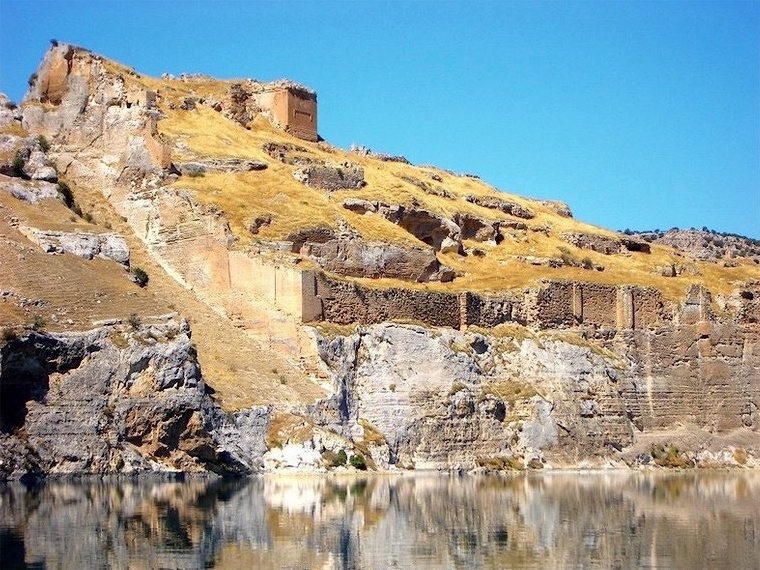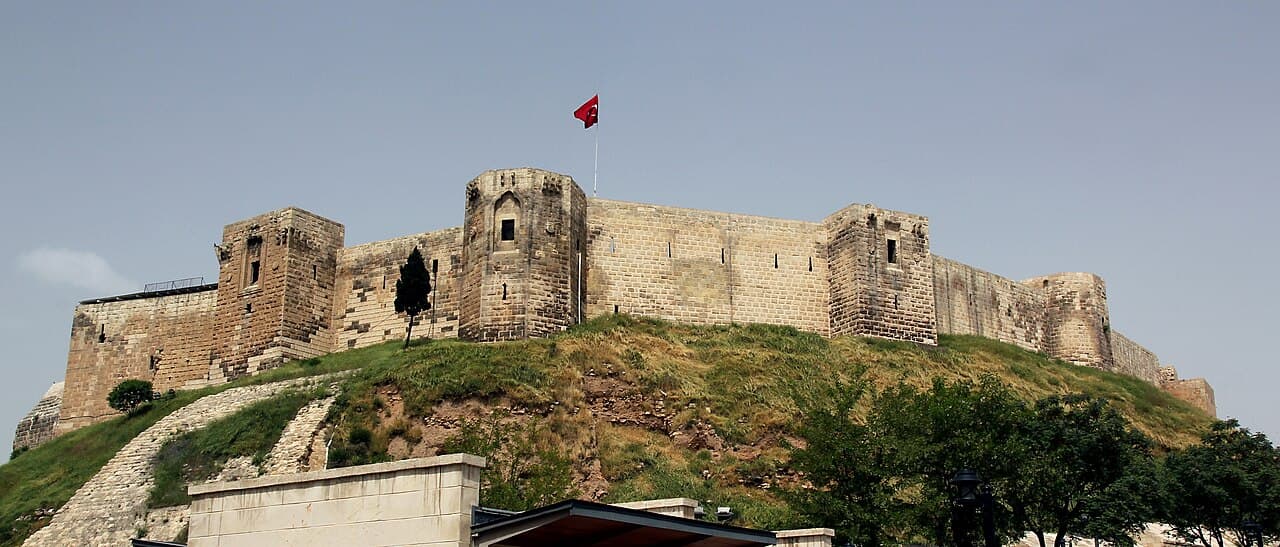
Gaziantep Castle
Gaziantep Castle, locally known as Gaziantep Kalesi, is a historic fortress located in the heart of Gaziantep city in southeastern Turkey. Perched atop a strategic hill overlooking the Alleben stream, this hill castle has a rich history spanning several millennia, reflecting the military and cultural shifts of the region. Its origins trace back to the Chalcolithic period, with archaeological evidence suggesting the site was used as a lookout point by the Hittite Empire in the 2nd millennium BC, making it one of the oldest known fortified sites in Anatolia.
During the Roman period in the 2nd and 3rd centuries AD, the site was transformed into a significant fortress, incorporating Roman military architectural principles to control and defend the surrounding region. The Romans constructed robust stone walls and fortifications that laid the groundwork for subsequent expansions.
The castle underwent extensive renovations and expansions under the Byzantine Emperor Justinian I in the 6th century (527-565 AD), a period marked by widespread fortification efforts across the empire. Justinian's work included enlarging the castle by building a mound against the natural rock slope and encircling the site with a dry moat. This moat was defended by a subterranean gallery at the foot of the castle, a sophisticated defensive feature allowing protected movement and defense against attackers.
Medieval history and changing rulers
Following the Byzantine period, Gaziantep Castle passed through a series of rulers reflecting the turbulent history of the region. In 661 AD, the castle came under the control of the Umayyad Caliphate, marking the beginning of Muslim rule that lasted intermittently until the 16th century. The Byzantines briefly recaptured it in 962 AD, but by 1067 it was taken by the Seljuks, who were expanding their influence in Anatolia.
The castle was captured by the Crusaders in 1098 during the First Crusade and became part of the County of Edessa, a Crusader state. It was a key military and administrative center overseeing important trade routes along the Orontes River. By 1150, control reverted to the Seljuk Sultanate of Rûm, but the region remained contested.
Throughout the 12th and 13th centuries, the fortress changed hands multiple times among the Seljuks, the Armenian Kingdom of Cilicia, the Zengid dynasty, and the Ayyubids. The Ayyubids notably captured and restored the castle in 1181, strengthening its defenses and adding architectural embellishments that survive in some of the towers today.
In 1218, the Seljuks regained control, but the castle's strategic importance meant it was repeatedly contested by the Ilkhanate and the Mamluks until the Ottoman Empire finally took possession in 1516. Under Ottoman rule, the castle's military significance declined, though the Ottomans undertook repairs and added decorative elements, including inscriptions commissioned by Sultan Qaytbay in the 15th century and Suleiman the Magnificent in 1557.
Architectural features and layout
Gaziantep Castle has an irregular circular layout with a circumference of approximately 1,200 meters, following the natural contours of the hill. The fortress is constructed from large stone blocks, many of which were shaped and fitted to create sturdy defensive walls. The castle is fortified by twelve stone towers or bastions, some of which bear decorative motifs from the Ayyubid and Mamluk periods, reflecting the castle's layered history.
The walls were originally connected by vaulted and arched galleries, providing sheltered walkways for defenders. One of the castle's most remarkable features is a 150-meter-long illuminated subterranean gallery with arrow slits, allowing defenders to move safely and monitor the perimeter. Surrounding the castle was once a deep and wide moat, approximately 30 meters across and 10 meters deep, enhancing the fortress's defensive capabilities.
Access to the castle was controlled through a monumental gate leading to an outer courtyard or outer bailey. From here, two ascending roads led to a second fortified gate, which was covered with iron plating for added security. Beyond this gate, a suspension bridge spanned the moat, granting entry to the inner keep.
Within the castle walls lie the remains of a 13th-century bathhouse and mosque, underscoring the site's role as not only a military stronghold but also a social and religious center for the community.
Modern use and recent events
In the 20th century, Gaziantep Castle transitioned from a military fortress to a cultural landmark. It was repurposed as the Gaziantep Defense and Heroism Panoramic Museum, commemorating the city's courageous defense during the Siege of Aintab in 1920 against French forces. The museum showcases artifacts spanning from the Neolithic to Roman periods, including mosaics and ceramics, highlighting the region's rich archaeological heritage.
The castle's name was changed from Aintab to Gaziantep, where the prefix "Gazi" means "warrior," honoring the city's resilience during the Turkish War of Independence. The subterranean gallery was adapted to host exhibitions focused on this modern history, although it offered limited information on the castle's earlier periods.
Tragically, on February 6, 2023, a powerful earthquake struck the region, causing significant damage to the castle. Sections of the southern and eastern bastions partially collapsed, leaving the fortress in a fragile state. Restoration and preservation efforts are underway, but the castle remains closed to visitors as experts assess the extent of the damage and plan its rehabilitation.
Historical significance and cultural heritage
Gaziantep Castle stands as a testament to the complex history of southeastern Anatolia, reflecting the diverse civilizations that have controlled the region over thousands of years. Its strategic location made it a coveted military asset from the Hittite era through the Ottoman period, witnessing the rise and fall of empires and the shifting tides of warfare and politics.
The castle's layered architectural styles, from Roman and Byzantine fortifications to Ayyubid and Mamluk decorative elements, provide valuable insights into the evolution of military architecture in Anatolia. Its role in the Crusades and later Islamic dynasties highlights its enduring strategic importance.
Today, the castle is not only a symbol of Gaziantep's historical resilience but also a cultural landmark that connects modern visitors with the rich heritage of the region. Its preservation is vital for understanding the broader history of Anatolia and the interplay of civilizations that have shaped it.
Frequently asked questions (FAQ)
- What is the historical significance of Gaziantep Castle?
- Gaziantep Castle is significant for its long history dating back to the Hittite period and its role in various empires including Roman, Byzantine, Seljuk, Crusader, and Ottoman. It reflects the military and cultural evolution of southeastern Anatolia.
- Can I visit Gaziantep Castle today?
- As of now, Gaziantep Castle is partially closed due to damage from the 2023 earthquake. Restoration efforts are ongoing, so visitor access may be limited or unavailable until repairs are completed.
- What architectural features are notable in Gaziantep Castle?
- Notable features include its irregular circular layout, twelve stone towers with Ayyubid and Mamluk decorations, a 150-meter-long subterranean gallery with arrow slits, and remains of a 13th-century bathhouse and mosque.
- When was Gaziantep Castle built?
- The castle's foundations date back to the 3rd century AD, with significant expansions during the Byzantine period under Emperor Justinian I in the 6th century.
- What museum is housed in Gaziantep Castle?
- The castle houses the Gaziantep Defense and Heroism Panoramic Museum, focusing on the city's defense during the 1920 Siege of Aintab and displaying artifacts from various historical periods.
Photo gallery

Information
Address
Kale Altı Çarşısı Sk., Gaziantep, Turkey
Loading map...
Visitor reviews
No reviews yet. Been here? Write the first review and help other travelers!
Write the first reviewVisited this castle? Share your experience
Your review helps other travelers and adds first-hand knowledge to our encyclopedia.