Rūjiena Fortress
Rūjiena Fortress stands as a significant medieval hill castle located in the municipality of Rūjiena, within the Vidzeme region of Latvia. Constructed by the Livonian Order, a branch of the Teutonic Knights, this fortress played a strategic role in the defense and administration of the Baltic territories during the Late Medieval period. Its history and architecture reflect the turbulent military and political landscape of the region from the 13th through the 17th centuries.
The fortress was established in the mid-13th century, with construction dated approximately between 1257 and 1263. Some historical sources cite the year 1272 as significant for the foundation of both the castle and an associated church, highlighting the site's dual military and ecclesiastical importance. Rūjiena Fortress was part of a network of fortifications including castles at Karksi, Trikata, Asti, and Helme, which collectively secured the borderlands between the Livonian Order and the neighboring Archbishopric of Riga. These fortresses also functioned as storage centers for grain, supporting the fertile agricultural regions of historic Sakala and Talava.
Historical context and military significance
Rūjiena Fortress first appears in written records in the early 14th century and continued to be mentioned in various documents through the 15th and 16th centuries. Throughout its history, it witnessed several military confrontations reflecting the shifting power dynamics in the Baltic region. In 1481, the fortress was attacked by forces under Ivan III of Russia, sustaining damage from this incursion. The Livonian War (1558–1583) marked a particularly destructive period for Rūjiena, as it was repeatedly occupied, looted, and burned. Russian troops notably destroyed the fortress in 1560, illustrating the intense conflicts between emerging regional powers.
Control over Rūjiena shifted multiple times during the 16th and 17th centuries, passing between the Livonian Order, Polish rulers, Swedish administrators, and Russian forces. By 1582, the fortress had lost much of its military importance and was described as largely ruined and without a roof. It was granted as a feudal holding to figures such as Georg Fahrensbach and later to officials under Swedish rule. The final blow came during the Great Northern War in 1704, when Rūjiena Fortress was demolished and never rebuilt.
Architectural design and defensive features
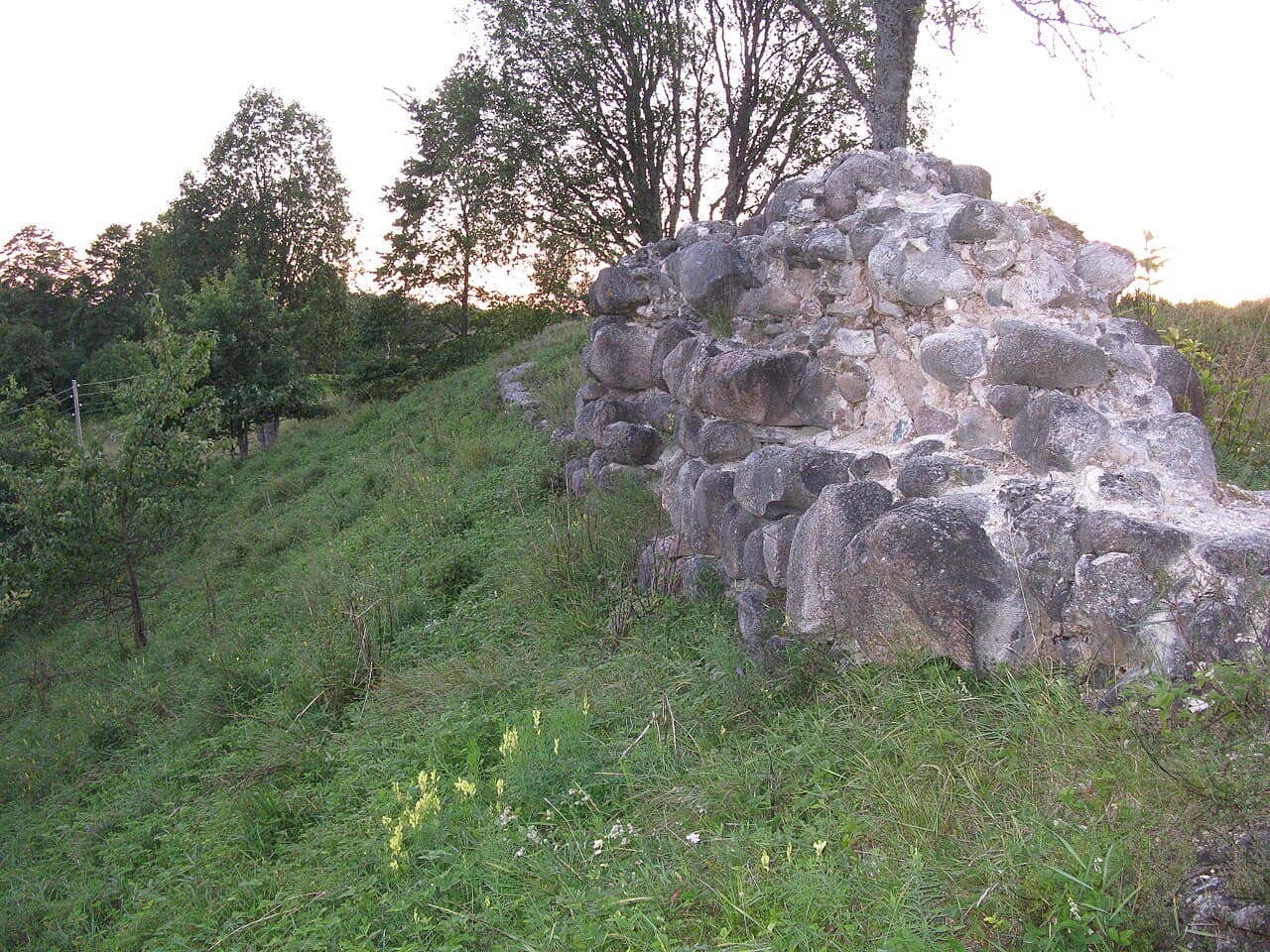
Rūjiena Fortress was built in the distinctive Mantelmauer style, characterized by a thick, continuous outer stone wall forming a protective mantle around the inner structures. This style was common in the Baltic region during the medieval period and emphasized robust, solid masonry for defense against siege warfare. The fortress is situated on an elevated oval-shaped hill on the right bank of the Rūja River, taking advantage of the natural topography to enhance its defensive capabilities.
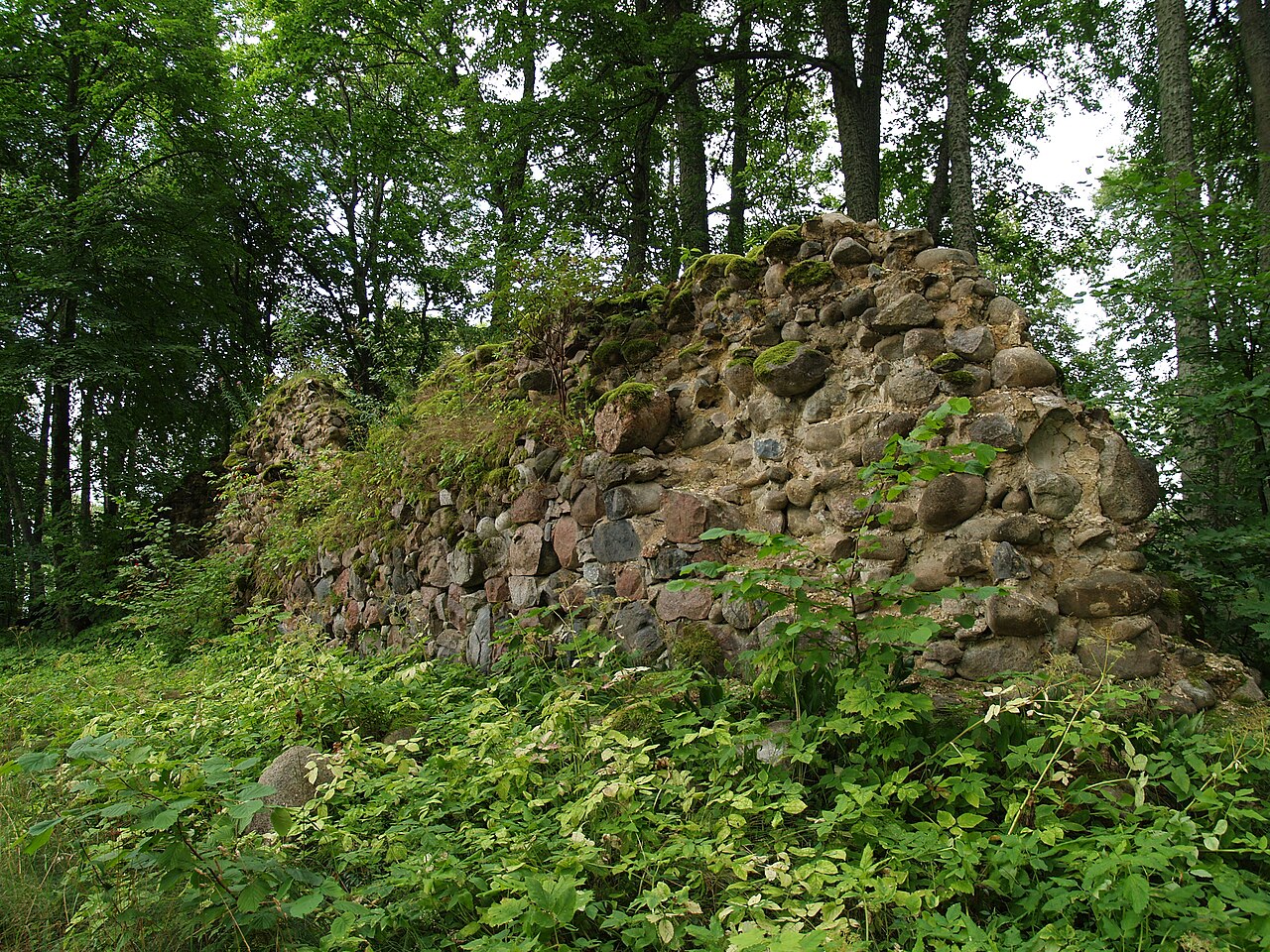
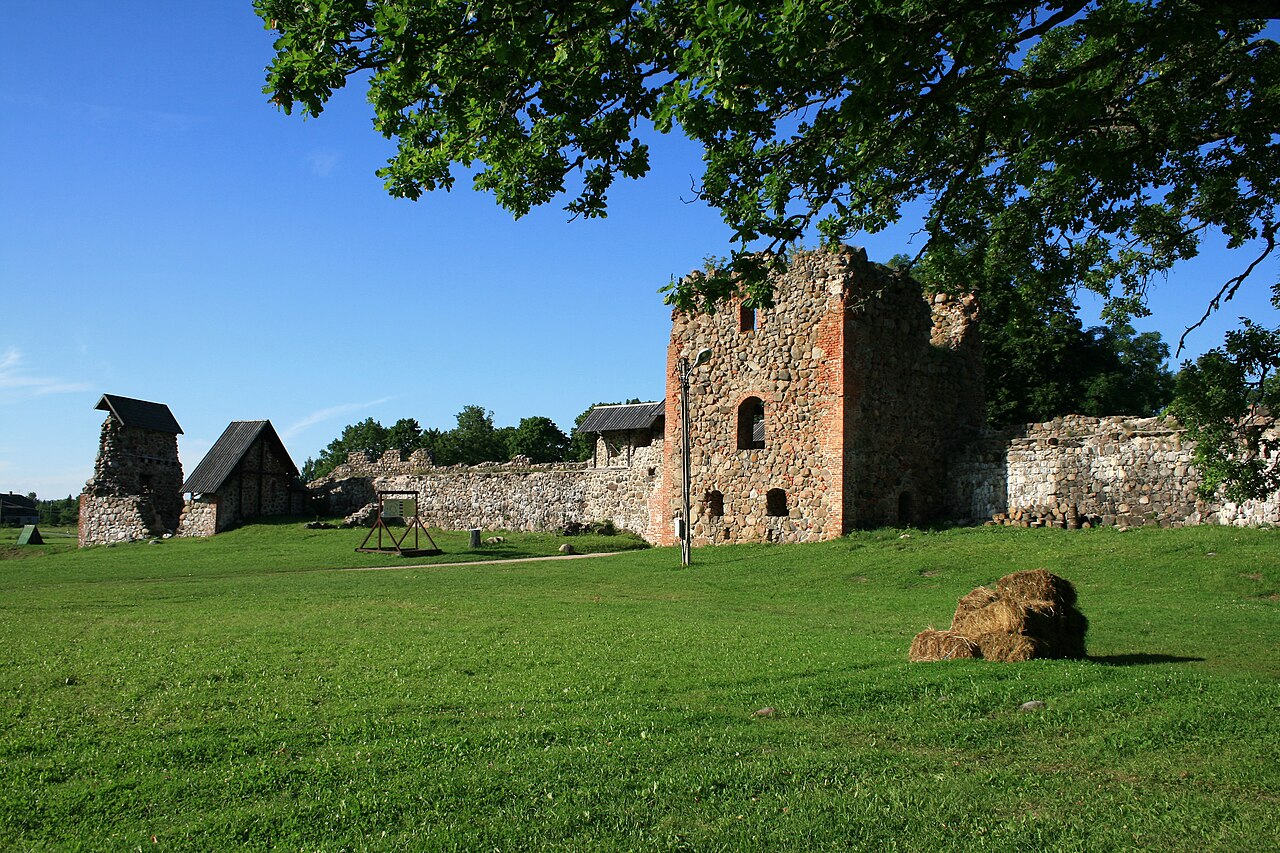
The castle's enclosure features a stone curtain wall approximately two meters thick, primarily constructed from fieldstones. This heavy masonry gave the fortress a formidable and imposing appearance. Along the northern side of the wall stood a single square tower integrated into the curtain wall, providing enhanced defensive coverage on that flank. During the era when gunpowder firearms became prevalent, a large semicircular tower about eight meters in diameter was added outside the northern curtain wall, reflecting adaptations to evolving military technology.
The main entrance was originally located on the western side within the ring wall but was later reinforced with an outer gatehouse to improve access control and defense. Inside the walls, three stone buildings developed over time, with walls approximately 1.3 meters thick. These internal structures evolved to meet the changing needs of the fortress's occupants, including administrative and storage functions.
Surrounding the hill was a deep moat, crossed by a bridge leading to the western gate. A smaller exit on the southern side provided controlled access to the adjacent mill pond and river, likely facilitating water supply and logistics. Defensive earthworks and ditches further fortified the site, supplemented by a water defense system fed by a nearby mill dam, enhancing protection against attackers.
Later history and preservation status
By the late 16th century, Rūjiena Fortress had lost its strategic importance and gradually fell into ruin. Historical records from the late 18th century, including drawings from 1790, show that parts of the walls remained standing up to three meters tall, with visible battlements and wall fragments. However, many stones from the ruins were later repurposed by local inhabitants, including use in constructing a mill dam.
Today, the site of Rūjiena Fortress is an archaeological ruin open to the public, covered by sparse woodland and marked by earthworks and remnants of the original walls. The surviving features provide valuable insight into the castle's role as a defensive and economic center in medieval Livonia. Since 1922, the location has been protected as a cultural monument under Latvian state ownership, ensuring the preservation of its historical legacy.
Significance in baltic medieval fortifications
Rūjiena Fortress exemplifies the military architecture of the Livonian Order and the broader Baltic crusader states during the Late Medieval period. Its Mantelmauer defensive style and adaptation to gunpowder weaponry illustrate the evolution of castle design in response to changing warfare technologies. As part of a network of fortifications, it played a key role in securing borderlands and supporting agricultural economies through grain storage.
The fortress's repeated destruction and reconstruction reflect the volatile political and military history of the Baltic region, marked by conflicts between the Livonian Order, Russian principalities, Polish-Lithuanian Commonwealth, Sweden, and later Russian Empire. Its ruins today offer a tangible link to this complex past and serve as a resource for understanding medieval Baltic history and architecture.
Frequently asked questions (FAQ)
- What is the historical significance of Rūjiena Fortress?
- Rūjiena Fortress, built in the 13th century, played a crucial role in the defense against invasions in the region. It is a significant example of medieval military architecture in Latvia and reflects the historical struggles and cultural exchanges in the Baltic area.
- When was Rūjiena Fortress built?
- Rūjiena Fortress was constructed in the early 13th century, specifically around the year 1260. This fortification was established by the Livonian Order as part of their efforts to consolidate power and protect the region from external threats.
- What are the opening hours for Rūjiena Fortress?
- Rūjiena Fortress is open to visitors from 10 AM to 6 PM during the summer months and from 10 AM to 4 PM during the winter. It is advisable to check the official website for any seasonal changes or special holiday hours before planning your visit.
- Can I take guided tours of Rūjiena Fortress?
- Yes, guided tours of Rūjiena Fortress are available and provide an in-depth look at its history and architecture. These tours are led by knowledgeable guides who can answer your questions and enhance your understanding of this historic site.
- Is it possible to access Rūjiena Fortress with a wheelchair?
- Rūjiena Fortress has made efforts to improve accessibility, but due to its historical nature, some areas may be challenging for wheelchair users. It is recommended to contact the fortress staff in advance to inquire about specific accessibility options and accommodations.
- What is the best time to visit Rūjiena Fortress?
- The best time to visit Rūjiena Fortress is during the late spring and summer months when the weather is pleasant, and the surrounding scenery is lush and vibrant. Additionally, many cultural events and festivals take place during this time, offering visitors a richer experience.
- Are there any nearby attractions to Rūjiena Fortress?
- Yes, there are several nearby attractions, including the picturesque Rūjiena town center and local parks. Visitors can also explore other historical sites and natural landscapes in the area, making it easy to spend a full day enjoying the local culture and scenery.
- What are the ticket prices for Rūjiena Fortress?
- Ticket prices for Rūjiena Fortress are generally affordable, with discounts available for students and seniors. Special family packages may also be offered, so it's a good idea to check the official website for the latest pricing and any available promotions.
Photo gallery

Information
Loading map...
Visitor reviews
No reviews yet. Been here? Write the first review and help other travelers!
Write the first reviewVisited this castle? Share your experience
Your review helps other travelers and adds first-hand knowledge to our encyclopedia.