Karksi Castle
Karksi Castle stands as a significant medieval fortress ruin located in Viljandimaa, Estonia. Constructed originally in the 13th century by the Livonian Order on the site of an ancient Estonian stronghold, it has played a pivotal role in the military and political history of the Baltic region. The castle’s strategic position atop two prominent hills overlooking a lake provided natural defenses that were enhanced by formidable man-made fortifications. Its history reflects the turbulent power struggles of medieval and early modern Northern Europe, involving the Livonian Order, the Polish-Lithuanian Commonwealth, the Swedish Empire, and the Tsardom of Russia.
The earliest fortress at Karksi was a wooden stronghold, first mentioned in 1248 during the Livonian Crusade. This initial fortification was destroyed by Lithuanian forces in 1297 or 1298. Subsequently, in 1357, the Order Master Goswin von Herike commissioned the construction of a new stone castle, marking the transition from wood to stone fortifications typical of the High Medieval period. Despite this upgrade, the castle remained vulnerable and was attacked again by Lithuanians in 1366.
Historical significance and military role
Karksi Castle maintained its military importance through the centuries, enduring damage during the Russo-Livonian War (1480–1481) and the broader Livonian War in the 16th century. The castle’s control changed hands multiple times, reflecting the shifting political landscape of the Baltic region. Its final destruction occurred in 1708 during the Great Northern War, when Peter the Great ordered its demolition to prevent further military use. Since then, the castle has remained a ruin, with only portions of its walls and towers surviving.
Architectural features and layout
Site and natural defenses
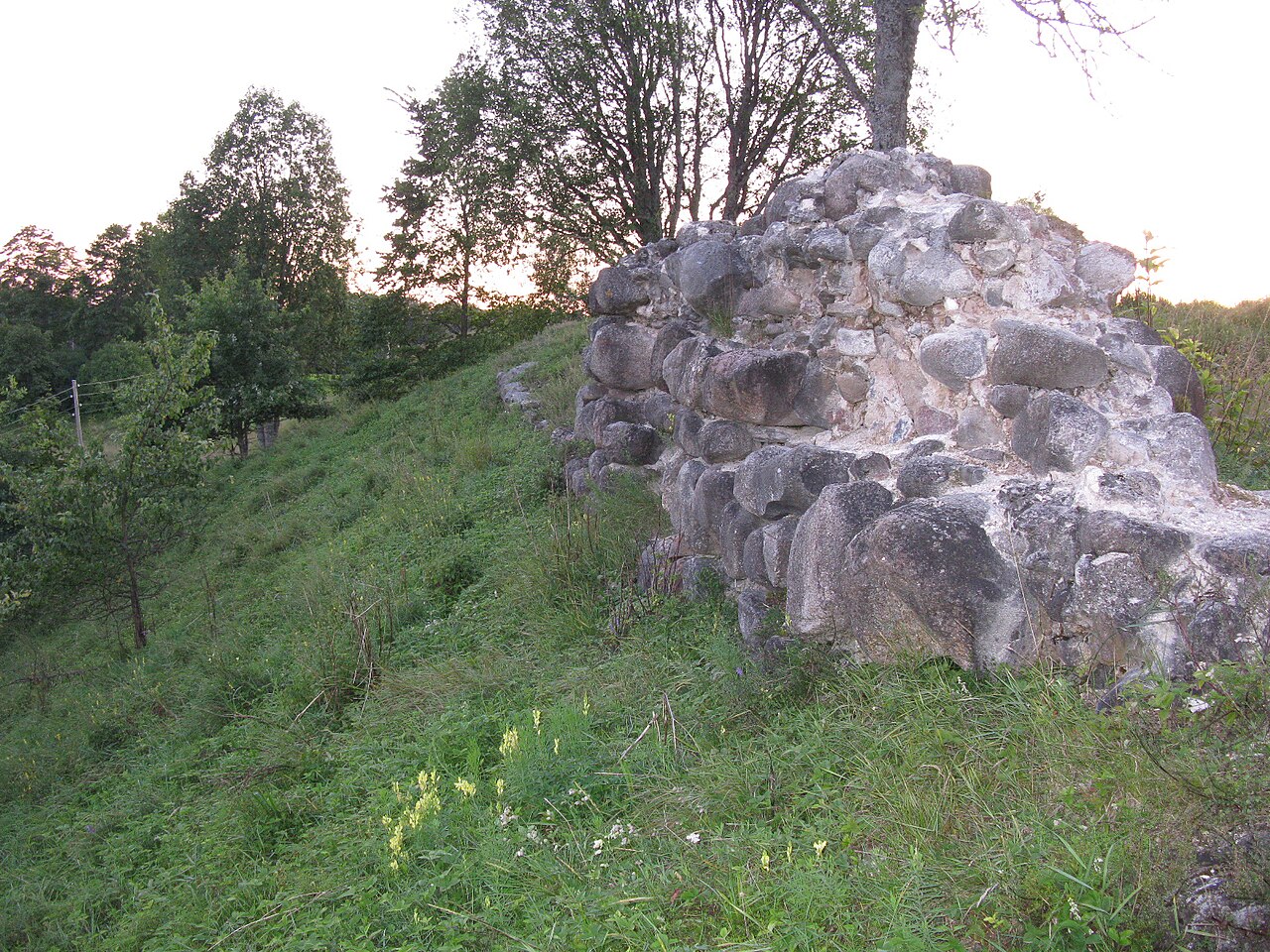
The castle’s location atop two hills overlooking a lake provided natural protection with steep slopes and water barriers. The fortress was divided into two main parts: the main castle (pealinnus) and the outer bailey (forburg), separated by a moat connected to cliffs on the north and south sides. Access to the castle was controlled by a drawbridge spanning this moat, with surviving stone foundations of the bridge’s supporting pillars still visible today.
Fortifications and towers
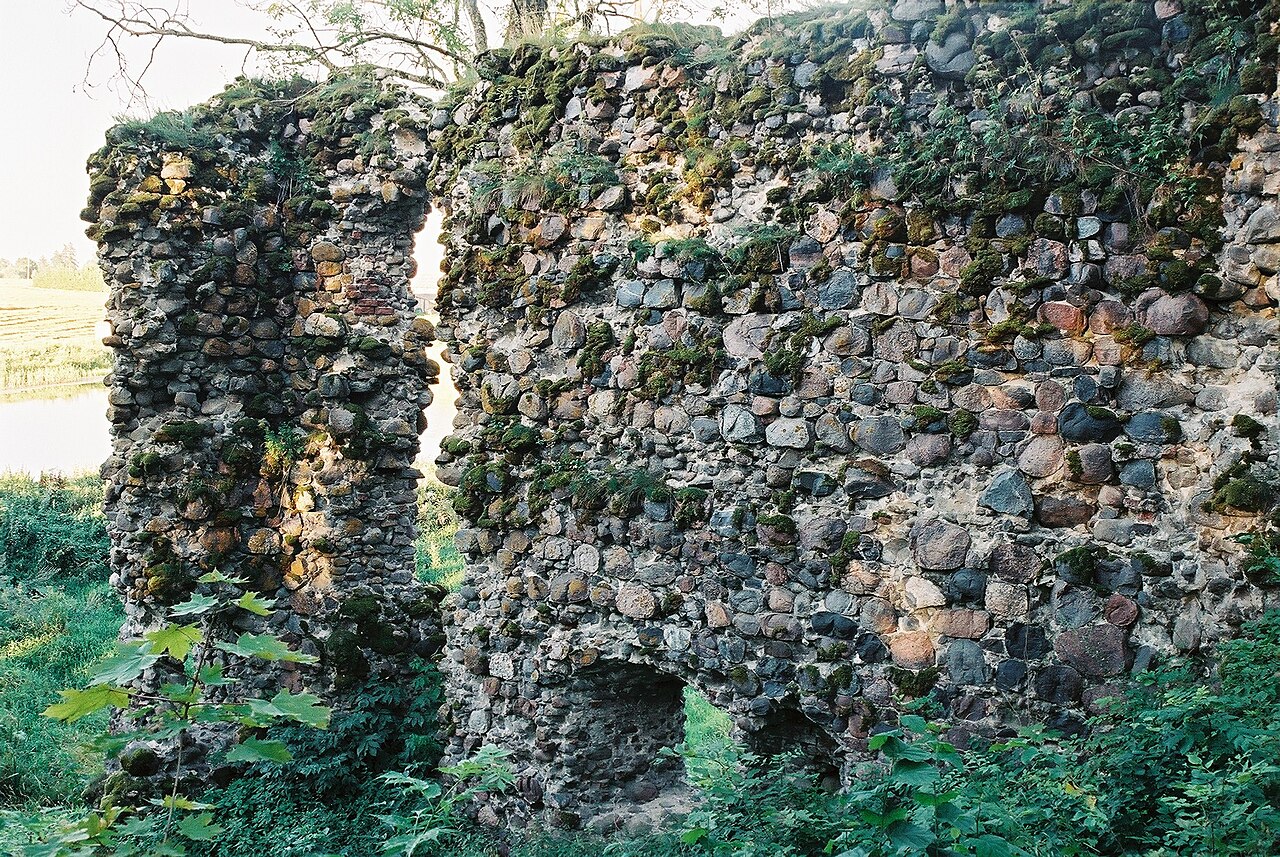
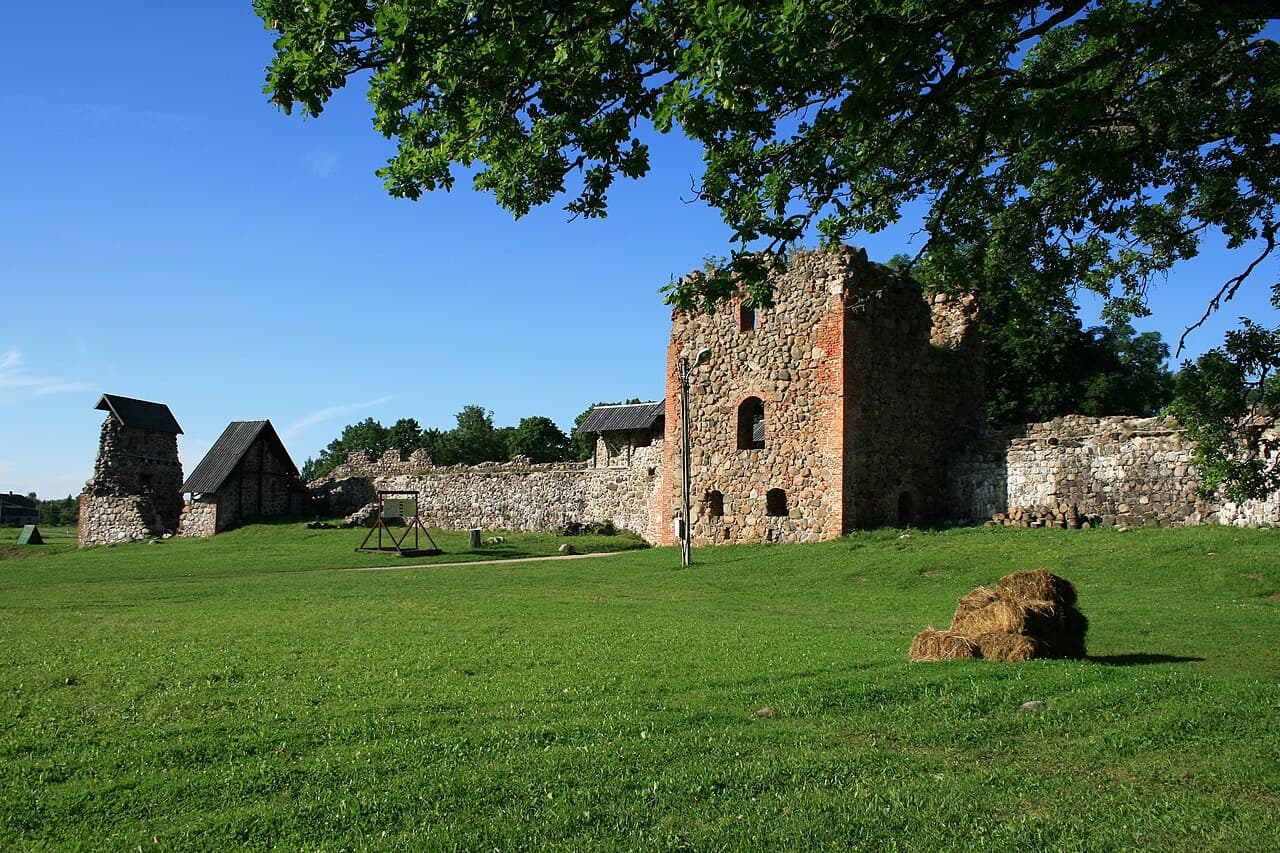
The castle’s curtain walls were constructed using local fieldstone combined with bricks characteristic of southern Estonia. The strongest fortifications were concentrated on the northeast side, where three key towers were positioned: a heavily fortified central tower near the main gate, an eastern tower located at a bend in the wall facing southwest, and a northern tower guarding the gate approaches with flanking defense. These towers emphasized control over the principal entrance and the most vulnerable points of the fortress.
The outer bailey features better-preserved walls with two square towers. Unlike the main castle towers, these did not provide flanking fire but contributed to the overall defense. The irregular shape of the outer bailey walls reflects adaptations to the terrain and defensive needs.
Archaeological discoveries and armaments
Excavations within the castle grounds have revealed extensive evidence of the castle’s military preparedness and daily life. Archaeologists uncovered remains of two stone-throwing siege machines, eight cannons, and barrels that once contained gunpowder. The armory inventory included suits of armor, knightly equipment, bows, and arrows, indicating a well-equipped garrison. Large food stores consisting of hundreds of preserved meats, dried fish, grains, and salt were also found, demonstrating the castle’s capacity to withstand prolonged sieges.
Religious structures and later developments
Within the castle complex, a chapel dedicated to Apostle Peter existed by at least 1624. A wooden church was located in the outer bailey, serving the spiritual needs of the inhabitants. Later, stones from the castle walls were repurposed in constructing Karksi St. Peter’s Church, built between 1773 and 1778. This church is notably simple in design and incorporates parts of the castle’s curtain wall into its structure. Its tower is famously leaning, with an inclination of approximately 205 cm, stabilized in 1994 through advanced engineering techniques involving bored piles and concrete beams.
Nearby, the Baroque chapel built in the early 18th century by Field Marshal George Reinhold von Lieven, owner of the Karksi manorial estate, stands in the former cemetery of the Knights of the Order of the Sword. This chapel also leans slightly due to its foundation resting partially on former castle structures. The coats of arms of the Lievens and Mannteuffels families adorn its doors.
Current condition and preservation efforts
Today, Karksi Castle remains a ruin with only parts of the southwest side walls of the main castle intact, along with sections near the moat separating the main fortress from the outer bailey. The bases of the original drawbridge pillars are still visible, providing insight into the castle’s defensive design. Preservation efforts have focused on stabilizing the ruins and planning reconstructions of key features such as the Catherine Tower and the main gate tower. Infrastructure improvements aim to enhance visitor experience and protect the site’s historical fabric.
Archaeological research, including excavations conducted in 2011 and 2012 as part of the "Ecology of Crusading" project, has confirmed the site’s continuous occupation from the late 13th century through the Swedish period. These findings underscore Karksi Castle’s enduring importance as a cultural and historical landmark in Estonia.
Frequently asked questions (FAQ)
- How do I get to Karksi Castle?
- Karksi Castle is located in Viljandimaa, Estonia, and can be accessed by car or public transport. If driving, the castle is well-signposted, and there is parking available nearby. Public buses also connect Viljandi with surrounding areas, making it easy to visit.
- What is the historical significance of Karksi Castle?
- Karksi Castle dates back to the 14th century and served as a significant stronghold for the Livonian Order. It is an important part of Estonia's medieval heritage, providing insights into the region's feudal history and architecture. The ruins of the castle are a testament to the strategic importance it held during its time.
- When was Karksi Castle built?
- Construction of Karksi Castle began in the 14th century, specifically around the year 1370. The castle was built as a defensive structure and has undergone various modifications throughout its history. Its ruins today reflect the architectural styles of that era.
- Can I enter Karksi Castle?
- Visitors can explore the ruins of Karksi Castle, as it is open to the public for free. While there are no formal guided tours, informational signage around the site provides historical context. It is advisable to wear appropriate footwear as the terrain can be uneven.
- Why is Karksi Castle a popular tourist attraction?
- Karksi Castle attracts visitors due to its rich history, stunning ruins, and picturesque setting. The castle offers a glimpse into Estonia's medieval past and is a great spot for photography and exploration. Additionally, its proximity to Viljandi enhances its accessibility for tourists.
- Is it possible to visit Karksi Castle year-round?
- Yes, Karksi Castle is open year-round, allowing visitors to experience its beauty in all seasons. However, accessibility can vary depending on weather conditions, so it's best to check local forecasts before planning your visit. The ambiance of the castle changes with the seasons, offering unique experiences throughout the year.
- What are the opening hours for Karksi Castle?
- Karksi Castle is open to the public without specific opening hours, allowing visitors to explore the site at their convenience. However, it is recommended to visit during daylight hours for safety and the best experience. Always check local information for any changes or events that may affect access.
- Are there any nearby attractions to Karksi Castle?
- Yes, there are several attractions near Karksi Castle, including the picturesque town of Viljandi, known for its beautiful lakes and cultural events. The Viljandi Castle ruins and the Viljandi Old Believers' Cemetery are also worth a visit. Exploring the surrounding nature trails adds to the overall experience of the area.
- What are the ticket prices for visiting Karksi Castle?
- Entry to Karksi Castle is free of charge, making it an accessible destination for all visitors. While there are no ticket prices, donations for the preservation of the site are appreciated. This allows everyone to enjoy the historical significance of the castle without any financial barriers.
Photo gallery

Information
Loading map...
Visitor reviews
No reviews yet. Been here? Write the first review and help other travelers!
Write the first reviewVisited this castle? Share your experience
Your review helps other travelers and adds first-hand knowledge to our encyclopedia.