Ruine Hohenberg
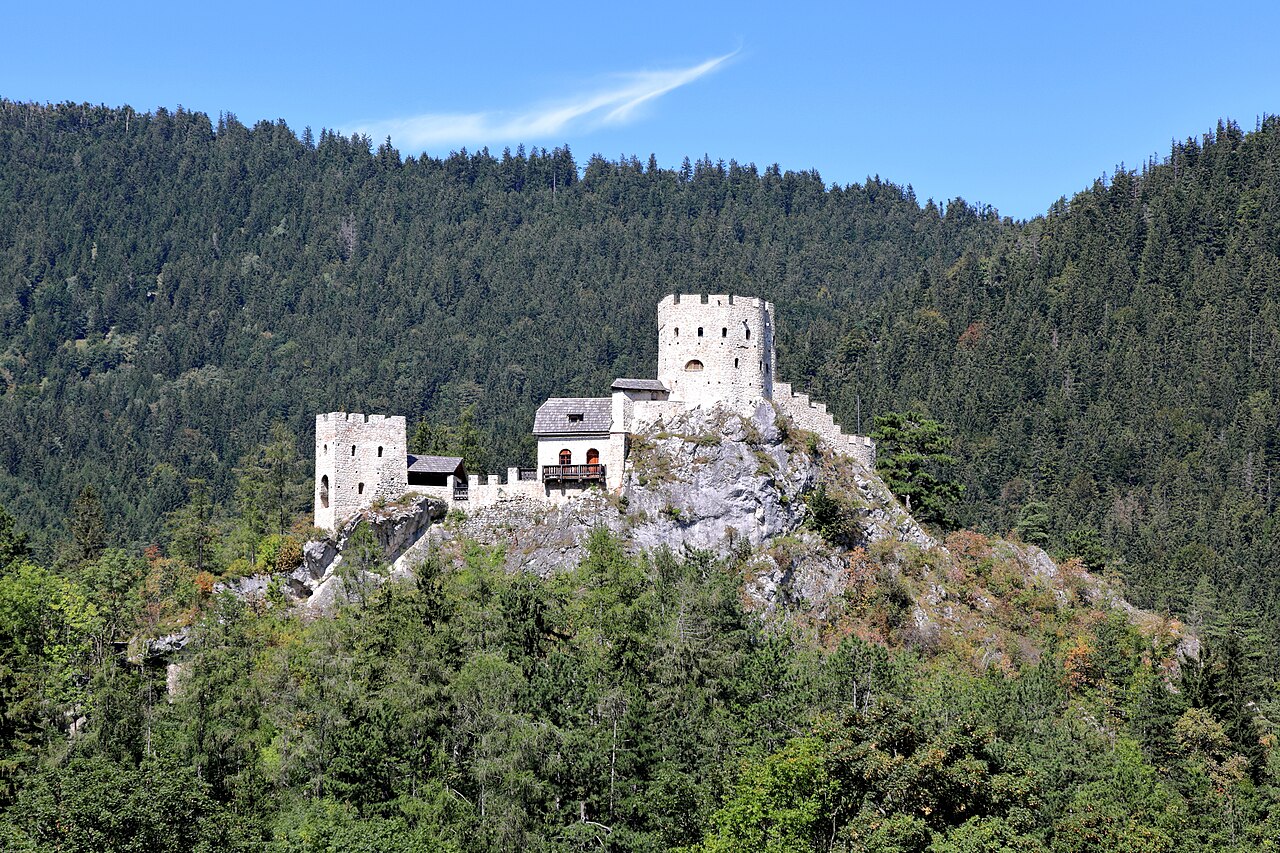
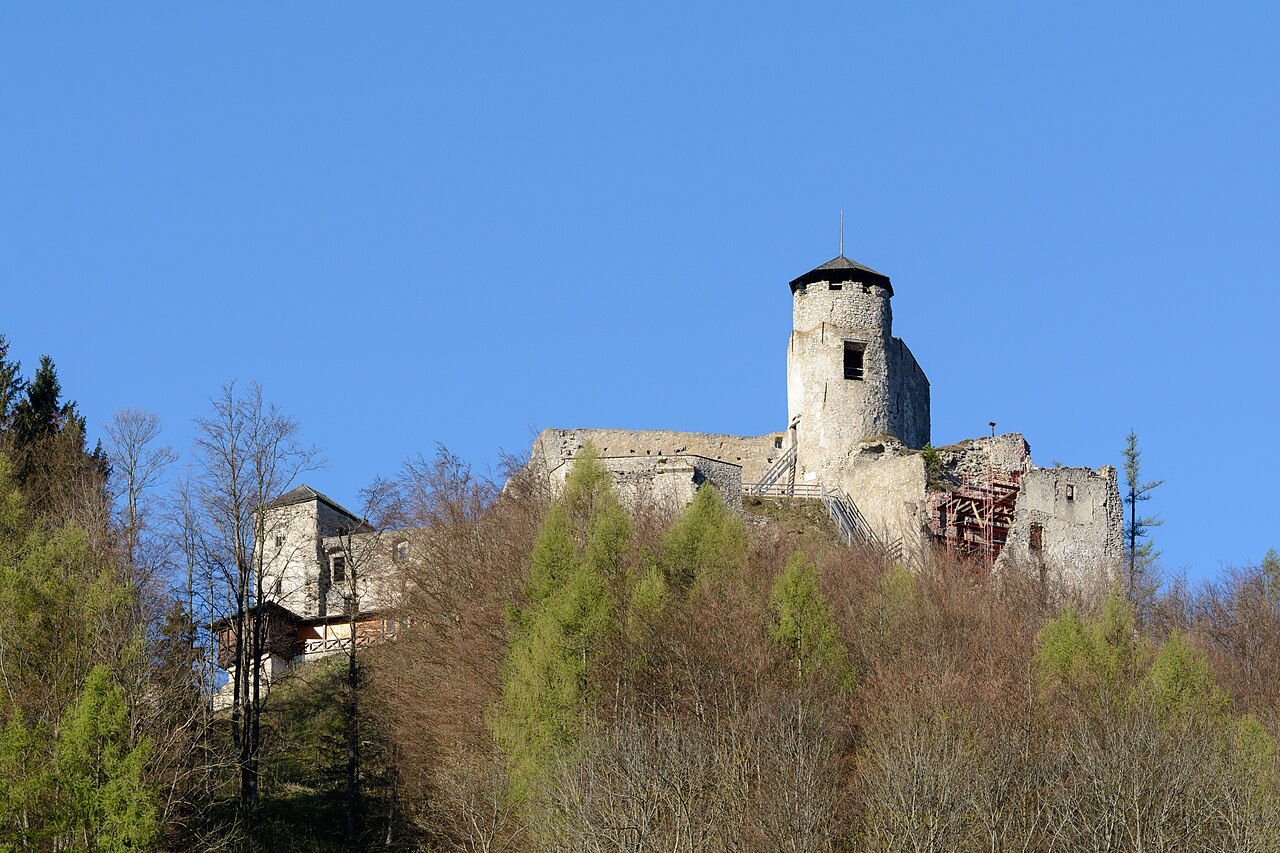
Ruine Hohenberg stands as a significant medieval hill castle ruin located in the municipality of Hinterberg, Austria. Built in the 13th century by the noble Dietrich von Hohenberg, this fortress was part of the expansive legacy of the Hohenstaff-Altenburg-Hohenberg dynasty. The castle's strategic hilltop position provided commanding views over the Traisen valley, making it a vital stronghold in regional power dynamics throughout the Middle Ages and early modern period.
The foundation and early history
The castle's origins trace back to the early 1200s when Dietrich von Hohenberg, a scion of the ministerial family originally known as von Hohenstaff and later von Altenburg, established the fortress as a symbol of his family's growing influence. Dietrich and his brother Heinrich founded the Hohenberger line, which played an important role in the political and military affairs of the region.
During the early 15th century, Ruine Hohenberg became a focal point in the civil war over the guardianship of the young Duke Albrecht V. Hans I. von Hohenberg sided with Duke Ernst the Iron against Duke Leopold the Fat. This conflict highlighted the castle's strategic and symbolic importance, as Hans I. successfully influenced Lilienfeld Abbey to support Ernst. However, the military response from Leopold, led by the Moravian knight Sokol, forced Hans I. to flee the castle temporarily. His subsequent retaliation against the abbey by looting demonstrated the turbulent nature of alliances and loyalties during this period.
Military significance in the late medieval period
In the late 15th century, the castle continued to be a critical military asset. In 1482, Hans III. von Hohenberg allied with King Matthias Corvinus of Hungary in his conflict with Emperor Frederick III. As part of this alliance, Hans III. offered the castles of Merkenstein, Hohenberg, and Kreisbach to Matthias. Despite imperial efforts to regain control, the siege of Hohenberg failed, underscoring the fortress's robust defensive capabilities.
The castle's resilience during sieges reflects its well-planned fortifications, including double defensive walls, a moat, and a gate tower that regulated access. The presence of a zwinger—a narrow enclosed area between walls designed for defense—and a triangular courtyard further enhanced its military strength. These architectural features exemplify the medieval emphasis on layered defense mechanisms to protect noble residences and their domains.
Ownership changes and architectural expansions
Following the death of Erasmus von Hohenberg in 1529, the castle passed through marriage to Wilhelm von Roggendorf. The 16th century saw frequent changes in ownership, reflecting the shifting political landscape of the region. In 1535, Sebald Pögl the Younger acquired the castle, and later in 1589, Baron Bernhard V. von Jörger, a Protestant noble from Upper Austria, purchased the lordship.
The Jörger family undertook expansions to the castle, adapting it to the evolving needs of the time. These modifications likely included enhancements to living quarters and defensive structures, although specific architectural details remain limited. The growing influence of the Jörger family alarmed local authorities, including the powerful Lilienfeld Abbey, setting the stage for imperial intervention.
The impact of the Counter-Reformation and decline
The Counter-Reformation dramatically affected Ruine Hohenberg in 1619 when the properties of the Protestant Jörgers were confiscated by imperial decree. Military forces under Hans Balthasar von Hoyos captured the castle, which suffered significant damage due to fires during the conflict. Von Hoyos was granted the castle as a fief and formally acquired it in 1627.
Despite this change in ownership, the Hoyos family's infrequent residence in the Traisen valley contributed to the castle's gradual decline. By 1672, records describe the ruin as partially standing, with intact outbuildings, round towers, and defensive walls, but the fortress had lost much of its former military strength and prominence.
In 1892, a notable square tower known as the "Hungerturm," situated near the Traisen River and part of the castle's valley defense system, was demolished to accommodate railway construction. This event marked a significant alteration to the castle's historical landscape, further contributing to its ruinous state.
Architectural features and current remains
Originally, Ruine Hohenberg was designed with a fortified layout that included a double defensive wall and a surrounding moat. The gate tower controlled access to the castle, while the zwinger provided a defensive killing zone between the walls. The triangular courtyard formed the heart of the complex, enclosed by sturdy curtain walls and complemented by strategically placed round towers.
Today, visitors can observe sections of the outer defensive walls, which stand as a testament to the castle's medieval military architecture. The preservation of a chimney flue indicates the location of domestic structures within the castle grounds, offering insights into the daily lives of its inhabitants.
The castle's defensive elements, including the curtain walls and towers, were robust enough to be recorded intact in 1672, although they have since deteriorated. The loss of the "Hungerturm" tower in the late 19th century removed a key component of the valley's fortification system, which once linked the Schlossberg and Rierkogel hills.
Despite its ruinous condition, Ruine Hohenberg remains a site of historical and architectural significance. The surviving walls and structural traces reflect centuries of construction, military engagement, and adaptation. They provide valuable insights into medieval defensive strategies and the complex socio-political history of Austria's hill castles.
Visiting Ruine Hohenberg
While the castle is largely in ruins, it offers a fascinating glimpse into medieval fortification and noble life. Its hilltop location provides scenic views of the surrounding Traisen valley, making it a worthwhile destination for history enthusiasts and hikers alike. Visitors should prepare for uneven terrain and limited facilities, as the site has seen only minimal restoration efforts.
Frequently asked questions (FAQ)
- How do I get to Ruine Hohenberg?
- Ruine Hohenberg is located in Hinterberg, Lower Austria. It is accessible by local roads and hiking trails. Visitors should check local maps and transportation options before planning their visit.
- What is the best time to visit Ruine Hohenberg?
- The best time to visit Ruine Hohenberg is during the late spring to early autumn months when weather conditions are favorable for hiking and exploring the ruins.
- Is Ruine Hohenberg suitable for families with children?
- While the site offers historical interest, the uneven terrain and lack of facilities mean families with young children should exercise caution and supervise closely during their visit.
- Can I explore the entire castle grounds?
- Visitors can explore the visible remains of the outer walls and courtyard areas, but some parts of the castle are unsafe or inaccessible due to the ruinous condition.
- Are there guided tours available at Ruine Hohenberg?
- Currently, there are no regular guided tours at Ruine Hohenberg. Visitors interested in detailed historical information may consider hiring local guides or joining regional history tours.
Information
Sources & official resources
Verify the information above using these authoritative references.
Loading map...
Visitor reviews
No reviews yet. Been here? Write the first review and help other travelers!
Write the first reviewVisited this castle? Share your experience
Your review helps other travelers and adds first-hand knowledge to our encyclopedia.