Ruffo di Scilla Castle
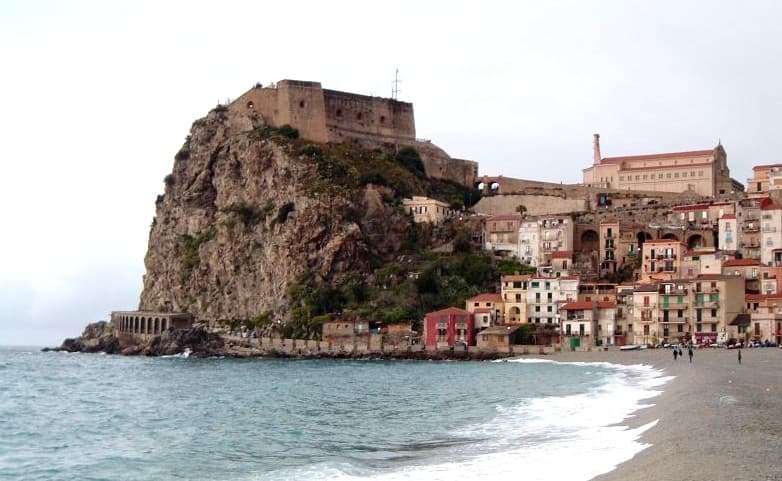
Ruffo di Scilla Castle, also known as Castello Ruffo di Calabria, stands as a monumental testament to the strategic maritime and military history of southern Italy. Perched on the Scilla promontory overlooking the Strait of Messina, this hill castle has served as a crucial lookout and defensive site for millennia, commanding views across the narrow sea passage between the Italian mainland and Sicily. Its origins reach back to the ancient Greek period, with layers of history spanning from the 5th century BCE through the High Medieval era and beyond, reflecting the evolving military architecture and regional power struggles of Calabria.
The castle's location is a natural fortress, isolated and adjacent to the sea, perfectly positioned to control naval access and protect the Calabrian coast from invasions and pirate raids. Archaeological and historical evidence reveals that the site was initially fortified by the ancient Greeks under the rule of Anaxilas II of Reggio around 493 BCE, primarily to defend against incursions by Etruscan pirates. The fortress was further reinforced by successive rulers, including during the Roman era when Emperor Augustus ordered enhancements, underscoring its continued strategic importance.
Ancient origins and classical period fortifications
The earliest known fortifications at the site predate the castle itself, with evidence of defensive walls from the Magna Graecia period and even earlier Etruscan settlements. The Greeks established the initial stronghold in the early 5th century BCE, constructing maritime defenses to secure the vital sea routes. Historical accounts describe the castle as a naval station, known to authors like Pliny the Elder and Strabo as Oppidum Scyllaeum, highlighting its role in controlling the Strait of Messina.
The fortress endured a significant siege in 390 BCE when it was captured by Dionysius I of Syracuse. Control shifted several times until Timoleon of Corinth restored it to Reggio around 340 BCE. During the 3rd century BCE, the castle played a defensive role against the Punic allies of the Bruttians. This period solidified the castle's reputation as a resilient maritime fortress.
Medieval transformations and saracen threats
In the medieval era, the site saw the construction of the Basilian monastery of San Pancrazio in the 9th century, which also served defensive purposes against Saracen invasions. The castle's military significance continued through the Norman conquest of Calabria in 1060, when it was besieged and eventually taken by Robert Guiscard. The fortress was adapted to the changing military technologies and needs over the centuries.
Throughout the 13th century, rulers such as Manfred of Sicily and Charles I of Anjou undertook fortification efforts. A major renovation occurred in 1469 under King Ferdinand I of Naples, who granted the castle to Gutierre De Nava for extensive expansions. The Ruffo family acquired the castle in 1543, with Paolo Ruffo restoring the baronial residence and establishing the castle as a noble seat, further enhanced when the family gained princely status in 1578.
Architectural features and layout
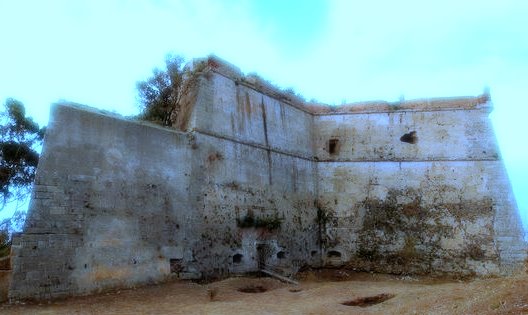
The castle's layout is an irregular but cohesive design shaped by centuries of modifications. It stands approximately 72 meters above sea level, dominating the landscape between the Marina Grande and Chianalea beaches. The fortress features strong curtain walls, defensive towers, and narrow arrow slits for surveillance and protection.
The main entrance is accessed via a bridge leading to a stone portal with a pointed arch, adorned with the Ruffo family coat of arms and a restoration plaque dating to the 16th century. Inside, a vaulted entrance hall opens to a courtyard, from which a large staircase ascends to the residential quarters.
The residential area contains spacious halls reflecting the castle's dual role as a fortress and a noble residence. Below these chambers lies a basement dungeon infamous for its use in the 17th century as a prison and torture chamber.
A notable 20th-century addition is the small lighthouse tower built in 1913 on the northern promontory edge. This lighthouse, with its white body and black base, remains operational under the Italian Navy, guiding ships through the Strait.
Damage, restoration, and modern use
The castle has suffered significant damage from natural disasters, notably the Calabrian earthquakes of 1783 and the devastating 1908 Messina earthquake, which destroyed much of the older residential sections. Early 19th-century restorations helped stabilize the structure, and further efforts in the 20th century have preserved the remaining medieval and Renaissance features.
During the Fascist period, parts of the castle were converted into residential apartments, which unfortunately caused some deterioration. Historically, the castle also served as a prison during the 17th century and saw military use during the Napoleonic Wars and other 18th-century conflicts before losing its strategic military role in the early 1700s.
Since the 1970s, Ruffo di Scilla Castle has evolved into a vibrant cultural center, hosting exhibitions, meetings, and serving as a youth hostel, symbolizing a bridge between its martial past and contemporary cultural significance. Its preservation reflects the importance of protecting Calabria's rich heritage and the castle's enduring role as a landmark of maritime defense and noble residence.
Cultural and historical significance
The castle is not only an architectural monument but also a symbol of the layered history of Calabria, from ancient Greek colonization through Roman, medieval, and modern periods. Its strategic location at the Strait of Messina has made it a focal point for military, economic, and cultural exchanges across centuries.
Today, Ruffo di Scilla Castle stands as a testament to the region's resilience and historical depth, attracting visitors interested in military architecture, Mediterranean history, and the dramatic landscape of southern Italy.
Frequently asked questions (FAQ)
- What is the historical significance of Ruffo di Scilla Castle?
- Ruffo di Scilla Castle, built in the 11th century, is a significant historical landmark that reflects the rich heritage of the region. It served as a defensive fortress and a residence for the noble Ruffo family, playing a crucial role in the feudal history of Calabria.
- When was Ruffo di Scilla Castle built?
- The castle was constructed in the 11th century, during a time when strategic fortifications were essential for protection against invasions. Its architecture has evolved over the centuries, showcasing various styles influenced by different ruling powers.
- Can I visit Ruffo di Scilla Castle?
- Yes, Ruffo di Scilla Castle is open to visitors, allowing you to explore its historical architecture and stunning views of the Tyrrhenian Sea. Guided tours are often available to enhance your experience and provide deeper insights into the castle's history.
- What are the opening hours of Ruffo di Scilla Castle?
- The castle typically opens daily from 9 AM to 7 PM, but it is advisable to check for seasonal variations or special events that might affect these hours. Visiting earlier in the day can help you avoid crowds and enjoy a more leisurely experience.
- Is it possible to access Ruffo di Scilla Castle with limited mobility?
- Access to Ruffo di Scilla Castle may be challenging due to its location on a hill and the uneven terrain around it. However, staff can provide assistance, so it's recommended to contact them in advance to discuss any accessibility needs.
- What is the best time to visit Ruffo di Scilla Castle?
- The best time to visit is during the spring and fall months when the weather is mild and pleasant for exploring. Summer can be quite hot, and winter may bring rain, so planning your visit during these optimal seasons can enhance your experience.
- Are there any nearby attractions to explore after visiting the castle?
- Yes, after visiting Ruffo di Scilla Castle, you can explore the beautiful beaches of Scilla, famous for their clear waters and picturesque views. Additionally, the nearby coastal town of Chianalea offers charming streets and delicious local cuisine.
- What are the ticket prices for Ruffo di Scilla Castle?
- Ticket prices for Ruffo di Scilla Castle are generally affordable, with discounts available for students and seniors. It's best to check the official website or local tourism information for the most current pricing and any special offers.
Photo gallery

Information
Website
Visit websiteSources & official resources
Verify the information above using these authoritative references.
Loading map...
Visitor reviews
No reviews yet. Been here? Write the first review and help other travelers!
Write the first reviewVisited this castle? Share your experience
Your review helps other travelers and adds first-hand knowledge to our encyclopedia.