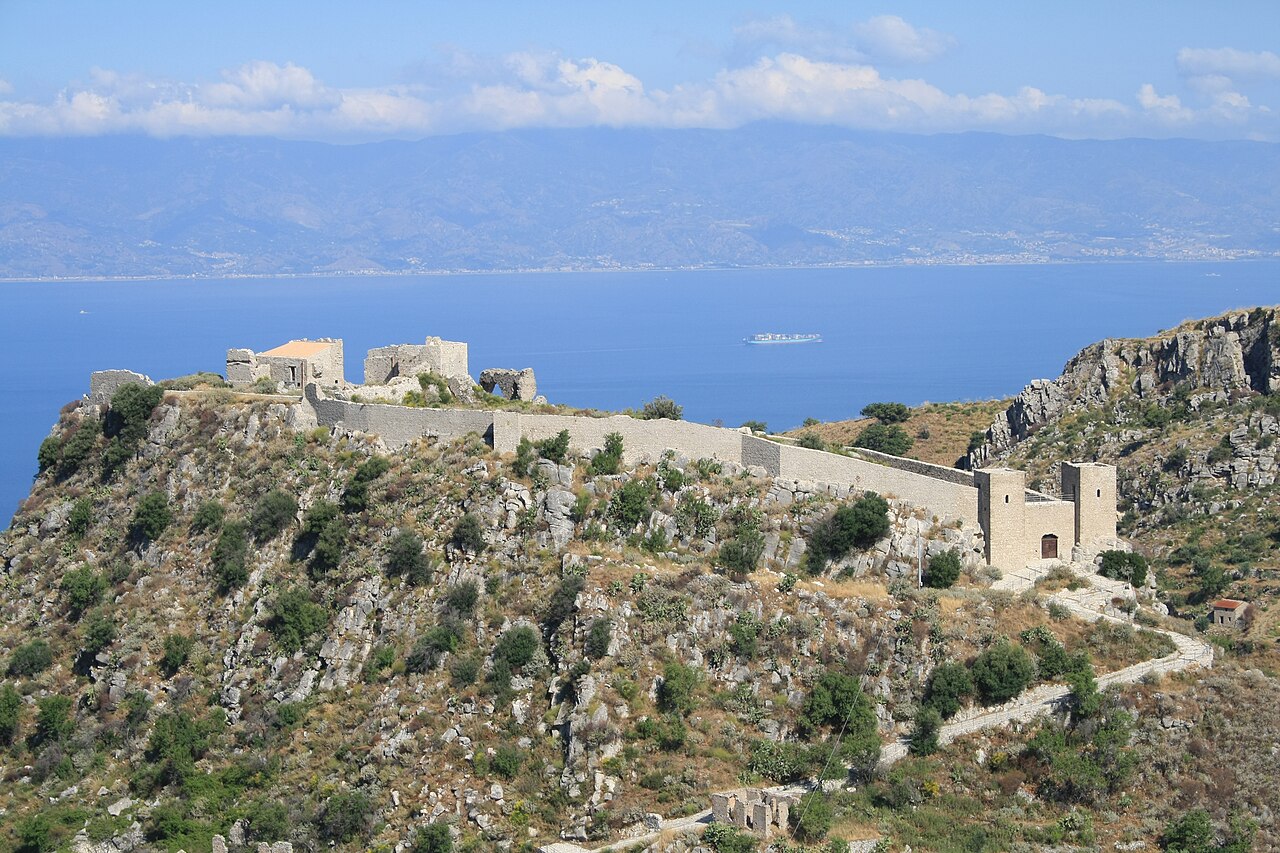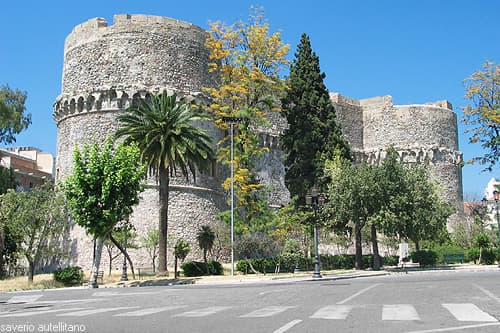
Aragonese Castle of Reggio Calabria
The Aragonese Castle of Reggio Calabria stands as a monumental symbol of the city, renowned for its imposing cylindrical towers that dominate the skyline. This ancient fortification, located in the heart of Reggio Calabria in southern Italy, offers a remarkable glimpse into the layered history of the region, reflecting centuries of architectural evolution and military significance.
Despite its name, the castle's origins predate the Aragonese period significantly. The fortress was initially constructed before 540 AD, during the late Antiquity, making it one of the oldest defensive structures in Calabria. Over the centuries, the castle underwent numerous extensions and restorations, shaped by various rulers who controlled the region. The Normans established their court within the castle, contributing to its expansion and fortification. Subsequently, the Angioinis and the Aragonese dynasties further enhanced the structure, each adding layers of architectural and military modifications that reflect the changing styles and defensive needs of their times.
Historical development and architectural evolution
The castle's original construction before 540 AD places it in the context of the early medieval period, a time when fortifications were crucial for controlling strategic coastal locations. Its location in Reggio Calabria was of great importance due to the city's position overlooking the Strait of Messina, a vital maritime passage between the Italian peninsula and Sicily.
Norman contributions
During the High Medieval period, the Normans undertook significant work on the castle, transforming it into a formidable stronghold. They established their court here, highlighting the castle’s role not only as a military fortress but also as an administrative center. The Normans reinforced the walls and added defensive features that enhanced its ability to withstand sieges.
Aragonese enhancements
The castle’s name is derived from the extensive renovations and expansions commissioned by Ferdinando I of Aragon in 1458. These works marked the castle’s peak in terms of size and military capability. The Aragonese period introduced robust fortifications suitable for the evolving warfare technology of the late medieval era, including thickened walls and improved battlements. The two massive cylindrical towers that remain today are emblematic of this phase, designed to provide both defensive strength and a commanding view over the surrounding area.
Decline and restoration
The castle experienced a period of decline starting in the early 19th century. Various collapses and demolitions, driven by neglect and changing military needs, compromised much of its original structure and aesthetic. Despite this, the castle remained a significant historical landmark in Reggio Calabria.
In recent decades, a comprehensive restoration effort has been undertaken to preserve and revive the castle’s grandeur. This restoration has focused on stabilizing the remaining structures, restoring architectural details, and adapting the space for contemporary use. Today, the Aragonese Castle serves as a cultural venue, hosting exhibitions and art events, thereby continuing its legacy as a focal point of the city’s historical and cultural identity.
Architectural features and significance
The castle’s most striking architectural elements are its two cylindrical towers, which dominate the fortress and offer panoramic views of the city and the sea. These towers are exemplary of the military architecture of the late medieval period, designed to provide both defense and surveillance.
The castle's walls, battlements, and courtyards reflect the successive layers of construction from different periods, showcasing a blend of styles from the early medieval foundations to the robust Aragonese fortifications. The structure’s strategic coastal location underscores its historical role in controlling maritime routes and defending against invasions.
Military and cultural role
Throughout its history, the castle functioned as a military bastion, administrative center, and royal residence. Its control was pivotal in the political and military struggles that shaped southern Italy. Today, it stands as a testament to the region’s rich history and architectural heritage.
Visiting the Aragonese Castle
Visitors to the castle can explore its imposing towers, walk along the ancient walls, and experience the blend of historical architecture and modern cultural use. The castle’s location in the city center makes it accessible and a must-see attraction for those interested in medieval fortifications, Italian history, and art exhibitions.
The castle’s preservation and adaptive reuse highlight the importance of maintaining historical monuments as living parts of the urban landscape, connecting the past with present-day cultural life.
Frequently asked questions (FAQ)
- How do I get to the Aragonese Castle of Reggio Calabria?
- The Aragonese Castle is located in the heart of Reggio Calabria, easily accessible by public transport or car. If you're using public transportation, local buses connect various parts of the city to the castle, and there are parking facilities nearby for those driving.
- What is the historical significance of the Aragonese Castle?
- The Aragonese Castle, originally built in the 15th century, played a crucial role in the defense of the city against invasions and has witnessed numerous historical events. Its architecture reflects the military needs of the period and showcases the strategic importance of Reggio Calabria in Mediterranean history.
- When was the Aragonese Castle built?
- Construction of the Aragonese Castle began in the late 15th century under King Ferdinand I of Aragon. Over the years, it has undergone various renovations and restorations, preserving its historical essence while adapting to modern tourist needs.
- Can I visit the Aragonese Castle with children?
- Yes, the Aragonese Castle is a family-friendly attraction, and children are welcome to explore its fascinating architecture and grounds. There are spacious areas where kids can roam, and educational displays that engage young visitors in the castle's rich history.
- Why is the Aragonese Castle a popular tourist attraction?
- The Aragonese Castle is popular due to its stunning views of the Strait of Messina and its impressive medieval architecture. Visitors are drawn to the combination of history, culture, and the picturesque scenery that the castle offers, making it a must-see in Reggio Calabria.
- Is it possible to take guided tours of the Aragonese Castle?
- Yes, guided tours are available at the Aragonese Castle, providing in-depth insights into its history and architecture. These tours enhance the visitor experience, allowing guests to appreciate the castle's significance with the help of knowledgeable guides.
- What are the opening hours for the Aragonese Castle?
- The Aragonese Castle is typically open from 9:00 AM to 7:00 PM, but it's advisable to check the official website for any seasonal changes or special events. Extended hours may be available during peak tourist seasons.
- Are there any nearby attractions to the Aragonese Castle?
- Yes, nearby attractions include the National Archaeological Museum of Reggio Calabria, which houses significant artifacts, and the beautiful waterfront promenade. Visitors can easily explore these sites before or after their visit to the castle.
- What are the ticket prices for the Aragonese Castle?
- Ticket prices for the Aragonese Castle are generally affordable, with discounts available for students, seniors, and children. Special rates may apply for family tickets or group visits, making it accessible for all types of travelers.
Photo gallery

Information
Loading map...
Visitor reviews
No reviews yet. Been here? Write the first review and help other travelers!
Write the first reviewVisited this castle? Share your experience
Your review helps other travelers and adds first-hand knowledge to our encyclopedia.