Forte Gonzaga
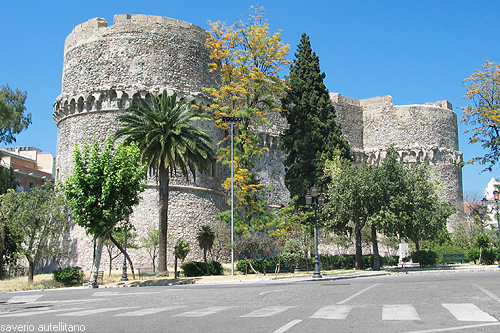
Forte Gonzaga, also known as Castel Gonzaga, is a significant bastioned fortress located on the hill of Montepiselli overlooking the city of Messina and the strategic Strait of Messina in Sicily, Italy. Constructed in the Renaissance period in 1545, this fortress was a key element in the modernization of Messina's defenses during a time of heightened military tension due to the expanding Ottoman Empire. Its position outside the city walls allowed it to control the mountainous landward approaches and provide a commanding view over the vital maritime passage.
Strategic importance and location
Built on the elevated terrain of Montepiselli, Forte Gonzaga was designed to protect Messina from both land and sea attacks. The fortress’s location was carefully chosen to oversee the narrow Strait of Messina, a crucial maritime route between the eastern and western Mediterranean. This vantage point gave its garrison the ability to monitor naval movements and defend against potential Ottoman incursions that threatened the Sicilian coast during the mid-16th century.
Architectural design and construction
The fort was designed by Antonio Ferramolino, a renowned military engineer from Bergamo, whose expertise in fortifications was sought after in the Mediterranean region. Ferramolino was assisted by Francesco Maurolico, a native scholar and mathematician from Messina, who contributed local knowledge and technical support. The fortress exemplifies the Renaissance bastioned fortification style, characterized by angular bastions that allowed for effective defensive artillery coverage and eliminated blind spots around the walls.
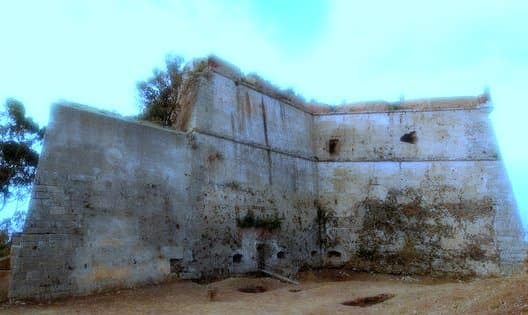
The design incorporated thick, sloped walls made to withstand cannon fire, and the bastions were positioned to enable crossfire against any attacking force. The fortress included multiple defensive features such as ramparts, ditches, and strategically placed embrasures for cannons. Its layout reflects the military architectural innovations of the time, which were driven by the need to counter the increasing power of artillery.
Historical role and military engagements
Forte Gonzaga was named after Don Ferrante Gonzaga, the Viceroy of Sicily, under whose authority the fort was completed in 1545. Although the fortress was built primarily to counter the Ottoman threat, the significance of this threat diminished after the decisive Battle of Lepanto in 1571, where the Holy League defeated the Ottoman fleet.
Despite the reduced Ottoman danger, Forte Gonzaga remained a critical military asset in Sicily. It played a role during the 1674–78 uprising against Spanish rule, serving as a defensive position in the conflict. Later, during the War of the Quadruple Alliance (1718), the fortress was captured by Spanish forces led by General Luca Spinola, indicating its ongoing strategic value.
In the Sicilian revolution of 1848, rebels seized Forte Gonzaga and used it as a platform to bombard the Real Cittadella, which was still held by Bourbon forces. This event highlighted the fort’s continued military relevance well into the 19th century.
During World War II, Forte Gonzaga was utilized by both German and Italian troops to defend against the Allied invasion. Subsequently, American forces used the fort as a forward observation post to direct artillery fire during the campaign to liberate Sicily and mainland Italy.
Post-war use and preservation
Forte Gonzaga remained an active military installation until 1973, when it was transferred to the municipality of Messina. Since then, there have been plans to restore the fortress and repurpose it as a museum and conference center, aiming to preserve its historical and architectural significance for public education and cultural activities.
Today, Forte Gonzaga is in well-preserved condition, offering visitors a tangible connection to the military history of Sicily and the evolution of fortification architecture in the Renaissance era. Its bastioned walls, ramparts, and commanding views continue to attract historians, architects, and tourists interested in military heritage.
Architectural features and layout
The fortress’s bastioned design includes several angular bastions that provide overlapping fields of fire, a hallmark of Renaissance military architecture. The thick stone walls are angled to deflect cannonballs, and the fort’s layout is adapted to the natural contours of Montepiselli hill, maximizing defensive advantage.
Inside the fort, there are remnants of barracks, storage rooms, and artillery platforms that illustrate the daily life of the garrison stationed there. The fort’s entrance is fortified with a gatehouse designed to control access and withstand siege attempts.
Cultural and historical significance
Forte Gonzaga stands as a testament to the military and political history of Sicily during a turbulent period marked by Ottoman expansion, Spanish rule, and revolutionary movements. Its construction reflects the strategic military thinking of the Renaissance, blending engineering innovation with practical defense needs.
The fortress also symbolizes the layered history of Messina, a city that has been a crossroads of Mediterranean powers for centuries. Its preservation allows contemporary visitors to explore the military heritage of the region and understand the historical conflicts that shaped Sicily.
Visitor experience and future prospects
Visitors to Forte Gonzaga can explore the extensive ramparts and bastions, enjoy panoramic views of the Strait of Messina, and learn about the fortress’s role in various historical conflicts through interpretive displays. The planned restoration and conversion into a museum and conference center will enhance its accessibility and educational value.
Frequently asked questions (FAQ)
- How do I visit Forte Gonzaga and what are the opening hours?
- Forte Gonzaga is open to visitors, but opening hours may vary seasonally. It is recommended to check with the Municipality of Messina or local tourist information centers for the latest visiting times.
- What is the historical significance of Forte Gonzaga?
- Forte Gonzaga played a key role in defending Messina from Ottoman threats in the 16th century and saw action during various conflicts including the Sicilian revolution of 1848 and World War II.
- Can I explore the architectural features of the fort?
- Yes, visitors can explore the bastioned walls, ramparts, and artillery platforms, which showcase Renaissance military engineering designed to withstand cannon fire.
- Is Forte Gonzaga accessible for people with mobility issues?
- Due to the fortress's historic nature and hilltop location, accessibility may be limited. Visitors with mobility concerns should inquire in advance to plan their visit accordingly.
- When was Forte Gonzaga built and by whom?
- Forte Gonzaga was built in 1545, designed by military engineer Antonio Ferramolino with assistance from Francesco Maurolico.
Photo gallery

Photo by User:Simon Praud•Public domain
Information
Current owner
Municipality of Messina
Loading map...
Visitor reviews
No reviews yet. Been here? Write the first review and help other travelers!
Write the first reviewVisited this castle? Share your experience
Your review helps other travelers and adds first-hand knowledge to our encyclopedia.