Forte del Santissimo Salvatore
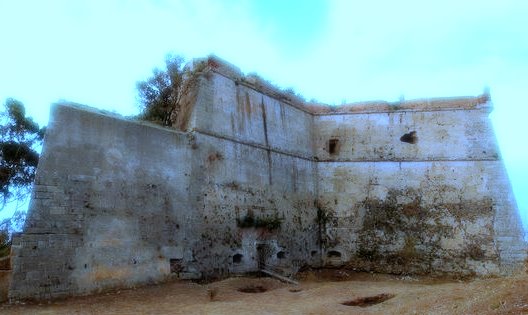
Forte del Santissimo Salvatore is a prominent Renaissance coastal fortress located on the San Raineri peninsula in Messina, Italy. Its strategic position overlooking the Strait of Messina has made it a key military site for centuries. The peninsula itself has a long history of human habitation, with archaeological finds such as Greek pottery dating back to the 8th century BC indicating ancient settlement. The fort’s name derives from a medieval monastery and church dedicated to the Holy Saviour that once stood on the site.
Early history and medieval structures
Before the construction of the fort, the San Raineri peninsula was home to several significant medieval buildings. Around 1081, a tower dedicated to Saint Anne was erected, serving as a defensive lookout. This tower played a role during the War of the Sicilian Vespers in 1282, a conflict that reshaped Sicilian governance and saw local forces resisting Angevin rule. The monastery and church dedicated to the Holy Saviour were important religious centers on the peninsula throughout the Middle Ages.
Renaissance fortification and construction
In the mid-16th century, the geopolitical landscape of the Mediterranean prompted a major upgrade of Messina’s defenses. The expanding threat of the Ottoman Empire led to the decision to modernize fortifications along the coast. Consequently, the medieval monastery and other structures were demolished to make way for a new fortress. However, the church and the tower of Saint Anne were preserved and integrated into the design.
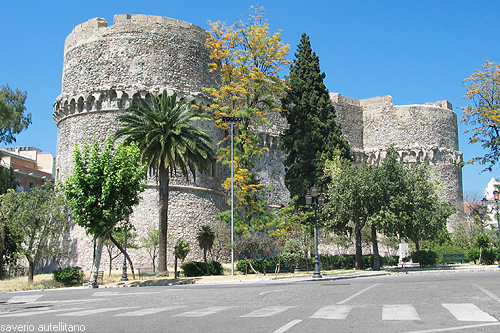
The fort was designed by Antonio Ferramolino, a military engineer from Bergamo known for his expertise in fortifications. Construction was completed in 1546, resulting in a polygonal fortress that conformed to the natural contours of the peninsula. The fort’s layout includes a semi-circular bastion at its tip named Forte Campana, which incorporated the medieval tower of Saint Anne. This bastion provided a strong defensive position overlooking the sea.
Architectural features
The fort’s land front originally featured two bastions connected by a curtain wall containing the main gate. One of these bastions remains intact today, while the other was destroyed after the 1908 earthquake. The land front was connected to the semi-circular bastion by two curtain walls, each equipped with artillery batteries and smaller bastions, reflecting the Renaissance emphasis on artillery defense. The curtain wall facing the Strait of Messina remains well preserved, whereas the wall facing the harbor was demolished following earthquake damage.
Historical events and military significance
Forte del Santissimo Salvatore has witnessed several significant historical events. In 1549, a catastrophic explosion in the fort’s gunpowder magazine destroyed the church within its walls. The fort was captured by local rebels during the 1674 uprising against Spanish rule, a notable episode in Sicily’s turbulent history. After the revolt was suppressed in 1678, the nearby Real Cittadella was constructed on the San Raineri peninsula, enhancing the area’s military defenses.
The fort sustained damage during the 1783 earthquake but was promptly repaired. During the Sicilian revolution of 1848, it remained under Bourbon control and was used to bombard Messina, which had fallen to rebel forces. Later, in 1861, the fort was seized by Piedmontese troops during the Expedition of the Thousand, marking a key moment in the unification of Italy.
The 1908 Messina earthquake caused severe damage to the fortress, leading to the demolition of the walls facing the port a year later. Despite these setbacks, the site retains significant portions of its original structure.
Modern era and preservation
In 1934, a large statue known as the Madonna della Lettera was erected within the fort on the site of the medieval Saint Anne tower, symbolizing the enduring cultural and religious importance of the location. The fort remains military property today, situated near the base of the Italian Coast Guard in Messina.
Some restoration efforts have been undertaken to preserve the remaining structures, though the fort is not fully accessible to the public due to its active military use. Its enduring presence offers valuable insights into Renaissance military architecture and the historical defense of Sicily’s eastern coast.
Information
Loading map...
Visitor reviews
No reviews yet. Been here? Write the first review and help other travelers!
Write the first reviewVisited this castle? Share your experience
Your review helps other travelers and adds first-hand knowledge to our encyclopedia.