
Royal Castle of Collioure
The Royal Castle of Collioure, known in French as Château Royal de Collioure, is a monumental fortress located in the coastal town of Collioure in southern France. Positioned strategically near the Mediterranean Sea and just a few kilometers north of the Spanish border, the castle has played a pivotal role in the military and political history of the region, reflecting centuries of conflict and cultural interchange. The castle complex is a remarkable example of layered architectural evolution, combining medieval fortifications with extensive 17th-century military engineering adaptations.
Originally constructed in the early 13th century by the Knights Templar, the castle was integrated into the royal domain by 1276. It was subsequently expanded and modified by the Kings of Majorca during the 13th and 14th centuries, who used Collioure as a royal residence and administrative center within their Mediterranean kingdom. This period endowed the castle with much of its medieval character and importance as a fortified port town.
Historical background and political significance
The site of Collioure has a long history of human occupation, with evidence of Roman conquest around 120 BC and Visigothic control from 418 AD. The earliest recorded mention of a fortified site at Collioure dates back to 673 AD, when King Wamba of the Visigoths laid siege to the "Castellum Caucolibéri" to suppress a rebellion. This early fortification laid the groundwork for the castle's strategic importance in controlling the coastal approaches and regional trade routes.
In the 12th century, the last independent count of Roussillon, Girard II, transferred his lands to Alfons II, King of Aragon and Count of Barcelona. Under Aragonese rule, Collioure flourished, receiving privileges, tax exemptions, and the establishment of an annual fair, which contributed to the town's prosperity. The castle itself became a symbol of royal authority and military strength.
During the 16th century, following a brief occupation by Louis XI of France, the castle came under the control of the Spanish Habsburgs, starting with Charles V. Recognizing the need to adapt to advances in artillery warfare, Charles V and his son Philip II undertook significant fortification upgrades, transforming the castle into a modern bastioned fortress. This evolution was essential for maintaining control over this contested border region.
The castle was a focal point during the 17th-century conflicts between the Spanish Habsburgs and the French Bourbons. In 1642, the forces of Louis XIII, including notable figures such as Turenne and d'Artagnan, besieged Collioure, ultimately capturing the fortress after cutting off water supplies. The 1659 Treaty of the Pyrenees resulted in the permanent annexation of Roussillon and Collioure by France.
Architectural evolution and military engineering
Medieval foundations and majorca period
The core medieval structure of the castle dates primarily from the 13th and 14th centuries, reflecting the initial construction by the Knights Templar and subsequent expansions by the Kings of Majorca. The castle's layout is complex, comprising the integration of at least four distinct castles or fortifications over time, forming a large defensive complex.
Key medieval features include a northern courtyard housing the chapel dedicated to Sainte-Marie-Madeleine, a large hall on the eastern side now converted into a terrace, and residential chambers such as the historically significant Queen's chamber adjoining a square tower at the southwestern corner. These spaces indicate the castle's dual role as a royal residence and military stronghold.
16th-century upgrades under the spanish habsburgs
Responding to the increasing threat posed by artillery, the Spanish Habsburgs reinforced the castle's defenses in the 16th century. Notable additions include a barbican constructed in 1454 to protect vulnerable gates, and a sea-facing caponier built in 1465 at the southwest angle, allowing defenders to fire along the ditch and cover approaches from the sea. These enhancements exemplify the adaptation of medieval fortifications to early modern warfare.
Vauban's 17th-century transformations
The most significant architectural transformation occurred in the late 17th century under the direction of the renowned military engineer Sébastien Le Prestre de Vauban. Between the 1670s and 1690, Vauban implemented extensive remodeling to adapt the castle to the era of gunpowder artillery. He raised the ramparts, added three new bastions, and constructed a demi-lune—an outer earthwork designed to protect the fortress front.
Vauban also replaced the original medieval western gate with a more formidable entrance, enhancing the castle's defensive capabilities. His work extended beyond the castle walls, involving the demolition of approximately 130 buildings in the surrounding town, including the medieval town enclosure and the fortified church, to create open glacis—sloping clear fields that improved visibility and fields of fire for defenders.
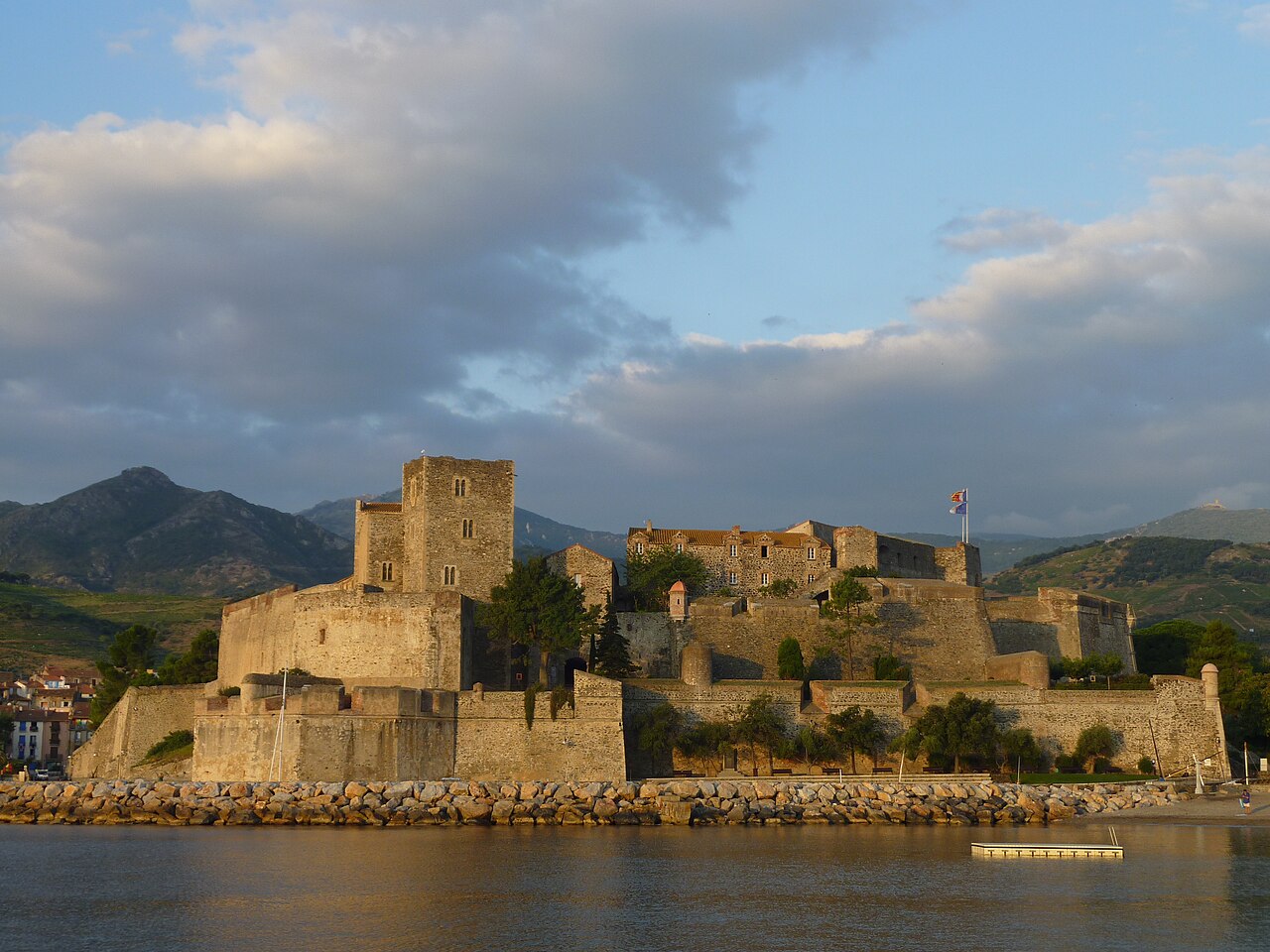
Photo by Miniwark • CC BY-SA 3.0
The castle's role in modern history
In the 20th century, the Royal Castle of Collioure ceased to serve a military function in 1922 and was subsequently declared a historic monument. During the Spanish Civil War, starting in 1939, the castle was repurposed as a prison and disciplinary camp for Spanish refugees fleeing the conflict, known as the Retirada. It later held prisoners under the Vichy regime during World War II and was used to detain Axis prisoners of war after 1945.
Since 1952, the castle has been owned and maintained by the Pyrénées-Orientales Departmental Council, which has preserved the site as a cultural and tourist attraction. Today, it stands as one of the major heritage landmarks in Northern Catalonia, drawing visitors interested in its rich history and impressive military architecture.
Archaeological findings and current condition
Recent archaeological investigations have revealed structural remains beneath and around the castle, shedding light on the site's long occupation and the multiple phases of construction. While specific artifacts have not been extensively detailed, these findings contribute to a deeper understanding of the castle's evolution from antiquity through the early modern period.
The castle is well preserved, showcasing a blend of medieval and 17th-century military architecture. It occupies a commanding position near Collioure's historic old town and port area, linked to the nearby Fort Saint-Elme, which was similarly fortified during the same periods. Visitors can explore the castle's terraces, towers, bastions, and courtyards, gaining insight into the strategic importance and architectural ingenuity of this Mediterranean fortress.
Frequently asked questions (FAQ)
- How do I get to the Royal Castle of Collioure?
- The Royal Castle of Collioure is easily accessible by car, train, or bus. If you're traveling by train, the closest station is Collioure, which is a short walk from the castle. For those driving, there are parking facilities nearby, but be mindful of limited spaces during peak tourist seasons.
- What is the historical significance of the Royal Castle of Collioure?
- The Royal Castle of Collioure, built in the 17th century, served as a strategic military fortress and residence for the Kings of Majorca. It played a crucial role in defending the region against invasions and has witnessed significant historical events. Today, it stands as a testament to the area's rich history and architectural heritage.
- When was the Royal Castle of Collioure constructed?
- Construction of the Royal Castle of Collioure began in 1680 and continued until 1691. It was built to reinforce the defensive capabilities of the coastal town against naval threats. Over the years, it has undergone various renovations and restorations to preserve its historical integrity.
- Can I visit the Royal Castle of Collioure year-round?
- Yes, the Royal Castle of Collioure is open to visitors year-round. However, opening hours may vary depending on the season, so it's advisable to check in advance before your visit. Guided tours are also available, providing deeper insights into the castle's history and architecture.
- Why is the architecture of the Royal Castle of Collioure unique?
- The architecture of the Royal Castle of Collioure is a blend of military and Catalan styles, featuring robust walls and strategic towers. Its location on a rocky outcrop provides breathtaking views of the Mediterranean, enhancing its aesthetic appeal. The design reflects the military needs of the time while incorporating local architectural elements.
- Is it possible to explore the grounds of the Royal Castle of Collioure?
- Yes, visitors can explore the grounds of the Royal Castle of Collioure, including its ramparts and courtyards. There are designated paths and areas that allow you to enjoy panoramic views of the surrounding landscape and the sea. Make sure to wear comfortable shoes, as some areas may involve walking on uneven terrain.
- What are the ticket prices for visiting the Royal Castle of Collioure?
- Ticket prices for the Royal Castle of Collioure are generally affordable, with discounts available for students and seniors. Children under a certain age may enter for free, making it a great family-friendly destination. It's best to check the official website for the most up-to-date pricing information.
- What is the best time to visit the Royal Castle of Collioure?
- The best time to visit the Royal Castle of Collioure is during the spring and early autumn months when the weather is mild and pleasant. This period also sees fewer crowds compared to the peak summer months. Additionally, the stunning views and vibrant surroundings make for a memorable experience.
- Are there any nearby attractions to visit after the Royal Castle of Collioure?
- Yes, there are several nearby attractions worth visiting, such as the charming village of Collioure with its colorful houses and art galleries. The beaches in the area offer a relaxing spot to unwind after your castle tour. Additionally, the nearby vineyards provide opportunities for wine tasting and exploring the local culture.
Photo gallery

Information
Website
Visit websiteSources & official resources
Verify the information above using these authoritative references.
Loading map...
Visitor reviews
No reviews yet. Been here? Write the first review and help other travelers!
Write the first reviewVisited this castle? Share your experience
Your review helps other travelers and adds first-hand knowledge to our encyclopedia.